Many politicians — especially conservatives — are loath to approve anything that could be construed as a tax increase.
But since 2009, Ohio’s leadership has gone along with a number of questionable rate hikes demanded by regulated utilities. They’ve functioned in the same manner as tax increases — regressive ones with unsavory origins.
There were new state charges earlier this month in Ohio’s massive FirstEnergy bribery scandal. They brought new attention to the issue, but that scandal is hardly the only time Ohio utilities have been able to impose questionable rate increases on their unsuspecting customers.
In the scandal, Akron-based FirstEnergy paid more than $61 million in bribes in exchange for the 2019 passage and protection of a $1.3 billion ratepayer bailout. As a consequence, former House Speaker Larry Householder, R-Glenford, is serving a 20-year federal prison sentence.
The state charges filed this month against two top FirstEnergy executives and the state’s top regulator pertain to those crimes. But they also describe more than a decade’s worth of additional shady increases in which payoffs played a central role.
They accuse Sam Randazzo — whom Ohio Gov. Mike DeWine later appointed to be top regulator — of secretly helping FirstEnergy make huge, secret payments to powerful energy users. In exchange, the charges say, the industrial users dropped their opposition to rate increases FirstEnergy wanted to impose on all its customers.
The payments might not have been illegal, but they functioned as kickbacks all the same.
The Columbus Dispatch on Sunday reported that in 2008 then-Gov. Ted Strickland, a Democrat, tried to negotiate an end to the shady practice, but then-House Speaker Jon Husted killed the attempt, a former aide to Strickland told the paper. Husted is now DeWine’s lieutenant governor and is said to be planning a run in the 2026 Ohio Republican primary to be governor in his own right.
Those increases are in addition to a whole slew of other rate hikes that Ohio’s erstwhile regulator has granted, but the state Supreme Court later ruled to be illegal. They total more than $1.5 billion worth altogether. Even though the gains have been ruled unlawful, utilities have gotten to keep them because the Public Utilities Commission of Ohio keeps granting such increases without building in a refund mechanism in the event they’re struck down.
Jenifer French, DeWine’s appointment to replace the disgraced Randazzo, has repeated PUCO staff claims that such refund mechanisms are illegal. But the legal case seems dubious and watchdogs and lawmakers from both parties dispute it.
So Ohio ratepayers have shelled out billions in illegal electric payments and untold millions more as the consequence of shady kickbacks to powerful companies. Those who allowed such payments are responsible for what is the functional equivalent of a tax increase, said Rob Moore, principal of Scioto Analysis, a Columbus firm that applies economics to questions of public policy.
One reason they work the same as a tax is because one has little choice in 2024 about paying for electrical service, he said.
“You can’t get away from it,” Moore said. “You’re going to have to pay something for electricity.” He later added, “That’s functionally no different from a tax.”
And it’s one that falls extra-hard on the poor.
Disconnected electricity and gas can destroy perishable food while also taking away the ability to cook it. For those who are struggling, finding money and getting to the store for one batch of food can already be a challenge. Having to do it again after arranging a reconnection can be even more difficult.
The news outlet reported that as part of a story about nearly 200,000 disconnections by Ohio electric utilities at the height of the coronavirus pandemic. Advocates asked the PUCO for relief, but the regulatory agency said it was powerless to act.
Moore said that if you view utilities as the practical equivalent of a tax, it’s a regressive one.
“In general, lower-income people pay more of their income on utilities than upper-income people,” he said.
Moore cited a 2013 report by the U.S. Energy Information Agency saying that households in the bottom 20% of incomes made 6% of their total expenditures on home energy, while those in the top 20% paid half that.
Energy-insecure households are likely to be poorer still. The agency last year reported that they paid 27% more in real terms than everybody else — $1.24 per square foot vs. 98 cents.
As with the state and local tax burden, the extra costs Householder, the PUCO and others have imposed on Ohio seem to be falling most heavily on those least able to pay it.
“Basically, he just levied a tax and lined his pockets with it,” Moore said of the former speaker.
MARTY SCHLADEN
Marty Schladen has been a reporter for decades, working in Indiana, Texas and other places before returning to his native Ohio to work at The Columbus Dispatch in 2017. He’s won state and national journalism awards for investigations into utility regulation, public corruption, the environment, prescription drug spending and other matters.
Below are some of the top findings from the release.
Suicide is a leading cause of death for working-age Ohioans.
Over 1,400 Ohioans died from suicide in 2022, the most recent year we have data for. This makes suicide the fifth-leading causes of death for working-age Ohioans, behind unintentional injuries like drug overdose and motor vehicle crashes, cancer, heart disease, and COVID-19.
Ohio’s suicide death rate is 15 deaths per 100,000 people, just slightly above than the national rate of 14.5 deaths per 100,000 people.
Suicide victims are disproportionately white, male, working-age, and Appalachian.
In 2022, 17 white Ohioans died from suicide per 100,000 population, higher than the rate of 12 for Black Ohioans, 10 for Hispanic Ohioans, and 7 for Asian Ohioans. Men were also four times likely to die from suicide than women. This is despite the fact that women attempt suicide at a rate 70% higher than men.
Suicide rates were highest in 2022 for working-age adults, higher than the rate for young adults, retirement-age adults, and children. Suicide was most common in Appalachian counties, with 15 of Ohio’s 22 counties with the highest suicide rates located in Appalachia.
Suicide is on the rise–for nearly everyone.
Since 2007, suicide rates have increased for men and women, white, Black, and Hispanic Ohioans, and Ohioans in every age group. The only major demographic group that has seen a flat suicide trend are non-Hispanic Asian or Pacific Islander Ohioans.
Risk factors for high school students are also becoming more common.
Compared to 2019, female Ohio high school students were more likely in 2021 to feel sad or hopeless, seriously consider suicide, make a plan to commit suicide, or attempt suicide. While more male high-school felt sad or hopeless and seriously considered suicide over that time period, fewer made a plan or attempted suicide. The increase in suicide plans and attempts among female students was much larger than the decrease among male students.
The increase in suicide rate is driven by firearms.
Suicide deaths involving a firearm increased 60% from 2007 to 2022. This accounted for 75% of the total increase in suicides over that time period. The remainder of the increase was driven mostly by an increase in deaths by suffocation and other causes. Deaths by poisoning decreased over that time period.
Suicide is a hard social problem to make progress against. That being said, the Health Policy Institute of Ohio suggests interventions to improve mental health to prevent suicide attempts.
A 2016 evidence review published in the American Journal of Psychiatry concluded legislation reducing firearm ownership lowers firearm suicide rates. It also acknowledged, however, that court interpretations of the second amendment to the U.S. Constitution have made most legislative options for reducing firearm ownership politically unfeasible in the United States.
The researchers however, say targeted initiatives like gun violence restraining orders, smart gun technology, and gun safety education may be able to reduce risk for current gun owners. These sorts of approaches do not have a strong evidence base yet, but they at least give us something to tackle this difficult problem.
If you or someone you know needs support now, call or text 988 or chat 988lifeline.org.
ROB MOORE
Rob Moore is the principal for Scioto Analysis, a public policy analysis firm based in Columbus. Moore has worked as an analyst in the public and nonprofit sectors and has analyzed diverse issue areas such as economic development, environment, education, and public health. He holds a Master of Public Policy from the University of California Berkeley’s Goldman School of Public Policy and a Bachelor of Arts in Philosophy from Denison University.
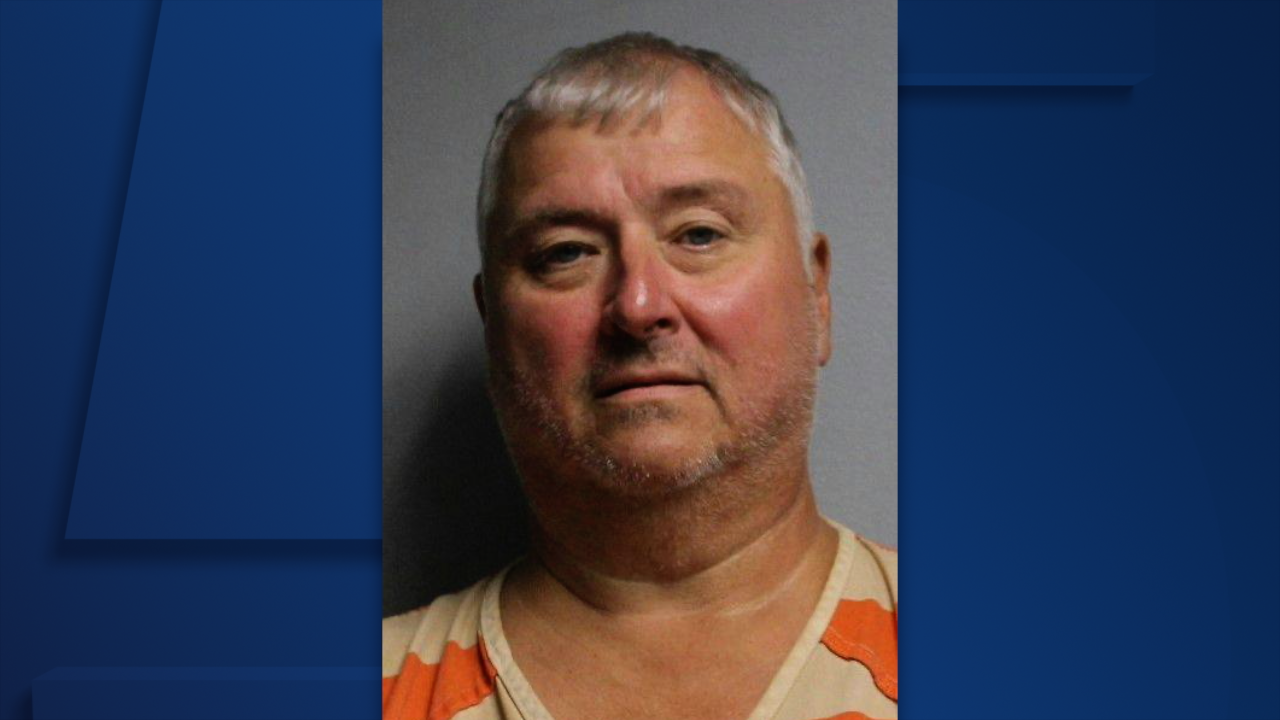
From left to right: Former PUCO Chair Sam Randazzo, former FirstEnergy CEO Chuck Jones, former FirstEnergy VP Michael Dowling. (Mugshots from the Summit County Sheriff’s Office. Graphic by WEWS.)
Ohio law enforcement authorities on Monday filed numerous felony charges against two former First Energy executives and a former top utility regulator in what has been called the biggest bribery and money-laundering scandal in Ohio history.
Ohio Attorney General Dave Yost announced scores of felony charges against a former regulator who also has been charged federally, and against two people who haven’t — former top executives for Akron-based FirstEnergy whom the company admitted paid more than $60 million in bribes between 2016 and 2020 in exchange for a $1.3 billion ratepayer bailout.
Charged were Sam Randazzo, former chairman of the Public Utilities Commission. Already facing felony charges in federal court, the state indictment charges him with 22 more, including grand theft, bribery, and money laundering. The indictment accuses him of taking bribes from FirstEnergy from 2010 until just before he became chairman of the commission in 2019.
Also charged were former FirstEnergy CEO Chuck Jones and Vice President Michael Dowling. Between them, they face 22 felony charges similar to those faced by Randazzo.
“This indictment is about more than one piece of legislation,” Yost said Monday. “It is about the hostile capture of a significant portion of Ohio’s state government by deception, betrayal, and dishonesty.”
The state charges that were announced Monday didn’t deal with much of the activity addressed in the federal case. They instead focused on the relationship between Jones, Dowling, and Randazzo between 2010 and early 2019, when they paid him $4.33 million just as he was becoming the state’s top utility regulator.
The House Bill 6 scandal
Back in 2019, former Ohio House Speaker Larry Householder took $61 million in bribes in exchange for legislation to give FirstEnergy a $1 billion bailout, named House Bill 6, all at the expense of the ratepayers.
The scheme was revealed in three main ways — two separate whistleblowers and a phone wiretap.
In March 2023, a jury found Householder and former Ohio Republican Party leader Matt Borges guilty beyond a reasonable doubt for their involvement in the racketeering scheme that left four men guilty and another dead by suicide.
In late June that year, federal judge Timothy Black sentenced Householder to 20 years in prison. Borges got 5 years. The two surviving defendants took plea agreements early on, helping the FBI, and are still awaiting their sentencing. The feds are asking for 0-6 months for them.
Until Monday, only federal indictments had been handed out.
The Ohio Valley Electric Corporation (OVEC) got a handout from the scheme. It expanded a bailout of the OVEC plants and required Ohioans to pay for two 1950s-era coal plants— one in the Southern area of the state and the other in Indiana. The main beneficiaries of this are American Electric Power Company (AEP), Duke Energy and AES Ohio.
Despite this scandal becoming public years ago, ethics laws in the state have not changed to prevent schemes like this from happening.
There are numerous bipartisan efforts to repeal HB 6 totally and to put forward ethics laws. None are going anywhere, it seems.
Monday’s indictments
AG Yost was joined by Summit County Prosecutor Sherri Bevan Walsh and Sheriff Kandy Fatheree for the announcement Monday.
“The crimes committed by these individuals impacted the pocketbooks of every hard working Ohioan and further shook our faith in the institutions and organizations that we count on to represent us and to provide us with essential services,” Fatheree said. “Today, we take another important step in ensuring that justice is served for these crimes and that those who took advantage of the public’s trust are held accountable.”
FirstEnergy as a company has already admitted in a deferred prosecution agreement to bribing public officials in Ohio, including a $4.3 million bribe to Randazzo. Jones and Dowling allegedly paid this to him.
Randazzo pleaded not guilty to the federal charges against him in December.
The Sustainability Funding Alliance of Ohio and IEU-Ohio Administration Company are also named in the filing. Randazzo controlled each of them, and they were allegedly shell companies created to further his criminal activity.
Reactions
While Monday was probably not the best day for Randazzo, Jones and Dowling, it was a great day for whistleblower Tyler Fehrman.
Fehrman is the Republican operative-turned-FBI informant who is credited with exposing this mass public corruption at the Statehouse — and he is cheering the AG and Summit County for these arrests.
“These guys deserve to have everything taken away from them,” Fehrman said. “They deserve it.”
Borges attempted to bribe Fehrman, and threatened him, to be a part of the scandal — even at one point telling him that if he snitches, Borges would “blow up his house.”
That conversation was actually set up and recorded by the feds. Instead of staying quiet, Fehrman testified, helping the jury to return guilty verdicts in the federal trial.
Fehrman ended up having to change careers and flee the state due to fears of retaliation — and because he was ostracized — but now he gets to watch as the scheme continues to unravel.
“You can hide your actions in the dark for a little bit,” Fehrman said Monday. “But the sun always rises and the truth always comes out. Every time one of these guys gets indicted, especially the people that made it possible for Matt and Larry to have the opportunity to do what they did to me — to see them get in trouble, it’s extremely vindicating.”
He agreed with Yost’s statement that there can be no justice without holding the check-writers and the masterminds accountable.
Case Western Reserve University law professor Mike Benza believes these charges are going to be hard to fight. When asked the best possible scenario for them, other than pleading guilty, he said their best bet could be to argue this is politics as usual.
“It seems that the focus from the defense side is going to be much like the focus from Householder and Borges — this is just how things get done in Columbus,” Benza said. “This is just the normal sausage-making of public policy and it may not be pretty and you may not like it, but this is the reality and it doesn’t equal corruption.”
Clearly, that wasn’t a winning argument in federal court.
Part of the reason why it may have worked so poorly in Black’s federal courtroom is because Householder went against the advice of the vast majority of criminal defense attorneys and decided to testify in his defense.
The now-convicted felon used the bribe money to put himself and his allies into power, demolishing and threatening anyone in his path, as well as paying off credit card debt and renovations to his home in Florida.
Benza believes Randazzo, Jones, and Dowling are facing difficult days ahead.
“Randazzo is probably going to be looking at dying in prison,” Benza responded. “Jones and Dowling are probably in that same boat.”
Ferhman is hoping for more indictments, including high-profile names.
“The clock is ticking for the other people that were involved,” Fehrman said.
He named Gov. Mike DeWine Lt. Gov. Jon Husted as people of interest for him.
DeWine has been complying with a subpoena he received in a civil case connected to the scandal, he said.
FirstEnergy investors are suing for being negatively impacted financially by the scandal. They have subpoenaed documents from DeWine, and they’re scheduling a sworn deposition with Husted.
In a one-on-one interview with the governor, DeWine was asked if he was nervous about the scandal, or, more importantly — if was he worried for Husted. DeWine said no to both.
Randazzo has been named as the mastermind behind HB 6, due to him being one of the creators of it — according to the feds. But DeWine was how he came into power.
DeWine was asked in the same interview if he regretted naming Randazzo the state’s top utility regulator.
“Oh, look, if I knew what I know now, if I knew that — I certainly would not have appointed Sam Randazzo to that position,” DeWine responded.
DeWine said he was the best person for the job, claiming that he wasn’t aware that Randazzo was FirstEnergy’s handpicked man.
“While our office was not privy to the indictment and have not yet reviewed it, the indictment alleges very serious acts,” DeWine’s spokesperson Dan Tierney said Monday afternoon. “Our office has full faith in the criminal justice system to adjudicate these serious allegations in an appropriate manner.”
________________
MARTY SCHLADEN
Marty Schladen has been a reporter for decades, working in Indiana, Texas and other places before returning to his native Ohio to work at The Columbus Dispatch in 2017. He’s won state and national journalism awards for investigations into utility regulation, public corruption, the environment, prescription drug spending and other matters. MORE FROM AUTHOR
MORGAN TRAU
Morgan Trau is a political reporter and multimedia journalist based out of the WEWS Columbus Bureau. A graduate of Syracuse University’s S.I. Newhouse School of Public Communications, Trau has previously worked as an investigative, political and fact-checking reporter in Grand Rapids, Mich. at WZZM-TV; a reporter and MMJ in Spokane, Wash. at KREM-TV and has interned at 60 Minutes and worked for CBS Interactive and PBS NewsHour. MORE FROM AUTHOR
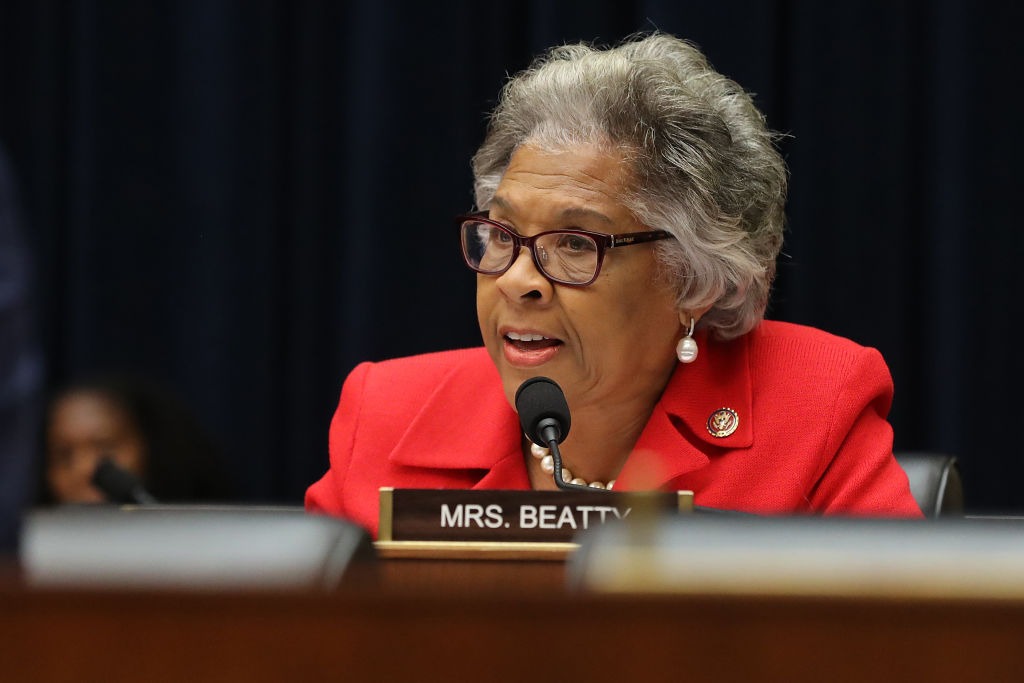
Referencing the recent case of an Ohio woman who faced charges after her miscarriage, Ohio Democratic U.S. Rep. Joyce Beatty joined with other congressional Democrats to urge the Biden administration to push further against “pregnancy criminalization.”
The Democratic Women’s Caucus, led by its White House liaison, Beatty, sent a letter last week to President Joe Biden, Attorney General Merrick B. Garland and U.S. Health and Human Services Secretary Xavier Bacerra, asking that federal leaders “provide all legal and medical support available within your respective authorities to prevent the criminalization of pregnancies and pregnancy outcomes.”
“One alarming example of this was the case of Brittany Watts, an Ohio woman who was unjustly charged with a crime related to her miscarriage,” the letter stated. “While a grand jury refused to move the case forward, irreparable harm has already been done and we must ensure this never happens to anyone again.”
Watts’ case received local and national coverage, including coverage of the outrage after she was charged with abuse of a corpse in Trumbull County. She was charged after prosecutors said she improperly disposed of the remains of her miscarriage, despite the fact that she’d sought medical treatment for the unviable pregnancy.
The Democratic Caucus said in their letter to the Biden administration that Watts’ experience “is all too common for Black women, who disproportionately experience adverse pregnancy outcomes due to inadequate health care, and disproportionately experience disrespect, abuse and punitive responses when they seek pregnancy-related care.”
On a press call about the letter, Beatty said it was important for her and her colleagues to “continue to make sure that we don’t continue to have Brittany stories.”
“It’s not an Ohio issue, it’s an issue that goes across the wonderful America that we live in,” Beatty said.
Beatty was joined by fellow U.S. Rep. Teresa Leger Fernandez of New Mexico, who said she has experienced miscarriage and life-threatening pregnancy complications, and said what happened to Watts was “a direct result of the Dobbs decision,” which overturned Roe v. Wade and abortion legalization nationwide.
She said the landscape and politicization of reproductive health in America has also led to pregnancy decisions sometimes being in the hands of the justice system, not the health system.
“Women need help, not handcuffs,” Leger Fernandez said.
Two decades of study
The legal reproductive rights advocacy group If/When/How released a report in 2023 analyzed court records and media reporting from 2000 to 2020 “in which someone was criminally investigated or arrested for allegedly self-managing their own abortion or helping someone else do so.”
“Some of the reasons for self-managing that emerged included affordability of self-managed care versus clinical care; the belief that someone was too far along in their pregnancy for clinical care in their state; the inaccessibility of clinical care due to abortion policy restrictions in the individual’s home state; the distance to a clinic; and the pregnant person’s experience with interpersonal violence or trauma,” the study stated.
The group found 61 people who were criminally investigated or arrested on allegations related to their pregnancy, but the research is “likely still an undercount,” they said.
“Case data requested was not received from all jurisdictions and offices,” the study stated, and not all court cases are reported by media.
Ohio was one of the 26 states in which a case was found — a 2002 case in which the study said a woman attempted to terminate her pregnancy through “self injury,” but didn’t cause harm to the fetus. The case was eventually dismissed, but the study used the case as an example of dismissals as “a recognized win” but one where “the process to get to that point still subjects people to harmful criminal system consequences.”
“Decades of stigma and legal restrictions on abortion have fueled an aura of illegality that now surrounds self-managed abortion and seeking abortion in general, turning it into something seen as suspicious or deserving of punitive state action,” researchers stated in the study.
One of the authors of the study, If/When/How senior counsel and legal director Farah Diaz-Tello, was with Beatty and Leger Fernandez during their press call, saying it is becoming “increasingly dangerous to be pregnant in the United States.”
“What happened (in the Watts case) was that what was essentially a health care matter was turned into a criminal justice matter,” Diaz-Tello said.
Moving forward
The congressional Democrats want to see federal agencies investigate “any prosecutions of people with pregnancy-related conditions as unlawful under federal statutes that prohibit discrimination by law enforcement on the basis of sex, including on the basis of pregnancy.”
They also want to see stronger oversight on violations of the Health Insurance Portability and Accountability Act (HIPAA) and enforcement of an anti-discrimination provision in the Affordable Care Act that bars federally-funded health care entities “whose personnel improperly report to law enforcement when patients miscarry, terminate a pregnancy or seek other pregnancy-related care,” according to the Democrat letter.
Beatty said the fact that voters strongly passed the abortion rights constitutional amendment in November and staunchly rebuffed attempts by Republican leadership to change the approval percentage for constitutional changes in an August vote shows Ohioans “have beat the odds,” and are looking for change, despite gerrymandered voting districts that lean Republican.
“Ohio is on the upswing because of the people in this community, in this state,” Beatty said. “They are tired of getting their rights taken away.”
She said she and her federal counterparts have been working with the state legislature, but the primary way to change is still increasing voter turnout and education.
“People have to do one of two things, in my opinion,” she said. “They have to be excited or they have to get mad.”
SUSAN TEBBEN
Susan Tebben is an award-winning journalist with a decade of experience covering Ohio news, including courts and crime, Appalachian social issues, government, education, diversity and culture. She has worked for The Newark Advocate, The Glasgow (KY) Daily Times, The Athens Messenger, and WOUB Public Media. She has also had work featured on National Public Radio.
Ohio children advocates continue to express concern for the increasing cost of child care, trouble staffing child care providers, low pay for those workers, and pervasive adverse childhood experiences that could be alleviated by early childhood programs.
Child care costs have been a hot topic, especially with the expiration of pandemic-era aid this past fall, including the expanded child care tax credit that advocates and politicians alike say should be instituted permanently.
A new report from Care.com showed that 47% of parents in the U.S. are spending up to $18,000 per year on child care expenses, while 1 in 5 households shell out $36,000 annually on care for their children.
The 2024 Cost of Care Report surveyed 2,000 parents of children aged 14 and younger on their household income and yearly spending on child care after the “child care cliff,” which is Care.com’s term for the end of funding for child care programs received during the pandemic, amounting to $24 billion nationwide. That funding ended in September 2023.
In terms of future impact from the end of funding, 79% of the those surveyed in the study expected to be impacted, with 54% “steeling themselves to spend $600 or more per month on child care, which totals more than $7,000 in additional care costs for 2024,” according to the study.
The First Five Years Fund, which analyzes child care and welfare data, said the cost of child care in the U.S. is currently five times higher than the national average of basic utilities, more than double the average cost of rent and nearly $12,000 higher than the average cost to attend a public four-year state university.
“Child care is one of the largest expenses most families with young children face,” said First Five Years Fund executive director Sarah Rittling, in a release on the data. “As a nation, we simply lack enough affordable, quality child care options for families.”
Staffing
Not only is the cost of child care a concern, but the ability to staff child care facilities is also on advocates minds. In Ohio, the amount of child care workers in the state dropped nearly 36% from 2017 to 2022, according to Kathryn Poe, researcher for think tank Policy Matters Ohio.
The lack of workers, plus the fact that almost 40% of Ohioans live in a “child care desert” — meaning the number of child care facilities in a particular area doesn’t match the population needs — creates an environment that doesn’t allow for proper care for children, according to Poe, writing as part of a forum on child care for Crain’s Cleveland Business..
The state could get a start on improving the landscape by increasing reimbursement rates for child care workers, Policy Matters recommended.
“The median hourly wage for child care workers is just $13.15, too little to afford child care — or much else — for their own kids,” Poe wrote. “Raising reimbursement rates could help address this issue, but only if the increase comes with the requirement that funds primarily be used to raise worker pay, cover benefits and improve working conditions.”
Improving child care can only have positive impacts on child outcomes, according to health researchers.
The Health Policy Institute of Ohio has ongoing studies on “adverse childhood experiences” (ACEs) in the state: events like violence, abuse, and instability that can cause trauma to children. HPIO has called exposure to ACEs “a pervasive problem in Ohio and across the nation,” with their research showing that more than two-thirds of Ohioans have been exposed to an ACE.
In HPIO’s newest brief, released this month, early childhood education programs and economic supports for families were among the 12 “key strategies” to prevent ACEs in the state.
Ohio House Democrats introduced a “Thriving Families Tax Credit” in October 2023, which aims to provide a tax credit to families who are being hit with the “child care cliff” stemming from the loss of COVID-19 aid.
The bill would credit families $1,000 per year per child for children 0 to 5, and $500 per year for each child aged 6 to 17.
The bill was referred to the House Committee on Ways and Means on Oct. 10, but has yet to see action since then.
Attempting to boost child care funding on the federal level, the Biden administration asked Congress in November to approve additional funding specifically for child care, acknowledging the lack of American Rescue Plan (ARP) funds.
“As ARP funds dry up, the sector urgently needs more support as parents are at serious risk of paying more or losing access to care altogether,” the White House said in a press release at the time.
Biden has asked for $16 billion in supplemental funding “to sustain the child care sector.”
That would amount to an estimated $565 million directed to Ohio child care, impacting more than 6,000 workers in the field and more than 400,000 children in the state, according to White House estimates.
U.S. House Democrats further pushed for the measure in December, joining with coalitions of child care workers to ask Congress to move forward with the request.
The Senate Appropriations Committee held a hearing on the funding request, but as yet, no decision has been reported.
An expansion of the federal child care tax credit might be on the way, however, as the U.S. House may vote on a bill that includes a child care tax credit, though the bill’s other parts reportedly could create roadblocks.
SUSAN TEBBEN
Susan Tebben is an award-winning journalist with a decade of experience covering Ohio news, including courts and crime, Appalachian social issues, government, education, diversity and culture. She has worked for The Newark Advocate, The Glasgow (KY) Daily Times, The Athens Messenger, and WOUB Public Media. She has also had work featured on National Public Radio.
JANUARY 31: Ohio Gov. Mike DeWine during the State of the State Address, Jan. 31, 2023, in the House Chamber at the Statehouse in Columbus, Ohio. (Photo by Graham Stokes for Ohio Capital Journal. Republish photo only with original story.)
Plan mentions high risk to LGBTQ community impacted by gender-affirming care rules, HB 68
Ohio Gov. Mike DeWine announced a two-year plan for suicide prevention, including with it statistics many advocates cited in opposing anti-trans legislation passed by lawmakers, and administrative rules the governor proposed.
The 2024-2026 Suicide Prevention Plan “aims to promote life-saving strategies statewide,” according to an announcement by the governor’s office. The plan was developed in partnership between the RecoveryOhio initiative and the Ohio Suicide Prevention Foundation, “incorporating input from more than 30 private and public organizations,” according to the governor’s office statement.
The plan’s main goals are centered around public awareness, data gathering, expansion of health care access and support for those with family members who have died by suicide.
Tony Coder, executive director of the Ohio Suicide Prevention Foundation, wrote in an introduction to the prevention plan that suicide in the state “is at a crisis level, and it will take a statewide effort to reduce the rate of loss.”
“We need policymakers to create common sense legislation that will improve our behavioral health care system,” Coder wrote. “…We need all hands on deck to end suicide.”
The groups listed as most affected by suicide in Ohio include rural and Appalachian Ohioans, Ohioans with disabilities, veterans, males, young adults, and LGBTQ+ Ohioans.
“Nationally, 1 in 5 transgender and nonbinary youth reported attempting suicide in the past year in 2022,” the report stated, also noting that lesbian, gay and bisexual youth are 4.8 times more likely “to consider suicide” and 4.3 times more likely to attempt it than their heterosexual peers.
One 2023 national study from The Trevor Project found 41% of LGBTQ+ youth surveyed have “seriously considered attempting suicide in the past year,” and that “anti-LGBTQ victimization” contributes to raise rates of suicide risk.
House Bill 68 bans gender-affirming care for minors in Ohio, a measure that was supported by the Republican supermajority in the Ohio House and Senate, but was vetoed by DeWine.
DeWine’s veto was overridden by the House earlier this month, and by the Senate just last week, allowing the measure to go through, though it may face legal challenges in the near future.
Even as DeWine vetoed HB 68, he introduced an emergency rule on Jan. 5 prohibiting health care facilities and other medical facilities from “performing gender surgeries on minors,” despite the fact that Ohio children’s hospitals say they haven’t been doing so, even before the rule or legislation was created.
Two other rules have been proposed, one of which would establish a process through the Ohio Department of Mental Health and Addiction Services to diagnose and treat a “gender-related condition,” but only provide “gender transition services,” not surgical services, according to the draft language.
A mental health evaluation and counseling would be required for at least six months before diagnosis or any treatment. That evaluation was criticized in public comment submitted regarding the draft language, in which Kathryn Poe, budget and health researcher for Policy Matters Ohio, said definitions in the draft rule “set a dangerous precedent for an organization concerned with the mental health of Ohioans, especially given th elevated risk for transgender Ohioans.”
The second proposed rule would direct the Ohio Department of Health to report data on gender care to the General Assembly and the public every six months, while also creating “quality standards for those hospitals and ambulatory surgical facilities that wish to treat gender-related conditions.”
In the new suicide prevention plan for 2024-2026, goals specifically targeted toward LGBTQ+ youth include offering “learning opportunities to grow knowledge skills for specific evidence-based practices, policies and services to impact high-risk populations, including Black and LGBTQ+ youth and young adults.”
Included in proposed “action steps” to reduce suicide for LGBTQ+ is the creation of “workforce learning opportunities related to stress and risk factors of LGBTQ+ youth,” building “opportunities for affirming spaces and supportive relationships with trusted adults” and promoting anti-bullying policies in schools.
The report also cites The Trevor Project as a resource for “evidence-informed strategies” to be used in the state for improved suicide prevention outcomes.
The creator of HB 68, state Rep. Gary Click, called the Trevor Project an “advocacy group” in November as part of a committee meeting on the bill, claiming statistics on transgender mental health reported by the group were “a political statement” that was “designed to intimidate people like me from carrying legislation which would help protect young people.”
“I totally reject that my bill causes people harm,” Click said at the time.
Susan Tebben is an award-winning journalist with a decade of experience covering Ohio news, including courts and crime, Appalachian social issues, government, education, diversity and culture. She has worked for The Newark Advocate, The Glasgow (KY) Daily Times, The Athens Messenger, and WOUB Public Media. She has also had work featured on National Public Radio.
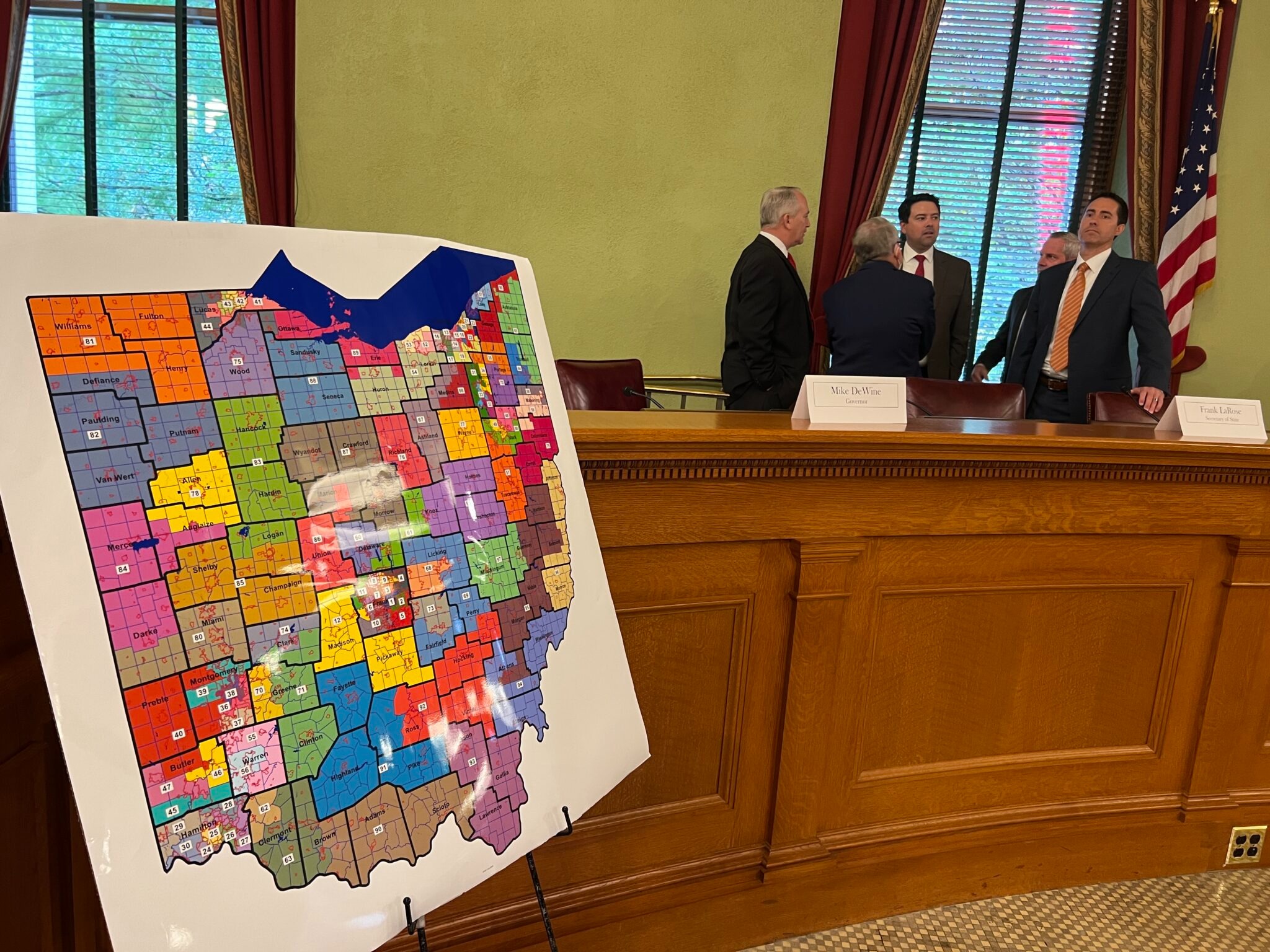
The Republican members of the Ohio Redistricting Commission talk before a 2023 public hearing on Statehouse district maps. (Photo by Susan Tebben, Ohio Capital Journal.)
Business leaders from Ohio are standing in support of a proposed constitutional amendment that would change the way redistricting occurs in the state by removing politicians from the process in favor of a citizen commission.
“One crucial aspect of ensuring a robust representative democracy are legislative districts that ensure fair representation of the voting population,” an open letter from 67 Ohio business leaders stated. “The sad reality in Ohio is that political leaders of both parties have abused the system.”
The letter was released via the Leadership Now Project, a national group of business leaders, and organized by a senior advisor to the project, Ohio Business Roundtable co-founder Richard Stoff.
“Extreme gerrymandering reflects poorly on this great state of ours,” Stoff said in a statement announcing the letter, in conjunction with Citizens Not Politicians, the group leading the effort to get redistricting reform on the ballot.
Citizens Not Policians is working to get a proposed constitutional amendment on the November 2024 ballot that would eliminate the Ohio Redistricting Commission as it stands now, made up of seven elected officials including the Ohio governor, secretary of state, and auditor, as well as one Republican and one Democratic lawmaker from both the Ohio House and Ohio Senate.
Instead, if the amendment is approved by voters, a 15-member commission made up of public citizens would be empaneled to choose Ohio Statehouse and U.S. congressional voting districts.
The newest constitutional amendment on redistricting would “empower a truly independent citizen-led process to draw congressional and state legislative maps,” according to the letter.
“Building on successful best practices from other states, the Ohio proposal would ban gerrymandering, prohibit consideration of individual incumbents or candidates when drawing maps, and ensure an open and transparent redistricting process with extensive and meaningful public input,” the business leaders wrote.
As of Wednesday, individuals who signed the letter included former CEOs and leaders from the banking, energy, insurance, retail, small business and academic worlds. Recognizable names like Dr. Amy Acton, Jeni Britton, and Yvette McGee Brown appear alongside Doug Ulman of Pelotonia, former Procter & Gamble chair and CEO John Pepper, and Robert Schottenstein, chairman and CEO of M/I Homes.
Citizens Not Politicians and supporters of the proposed amendment are currently collecting signatures to bring the measure to the ballot box. The deadline to collect signatures for the 2024 General Election ballot is July 3.
SUSAN TEBBEN
Susan Tebben is an award-winning journalist with a decade of experience covering Ohio news, including courts and crime, Appalachian social issues, government, education, diversity and culture. She has worked for The Newark Advocate, The Glasgow (KY) Daily Times, The Athens Messenger, and WOUB Public Media. She has also had work featured on National Public Radio.
A transgender Pride flag is covered with the words “Hands Off Trans Youth.” (Photo by Greg LaRose/Louisiana Illuminator/States Newsroom)
Ohio transgender youth who aren’t already on a treatment plan won’t be able to access gender-affirming care after House Bill 68 takes effect on April 23.
Ohioans have seen firsthand how valuable gender-affirming care is for their children.
“My son would not be here if he hadn’t found (gender-affirming care) here in Ohio,” Rick Colby said, talking about his 31-year-old transgender son Ashton.
But now those dads fear for Ohio transgender youth. Those not already receiving it won’t be able to access gender-affirming care after the House and the Senate voted to override Gov. Mike DeWine’s veto of House Bill 68 — banning doctors from providing gender-affirming care to trans youth. The bill is set to take effect on April 23.
“They need this care,” said Dr. Carl Streed, President of the U.S. Professional Association for Transgender Health.
“This care is medically necessary,” Streed said. “It’s critical for their well being. It’s critical for their mental wellbeing long-term.”
Ohio families can apply for the Southern Trans Youth Emergency Project (STYEP), a regional project of the Campaign for Southern Equality. This is in partnership with Equality Ohio, TransOhio and the Kaleidoscope Youth Center.
STYEP can help families find out-of-state gender-affirming care providers and offer emergency grants of $500 for things such as travel and medication.
Gender-affirming care can “include any single or combination of a number of social, psychological, behavioral or medical interventions designed to support and affirm an individual’s gender identity,” according to the World Health Organization.
A 2022 study published in JAMA Network Open found access to hormones and puberty blockers for young people ages 13-20 was associated with a 60% lower odds of moderate to severe depression and a 73% lower odds of self-harm or suicidal thoughts compared to youths who didn’t get these medications.
“You’re going to have kids that suffer from higher rates of depression,” Zingarelli said. “You’re going to have kids that are looking to get out of Ohio as soon as they possibly can either together with their parents now or as soon as they turn 18.”
“Lawmakers who don’t listen to the best medical practice are causing harm to their constituents,” he said. “The reason that legislators are focused on this is, that for them, they see it as a winning topic to distract from the fact that they don’t know how to govern on any other issue.”
State Sen. Nathan Manning of North Ridgeville was the only Republican to vote against overriding DeWine’s veto on the gender-affirming care ban. But for Colby, this transcends political party affiliation.
“I’m a parent before I’m a Republican, first and foremost,” Colby said. “My son has been on an incredible journey. But we’ve done this together, he wasn’t alone. … The unconditional love that I have for him, that all the other parents have for their children, is what guides us and fortifies us in this journey.”
The Zingarellis consider themselves lucky. Their daughter is already receiving gender-affirming at Cincinnati Children’s Hospital Medical Center, so she’ll be able to continue to receive care under HB 68’s grandfather clause that allows doctors who have already started treatment on patients to continue.
“We’re grateful for that,” he said. “But that in no way makes it OK that she was lucky enough to have been born in the year that she was born in. … There’s too many out there that are going to be incredibly unlucky and all those that came after her in Ohio if this bill stands up to legal challenge.”
Families will move out of Ohio in search of better healthcare, said Siobhan Boyd-Nelson, Equality Ohio’s co–interim executive director.
“We know that many families have been planning for this day, and that right now, families are making some very difficult decisions,” Boyd-Nelson said.
HB 68 becoming law in Ohio will continue to have ripple effects felt throughout the state.
“It’s going to impact the way that physicians and other medical providers do their work here in Ohio,” Boyd-Nelson said. “It’s already raised a number of difficult questions for providers in a number of areas because they are now faced with ethical conundrums that I don’t even think you’d want to face on a law school exam.”
Megan Henry is a reporter for the Ohio Capital Journal and has spent the past five years reporting in Ohio on various topics including education, healthcare, business and crime. She previously worked at The Columbus Dispatch, part of the USA Today Network.
COLUMBUS, OH — JANUARY 24: A protester asks senators to not override Gov. Mike DeWine’s veto of House Bill 68 that would limit medical care for transgender minors and block transgender girls from sports during the Ohio Senate session, January 24, 2024, at the Statehouse in Columbus, Ohio. (Photo by Graham Stokes for Ohio Capital Journal)
Both laws — banning gender-affirming care and local flavored tobacco regulations — are now set to take effect at the end of April.
The Ohio Senate voted to override two of Gov. Mike DeWine’s vetoes Wednesday — one on a bill blocking gender-affirming care for trans youth and the other blocking cities from banning flavored tobacco sales. Both laws are now set to take effect at the end of April.
The Senate voted 24-8 to override DeWine’s veto of House Bill 68, which blocks gender-affirming care for trans youth and prevents transgender athletes from playing women’s sports. The bill prohibits transgender youth from starting hormone therapy and puberty blockers.
“I think parents should make those decisions and not the government,” DeWine said before the vote Wednesday.
The Senate also voted 24-8 to override DeWine’s veto of a provision that would prevent cities from banning flavored tobacco sales. A flavored tobacco ban took effect in Columbus earlier this month after Columbus City Council voted to stop the sale of flavored tobacco products in December 2022.
“It will be a win for big tobacco and it will be a loss for Ohio,” DeWine said before the vote Wednesday.
A three-fifths majority vote from the members of the House and Senate is necessary to override the governor’s veto. The Ohio House voted to override HB 68 earlier this month and voted to override the flavored tobacco ban in December. State Sen. Nathan Manning of North Ridgeville was the only Republican to vote against overriding the Republican governor on the gender-affirming care ban, and state Sen. Louis Blessing of Colerain Township was the sole Republican to vote against overriding DeWine on the tobacco law.
The laws are set to go into effect 90 days after they are delivered to the Secretary of State’s office, meaning it would likely take effect April 23.
House Bill 68
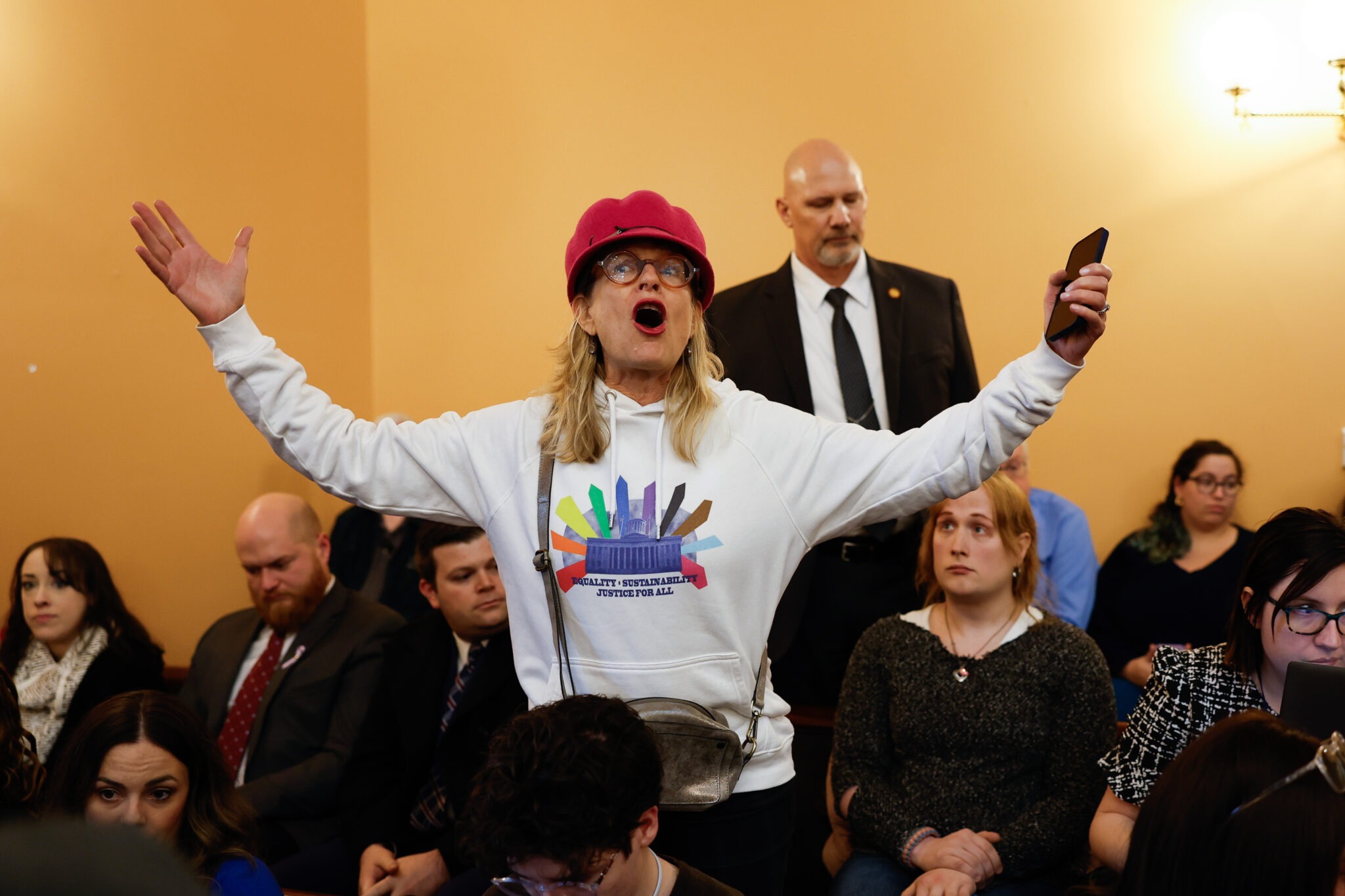
COLUMBUS, OH — JANUARY 24: A protester asking senators to not override Gov. Mike DeWine’s veto of House Bill 68 that would limit medical care for transgender minors and block transgender girls from sports is removed from the gallery during the Ohio Senate session, January 24, 2024, at the Statehouse in Columbus, Ohio. (Photo by Graham Stokes for Ohio Capital Journal)
Ohio Senators discussed House Bill 68 for about an hour before taking a vote. Democrats said they celebrated DeWine’s veto while Republicans expressed their disappointment in last month’s veto.
“There are men and there are women and there are boys and there are girls and they are different,” said State Sen. Kristina Roegner, R-Hudson.
“Gender is not fluid. There is no such thing as a gender spectrum,” she claimed.
State Sen. Bill DeMora, D-Columbus, said this bill becoming law will lead to loss of life.
“Politicians have no business banning evidence-based, life-saving medical care – especially when it is endorsed by every major medical and mental health association,”said Ohio Senate Democratic Leader Nickie J. Antonio, D-Lakewood.
“We should listen to parents, providers and patients, not willfully and purposely pass harmful legislation that will add to the mass exodus of individuals from the state of Ohio,” Antonio said.
A protester was removed from the Senate chamber after she interrupted Roegner.
“Jesus loves the little children, all the children of the world, LGBTQIA,” she screamed. “Jesus would be here on their side today. We need to support them.”
HB 68 has a grandfather clause that would allow doctors who already started treatment on patients to continue.
Gender-affirming care is supported by every major medical organization in the United States. Children’s hospitals across Ohio, the Ohio Children’s Hospital Association, and the Ohio Academy of Family Physicians all oppose HB 68. No Ohio children’s hospital performs gender-affirming surgery on patients under 18 currently.
DeWine said his veto of HB 68 was “about protecting human life.”
“These are gut-wrenching decisions that should be made by parents and should be informed by teams of doctors who are advising them,” he said during a press conference on Dec. 29.
It’s likely this new law will end up in court.
Twenty-two other states have passed a law that bans gender affirming care for transgender youth, but most have faced legal challenges, according to the Human Rights Campaign.
Before the Senate voted to override his veto, DeWine said he does not plan to pursue legal against HB 68.
“The legislature has the constitutional right to override anything, any bill that I sign, or any or any bill that I veto,” DeWine said. “That’s part of our system. And I respect our system. It doesn’t mean I like the vote, but I respect our system.”
Senate President Matt Huffman, R-Lima, told reporters Wednesday he believes HB 68 will hold up in court.
“I do think that it’ll pass constitutional scrutiny,” he said.
State Rep. Gary Click
The bill’s author state Rep. Gary Click, R-Vickery, has denied that HB 68 has any religious backing, but Click can be heard saying in a recorded sermon from 2018 that trans people break from God’s plan for the family.
COLUMBUS, Ohio — JANUARY 10: State Rep. Gary Click, R-Vickery, celebrates the vote to override Gov. Mike DeWine’s veto of HB 68 during the Ohio House session, January 10, 2024, at the Statehouse in Columbus, Ohio. (Photo by Graham Stokes for Ohio Capital Journal. Republish photo only with original article.)
“You’re not born that way,” Click says about trans people during the sermon. “God’s not going to curse you in the wrong body. He’s not going to curse you with desires that cannot be adequately and appropriately and biologically fulfilled correctly.”
Click is a pastor at Fremont Baptist Church and celebrated Wednesday’s Senate vote.
“The SAFE Act and Save Women’s Sports Act are the civil rights issues of our day, ensuring that children have the right to grow up intact and that women are no longer subject to men invading their spaces,” he said in a statement.
Gender-affirming care
Gender-affirming care can “include any single or combination of a number of social, psychological, behavioral or medical interventions designed to support and affirm an individual’s gender identity,” according to the World Health Organization.
Puberty blockers use hormones to pause puberty development and are reversible.
Hormone therapy helps align a person’s body with their gender identity by giving testosterone hormones to those who were assigned female at birth and giving estrogen hormones to those who were assigned male at birth. This is partially reversible.
A 2022 study published in JAMA Network Open found access to hormones and puberty blockers for young people ages 13-20 was associated with a 60% lower odds of moderate to severe depression and a 73% lower odds of self-harm or suicidal thoughts compared to youths who didn’t get these medications.
Transgender athletes
House Bill 6, which prevents trans athletes from playing Ohio women’s sports, was rolled into HB 68 during the summer.
“It’s too bad that House Bill 68 and House Bill 6 were combined into one piece of legislation because the only commonality these two pieces of legislation have is they both target the same small portion of transgender kids,” said State Senator Kent Smith, D-Euclid.
Twenty-three states have passed similar laws in regards to transgender athletes since 2020, according to ESPN.
Currently, if a trans girl wants to play on a team with cis girls in Ohio, she must go through hormone treatments for at least one year or show no physical or physiological advantages, according to the Ohio High School Athletic Association.
“They think that they can erase transgender people with this legislation and the other legislation they’re passing, but our kids will still be trans and trans people will still be trans no matter what they do,” Zelch said. “And we’re here to fight and continue fighting.”
Human Rights Campaign President Kelley Robinson said the override of HB 68 will harm innocent children.
“Despite the fact that they have no medical training, these politicians believe they know better than parents and transgender youth seeking health care. It’s shameful,” Robinson said in a statement.
Dara Adkison, board secretary of TransOhio, said trans youth deserve better.
“Our community is strong and resilient in ways that hateful legislators can not comprehend, and trans Ohioans across the state cannot and will not be legislated away,” Adkison said.
Carson Hartlage, an Ohio medical student, said this is a dark day for the Ohio trans community.
“I was a trans kid who became a trans adult in Ohio, and it feels so dehumanizing to see my home state spend years trying to stop healthcare from my community,” Harlage said.
Tobacco
Back in January 2023, DeWine vetoed a bill that would have prevented any city or municipality from regulating smoking, vaping and other e-cigarette usage and sales. Before the Senate voted to override the tobacco veto, DeWine said a veto override would be horrible for Ohio children.
“I just don’t know how anybody thinks it was a great idea,” DeWine said. “To have more children in the state of Ohio become addicted (to nicotine).”
One out of every five children in Ohio vape, DeWine said.
“It’s the Tutti Frutti and all the other kinds of crazy flavors that masked all nicotine and it gets them addicted,” he said.
The American Cancer Society Cancer Action Network said lawmakers have turned their backs on Ohio kids with the veto override.
“Instead of offering solutions to address the health of Ohioans, lawmakers have now rolled back existing local laws regulating the sale of tobacco products and limited what local governments can do to prevent people from starting to use tobacco and help people quit,” ACS CAN said in a statement.
Municipal home rule gives cities and villages in Ohio the constitutional right to certain powers, including establishing laws in accordance with the self-government clause. Cities have the right to make their own policies, as long as it doesn’t get in the way of laws in the Ohio Revised Code.
Ohio Capital Journal reporter Zurie Pope contributed to this report.
Megan Henry is a reporter for the Ohio Capital Journal and has spent the past five years reporting in Ohio on various topics including education, healthcare, business and crime. She previously worked at The Columbus Dispatch, part of the USA Today Network.
Ohio Gov. Mike DeWine during the State of the State Address, Jan. 31, 2023, in the House Chamber at the Statehouse in Columbus, Ohio. (Photo by Graham Stokes for Ohio Capital Journal. Republish photo only with original story.)
Responding to a media request to obtain the amount taxpayers paid for the governor’s security detail at 2022’s Super Bowl, the Ohio Supreme Court ruled in a 4-3 decision that the information is not for public review.
The Cincinnati Enquirer requested the information through a public records request in February 2022, but were rebuffed by the Ohio Department of Public Safety and the governor’s office, which said releasing the information would compromise future security for Gov. Mike DeWine.
The request asked for “travel and expenses for troopers and/or staff attending the 2022 Super Bowl in Los Angeles, CA, with Gov. DeWine” and expenses for overtime pay, air travel, hotel and vehicle rental costs.
The denial led to a lawsuit, thus ending up in the hands of the Ohio Supreme Court.
To the state’s highest court, the Enquirer’s attorneys argued expenses from the Super Bowl trip don’t contain “information directly used for protecting or maintaining the security of a public office against attack, interference or sabotage,” contradicting arguments by the state attorneys, who said the documents were “security records.”
Ohio’s Attorney General’s Office, who represents the governor in lawsuits, said records related to DeWine’s security detail “necessarily contain information (the Ohio State Highway Patrol) directly uses for protecting and maintaining the governor’s security against attack, interference or sabotage.”
That, according to the AG’s office, includes not only the number of officers, the timeline of their travel, and the security detail’s “patterns and protocols,” but also choice of hotel and rental car vendors.
Even though the information is from a trip that had already occurred, lawyers for the governor said the information “may inform how the governor travels on future out-of-state trips, and because this information exposes security protocols OSHP and the Governor’s (Executive Protection Unit) follow on a regular basis, it is precisely the sort of information a potential aggressor would necessarily exploit in launching an attack on the governor at a vulnerable moment.”
“DPS properly withheld the records because they are security records … and thus not ‘public records’ – to ensure the safety of Governor DeWine and that of the state employees who protect them,” state attorneys said in court documents.
The state’s highest court agreed with state attorneys in a 4-3 decision, ruling on Tuesday that the records are “exempt from disclosure when public office presents evidence showing that information in requested records is directly used for protecting and maintaining public office’s safety.”
The high court majority pointed to statements from a state Highway Patrol captain, a patrol staff lieutenant and a former Secret Service and Indiana State Police officer, all of whom said details like those requested by the Enquirer “can be used to plan an attack” and are considered “law enforcement sensitive.”
“And the evidence also reflects that the (Ohio Department of Public Safety) will rely on information contained in the security detail records for the Super Bowl trip in formulating future security plans for the governor’s office,” the majority wrote. “Accordingly, we hold that the department met its burden to show that the requested records are exempt from public disclosure as security records under (Ohio Revised Code).”
Justice Michael Donnelly disagreed with the majority opinion, spelling out the meaning of “security record” in Ohio law, and saying “the records sought in this case do not fit clearly and squarely into any those categories, as they must in order to be exempt from disclosure.”
“In this case, there is no evidence – or reason to believe – that the department uses its expense records for anything related to protecting or maintaining security; there is evidence only that such records could be misused by someone else,” Donnelly wrote in a dissent joined by Justice Melody Stewart and Justice Jennifer Brunner.
Justice Pat DeWine, the governor’s son, recused himself from the case, but did not give a reason as to why in a letter filed with the court. The OCJ reached out to the justice’s office asking for a reason, but had not received a response as of Tuesday afternoon.
It was reported that the governor and First Lady Fran DeWine took multiple unspecified family members to the Super Bowl with them, at their own expense.
SUSAN TEBBEN
Susan Tebben is an award-winning journalist with a decade of experience covering Ohio news, including courts and crime, Appalachian social issues, government, education, diversity and culture. She has worked for The Newark Advocate, The Glasgow (KY) Daily Times, The Athens Messenger, and WOUB Public Media. She has also had work featured on National Public Radio.



![[Commentary] Suicide is on the rise in Ohio](https://lovelandmagazine.com/wp-content/uploads/2024/02/988-suicide-prevention-2-1024x791-1-700x541-1.jpg)
 by Rob Moore –
 ![[BREAKING] Ex-First Energy executives, Ohio utility regulator charged by state in bailout and bribery scandal](https://lovelandmagazine.com/wp-content/uploads/2024/02/indictments.png)