Tag: Ohio Capital Journal

  • Raise the Wage Ohio is trying to get a minimum wage constitutional amendment on the ballot

    Raise the Wage Ohio is trying to get a minimum wage constitutional amendment on the ballot

    Protestors rally against subminimum wages. (Photo by Noam Galai/Getty Images for One Fair Wage)

    BY:  Ohio Capital Journal

    Ohioans could have a chance vote to raise the minimum wage to $15 an hour by 2026.

    Raise the Wage Ohio is collecting signatures to put a proposed constitutional amendment on this year’s ballot that would raise the minimum wage to $12.75 an hour starting Jan. 1, 2025, and then it would go up to $15 an hour starting on Jan. 1, 2026. It would also get rid of Ohio’s tipped wage.

    Ohio’s current minimum wage is $10.45 an hour for non-tipped employees and $5.25 for tipped employees.

    “We’re going to be raising wages for 1.4 million Ohioans immediately,” said Mariah Ross, the executive director of One Fair Wage. “Minimum wage will give everyone a bump. It will make it a livable wage.”

    They need to collect more than 413,000 signatures by July and they currently have more then 350,000 signatures, she said.

    “The basic necessities that will be covered by $15 an hour minimum wage just include very basic things like food, housing, transportation, … child care, health care,” she said. “It’s very basic things.”

    Full-workers in Ohio need to earn $19.09 per hour to afford a 2-bedroom apartment, according to the National Low Income Housing Coalition (NLIHC) and the Coalition on Homelessness and Housing in Ohio (COHHIO).

    But Ohio’s restaurant industry opposes raising the minimum wage — arguing it would hurt tipped workers.

    “(Servers and bartenders) are very concerned that their income would go down as a result of all this,” said John Barker, President & CEO of the Ohio Restaurant & Hospitality Alliance.

    Ross disagrees, saying raising the minimum wage will only help tipped workers.

    “They’d make more money,” she said. “We’re not trying to take away tips.”

    Under the ballot initiative, Ross said restaurants would have until 2029 to pay all their employees the state minimum wage to give them more time to accommodate the change.

    “They have approximately four years to adjust their plans and do incremental increases to get whatever the minimum wage will be in 2029,” Ross said. “This is a time to adjust because we’re not here to hurt small businesses. We’re here to help small businesses. … For a restaurant to say that I can’t afford to pay my workers that, that is just unacceptable.”

    Many restaurant servers who rely on tips have been harassed, she said.

    “When you have to rely on your customers or consumers for your livelihood, you can’t really speak out against this harassment or these injustices,” she said.“Without the workers there would not be a business, so we have both a moral obligation but also an obligation as Ohioans to support our economy and for the long term for the restaurant industry. It’s better to pay livable wages.”

    More than 90% of the servers and bartenders the Ohio Restaurant & Hospitality Alliance have talked don’t support raising the minimum wage, Barker said.

    An employer in Ohio can pay tipped employees half the starting wage, so tipped employees are guaranteed to receive the full minimum wage, but most earn a lot more through tipping.

    The national median income for tipped servers is $27 an hour and Ohio’s income for tipped servers typically ranges from $19 an hour all the way up to $41 an hour, Barker said.

    “They’re very concerned about what this would do to them because it defies logic that if all these wages that the restaurants have to pay go up so significantly, the restaurants have to bear that and that has to get passed on to consumers,” he said.

    That means consumers would likely see one of two things — higher menu prices or a service charge on their bill that goes back to the restaurant, Barker said.

    “We just don’t believe that people are going to tip generously on top of all that because we’ve already seen massive inflation in food,” he said. “It’s going to be difficult to continue to raise prices.”

    Food costs have gone up by 25% in the past couple of years while the restaurant industry continues to recover from the pandemic, Barker said.

    “It’s such a very difficult time for the industry,” he said.

    If this passed, restaurant operators could cut their workforce and reduce employee benefits, according to Ohio Restaurant & Hospitality Alliance.

    2006 constitutional amendment

    Ohioans passed a citizen initiated constitutional amendment in 2006 that raised the state minimum wage to $6.85 per hour. It has raised the minimum wage each year after that based on the consumer price index.

    Ross said this year’s ballot initiative would update the 2006 constitutional amendment.

    “The cost of living has outpaced that incremental increase that we got in 2006,” she said.

    Ohio’s minimum wage for non-tipped employees went up 35 cents and 20 cents for tipped workers this year.

    “Even with these incremental increases, it hasn’t been enough because of the rapid cost of living increases that have been exacerbated by COVID-19, so we need a bump,” Ross said.

    Minimum wage in other states

    California’s mandatory $20 an hour minimum wage for fast-food workers recently took effect.

    Washington D.C. overwhelmingly voted to gradually get rid of the special minimum wage for tipped employees in the 2022 election and it went into effect on Feb. 23, 2023. The tipped wage will be eliminated in D.C. by July 2027.

    But full service D.C. restaurants cut 3,700 jobs from May 2023 to January 2024, and a poll of nearly 1,000 D.C.-area adults showed more than half were dining out less because of higher prices and were more reluctant to tip, according to the National Restaurant Association.

    Follow OCJ Reporter Megan Henry on X.


    Megan Henry
    MEGAN HENRY

    Megan Henry is a reporter for the Ohio Capital Journal and has spent the past five years reporting in Ohio on various topics including education, healthcare, business and crime. She previously worked at The Columbus Dispatch, part of the USA Today Network.

    Ohio Capital Journal is part of States Newsroom, the nation’s largest state-focused nonprofit news organization.

    MORE FROM AUTHOR

  • Digging into the latest indictment of former Ohio House Speaker Larry Householder

    Digging into the latest indictment of former Ohio House Speaker Larry Householder

    Former Ohio House speaker Larry Householder arrives for day two of his racketeering trial. (Photo by Morgan Trau, WEWS.)

    Some allegations address Householder’s actions after the feds arrested him in 2020

    BY:  Ohio Capital Journal

    Former House Speaker Larry Householder has again been indicted on charges related to his actions in a massive bribery and money laundering scandal.

    The Glenford Republican is already serving a 20-year sentence in federal prison after being convicted last March of racketeering in a scheme in which Akron-based FirstEnergy paid more than $60 million to purchase a $1.3 billion, ratepayer-financed bailout.

    The state charges concern some conduct Householder engaged in after he was arrested in July 2020. They also concern debts and other items that Householder admitted during his federal trial that he didn’t report to the Joint Legislative Ethics Commission as required.

    The former speaker faces maximum sentences of from three to eight years on each of the 10 state charges from the Cuyahoga grand jury. And importantly, if he’s convicted of one of the counts — theft in office — he’s permanently disqualified from holding public office.

    In a video accompanying the announcement of the indictment, Ohio Attorney General Dave Yost noted that Householder has served two different stints as speaker, and that if he’s successful in appealing his federal conviction, “he might well try for a third bite at the apple.”

    Five of the 10 state counts Householder faces stem from his use of campaign funds to pay lawyers after his July 2020 arrest. In the video in which Yost appeared, Deputy Attorney General Carol O’Brien said Householder knew that was illegal when he did it.

    Several other counts relate to Householder “not reporting significant credit card debts going back to at least 2016, as well as gifts from lobbyists and significant loans from individuals.”

    Among gifts Householder received from FirstEnergy were flights to and from the 2017 inaugural of Donald Trump.

    Householder is due in Cuyahoga Common Pleas Court to be arraigned on April 12.

    The new state charges follow the announcement last month of state charges against former FirstEnergy CEO Chuck Jones and Vice President Michael Dowling. The executives are accused of financing the $60 million scheme to bail out two unprofitable nuclear plants owned by the utility so they could spin them off.

    Also indicted was Sam Randazzo, Gov. Mike DeWine’s pick to be Ohio’s top utility regulator. Jones and Dowling paid Randazzo $4.3 million mere weeks before DeWine nominated him to the commission in February 2019.

    DeWine’s chief of staff, Laurel Dawson, knew of the payment, but an administration spokesman said she didn’t tell the governor until after the FBI searched Randazzo’s Columbus condo in 2020.

    The governor stands behind Dawson because it wasn’t until 2021 that the payment was alleged to be a bribe, the spokesman said.

    Randazzo was charged by federal authorities in relation to his role in the scandal in December.

    Despite all the prosecutions and allegations of wrongdoing, the bailout law, House Bill 6, is still on the books. As a result, ratepayers have ponied up nearly a quarter-billion dollars to prop up two aging coal plants.

    Despite the fact that Ohio ratepayers are shouldering that burden, one of the plants isn’t even in Ohio, but in Indiana instead.


    Marty Schladen
    MARTY SCHLADEN

    Marty Schladen has been a reporter for decades, working in Indiana, Texas and other places before returning to his native Ohio to work at The Columbus Dispatch in 2017. He’s won state and national journalism awards for investigations into utility regulation, public corruption, the environment, prescription drug spending and other matters.

    Ohio Capital Journal is part of States Newsroom, the nation’s largest state-focused nonprofit news organization.

    MORE FROM AUTHOR

  • Ohio Controlling Board approves purchase of modular shoot houses to train armed school districts

    Ohio Controlling Board approves purchase of modular shoot houses to train armed school districts

    BY:  Ohio Capital Journal

    The Ohio Controlling Board has approved a $78,028 purchase to buy two mobile modular shoot houses to help train school districts with armed staff.

    The Ohio Department of Public Safety made the request to the Controlling Board, which was approved during Monday’s meeting.

    The mobile modular shoot houses are from North Carolina-based Kontek Industries will “provide live fire and scenario-based training,” according to the Controlling Board agenda.

    The modular homes can be moved anywhere and feature “realistic-based training, rapid deployment, reconfigurable rooms, hallways and doors, weatherproof design and can build exact replicas of buildings,” according to the agenda.

    Ohio has 67 schools and school districts in 36 Ohio counties that have armed staff members. The law allowing local boards of education to decide whether to allow teachers and school staff went into effect in September 2022.

    The Capital Journal talked to four school districts with armed staff last year and they all said police response time to rural schools factored into their decision to arm staff.

    Ohio school staff were armed before the 2022 law went into effect, but an Ohio Supreme Court ruling in 2021 required school employees to undergo 700 hours of training to be armed at school. The 2022 law lowered the required training hours for armed personnel from 700 hours to at least 24. School boards have the authority to require more hours.

    This created the Ohio School Safety Center within the Ohio Department of Public Safety and school districts who want their staff to be armed are required to send their training plans for approval once their school board has approved the request to arm their staff.

    Follow OCJ Reporter Megan Henry on X.


    Megan Henry
    MEGAN HENRY

    Megan Henry is a reporter for the Ohio Capital Journal and has spent the past five years reporting in Ohio on various topics including education, healthcare, business and crime. She previously worked at The Columbus Dispatch, part of the USA Today Network.

    Ohio Capital Journal is part of States Newsroom, the nation’s largest state-focused nonprofit news organization.

    MORE FROM AUTHOR

  • Ohio Minority Leaders Nickie Antonio and Allison Russo are navigating a Republican supermajority

    Ohio Minority Leaders Nickie Antonio and Allison Russo are navigating a Republican supermajority

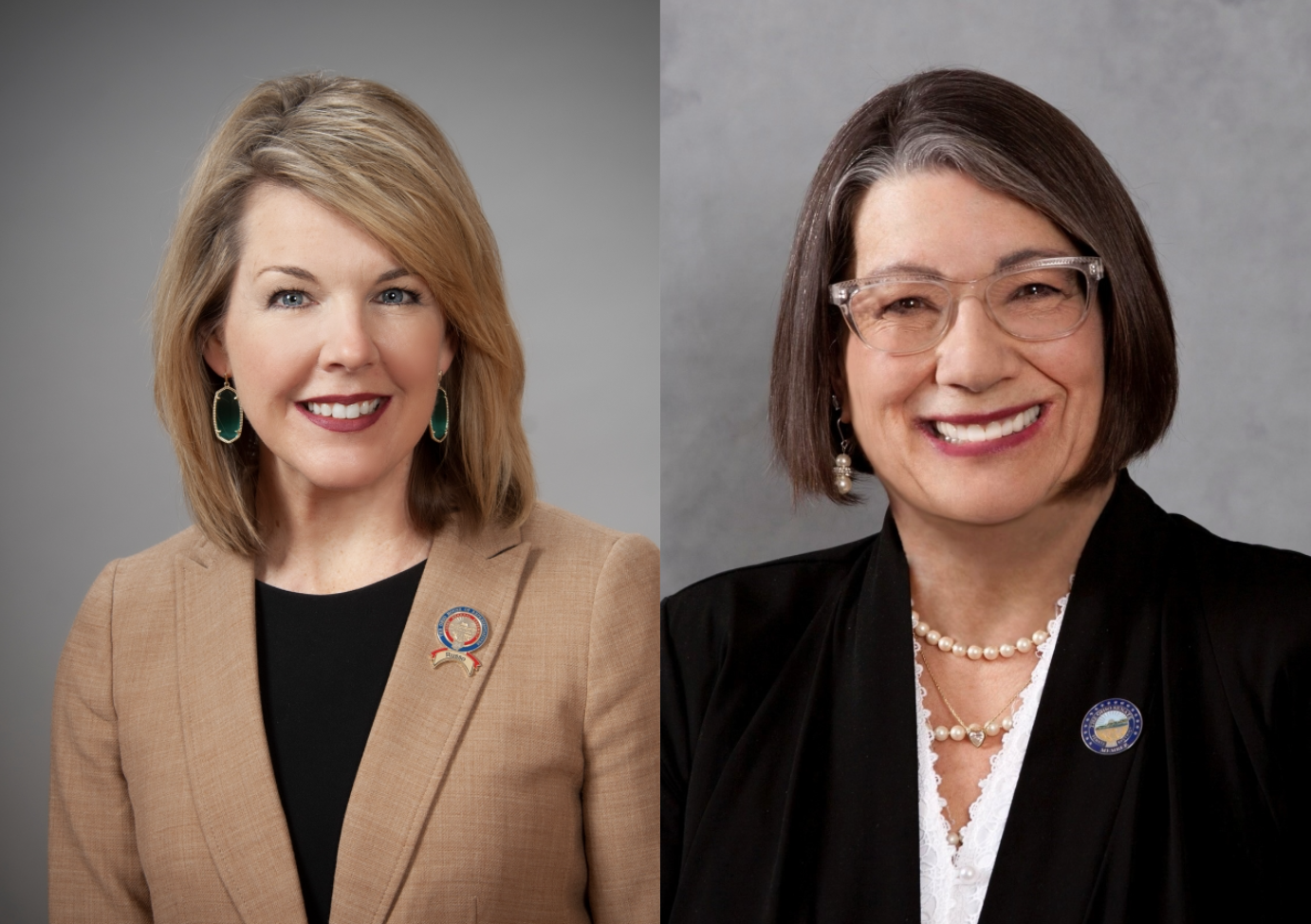
    Ohio House Democratic Leader Allison Russo, left, and Ohio Senate Democratic Leader Nickie Antonio, right. (Official photos from the Ohio Statehouse website.)

    Ohio Senate Minority Leader Nickie Antonio became leader in 2023 and Ohio House Minority Leader Allison Russo became leader in 2022.

    BY:  Ohio Capital Journal

    For the first time since 2008, two women are serving as the minority leaders of their caucuses in the Ohio Statehouse.

    Ohio Senate Minority Leader Nickie Antonio, D-Lakewood, became leader in 2023 and Ohio House Minority Leader Allison Russo, D-Upper Arlington, became leader in 2022.

    “I couldn’t be more proud to have two women leading the caucuses, but more importantly, beyond their gender, they’re just both really talented legislators and leaders,” said Ohio Democratic Chair Liz Walters. “They have different, but I think equally effective leadership styles that allow them to keep their caucuses together, and make sure the needs of all their members are met.”

    The last time two women served as minority leaders was during the 127th General Assembly (2007-2008) when then-state Representative Joyce Beatty and state Senator Teresa Fedor were the minority leaders.

    Antonio and Russo are navigating a Republican supermajority.

    “I think they really work well and balance each other, which goes a long way towards making the Democrats as a whole very effective,” Walters said. “When they work together, right across chambers, it helps overcome a lot more of the obstacles and make them a more formidable force.”

    But neither of them initially had political aspirations.

    Antonio’s path to Senate Minority Leader

    Antonio, 68, first got involved in politics at the local level when she advocated for a skatepark in Lakewood for her daughter. She went to city council, but was disappointed the council members didn’t seem to be paying attention to her.

    “I could do that job,” she remembered saying when she got home that night.

     COLUMBUS, Ohio — MAY 31: Senate Minority Leader Nickie Antonio, D-Lakewood, talks to reporters after the Ohio Senate session, May 31, 2023, at the Statehouse in Columbus, Ohio. (Photo by Graham Stokes for Ohio Capital Journal) 

    But she ultimately decided to run for office in 2004 after Ohio passed a constitutional amendment defining marriage as between a man and a woman.

    That caused many of their friends to move out of state, but Antonio and her now wife Jean committed to staying in Ohio to make it better.

    “We felt like LGBT folks were being attacked,” she said. “Certainly we were being marginalized and told that we were less than.”

    There was an opening on Lakewood City Council in 2005, so she ran and ended up serving two terms. Then the House seat for her district opened up in 2010 so she ran and got elected — making her the first openly gay person to be elected to the Ohio General Assembly.

    “A lot of people didn’t really know how to talk about it,” she recalled when she was elected in 2010.

    She married her long-time partner Jean in 2015 after the Supreme Court legalized same-sex marriage.

    Antonio served for eight years in the Ohio House of Representatives before being elected to the Ohio Senate in 2018, where she once again made history by being the first openly gay person to be elected Senate Minority Leader.

    “One of the things I appreciate most is her tenure as a public servant,” Walters said.

    People will often pull Antonio aside and tell her about a family member who is part of the LGBTQ community.

    “I’m happy that I’m able to have those conversations with folks because I think every conversation that’s had opens the door for some understanding and … I really do believe it makes a change in the long run,” she said.

    Ohio GOP lawmakers have introduced a slew of anti-LGBTQ legislation this General Assembly and Antonio will often speak up against those bills on the Senate floor. Notable among them is House Bill 68, which bans transgender minors from receiving gender-affirming medical care. Ohio Gov. Mike DeWine vetoed the bill, but the House and the Senate overturned it. The law is set to take effect on April 23, but the ACLU of Ohio will file a lawsuit in an attempt to stop the ban on gender-affirming care.

    “I’m definitely where I am supposed to be and doing what I’m supposed to be doing,” she said. “It’s really important to me in the room where it happens. And as the minority leader, I am in the room where it happens.”

    Some highlights of her career so far include working on bills that helped closed the loophole for people who are adopted to get original information, cut down on the response time for people experiencing a stroke and allowing pharmacies to give vaccines.

    Before launching her political career, she taught students with behavioral problems and learning disorders for 10 years in Cleveland.

    “I loved those kids and I always tell people that I learned everything I needed to know about the legislature and dealing with my colleagues in the legislature from troubled youth because you have to have a sense of humor, never show fear, really like people and make it part of your mission to find some kernel of commonality to start with to be able to communicate with them,” she said.

    Russo’s path to House Minority Leader

    Russo, 47, never intended to be in politics. She grew up in Mississippi and moved around quite a bit with her husband who was active duty military before deciding to put roots down in Ohio to be close to her in-laws.

    She worked in health policy for more than twenty years, but a couple key moments lead to her to run for office.

     COLUMBUS, Ohio — SEPTEMBER 20: House Minority Leader Allison Russo, D-Upper Arlington, speaks at the Ohio Redistricting Commission meeting, September 20, 2023, in the Lobby Hearing Room at the James A. Rhodes Office Tower in Columbus, Ohio. (Photo by Graham Stokes for Ohio Capital Journal) 

    The first was the 2016 Presidential Election where Donald Trump defeated Hillary Clinton.

    “2016 got those of us who had always been very active voters off the sidelines and into the arena in a way that probably no other election has,” she said.

    The following year, there were efforts to repeal the Affordable Care Act and freeze Medicaid expansion enrollments in Ohio, so she worked with folks doing advocacy work at the state and federal level. People encouraged her to pursue politics, but she brushed that aside since she was enjoying her career and her youngest child was less than a year old.

    But she ultimately decided to throw her hat in the ring when the House seat in her district opened for the 2018 election.

    “I thought, well, it’s now or never,” she said. “I knew absolutely nothing about running a campaign.”

    Russo, a mother of three, often had her children with her when she was campaigning and knocking on doors. She ended up not only winning the election, but flipping the district seat blue.

    She ran for Congress in 2021, but lost to U.S. Rep. Mike Carey 58% to 42%. The next year, she was elected House Minority Leader.

    Walters said Russo has “an aptitude and innate ability to lead her caucus and maneuver, playing chess every day rather than checkers.”

    As minority leader, Russo tells the members of her caucus they need to cultivate relationships and find common ground in order to be successful.

    “In a super minority, you are constantly having to figure out how to navigate this place, so that you can be effective and it’s not always in big ways, like you pass a big massive piece of legislation,” Russo said. “It can be in little ways— you get part of your legislation into a bill, you make bills better, you get things into the budget, you have wins there.”

    But sometimes finding common ground can be tricky.

    “You also don’t want to sacrifice your values,” she said. “You also want to be fearless in calling (things) out when needed. Don’t pull your punches.”

    Russo feels fortunate to live about 15 minutes away from the Statehouse, so she can run home to take one of her kids (ages 17, 14 and 7) to practice and then come back, if needed, for an event at the Statehouse later that night.

    “I realize that’s a luxury,” she said. “In some ways, it’s my proximity to the Statehouse that allows me to do this job with three kids at home and I know that that’s not normal for most people who are in these roles.”

    Advice for future women politicians

    Russo’s advice for women looking to get into politics is to not wait around for approval to run for office.

    “As women, we’re looking for someone to give us permission to take on these leadership roles or to run for office or whatever — you do not need that,” she said.

    Antonio’s suggestion to women who are in politics or who want to go into politics is to not take anything personal.

    “There are definitely things that make you feel like you get a gut punch some days,” she said.

    Something that can turn women away from politics is the lack of privacy, Russo said

    “Politics is an industry that’s tough for anyone, but it can be especially tough for women,” Walters said. “It’s a field that’s traditionally dominated by men with lots of strong opinions and feelings. … Leaders Russo and Antonio work twice as hard as their counterparts while overcoming unique obstacles. Even though they shouldn’t have to.”

    What’s next for Antonio and Russo?

    Antonio is term-limited and she’s not sure what she’ll do after her time in the Statehouse is up.

    “What I do know is I do not intend to go back to the House,” she said.

    Russo will be up for re-election for a fourth term this November. If she wins, she’ll be term-limited in the House. So what’s next after her time in the House is up?

    “To be determined,” she said. “There’s a lot of this that’s out of my control. And then a lot of this is about timing, and often many unknown factors.”

    And as for a potential run for Ohio Governor in 2026?

    “I know there’s been a lot of chatter in that space,” she said. “Let’s get through 2024 first and we’ll see what happens.”

    Follow OCJ Reporter Megan Henry on X.


    Megan Henry
    MEGAN HENRY

    Megan Henry is a reporter for the Ohio Capital Journal and has spent the past five years reporting in Ohio on various topics including education, healthcare, business and crime. She previously worked at The Columbus Dispatch, part of the USA Today Network.

    Ohio Capital Journal is part of States Newsroom, the nation’s largest state-focused nonprofit news organization.

    MORE FROM AUTHOR

  • More than 91,000 have applied for Ohio private school voucher expansion

    More than 91,000 have applied for Ohio private school voucher expansion

    Getty Images.

    87,312 scholarships have been awarded as of March 18 — amounting to $394 million in allocated funding, according to the Ohio Department of Education and Workforce.

    BY:  Ohio Capital Journal

    There have been more than 91,100 applications for Ohio’s private school voucher expansion program so far this school year — a dramatic increase compared to previous years.

    Out of 91,157 voucher expansion applications, 87,312 scholarships have been awarded as of March 18 — amounting to $394,015,641 in allocated funding, according to the Ohio Department of Education and Workforce. Applications are continuing to be accepted through the end of the fiscal year.

    There were 26,390 voucher expansion applications submitted in 2023 with 24,323 scholarships awarded, and 25,011 applications submitted and 21,873 scholarships awarded in 2022.

    Ohio lawmakers expanded private school voucher eligibility to 450% of the poverty line — or a household income of $135,000 or less for a family of four — in the state budget that was signed into law last summer. Families above the $135,000 threshold can still be eligible for at least 10% of the maximum scholarship.

    K-8 students can receive a $6,165 scholarship and high schoolers can receive a $8,407 scholarship in state funding under the expansion. 63,798 K-8 students were awarded a voucher scholarship and 20,495 high school students were awarded a scholarship, according to ODEW.

    When it comes to traditional EdChoice private school vouchers for this year, 43,330 families submitted applications and 42,477 were awarded scholarships — $270,987,877 in allocated funding, as of March 18, according to ODEW. 40,629 students were awarded traditional voucher scholarships in 2023 and 38,543 received traditional voucher scholarships in 2022.

    Ohioans are divided on this issue. Private school families who use the vouchers are obviously fans, but public school advocates oppose it.

    “Our number one concern about the expansion of school vouchers is that it means significant resources are going to private schools at the expense of the nearly 90% of Ohio kids who are attending our public schools,” said Ohio Education Association President Scott DiMauro.

    Ohio Lt. Gov. Jon Husted, who was the Ohio House speaker when the private school voucher program called EdChoice passed in 2005, recently visited St. Mary’s School in the Catholic Diocese of Columbus as part of a statewide tour of private schools.

    “It’s fantastic because more kids are getting the opportunity to get a great education and a school of their choice,” Husted said during his stop.

    St Mary’s School

    Eighth grader Sorcha Sweeney has attended St. Mary’s in Columbus’ German Village neighborhood since she was in preschool and is on an EdChoice scholarship.

    “I’ve never really been interested in going anywhere else,” she said during a recent roundtable discussion during Husted’s visit to the school.

    She will receive a full scholarship to attend Bishop Hartley High School next school year.

    “I wouldn’t have ever been able to afford (St. Mary’s),” Sorcha mom’s Megan Sweeney said. “Without a scholarship, it just wouldn’t be possible. … Without a private education, she wouldn’t be anywhere close to where she is.”

    St. Mary’s tuition for preschool through eighth grade costs $7,750 and 97% of St. Mary’s families use EdChoice Scholarships, said principal Gina Stull. Between 60-70% of students couldn’t afford the tuition without the scholarships, she said.

    The school currently enrolls about 400 students and expects to have 500 students next year and a waitlist, Stull said.

    “Through those initiatives, EdChoice has been a conduit for the big word of evangelization — trying to spread God’s love,” said St. Mary’s Pastor Vince Nguyen. “… With the EdChoice voucher program we have tried to love every single kid, catholic or not catholic, that comes through our doors here at St. Mary’s School.”

    Despite the explosion of private school vouchers in Ohio, DiMauro said there has been little impact on Ohio’s public school enrollment.

    “The evidence is very clear that the vast majority of those vouchers are going to students who are already attending private schools,” DiMauro said. “… It is about subsidizing private schools.”

    Husted said the vouchers have “accountability and oversight” safeguards in place so something like the Electronic Classroom of Tomorrow online charter school scandal from 2018 will never happen again.

    ECOT was forced to shut down after the Ohio Department of Education said Ohio’s first online charter school needed to repay much of its state aid for the 2015-16 and 2016-17 school years after the school inflated enrollment numbers. ECOT still owed the state $117 million in 2022.

    “I actually just spoke with (Ohio Department of Education and Workforce) Director (Steve) Dackin about this the other day, and I asked him whether he felt the safeguards are in place to make sure something like that didn’t happen again and he reassured me he thought there were,” Husted said.

    Follow OCJ Reporter Megan Henry on X.


    Megan Henry
    MEGAN HENRY

    Megan Henry is a reporter for the Ohio Capital Journal and has spent the past five years reporting in Ohio on various topics including education, healthcare, business and crime. She previously worked at The Columbus Dispatch, part of the USA Today Network.

    Ohio Capital Journal is part of States Newsroom, the nation’s largest state-focused nonprofit news organization.

    MORE FROM AUTHOR

  • A clean sweep: How Bernie Moreno became Ohio’s Republican U.S. Senate nominee

    A clean sweep: How Bernie Moreno became Ohio’s Republican U.S. Senate nominee

    BY:  Ohio Capital Journal

    Tuesday night went about as well as Ohio’s Republican U.S. Senate nominee Bernie Moreno could’ve dreamed. Despite a three-person race, Moreno was able to secure a majority of GOP voters and won in all 88 of Ohio’s counties. And it’s a victory that cements former President’s Donald Trump’s influence in the state. In two elections in a row, Trump’s favored candidates have been able to fend off challengers from the party’s establishment conservative wings.

    Turnout

    But the primary also offered an interesting test: with Trump’s own nomination in the bag, would his backing still drive MAGA voters to the polls?

    The answer was a qualified yes. Tuesday’s primary election brought out 22% of registered voters. That’s far lower than 2016’s still-hotly contested presidential primary in Ohio, but it falls right between the two most recent primaries in 2020 and 2022. When it comes the raw figures, GOP voters cast a nearly identical number of ballots as they did in 2022 and about 200,000 more than they did in 2020.

    “I think most experts were expecting a drop off,” University of Akron political scientist David Cohen said. “I think the (Matt) Dolan and (Frank) LaRose campaigns were hoping for a drop off, but obviously that didn’t happen.”

    “The numbers for Moreno are really kind of surprising,” he added, calling it “a clean sweep.”

    “Most people including myself were expecting a Moreno win, but I wasn’t expecting (a margin of) almost 18% — that’s crazy. A three-person race where he wins a majority of the Republican vote? That is really unexpected,” Cohen said.

    Meanwhile, political scientist David Niven from the University of Cincinnati turned the question of turnout back on the Democrats.

    “The lowest turnout in the state was Hamilton County. The second lowest turnout in the state was Franklin County,” Niven said. “Democrats obviously didn’t have a competitive Senate race, but oh my — I mean, the 87 and 88th counties for turnout were two of the absolute lynchpins of any kind of Democratic path to success.”

    Niven downplayed the overall turnout figures, though, as reflecting “an overall dearth of energy.” Even if it didn’t crater, he said, matching an off-cycle primary and a by-then uncontested presidential primary, during a pandemic no less, isn’t that high a bar.

    Still, Niven said, “It is really notable that more than twice as many Republicans showed up as Democrats. Even with a competitive Senate primary, that is a major red flag for Democrats.”

    Trump effect

    Former president Donald Trump cast a long shadow over Ohio’s GOP Senate primary. While Moreno and Ohio Secretary of State Frank LaRose jockeyed for his endorsement, state Sen. Matt Dolan, R-Chagrin Falls, argued his legislative record best mirrored Trump’s platform. All three built their pitch to voters around issues like immigration and border enforcement that Trump has made the centerpiece of his campaign.

    But nowhere was Trump’s influence more apparent than in his last-minute rally in Dayton.

    “It sure looks like Donald Trump was really able to motivate his base to vote yesterday,” Cohen said.

    “I just think that the results yesterday show that the Ohio Republican Party is now Trump’s party,” Cohen continued, “the Republican base in Ohio is Trump’s base, and there doesn’t really seem to be any going back.”

    He argued that’s not necessarily a recipe for long-term success but it’s still pretty hard to ignore.

    As Election Day drew nearer, polls had indicated the race was close and Dolan might even have an advantage. More establishment-leaning GOP figures like Gov. Mike DeWine former U.S. Sen. Rob Portman, broke for Dolan before Trump announced his visit.

    “I don’t think it would be a shock to anybody to realize that the country club, polite-mannered (Republican) party in Ohio is no more,” Niven said. “I do think it’s notable that Portman and DeWine thought they could ride in and save Dolan. I do think that’s the very last gasp of that sort of thing in Ohio politics —their day has passed.”

    Wednesday, DeWine said he would support Moreno and Trump in the general election.

    Niven as well pointed to the rally as an important factor in Moreno’s success. It created a “saturation point,” he said, reminding Ohioans who’d begun tuning out election ads that Moreno is Trump’s pick.

    “If every Republican in Ohio knows who the endorsed candidate is,” he explained, “Bernie Moreno wins the primary, and the rally went a long way toward that.”

    One mission

    In the final weeks of the primary campaign the attacks grew personal and bitter. It was clear during his victory speech that Moreno was still smarting, but he brushed off the campaign season hostility.

    “One of the things that we do as Republicans is we have spirited debates,” Moreno said, “Now maybe it’s like a little too spirited, could’ve been a little less spirited, right? But we have spirited debates and that’s okay.”

    “What we have to do now is, as a fully united party, understand we have one mission which is to get rid of Sherrod Brown,” Moreno said.


    In a social media post conceding the race, LaRose struck a similar note, saying, “The family disagreements that define partisan primaries are behind us.”

    Moreno could get a boost from having Donald Trump at the top of the ticket. The former president has twice won Ohio by eight points. But that track record could cut the other way, too. A cash-strapped Trump campaign may focus its efforts on states that are in play rather than a state it’s likely to win.

    Despite recent polling that shows Trump with an even bigger advantage, Cohen predicted the race will tighten before November. Given an improving economy and Republicans taking the losing side on a 2023 reproductive rights ballot measure, he doubts Trump will be able to match his previous showings in the state. Cohen also pointed to former South Carolina Gov. Nikki Haley collecting 14% of Ohio’s Republican presidential votes despite exiting the race about two weeks before the election.

    Ohio’s recent history of split-ticket could also present an opening for Brown even if Trump carries the state. Brown benefitted from voters backing candidates from both parties in 2018, but Niven noted the state has shifted to the right in the past six years.

    “The bottom line here is if Sherrod Brown’s campaign can make this a choice between two people, he can still win this thing,” Niven said. “If this campaign boils down to a choice between two parties, he cannot win this thing, the gulf is too large.”

    “So, if it’s a question of people, I think the Brown campaign looks at this as an ideal outcome,” he added. “If it’s a question of party, he’s swimming against a tide that’s just getting bigger and stronger.”

    Follow OCJ Reporter Nick Evans on Twitter.


    Nick Evans
    NICK EVANS

    Nick Evans has spent the past seven years reporting for NPR member stations in Florida and Ohio. He got his start in Tallahassee, covering issues like redistricting, same sex marriage and medical marijuana. Since arriving in Columbus in 2018, he has covered everything from city council to football. His work on Ohio politics and local policing have been featured numerous times on NPR.

    Ohio Capital Journal is part of States Newsroom, the nation’s largest state-focused nonprofit news organization.

    MORE FROM AUTHOR

  • ‘They’re all in.’ Athens mayor represents Ohio on Ukraine sister-city trip

    ‘They’re all in.’ Athens mayor represents Ohio on Ukraine sister-city trip

    Ostroh, Ukraine mayor Yurii Yahodka, left, and Athens Mayor Steve Patterson, right. Patterson is pointing in the direction of his city as displayed on a sign placed in Ostroh. Patterson traveled there as part of a program to help cities grow in governance. (Photo courtesy of Steve Patterson.)

    BY:  – Ohio Capital Journal

    There’s a good chance Southeast Ohio pawpaws are now growing in a small garden in Ukraine.

    That’s thanks to Athens mayor Steve Patterson, who brought some of PawPaw Festival founder Chris Chmiel’s stash on a trip to get to know the city of Ostroh, a city similar in many ways to Athens with its small-town charm and educational institutions that are almost as old as the city itself.

    Patterson made the trip in February – specifically choosing that time period to mark the second anniversary of Russia’s military invasion – to learn more about the city and establish the two far-away towns as sister cities.

    “To see the resolve and the patriotism coming from the cities that I got to see, they’re all in,” Patterson said. “Everybody’s doing everything they possible can.”

     Athens Mayor Steve Patterson (center) speaks as part of a panel of representatives from the United States Agency for International Development’s Ukraine Governance and Local Accountability program. (Photo courtesy of Steve Patterson.) 

    The trip was made possible after Patterson attended a National League of Cities conference in 2022, where he met with the United States Agency for International Development representatives at a reception. USAID has a specific program called the Ukraine Governance and Local Accountability program that “helps create and strengthen local governance systems, processes, and institutions so they are more self-reliant, inclusive, effective, and accountable to citizens,” according to a USAID fact sheet on the program.

    “We’re making ties between different sectors of commerce, we establish relationships with K-12 schools in both areas, and we’re looking at how to engage our institutions of higher ed,” Patterson said.

    When the Athens mayor was setting up the trip, he asked organizers to connect him with a city that was similar geographically to Athens, and which had a lot of the same facilities and functions. That’s where Ostroh comes in, located in the oblast (a term for the regions of Ukraine) of Rivne.

    “Geographically, (Ostroh) is in the southeast corner of the Rivne oblast, it has two rivers that run through it, it has rolling hills, and it’s got the Ostroh Academy,” Patterson said.

    When the opportunity to become a sister city with Ostroh came up, the Athens mayor said he never planned to make it just an on-paper association.

    “It wasn’t like just checking a box; I had to go over,” he said.

    Armed with local goods such as Passion Works flowers painted in Ukraine yellow and blue, and pawpaw seeds and homemade jam, he made the trek, flying from Ohio to Krakow, Poland. A security detail then took him and a group of translators and organizers across the border to Ukraine.

    From there, Patterson’s trip was marked by emotions more than landmarks. He started his trip in Lviv, a “cosmopolitan” city that also houses a hospital Patterson called “the epicenter in the whole nation for trauma, amputations, surgeries and prosthetics.”

    The city has been the subject of Russian air attacks during the course of the war, and throughout his trip through Ukraine, Patterson was a part of multiple air raid alerts.

    In one case, he talked to a class from the Ostroh Academy in an old crypt, because that was the closest air raid shelter to the classroom they were preparing to enter.

    “They’re so used to this that they had seats already in there,” Patterson said. “Because this is their life at this point.”

     Athens Mayor Steve Patterson talks to a class at the Ukrainian Ostroh Academy as they take shelter during an air raid alert. (Photo courtesy of Steve Patterson.) 

    Touring an elementary school in Ostroh, the Athens mayor walked through several “themed” rooms. One displayed the history and culture of Ostroh. Another was meant to teach kids how to react to an air raid siren, and the correct way to put on a gas mask.

    School administrators opened a book case with stuffed animals, chocolate boxes, and purses, then showed Patterson the deactivated explosives the items hid. He was told Russian soldiers gave the toys to kids in Ukrainian neighborhoods.

    One student showed Patterson traditional embroidered shirts and tablecloths from the region, and afterward, a teacher said his father had died less than a week ago on the front lines of the war.

    “It was crushing for me,” Patterson said. “I was sitting there having to manage that and stay engaged while they were showing me things.”

    In a volunteer center — one of many opened up after February 2022 across the country — he helped make candles to be used by soldiers (called “defenders”) in the trenches, and watched a group of predominantly women weave camouflage netting.

    “Most of them are there because their spouse is on the front line, or they’ve lost their husband (in the war),” Patterson was told.

    Every morning at 9 a.m., cities amplify a message through their town-squares PA systems, recognizing soldiers fighting and leading a moment of silence for those that have been lost. The cities come to a halt, with pedestrians pausing their days and drivers standing on the side of roads, according to Patterson.

    “It moved me so much that for the next two days, whatever we were doing, even if we were inside, I would go outside just to experience it again,” he said.

    Now that he’s back home, Patterson plans to continue the work he started with the trip. After talking to government leaders in Ostroh about Ohio’s Home Rule designation, and August and November’s ballot initiatives for constitutional amendments, and even Athens’ plastic bag ordinance, he also bragged about Ohio University’s Heritage College of Medicine and the training programs at the Athens Fire Department.

    Patterson said he’s since met with leaders from OUHCOM and Athens Fire Chief Robert Rymer about connecting with related officials in Ostroh for help with projects like a clinic to study psychology, and technical fire skills training.

    “There’s a lot of enthusiasm and hope within the areas that I engaged in,” Patterson said.

    He also said he plans to take the experiences he had in Ukraine to the National League of Cities Conference this year in DC, meeting with representatives on Capitol Hill and Ohio’s U.S. Congress members like U.S. Rep. Troy Balderson and U.S. Sen. J.D. Vance, who has been an outspoken critic of the U.S. offering assistance to Ukraine.

    “I want to tell the story of having been eyes and ears on the ground in a war-torn nation, in a conflict zone, and having to truly endure what they endure every day,” Patterson said. “It’s heavy, but this is real, and this is what they’re going through to become a whole country again.”


    Susan Tebben
    SUSAN TEBBEN

    Susan Tebben is an award-winning journalist with a decade of experience covering Ohio news, including courts and crime, Appalachian social issues, government, education, diversity and culture. She has worked for The Newark Advocate, The Glasgow (KY) Daily Times, The Athens Messenger, and WOUB Public Media. She has also had work featured on National Public Radio.

    MORE FROM AUTHOR

  • Ohio legislative leaders brush off concerns over Alabama IVF ruling’s impacts

    Ohio legislative leaders brush off concerns over Alabama IVF ruling’s impacts

    The Ohio Statehouse, Columbus, Ohio. (Photo by Graham Stokes for the Ohio Capital Journal. Republish photo only with original story.)

    BY:  Ohio Capital Journal

    After an Alabama Supreme Court decision that ruled frozen embryos housed outside of a human body were still considered children, states across the country are debating the implications of such a decision.

    Ohio legislative leaders are saying bills that would ban IVF are not being considered, but one lawmaker who has introduced a “personhood” bill in the past says it’s still “great policy” that’s being blocked by politics.

    National groups have said the Alabama decision will have impacts on the work that embryologists do, with the Society of Reproductive Biologists and Technologists saying the state’s supreme court ruling “stands in stark contrast to scientific understanding and the experiences of individuals navigating fertility treatments.”

    The concept of “fetal personhood” is not a new one for Ohio. Long before the Alabama decision threw into question the concept of in-vitro fertilization treatments in that state, legislators in the Buckeye state were considering a bill that would consider life’s beginning at conception, a theory conservatives and pro-life politicians have long pushed.

    Ohio House Bill 704 was introduced in 2022 by state Rep. Gary Click, R-Vickery, who claimed “one class of people has erroneously been denied their constitutional rights: the unborn.”

    “From the moment of fertilization, that zygote, embryo or whichever depersonalizing term you choose to use is not merely a potential human but rather (a) human with potential,” Click said in a statement announcing the legislation.

    The bill died as the General Assembly’s two-year session ended, but the fact that the idea was broached is still being brought up by Democrats and pro-choice groups around the state.

    Click himself didn’t rule out the idea of reintroducing his personhood legislation, saying in a Feb. 23 tweet that reintroducing it has “not been my plan at the moment.”

    “But plans do change,” the tweet went on.


    The legislator — who was also the creator of a successful bill that bans gender-affirming care for transgender minors, a controversial bill that succeeded with a veto-override in January — also told the Statehouse News Bureau in February that while he supported IVF if all embryos are used, he considered his personhood bill “great policy” blocked by politics.

    Since Click’s bill was introduced (and subsequently foiled by time limits), however, 57% of Ohio voters passed November’s Issue 1, which not only enshrined abortion rights into the Ohio Constitution, but also listed “fertility treatment” as one of the rights Ohio individuals have to “make and carry out one’s own reproductive decisions,” according to the amendment.

    IVF patients represented a group of people who spoke out in favor of Issue 1 as a protection against unnecessary regulation and uncertainty in the IVF process.

    But Republican legislators in particular have not seen this development as the roadblock to reproductive rights legislation one might expect, as policymakers at the Statehouse have continued to push anti-abortion legislation and bills that target the rights now protected under the state constitution.

    The state’s legal representatives are also still pushing against a lawsuit that seeks to eliminate a six-week abortion ban that became law in 2019 (and has been tied up in court ever since).

    Still, Ohio’s legislative leaders have said the Alabama decision has yet to spur any policy in the state at this point.

     Left, Ohio House Speaker Jason Stephens. Right, Ohio Senate President Matt Huffman. (Photos by Graham Stokes for the Ohio Capital Journal. Republish only with original article.) 

    House Speaker Jason Stephens, R-Kitts Hill, said the chamber is “monitoring any potential ramifications the Alabama decision may have in Ohio,” but also said, from his perspective, “IVF provides hope and is 100% pro-family.”

    “We look forward to advancing our values and continuing our pro-life legislative agenda,” Stephens told the OCJ in a statement.

    Senate President Matt Huffman said he has not heard of any legislation and there hasn’t been “any discussion by any member of my caucus or anybody else as far as in the state of Ohio as far as I know.”

    “We seem to be in this national culture that if some court in Alabama or some other state says something that we all should be reacting to it,” Huffman said.

    The senate leader acknowledged that “we have a constitutional amendment that affects some of this.”

    “But you know, with other things going on right now, it’s just not a discussion that’s taking place,” he said.

    A spokesperson for Gov. Mike DeWine said his office would “continue to monitor any bills in this policy area,” but they were not aware of any at the moment.

    DeWine’s office did not respond to questions as to whether or not the governor supported the consideration of frozen embryos as children.

    Megan Henry contributed to this story.

    _____________

    Susan Tebben
    SUSAN TEBBEN

    Susan Tebben is an award-winning journalist with a decade of experience covering Ohio news, including courts and crime, Appalachian social issues, government, education, diversity and culture. She has worked for The Newark Advocate, The Glasgow (KY) Daily Times, The Athens Messenger, and WOUB Public Media. She has also had work featured on National Public Radio.

    MORE FROM AUTHOR

  • Ohio moms, new group, push for federal child care support

    Ohio moms, new group, push for federal child care support

    (Photo by Jemal Countess/Getty Images for Community Change)

     Ohio Capital Journal

    Meaghan Robbins doesn’t like when her husband, a member of the Army National Guard, is deployed for long stints. But with a toddler in need of child care, she can’t argue with the extra money.

    “When he comes home and goes back to being a first responder, that changes,” the Marysville resident said.

    Robbins doesn’t want to saddle her police officer husband with the overtime that would be necessary to keep her from working while also affording child care.

    The cost of child care for the family, set to go up to $350 a month from the current $300 monthly, means two incomes are a must. But so, too, is the care and education their daughter receives.

    “The things that she has been able to do or express because of lessons learned (at the daycare), I can’t provide that,” Robbins told the OCJ.

    Addy Cary, mom to two young kids, had a family member to take care of her youngest until she was about eight months old. But once child care became necessary when they lived in Columbus, the religiously-affiliated daycare they found to meet their needs cost about the same as the family’s mortgage – more than $1,000 a month.

    “And that was considered really cheap when I talked to other people about it,” Cary said.

    Cary and her family moved to her hometown of Wooster to be closer to family, and the problem then became availability of care. So while she and her husband always wanted to have a family and considered it an important step in their lives, they realized they’d have to make unexpected decisions on how to care for their family.

    “How are we going to get by when the cost of everything is going up so much, and we’re stuck just trying to think about how we’re going to pay for child care,” Cary and her family pondered.

    Robbins works in HR and has a steady job at a family-oriented company now, but when she was laid off from a previous job, finding a job that paid enough to keep her youngest child in a quality learning environment while also allowing her the flexibility to take care of the child when she was home was a struggle she hadn’t anticipated before becoming a mother.

    “If it works pay wise, it doesn’t work hours wise,” Robbins said. “If it works hours wise, it definitely doesn’t work pay wise.”

    In the years before she had the job she currently has, she started working at her daughter’s daycare to partially offset the costs.

    “I was pretty much working for free,” she said.

    Campaign for Childcare

    The frustration that came from wanting a quality education for their children but struggling with the ever-rising costs of it led Robbins and Cary to join a new effort, the Campaign for Childcare, putting pressure on federal leadership to support families and stem the flood of overwhelming costs families pay just to take care of children.

    “I think it is very glossed over because having children, you’re seen as ‘you made this decision, now it’s all on you,’” Robbins said. “If we can make sure that people have access to daycare that is affordable, that is safe, we all get more out of it.”

    The Campaign for Childcare identifies as a grassroots organization seeking to advocate for “large scale change in our childcare system to expand capacity, quality, accessibility and affordability of childcare nationwide,” according to their website.

     Children at day care. (Getty Images) 

    CFC field organizer Katie Holler, who is also a Steubenville mom, said the group is looking into targeted spending on the federal level for child care, but it also hopes to bring the issue to the forefront as voters head to the polls this March and November in Ohio.

    “We hope it’s a talking point everywhere, and I think it’s just a matter of voters knowing they can ask candidates about child care and feel confident in talking to the candidates,” Holler said.

    According to Holler, local members of the group have already reached out to Ohio’s U.S. Sen. J.D. Vance to urge him to support supplemental funding for child care.

    The national campaign also listed Ohio Rep. Dave Joyce as the target of campaign messaging, hoping to get congressional lawmakers on board with a request from President Joe Biden in late 2023 to use $16 billion in “domestic emergency spending” as part of the 2024 budget for “child care stabilization.”

    Priorities

    For Robbins, helping families get the quality child care they need not only helps them, but brings about a more prepared workforce (current and future) and allows potential parents to feel more confident that they could bring a child into the country.

    “The United States is not built for parents, at least it’s not built for you to be a successful parent,” she said. “We’re not at that place where we support parents.”

    In Ohio, 40% of residents live in what’s considered a “child care desert,” according to think tank Policy Matters Ohio. That lack of facilities to keep up with area population combines with the fact that the child care workforce is falling, with a decrease of almost 36% between 2017 and 2022, Policy Matters researchers found.

    As families face their own tightened budgets to make child care a possibility, Cary thinks the priorities of the country should be the same as any ordinary family’s.

    “It seems like in a country that has the kind of budget that we do, it really seems like this would be a blip in the grand scheme of things,” Cary said.

    That funding should extend not only to the families who need child care, but to those who provide it, the moms said.

    Robbins saw firsthand the work that goes into providing child care, and the lack of support received from the workers who do it.

    “I see teachers feeling forgotten, I see them dealing with attendance policies when they get sick,” Robbins said. “I see the struggle of not being able to afford health insurance or care for their own son or daughter.”

    Pushing on the idea that the fight for child care should influence Ohioans at the polls, Cary said if society wants to continue to improve, the place to start is in early education of children, and quality sources of that education.

    “We have to think of ourselves as a society when we go to the polls, not just ourselves,” Cary said. “I think if you care about families, you need to show it.”


    Susan Tebben
    SUSAN TEBBEN

    Susan Tebben is an award-winning journalist with a decade of experience covering Ohio news, including courts and crime, Appalachian social issues, government, education, diversity and culture. She has worked for The Newark Advocate, The Glasgow (KY) Daily Times, The Athens Messenger, and WOUB Public Media. She has also had work featured on National Public Radio.

    MORE FROM AUTHOR

  • The first Black Ohio lawmaker was also the first Black author to write a history of Black Americans

    The first Black Ohio lawmaker was also the first Black author to write a history of Black Americans

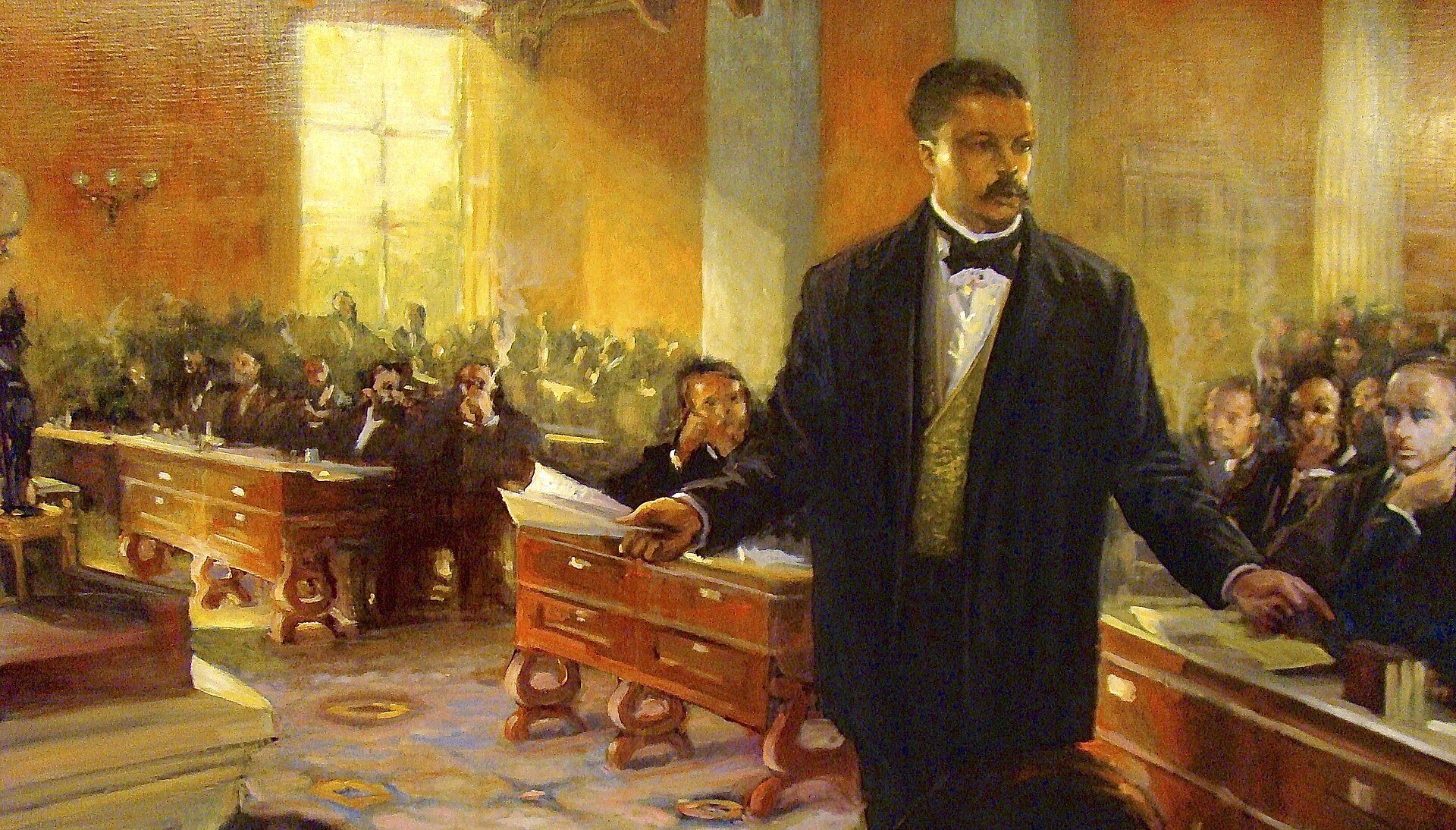
    Painting of George Washington Williams addressing the Ohio State Legislature. Williams was the first African-American elected to the Ohio State Legislature, serving one term 1880 to 1881. (Photo from the Ohio Statehouse.)

    The original 1619 project: George Washington Williams authored the two-volume “History of the Negro Race in America from 1619 to 1880”

    David DeWittby David DeWit

    On the first floor inside the limestone edifice of the Ohio Statehouse sits the George Washington Williams Memorial Room, adorned with two oil paintings and a large, bronze bust of Ohio’s first Black lawmaker: George Washington Williams, who served 1880-81, in Ohio’s 64th General Assembly.

    A soldier, Baptist minister, lawyer, politician, and journalist, Williams accomplished perhaps his most remarkable achievement when he authored the first academic history of Black people in America from their own perspective — the two-volume, “History of the Negro Race in America from 1619 to 1880: Negroes as Slaves, as Soldiers, and as Citizens.”

    The volumes were published in 1882 and 1883 following Williams’ term in the Statehouse. In 1888, he published, “A History of the Negro Troops in the War of the Rebellion, 1861–1865.”

    A deeply impressive autodidact, Williams says in the introduction to his history that he retired from public duties to focus on completion of the work, consulting more than 12,000 volumes, with more than a thousand of them included in its bibliography. He exhausted the state library of Ohio before moving on to the Library of Congress and New York Historical Society, and traveling southward to interview Black veterans for first-hand accounts when his inquirers of formal sources were rebuffed.

    “I have been possessed of a painful sense of the vastness of my work from first to last,” Williams wrote, adding that he conceived the work to give America more correct ideas about the nature of Black people and to inspire Black people in their efforts of citizenship by giving them the history of their people so many desired. “The single reason that there was no history of the Negro race would have been a sufficient reason for writing one.”

    Williams makes clear that his aim of the book is an honest and truthful discussion of history: “Not as the blind panegyrist of my race, nor as the partisan apologist, but from a love for ‘the truth of history’ I have striven to record the truth, the whole truth, and nothing but the truth,” Williams wrote. “I commit this work to the public, white and black, to the friends and foes of the Negro, in the hope that the obsolete antagonisms which grew out of the relation of master and slave may speedily sink as storms beneath the horizon.”

    Nearly a century-and-a-half later, America is beset by know-nothings and philistines intent on subverting and destroying the truth, the whole truth, and nothing but the truth about our collective American history. They project their personal inability to face unpleasant facts onto our society and education system at-large — to decree that they somehow are the arbiters of what knowledge the public is allowed to learn in our universities and libraries, and what knowledge we are not. Gravely exceeding a governmental assault on free speech — which is quite bad enough, and unconstitutional — they seek to police freedom of thought and expression itself, a despicable insult to our Enlightenment Era intellectual heritage.

    The life and work of George Washington Williams

    Born free in Pennsylvania, George Washington Williams ran away at 14-years-old to join the Union Army, fighting some of the later battles of the Civil War. In a sort of unofficial defense of the Monroe Doctrine and the forces of democracy, Williams then joined other American soldiers fighting under the Republican Army of Mexico to overthrow Emperor Maximillian. Afterward, Williams returned to America to serve for five years in the U.S. Army before going to college at first Howard University and then the Newton Theological Institution near Boston, becoming their first Black graduate.

    Ordained a Baptist minister, Williams served pastoral duties in Boston and then D.C., where with the support of Frederick Douglass and William Lloyd Garrison he published eight volumes of a Black newspaper called The Commoner. He then moved his family to Cincinnati, Ohio, where he served as a pastor and studied law under Alfonso Taft and was admitted to the bar. It’s from there he went on to the Ohio Statehouse and then his work as historian. Williams spent his last decade discovering and warning about the horrors of colonization in the Congo and Sierra Leone before dying of tuberculosis in the United Kingdom in 1891. He was 41 years old.

    Williams’ history of Black Americans begins from his Christian ministerial perspective: Painstakingly debunking the 19th Century propaganda that used the Bible to attempt to dehumanize Black people with scripture. He then traces the history and etymology of the term “Negro” itself and where it comes from and who it’s been used to describe, before overviewing colonization and then finally reaching 1619 itself, which marks the beginnings of race-based chattel slavery in America.

    In his first volume, Williams then studiously compares and contrasts the Black experience under the laws in the various colonies and later states, both before and after the American Revolution. His second volume deals with Black American experience in the 19th Century, and — given his veteran experience — is particularly heavy with insight and detail on combat experiences.

    For his efforts, W.E.B. DuBois called Williams “the greatest historian of the race” after discovering his work as a Fisk University undergraduate.

    In 1883, Williams wrote the editor of the Boston Herald: “I am now earnestly endeavoring to organize an American negro historical society. The negroes of this country are making very credible history now, and it should be preserved. … I have learned by experience the necessity of such an organization.”

    So Ohio’s first Black lawmaker, and the first Black author of an academic study of Black American history, was also one of the first, most vocal advocates for preserving, protecting, and sharing Black history.

    My personal disgust with ignorant political attempts to whitewash and destroy the Black history movement birthed by Williams is only matched by my commitment to defending it.

    __________

    Not everything that is faced can be changed but nothing can be changed until it is faced.

    – James Baldwin


    David DeWitt
    DAVID DEWITT

    Ohio Capital Journal Editor-in-Chief and Columnist David DeWitt has been covering government, politics, and policy in Ohio since 2007, including education, health care, crime and courts, poverty, state and local government, business, labor, energy, environment, and social issues. He has worked for the National Journal, The New York Observer, The Athens NEWS, and Plunderbund.com. He holds a bachelor’s degree from Ohio University’s E.W. Scripps School of Journalism and is a board member of the E.W. Scripps Society of Alumni and Friends. He can be found on Twitter @DC_DeWitt

    MORE FROM AUTHOR