Tag: Ohio Capital Journal

  • In GOP flip, August special election will return

    In GOP flip, August special election will return

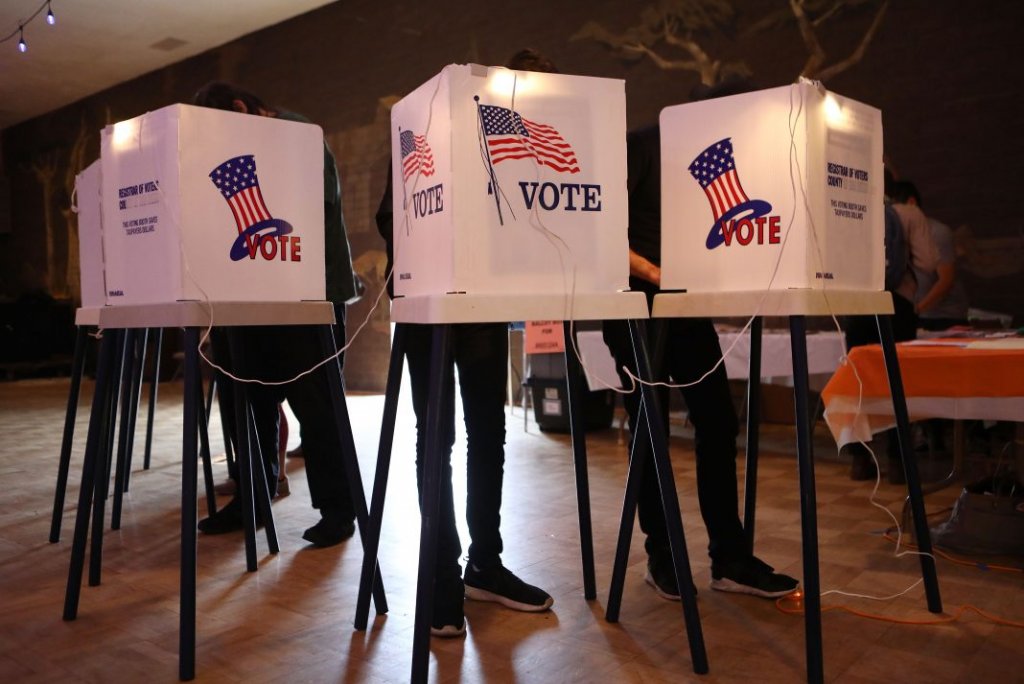
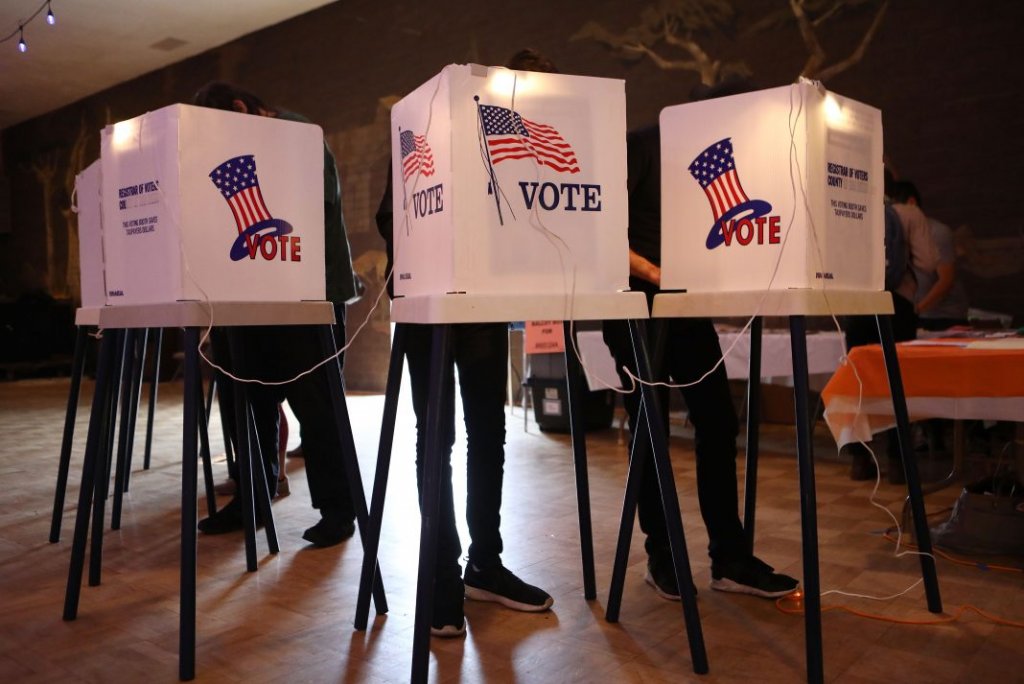
    Voters casting ballots. | Mario Tama/Getty Images

    Bill, along with SJR 2 constitutional amendment bill, directly impact abortion rights ballot initiative

    BY:  – Ohio Capital Journal

    Less than half a year after proclaiming August elections to be too expensive for the turnout they attract, the Senate Republican majority expanded the use of a special election this year, complete with $20 million in funding.

    “This is legislative whiplash, and we do it really well here in Columbus,” said state Sen. Kent Smith, D-Euclid.

    In a mostly party-line vote, Senate Bill 92 was passed Wednesday by the body. The only Republican to vote against SB 92 was state Sen. Nathan Manning, R-North Ridgeville.

    The vote came immediately after the state senate also passed an increase in the threshold for passing a constitutional amendment from 50% to 60% along party lines.

    The threshold bill, SJR 2, is a companion bill to HJR 1, which has been making its way through the Ohio House, but has yet to come up for a floor vote. The House resolution passed its committee after three hours of testimony on Wednesday, most of which spoke in opposition to the bill.

    Both bills could lead to a ballot measure where voters would approve or deny a constitutional amendment to raise that threshold.

    With the approval of SB 92, August special elections will now be held “for consideration of a General Assembly proposed constitutional amendment,” to fill a congressional vacancy or hold a special primary for congressional party candidates.

    The bill also appropriates $20 million to conduct “a one-time August special election on August 8, 2023,” a funding influx made while the bill was in committee.

    That August election would be to send a constitutional voter threshold to the ballot for voters to approve an legislature-initiated amendment to raise the threshold from 50% to 60%.

    Republicans pushed back on comparisons between previous August elections, including last year’s that saw an abysmal 8% turnout, with the argument that this time around, voters will care.

    “With this being a bonafide, statewide question, and with it being an important question … I would say the turnout is going to be markedly higher in this August election,” McColley told his colleagues on the Senate floor.

    The legislative measures seem to be direct hits at a potential constitutional amendment that would codify abortion rights if it makes it to the ballot box and is approved by voters in November. Abortion rights advocates are currently collecting the needed signatures. State law currently requires more than 400,000 in 44 of the 88 states.

    One of the pro-abortion rights groups helping with the ballot measure, Pro-Choice Ohio, called the passage of SB 92 “both expected and incredibly disappointing” in a post on Twitter.

    Last year, after redistricting confusion rocked the legislature, Republicans all-but eliminated the August election in a move that they said would save the state money and get rid of an unneeded annual election date that historically had low voter turnout.

    In August of last year, the special primary election included statehouse races because the redistricting maps were rejected by the Ohio Supreme Court before they could be included in the May election. A U.S. District Court then intervened in the legal snarl that swept up the redistricting process, and allowed the state to use a map previously deemed unconstitutional by the Ohio Supreme Court as the map for the August primary.

    That map is still in effect currently.

    Speaking in opposition for SB 92, state Sen. William DeMora, D-Columbus, quoted Ohio Secretary of State Frank LaRose who spoke in support of reducing August special election usage last year, when he said they “aren’t good for taxpayers, election officials, voters or the civic health of our state.”

    “(SB 92) is so bad that (LaRose) Secretary LaRose couldn’t even find the time to come and testify about it in committee,” DeMora said.

    State Sen. Theresa Gavarone, R-Bowling Green, said claims that the August special elections were eliminated last year was an exaggerated claim.

    “We’re not reinventing the wheel on this legislation,” Gavarone said, pointing out that certain occasions allowed for an August special election.

    SB 92 now moves to the House for consideration.

    _____________________

    Susan Tebben is an award-winning journalist with a decade of experience covering Ohio news, including courts and crime, Appalachian social issues, government, education, diversity and culture. She has worked for The Newark Advocate, The Glasgow (KY) Daily Times, The Athens Messenger, and WOUB Public Media. She has also had work featured on National Public Radio.

    MORE FROM AUTHOR

  • Economists: Ohio flat-tax would worsen inequality

    Economists: Ohio flat-tax would worsen inequality

    A concept of income disparity from Getty Images.

    BY:  Ohio Capital Journal

    An overwhelming majority of a panel of Ohio economists believes that a flat-tax proposal pending in the Ohio House would worsen economic inequality, according to a survey that was published Monday.

    Most of the 22 who responded also didn’t think that the proposal would spur economic growth.

    Inequality is a serious problem in the Buckeye State, where 30% of the population is covered by Medicaid, the federal-state health program for the poor, and where 40% of all births are also covered by the program.

    Meanwhile, Republican members of the state House of Representatives are pushing a measure that would require everyone to pay state income tax at the same rate regardless of their income. It’s more fair, the pitch goes, because people making more money would pay proportionately more in income taxes than those making less.

    But critics point out that taxes on income are far from the only way people pay to support state and local government. And other taxes — such as those on sales and gasoline — are charged without regard to whether an Ohioan makes $2.7 million a year or $27,000.

    When one takes all of those taxes into consideration, poorer Ohioans pay out nearly twice as much of their income in state and local taxes as the richest, the Institute on Taxation and Economic Policy reported.

    In 2018, the poorest 20% paid 12.3% of their income in such taxes as the richest 1%, who paid just 6.5%, the institute reported.

    The economists surveyed by Scioto Analysis agreed with that assessment. Adamantly.

    Eighteen of the 22 who responded said that the 2.5% flat income tax proposed in House Bill 1 would exacerbate inequality. Only one disagreed and the other three were uncertain.

    “A flat tax is a regressive tax in which low-income taxpayers carry a disproportionate share of the tax burden,” independent economist Kay Strong wrote in the comments section of the survey. “Further squeezing those least able to cover daily living expenses qualifies as truly draconian.”

    To some, the matter was self-evident.

    “This will so obviously increase inequality that it’s not even worth debating,” wrote Paul Holmes of Ashland University.

    A few other economists resorted to snark.

    “Giving $11,000 to high-income earners and $3 to low-income earners is an efficient way to increase inequality,” wrote Michael Myler of the University of Mount Union.

    In addition to falling more heavily on poorer Ohioans, an analysis by Policy Matters Ohio indicated that HB 1 would punch big holes in funding for local government, libraries, and schools. The loss of such services will also worsen economic inequality, some of the economists said.

    “The benefits will flow to higher income individuals but the spending cuts will hurt lower income individuals,” Bob Gitter of Ohio Wesleyan University said.

    There was less certainty about whether the flat tax would help grow the economy, but 12 of the 22 economists said it wouldn’t. Eight were uncertain and just two said they believed it would help expand the state economy.

    “Public services and goods are an important part of the necessary infrastructure to grow an economy,” Rachel Wilson of Wittenberg University said. “Cutting state income taxes will reduce the public infrastructure. Our current tax rate is very competitive with other states and doesn’t need to be reduced.”

    Conversely, David Brasington of the University of Cincinnati said the flat tax would force local governments to be more efficient and thus spur economic growth.

    “It will make local public services rely more on local taxation, and attract people and new businesses to the best-run municipalities,” he said.

    _______________________________

    MARTY SCHLADEN

    Marty Schladen has been a reporter for decades, working in Indiana, Texas and other places before returning to his native Ohio to work at The Columbus Dispatch in 2017. He’s won state and national journalism awards for investigations into utility regulation, public corruption, the environment, prescription drug spending and other matters.

    MORE FROM AUTHOR

  • After the end of COVID-era benefits, 70k older Ohioans struggle to fight hunger

    After the end of COVID-era benefits, 70k older Ohioans struggle to fight hunger

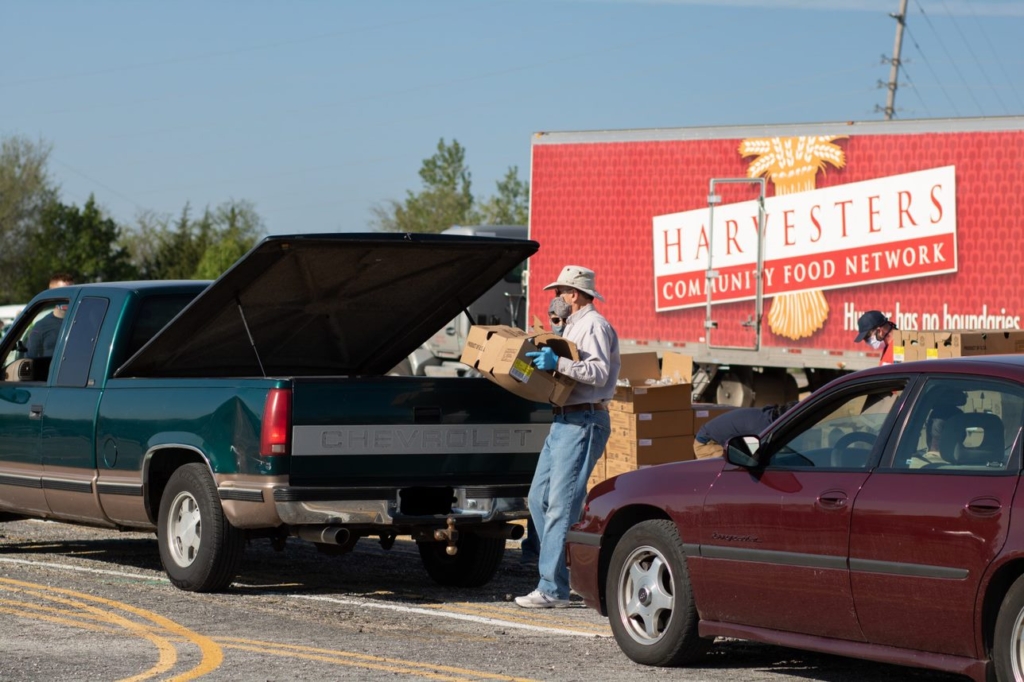
    Throughout the pandemic, families have turned to food banks for help. Harvesters, a private food bank, saw the amount of food distributed increase from 54 million pounds in 2019 to 65 million in 2020. In this picture, food is distributed at a drive-in in Kansas City, Kansas. (Harvesters — The Community Food Network).

    BY:  Ohio Capital Journal

    After Congress ended pandemic food assistance in February, 70,000 older Ohioans have seen food benefits slashed to $23 a month, in some cases down from $280.

    That has many making excruciating choices between food, medicine and utilities like electricity and gas, Lisa Hamler-Fugitt, executive director of the Ohio Association of Foodbanks, said Wednesday.

    And while it’s dire for anybody to live in hunger, that’s especially true the older you are, she said, because insufficient nutrition exacerbates conditions such as diabetes and depression and can take away seniors’ ability to live on their own. The end of COVID-era enhancements to benefits under the Supplemental Nutrition Assistance Program — or SNAP — has added to the already increasing number of older Ohioans seeking help at Ohio’s groaning food pantries, Hamler-Fugitt said.

    “They’re the canaries in the hunger coal mine,” she said, explaining that because most older Ohioans live on fixed incomes, they can’t earn their way out of food insecurity. “When they join the food line, they’re not leaving until they go into the nursing home or they pass away.”

    To help low-income people deal with the economic shocks from the coronavirus epidemic, Congress and the Trump administration in 2020 enhanced benefits under SNAP, the program formerly known as food stamps, and it eased eligibility to include households with somewhat higher incomes. And by literally putting food on the table, it had a big effect on poverty, the Center on Budget and Policy Priorities reported.

    “The temporary benefits pushed back against hunger and hardship during COVID,” the report said. “A study estimated that (enhanced allotments) kept 4.2 million people above the poverty line in the last quarter of 2021, reducing poverty by 10 percent — and child poverty by 14 percent — in states with (enhanced allotments) at the time. The estimated reduction in poverty rates due to (enhanced allotments) was highest for Black and Latino people.”

    But last December, Congress and the Biden administration decided to end the enhancements effective in February.

    “This change was made as part of a bipartisan compromise that created a permanent Summer Electronic Benefit Transfer (EBT) program to provide grocery benefits to replace school meals for some 30 million children in low-income families when schools are closed in the summer — a time when families with school-aged children are at higher risk for food insecurity,” the Center on Budget and Policy Priorities reported.

    Hamler-Fugitt said that in Ohio, the group over 60 was particularly hard hit in part because it’s an aging state. It has the 18th-highest percentage of residents over 65, for example.

    In some cases, seniors don’t have support systems and some are even supporting others, such as grandchildren and great-grandchildren. And the older one becomes, the more health complaints accumulate, often making it impossible to perform many of the jobs that are available.

    Hamler-Fugitt said her agency has been hearing about the real-life consequences of cutting back food benefits to older Ohioans.

    “You just can’t even believe these horror stories,” she said. “We’re interviewing them now about what their coping strategies are and it’s really, really scary. Before they had about $2 a meal — that was a best-case scenario. Now it’s 75 cents a day. That’s 25 cents a meal.”

    She explained that the permanent fix to the problem is at the federal level, where providing the U.S. Department of Agriculture with more resources could make the enhanced benefits permanent.

    But over the short term, advocates for the poor are asking the Ohio General Assembly to pony up $21 million for each of the next two years to ensure that every eligible Ohio household has at least a $50 monthly SNAP benefit.

    “The economic consequences of this for an aging state like Ohio are just huge,” Hamler Fugitt said.

    _____________________________

    MARTY SCHLADEN

    Marty Schladen has been a reporter for decades, working in Indiana, Texas and other places before returning to his native Ohio to work at The Columbus Dispatch in 2017. He’s won state and national journalism awards for investigations into utility regulation, public corruption, the environment, prescription drug spending and other matters.

    MORE FROM AUTHOR

  • Ohio SOS gives yet another reason to make it a lot harder for voters to amend Constitution

    Ohio SOS gives yet another reason to make it a lot harder for voters to amend Constitution

    [vc_row][vc_column][vc_column_text]

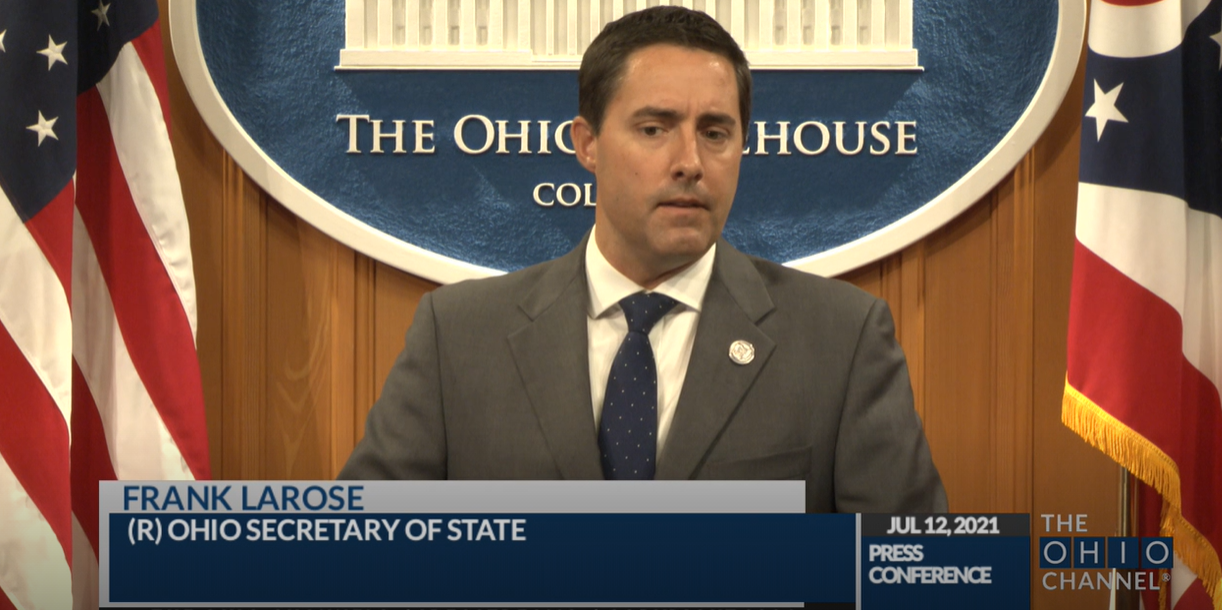
    Secretary of State Frank LaRose announces the referral of 117 cases of alleged voting and voter registration fraud stemming from the 2020 elections. Photo courtesy The Ohio Channel.

    BY:  Ohio Capital Journal

    Ohio Secretary of State Frank LaRose on Wednesday offered another rationale for making it much more difficult for voters to amend the Ohio Constitution. Now he’s saying it’s needed to fight a possible power grab like one that grew out of a massive bribery and money-laundering scandal.

    But LaRose didn’t mention in his op-ed that his name came up repeatedly in a criminal trial related to the scandal and that he appeared to be in close communication with some of its central figures.

    Nor did his office respond when asked whether LaRose ever spoke out against the corrupt utility bailout before the FBI started arresting people in July 2020.

    Slippery explanations

    The secretary of state — who is said to be eyeing a run for U.S. Senate next year — has been pushing to increase the portion of votes needed for a citizen-initiated amendment from 50% to 60%. As he and his allies have, they’ve given a shifting set of reasons for why that’s needed.

    Last November, during a lame-duck session of the legislature, LaRose and state Rep. Brian Stewart, R-Ashville, held a press conference saying that the change was necessary to prevent wanton amendments to the Ohio Constitution by monied special interests. But they didn’t point to any examples of how that had happened in the past.

    Many suspected an ulterior motive.

    LaRose sat on a Republican-dominated redistricting commission that last year ignored seven Ohio Supreme Court rulings saying that the legislative and congressional maps the commission produced violated anti-gerrymandering amendments overwhelmingly approved by Ohio voters. That prompted Maureen O’Connor, the outgoing Republican chief justice, to urge Ohioans to pass new, more-tightly written amendments this year.

    Ohio was also roiled when a highly restrictive abortion law took effect last June just after the U.S. Supreme Court overturned Roe v. Wade and horror stories poured out of abortion clinics and hospitals. An effort quickly started to get an amendment on the ballot protecting abortion rights after other protections easily passed in other states.

    But at last year’s presser, LaRose denied that his goal was to block anti-gerrymandering or abortion-rights amendments. The constitutional change he was advocating was a long-term, fundamental one that he didn’t seek to block such short-term disputes, he claimed.

    Just weeks later, however, Stewart, LaRose’s sidekick at the presser, sent a letter to his GOP colleagues in the House explaining the real reasons for making it harder for Ohioans to amend their constitution: to stop abortion-rights and anti-gerrymandering amendments that appear to be favored by strong majorities of Ohioans.


    [/vc_column_text][vc_raw_html]JTNDYmxvY2txdW90ZSUyMGNsYXNzJTNEJTIydHdpdHRlci10d2VldCUyMiUzRSUzQ3AlMjBsYW5nJTNEJTIyZW4lMjIlMjBkaXIlM0QlMjJsdHIlMjIlM0VIZXJlJTI2JTIzMzklM0JzJTIwdGhlJTIwZnVsbCUyMGxldHRlci4lMjBJdCUyMGFsc28lMjB0aWVzJTIwdGhlJTIwaXNzdWUlMjB0byUyMHJlZGlzdHJpY3RpbmclMjByZWZvcm0lMkMlMjBhbmQlMjByZXNwb25kcyUyMHRvJTIwdGhlJTIwb3JnYW5pemVkJTIwbGFib3IlMjBncm91cHMlMjB0aGF0JTIwcmFsbGllZCUyMGF0JTIwdGhlJTIwT2hpbyUyMFN0YXRlaG91c2UlMjB5ZXN0ZXJkYXkuJTIwJTNDYSUyMGhyZWYlM0QlMjJodHRwcyUzQSUyRiUyRnQuY28lMkZpbGhXTFBpV00wJTIyJTNFcGljLnR3aXR0ZXIuY29tJTJGaWxoV0xQaVdNMCUzQyUyRmElM0UlM0MlMkZwJTNFJTI2bWRhc2glM0IlMjBBbmRyZXclMjBUb2JpYXMlMjAlMjglNDBBbmRyZXdKVG9iaWFzJTI5JTIwJTNDYSUyMGhyZWYlM0QlMjJodHRwcyUzQSUyRiUyRnR3aXR0ZXIuY29tJTJGQW5kcmV3SlRvYmlhcyUyRnN0YXR1cyUyRjE2MDMxMzAzODQ3NDQ1MzQwMTYlM0ZyZWZfc3JjJTNEdHdzcmMlMjU1RXRmdyUyMiUzRURlY2VtYmVyJTIwMTQlMkMlMjAyMDIyJTNDJTJGYSUzRSUzQyUyRmJsb2NrcXVvdGUlM0UlMjAlM0NzY3JpcHQlMjBhc3luYyUyMHNyYyUzRCUyMmh0dHBzJTNBJTJGJTJGcGxhdGZvcm0udHdpdHRlci5jb20lMkZ3aWRnZXRzLmpzJTIyJTIwY2hhcnNldCUzRCUyMnV0Zi04JTIyJTNFJTNDJTJGc2NyaXB0JTNF[/vc_raw_html][vc_column_text]The attempt to rush a bill through lame duck last year failed.

    Now Stewart, LaRose and their allies are trying to pass it through Ohio’s now-unconstitutionally gerrymandered legislature. If it passes, it would put the measure requiring 60% of the vote to amend the state constitution on the ballot. And, since the vote would be under the existing rules, it would require just 50% of the vote to pass.

    Also on the pile of accusations that it’s a naked power grab is that LaRose, Stewart and their allies want to put the measure on the ballot in a low-turnout August election. They’re doing so just months after passing a bill that had LaRose’s support to eliminate such elections as costly and unnecessary — and three months before the abortion amendment is expected to hit the ballot.

    A new reason

    While he’s being accused of attempting a power grab, LaRose says he’s trying to stop them.

    On Tuesday, The Columbus Dispatch published an op-ed in which he furnished yet another reason to make it harder for voters to change the state Constitution. He cited an attempt by former House Speaker Larry Householder to pass an amendment changing the state’s term limits so Householder could stay speaker for another 16 years.

    It was part of a breathtaking scheme in which Householder and his allies took more than $61 million from Akron-based FirstEnergy and other utilities, used the money to make him speaker in January 2019, and then pass and protect a $1.3 billion ratepayer bailout that mostly went to FirstEnergy.

    Fresh off the passage of the bailout, Householder raised millions in early 2020 from FirstEnergy and AEP for his scheme that would allow him to stay longer in office. But it died with his arrest that July.

    It might seem ironic that LaRose would use a corruption scandal to gut a 1912 reform measure that was aimed at curbing corrupt, unresponsive government, but that’s what he argued. He said all it takes to change the Constitution now “is a well-funded, dishonest political campaign and a simple majority vote.”

    LaRose added that Householder planned to call his tenure-extension scheme “Ohioans for Legislative Term Limits, a deceptive name for a constitutional amendment that would more than double his term in office. It should come as no surprise that FirstEnergy Corporation, the company at the center of Householder’s racketeering scandal, agreed to bankroll the amendment campaign.”

    Significant omissions

    While he accused his opponents of “hysterical hyperbole” as he tries to make it 20% harder for voters to succeed in the already difficult process to amend the Ohio Constitution, there were some important things LaRose didn’t say in his Op-Ed.

    For starters, FirstEnergy didn’t only bankroll Householder in 2018 as the now-convicted former speaker elected a team of lieutenants who would hand him the speaker’s gavel. The utility also bankrolled LaRose to the tune of $25,000 that year as he ran for secretary of state.

    It was part of nearly $50,000 that the energy company — which signed a deferred prosecution agreement in the Householder scandal — has given LaRose, the campaign-finance tracker FollowTheMoney.org reports.

    And while LaRose is decrying the bailout now that there have been arrests and convictions, there was reason to know there was something wrong with it well before they took place.

    Insiders knew that somebody was burying Capitol Square in cash throughout the 2019 passage of House Bill 6, the corrupt utility bailout. That was especially true as FirstEnergy dumped what the FBI later determined was $36 million into a blatantly-dishonest-but-successful fight to beat back a repeal.

    Because the funds were non-disclosable 501(c)(4) dark money, it was impossible for the public to know exactly where they were coming from until the feds stepped in and used subpoenas and other special powers to find out.

    But HB 6 was such bad legislation and the campaign to stop the repeal so over-the-top that there was plenty of reason to suspect that somebody was being bought off to pass it. It was a massive corporate bailout that Householder and others were trying to officially declare a tax. Republican lawmakers who didn’t want to cast such a damaging vote described withering pressure from House leadership.

    Former friends

    LaRose’s office didn’t answer Wednesday when asked if the secretary of state ever spoke out against HB 6 before the FBI started making arrests.

    In the Cincinnati corruption trial that ran from late January to mid-March, federal prosecutors presented several communications to the jury that might indicate that LaRose was actually sympathetic to the effort to pass and protect the corrupt bailout.

    On July 23, 2019, as the repeal effort got underway, text messages flew between two prominent figures in the scandal: Matt Borges, the former Ohio Republican Party chairman who was convicted along with Householder; and Juan Cespedes, a lobbyist who pleaded guilty and cooperated with prosecutors.

    Borges told Cespedes he had received “a message from the secretary of state on the ballot-measure issue.”

    The men were hoping for help from LaRose. He’s chairman of the Ohio Ballot Board, which, along with Attorney General Dave Yost, has to approve the language of constitutional amendments before they’re circulated for the hundreds of thousands of needed voter signatures — and before they’re placed on the ballot.

    In the case of the HB 6 repeal, Yost initially sent the language back for revisions, then he and the ballot board approved it. But that wasn’t before the original 90 days opponents had to gather the signatures was whittled down to 53.

    In the end, time ran out before opponents could gather them. But at the beginning of the effort, Borges seemed to be talking to LaRose about what LaRose needed in exchange for his help.

    “LaRose is expecting us to be publicly supportive of him,” Borges said. “Apparently petitioners (for the repeal of HB 6) are going to call on him to step down from the ballot board because of ‘conflicts.’ He can be our friend in this process, so let’s be prepared to speak for him.”

    Continuing communication

    Later in the repeal fight, FirstEnergy’s two top executives discussed asking LaRose’s help with Yost. In addition to hamstringing the petition effort, supporters of the corrupt bailout wanted to have it officially declared a tax, and thus legally exempt from repeal.

    “I’ve been asked by (subsidiary FirstEnergy Solutions) to call Frank LaRose to get Frank to call Dave Yost,” Vice President Michael Dowling texted CEO Chuck Jones, according to messages put into evidence by prosecutors. “If Frank tells Yost that he believes HB 6 is a tax, Yost will come out publicly and say it, which (FirstEnergy Solutions) thinks helps with the Supreme Court. Frank is reluctant to make the call. I have a call in to Frank and I will ask him to do it.”

    LaRose may have been reluctant about making that call. But he apparently wasn’t reluctant to keep talking to the people who funded the scandal he’s now condemning and using as a reason to make it harder for voters to amend the Ohio Constitution.

    In October 2019 — shortly before the repeal effort failed — Jones sent a text to John Kiani, the chairman of the FirstEnergy subsidiary that was to receive $1 billion of the bailout. It indicated that both LaRose and Householder had been providing the FirstEnergy CEO with “private” information on the repeal effort.

    “For what it’s worth, LaRose and Householder think it’s game over,” Jones told Kiani. “But that is a private conversation unless they’ve told you the same thing. And Householder has a ‘quick fix’ anyway.”

    And then in November 2019 — just after the repeal failed — other messages indicated that LaRose wanted to cement a relationship with Kiani, the hard-charging former Enron executive whom Cespedes testified stood to make $100 million off the sale of FirstEnergy’s bailed-out nuclear and coal plants.

    Borges texted Cespedes that LaRose, “told me he wants to get to know Kiani, and I said, ‘Are you sure about that?’”

    Cespedes replied, “He will live to regret that.”[/vc_column_text][/vc_column][/vc_row]

    ____________________________________

    MARTY SCHLADEN

    Marty Schladen has been a reporter for decades, working in Indiana, Texas and other places before returning to his native Ohio to work at The Columbus Dispatch in 2017. He’s won state and national journalism awards for investigations into utility regulation, public corruption, the environment, prescription drug spending and other matters.

    MORE FROM AUTHOR
  • Ohioans can still use abortion drug mifepristone, but that could change

    Ohioans can still use abortion drug mifepristone, but that could change

    Loveland, Ohio and Columbus
    Since Roe v Wade was overturned last summer, abortion medication has been under fire as the abortion drug mifepristone is the subject of a federal lawsuit and some states are attempting to restrict access by threatening legal action against retail pharmacies and suppliers of the drug. (Adobe Stock).

    BY:  Ohio Capital Journal

    An abortion drug remains legal in Ohio at the moment, but the legality of mifepristone hangs in the balance after a Texas federal judge suspended the Food and Drug Administration’s approval of mifepristone last week.

    Trump-appointed U.S. District Judge Matthew Kacsmaryk stopped the FDA’s approval of mifepristone, the first in a two-drug regimen of mifepristone and misoprostol taken 24 to 48 hours apart to terminate a pregnancy. The FDA first approved the two-drug regimen in 2000.

    “This is a very direct and targeted attack on a very specific drug for a very specific reason,”said Planned Parenthood of Greater Ohio Public Policy Director Danielle Firsich.

    Mifepristone was used for 9,891 abortions in Ohio in 2021, according to the Ohio Department of Health. The drug was used the most in Franklin County (2,806), Summit County (2,008), and Cuyahoga County (1,643).

    Mifepristone and misoprostol

    There is an alternative regimen for patients who wish to have a medication abortion that involves just the abortion drug misoprostol.

    “It’s still a safe and effective regimen, it’s just not as patient-convenient or patient-centric as the current regimen,” said Planned Parenthood of Greater Ohio’s Chief Medical Officer Dr. Adarsh E. Krishen.

    The mifepristone and misoprostol regimen gives patients more predictability with regard to when a pregnancy is going to end, he said.

    “With the misoprostol regimen, there’s more variation in terms of the timing of when that pregnancy may end, as well as there’s prolonged bleeding after the use of the medication,” Krishen said. “If you are a person who needs to work or do other things in your life, it will be much more complicated and complex for you.”

    With the misoprostol-only regimen, bleeding can last up to one to two weeks after taking the medication, the pain lasts longer, and patients tend to be more nauseous, Krishen said.

    Bleeding stops within a few days, or sooner, with the mifepristone and misoprostol regimen, Krishen said.

    Cramping occurs with both regimens, he said.

    “If you are someone who is seeking abortion care or miscarriage … you will be able to continue to receive the same kind of care with the misoprostol only option,” Firsich said. “The only difference is the frustration, the chaos, and the confusion that decisions like these make.”

    She said decisions like these make patients more hesitant to access abortion care and not understand the rights they have to care.

    “It may make physicians more hesitant to provide certain types of care because they are afraid they may be doing something illegal or something they don’t have the authority to do now because of variations in state, local and federal laws,” Firsich said.

    The Texas federal judge is not targeting misoprostol.

    “(Misoprostol) has many other medical applications far outside of abortion care, so it would be very difficult to target misoprostol in the same way they are mifepristone,” Firsich said.

    Fifth Circuit Court of Appeals

    The United States Department of Justice filed an emergency stay motion with the Fifth Circuit Court of Appeals and is asking the 5th Circuit to respond to its request for a stay by noon on Thursday. Kacsmaryk’s ruling would take effect Friday unless the 5th Circuit puts it on hold.

    “This is notoriously the most conservative appellate court in the country,” Firsich said.

    She believes this ruling will eventually go to the United States Supreme Court.

    Within hours of the Texas ruling on Friday, U.S. District Judge Thomas Rice, ruled mifepristone should continue to be available in 17 states and the District of Columbia. Ohio is not one of those 17 states.

    What Ohio lawmakers, Ohio Right to Life is saying

    Ohio House Minority Leader Allison Russo, D-Upper Arlington, condemned the Texas federal judge’s ruling.

    “The FDA, a trusted federal agency, has determined it is safe for women to use this medication for their health care,” Russo said. “As lawmakers, we should ensure our policies reflect the expertise of trusted medical professionals.”

    State Rep. Beth Liston, D-Dublin, said mifepristone has been proven safe and effective.

    “A woman’s medical decisions should be left between herself and a medical professional. Not a judge in Texas,” said Liston, who has a medical degree.

    State Rep. Anita Somani, D-Dublin, said maternal mortality will increase by taking away access to mifepristone.

    “This ruling opens up the door to other medications like contraception becoming politicized and taken off the market. It is a dangerous precedent and hurts the FDA’s ability to do their job in a nonpolitical fashion,” said Somani, who is an OBGYN at OhioHealth.

    Firsich shares those fears and said “this could lead to an incredible dangerous slippery slope.”

    Ohio Right to Life is praising Kacsmaryk’s ruling.

    “As a young woman carrying a child, I look forward to the day when such rulings are no longer necessary—declaring whether or not human life deserves to be protected,” Ohio Right to Life’s spokesperson Elizabeth Marbach said in a statement.

    Abortion is currently legal in Ohio up to 22 weeks.

    Follow OCJ Reporter Megan Henry on Twitter.

    •••••••••••••••••••••••••••••••••••••

    MEGAN HENRY

    Megan is a reporter for the Ohio Capital Journal.

    MORE FROM AUTHOR


  • Ohio tax breaks adding up, watchdog says

    Ohio tax breaks adding up, watchdog says

    Loveland, Ohio, and Columbus

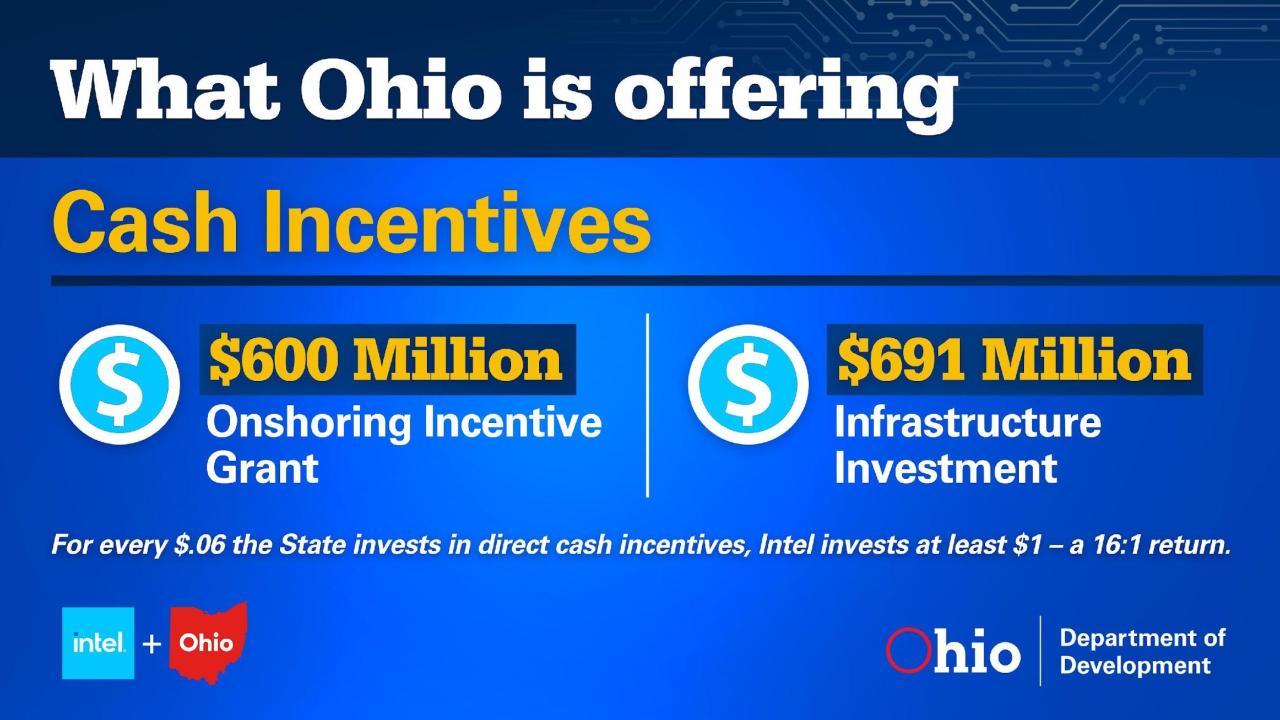
    Part of the incentive package offered to Intel by the state of Ohio. (Screenshot from Ohio Dept. of Development presentation)

    BY:  Ohio Capital Journal

    A new analysis says that 15 new tax breaks — many benefiting wealthy people and corporations — are coming online in Ohio.

    That will swell the total cost of tax breaks in the state to $11 billion a year, equal to 37% of the state’s annual revenue, the report by Policy Matters Ohio said.

    The new breaks will cost the state an additional $450 million a year as the state has ended a process to review the worthiness of its tax breaks, the report said.

    “Tax breaks are ballooning with little oversight,” Zach Schiller, Policy Matters’ research director, said in a written statement. “The General Assembly should restore a tax expenditure review committee, eliminated in the state budget two years ago, and rein in unproductive tax breaks that reinforce inequality in our state.”

    A big portion of the new tax breaks will go to Intel as part of a $2 billion incentive package in exchange for an investment of at least $20 billion to build a chip plant in New Albany and create at least 3,000 jobs. The new jobs are good news for Ohio, but some economic research indicates that in all but a fraction of cases, businesses would make the same location or expansion decisions regardless of the tax incentives they’re given.

    Meanwhile, the poorest Ohioans shoulder a disproportionate share of the state and local tax burden and House Republicans are proposing to make that burden heavier with House Bill 1, which would flatten that state income tax.

    The Policy Matters report said too many Ohio tax breaks favor people and corporations that need them the least.

    “While some tax breaks are well-directed, such as the Earned Income Tax Credit, which provides needed aid to low and moderate-income working families, a host of them should be repealed or cut back,” it said. “The business income deduction, also known as the LLC loophole, disproportionately rewards a small number of high-income individuals and costs an estimated $1 billion a year with negligible economic impact. Owners of data centers such as Facebook, Amazon and Google are receiving a sales-tax exemption worth more than $250 million over two years, though these facilities employ few workers.”

    The report also called out huge tax breaks to drug wholesalers Cardinal Health, McKesson and AmeriSource Bergen. The companies got those breaks even as the state sued them over claims that they fed and profited from Ohio’s opioid epidemic.

    “Suppliers to big drug distributors including Cardinal Health don’t have to pay much or any Commercial Activity Tax, though this was exposed as a tax dodge by the Kasich Administration’s budget director six years ago,” the report said. “Big retailers like Wal-Mart and Target are profiting from the discount on sales tax they collect, as then-taxation department commissioner Joe Testa testified years ago.”

    The report also called on lawmakers to resume evaluations of how effective tax breaks are at achieving their stated purpose. While many of Ohio’s tax breaks have been sold as job creators, the Buckeye State had the third-worst job growth of any state between February 2022 and February 2023, according to the U.S. Bureau of Labor Statistics.

    “Some tax breaks, such as Governor (Mike) DeWine’s proposed low-income housing tax credit, can be beneficial,” Schiller said. “But the General Assembly should set up a mechanism to rigorously scrutinize the tax breaks we have and cut back on unproductive exemptions and deductions that are proliferating in our tax code.”

    ___________________________

    MARTY SCHLADEN

    Marty Schladen has been a reporter for decades, working in Indiana, Texas and other places before returning to his native Ohio to work at The Columbus Dispatch in 2017. He’s won state and national journalism awards for investigations into utility regulation, public corruption, the environment, prescription drug spending and other matters.

    MORE FROM AUTHOR

    ___________________________

  • Ohio Ballot Board fights back against abortion amendment lawsuit

    Ohio Ballot Board fights back against abortion amendment lawsuit

    Voters casting ballots. | Mario Tama/Getty Images

    BY:  Ohio Capital Journal

    The Ohio Ballot Board submitted its comments to the Ohio Supreme Court, pushing back against claims they abused their power in verifying a proposed abortion amendment to the state constitution.

    The Ohio Attorney General’s Office wrote a brief on behalf of the ballot board, saying its members “correctly refused to usurp the people’s power by splitting the petition … into multiple amendments.”

    The lawsuit, filed on behalf of two members of Cincinnati Right to Life, argued that the amendment contains more than one constitutional issue, therefore should be split, and should not have been unanimously approved by the ballot board.

    The ballot board’s OK allowed pro-abortion rights groups to move forward with signature collection, in which they must collect more than 400,000 valid voter signatures by July 5.

    Because the proposed amendment mentions reproductive health and abortion, attorney Curt Hartman argued the ballot measure involved two different issues, a claim pro-abortion rights groups and the Ohio Ballot Board members deny.

    “The weakness of (Right to Life members Margaret DeBlase and John Giroux’s) claim is best exemplified by their failure to argue how many proposed amendments are supposedly included within the petition and what those amendments are,” Assistant Attorney General Julie Pfeiffer wrote on behalf of the ballot board.

    The ballot board is made up of legislative members, citizens, and the Ohio Secretary of State, who chairs the board. Currently, the legislative members are state Sen. Theresa Gavarone, R-Bowling Green; state Sen. Paula Hicks-Hudson, D-Toledo; and state Rep. Elliot Forhan, D-South Euclid.

    Secretary of State Frank LaRose is the chair, and Stoutsville resident William Morgan completes the board.

    One of the arguments made in the lawsuit is that no discussion was held when the board met to consider the amendment. LaRose asked for discussion before he asked for a vote, and none happened.

    Gavarone was the only one to make a comment, speaking against the amendment, but voting yes to the move, calling it a “procedural” vote.

    “(Giroux and DeBlase) fail to show how any alleged failure by the ballot board members to conduct a fulsome discussion amongst themselves before voting to certify the proposed amendment led to a decision that was ‘unreasonable, arbitrary or unconscionable,” the AG’s office wrote in defense of the board.

    LaRose made several comments during the meeting explaining that the vote did not represent any comments on the merits of the initiative, and instructed the public not to speak on the merits, as the vote was only to decide whether the measure only involved one constitutional issue.

    In response to the lawsuit, Pfeiffer brought up Giroux, who spoke during the public comment portion of the meeting. Giroux called the amendment “intentionally unjust and misleading,” but he “did not offer any specific proposal splitting up the petition or further opine as to the number or content of the separate amendments contained therein,” the board argued to the court.

    The ballot board did not need to analyze facts in the case, Pfeiffer argued, only whether the petition contains one amendment “on the face of the document.”

    ____________________________

    Susan Tebben
    SUSAN TEBBEN

    Susan Tebben is an award-winning journalist with a decade of experience covering Ohio news, including courts and crime, Appalachian social issues, government, education, diversity and culture. She has worked for The Newark Advocate, The Glasgow (KY) Daily Times, The Athens Messenger, and WOUB Public Media. She has also had work featured on National Public Radio.


    MORE FROM AUTHOR

  • Trump hit with 34 felony counts of falsifying New York state business records

    Trump hit with 34 felony counts of falsifying New York state business records

    BY:  AND  Ohio Capital Journal

    Former President Donald Trump pleaded not guilty Tuesday to 34 New York state felony offenses related to what prosecutors say were hush money payments to an adult film star.

    In a brief but historic appearance in a Manhattan trial court, Trump, the first former president to face criminal prosecution, learned he was charged with falsifying business records 34 times from February to December 2017.

    Trump’s former attorney, Michael Cohen, paid Stormy Daniels, a porn actor who said she had a sexual relationship with Trump, $130,000 in exchange for her silence about the supposed relationship during the 2016 presidential race, according to a 16-page indictment and attached statement of facts that were unsealed Tuesday.

    Trump then repaid Cohen in 34 payments over the course of 2017, but described them in Trump Organization records as payments for legal services, meant to cover up the payment to Daniels, prosecutors said.

    Trump, a Republican candidate for president in 2024, denies having an affair with Daniels.

    ​​“These are crimes in New York no matter who you are,” Manhattan District Attorney Alvin Bragg said following the arraignment.

    “Everyone stands equal before the law,” he added. “No amount of money and no amount of power changes that enduring American principle.”

    Responding to a question asking why Bragg brought charges after his predecessor and federal prosecutors declined to do so, Bragg said his office had new evidence that wasn’t available to the prior district attorney and that New York state, as the “business capital of the world,” had a particular interest in prosecuting business fraud cases.

    Trump has accused Bragg of being motivated by politics.

    Just before arriving at the arraignment, Trump posted to his social media site, Truth Social.

    “Heading to Lower Manhattan, the Courthouse” he wrote. “Seems so SURREAL — WOW, they are going to ARREST ME. Can’t believe this is happening in America. MAGA!”

    Trump left the courthouse without commenting but is scheduled to speak later Tuesday at his Mar-a-Lago estate in Florida.

    Payments covered up campaign crime, DA says

    Cohen’s payments to Daniels in 2016 exceeded campaign contribution limits — and because they were meant to boost Trump’s White House bid, should be considered campaign funds, Bragg said. The records of Trump’s payments to Cohen therefore were meant to conceal a crime, making the false business records criminal.

    “He could not simply say that the payments were a reimbursement for Mr. Cohen’s payments to Stormy Daniels,” Bragg said. “To do so, to make that true statement, would have been to admit a crime. So instead, Mr. Trump’s said he paid Mr. Cohen for fictitious legal services in 2017 to cover up actual crime committed the prior year.”

    The indictment said the false business record was done “with intent to defraud and intent to commit another crime and aid and conceal the commission thereof.”

    The payment to Daniels was part of a pattern Trump’s 2016 campaign employed to suppress stories about alleged Trump affairs, according to prosecutors’ statement of facts.

    A longtime confidante of Trump, Cohen pleaded guilty in 2018 to campaign finance and fraud charges. He also pleaded guilty to lying to Congress.

    He has said his crimes were in service of Trump’s 2016 campaign and has cooperated with authorities.

    House Republicans attack DA

    Bragg and U.S. House Republicans have publicly quarreled over the case, with the Republican chairs of the House Judiciary, Oversight & Accountability and Administration committees accusing Bragg of conducting a politically motivated prosecution.

     Ohio U.S. Rep. Jim Jordan stands with dozens of people calling for stopping the vote count in Pennsylvania on November 05, 2020 in Harrisburg, Pennsylvania. (Photo by Spencer Platt/Getty Images) 

    Judiciary Chair Jim Jordan of Ohio and Oversight & Accountability Chair James Comer of Kentucky said in a Tuesday statement that Judge Juan Merchan should not impose an order on Trump not to speak about the case.

    “To put any restrictions on the ability of President Trump to discuss his mistreatment at the hands of this politically motivated prosecutor would only further demonstrate the weaponization of the New York justice system,” they said.

    “To even contemplate stifling the speech of the former commander in chief and current candidate for President is at odds with everything America stands for.”

    Merchan did not issue a gag order Tuesday.

    Jordan, Comer and House Administration Chair Bryan Steil of Wisconsin wrote to Bragg last month calling his prosecution politically motivated and demanding documents.

    Greene headlines muted protest

    U.S. Rep. Marjorie Taylor Greene of Georgia traveled to New York City for a Tuesday morning rally in support of Trump across the street from the Manhattan Courthouse.

    According to videos and photos posted to Twitter, the Georgia Republican spoke for roughly 10 minutes through a bullhorn as supporters and journalists surrounded her, but counter-protesters largely muffled her comments with drums and whistles.

    New York Republican Rep. George Santos, who is under several legal and ethical investigations, made a brief appearance in the crowd prior to Greene’s comments, according to news media reports.

    Greene wrote on Twitter hours before the rally that protesters were “coming to commit assault that can cause audible damage to everyone’s ears including NYPD.”

    She wrote that protesters’ behavior should be considered “disorderly conduct” and that the “@NYCMayor better direct NYPD to lock these people up.”

    New York City Mayor Eric Adams said in a Monday press conference that Greene should be on her “best behavior” during her visit.

    In a “60 Minutes” interview that aired over the weekend, Greene defended her support for Trump and said other Republicans — including Senate Minority Leader Mitch McConnell of Kentucky and former House Speaker Paul Ryan of Wisconsin — “failed.”

    Greene, a well-known 2020 election denier, sits on the House Committee on Oversight & Accountability and the Committee on Homeland Security.

    Greene’s rally was presented in conjunction with the New York Young Republicans Club, which released a statement on March 30 that read in part: “President Trump embodies the American people — our psyche from id to super-ego — as does no other figure; his soul is totally bonded with our core values and emotions, and he is our total and indisputable champion. This tremendous connection threatens the established order.”

    Apart from Greene’s appearance in New York, major pro-Trump protests appeared limited across the country Tuesday. The U.S. Capitol remained calm.

    Democrats call for fair trial

    Reaction from other political figures split along party lines, with several Republicans alleging political bias in the criminal process and Democrats saying the case should play out.

    White House Press Secretary Karine Jean-Pierre declined to comment on Trump’s indictment.

    “I’m just not going to speak to this case. I’m not going to go beyond what the president shared with all of you,” she said during the daily press briefing.

    Senate Majority Leader Chuck Schumer of New York released a statement following Trump’s surrender.

    “I believe that Mr. Trump will have a fair trial that follows the facts and the law,” Schumer said in the statement. “There’s no place in our justice system for any outside influence or intimidation in the legal process. As the trial proceeds, protest is an American right but all protests must be peaceful.”

    House Judiciary ranking member Jerrold Nadler of New York said the indictment appeared well-reasoned and urged Republicans not to interfere with the judicial process.

    “This matter will play out in the New York criminal justice system, no matter how MAGA Republicans try to obstruct the process,” he said. “In a desperate attempt to protect Mr. Trump, the most extreme House Republicans are already trying to bully the law enforcement officers involved. I do not know how this case will be decided, but I do know that DA Bragg will not be deterred or intimidated by the political stunts Jim Jordan and (U.S. House Speaker) Kevin McCarthy throw at him.”

    House GOP leaders defend Trump

    Republicans in Congress posted messages on Twitter criticizing the indictment.

    House Majority Whip Tom Emmer, a Minnesota Republican, tweeted Tuesday was “a historic low for our nation.”

    “The Democrat Party has proven there is nothing they won’t do to hold onto power — even if it means weaponizing our justice system to target a political opponent,” Emmer wrote.

    Fourth-ranking House Republican Elise Stefanik of New York posted to Twitter: “I stand with President Trump.”

    “Another dark day in our nation’s history. The Far Left will stop at nothing to punish Joe Biden’s number one political opponent Donald Trump,” Stefanik tweeted about a half hour later.

    House Deputy Whip Guy Reschenthaler of Pennsylvania blamed the indictment on the “extreme left.”

    “The Left’s weaponization of our criminal justice system for their own benefit is truly un-American,” he wrote on Twitter.

    Tennessee Republican Sen. Marsha Blackburn said the “indictment is a gross abuse of power by a Democrat DA to get an outcome that the left has wanted for years.”

    Utah Republican Sen. Mitt Romney began his statement by saying that he believes Trump’s “character and conduct make him unfit for office.”

    “Even so, I believe the New York prosecutor has stretched to reach felony criminal charges in order to fit a political agenda,” he continued.

    Other Republican members of Congress, however, were not focused solely on Trump.

    Oklahoma Sen. Markwayne Mullin tweeted photos of a visit to Guymon, saying it was the first stop on his statewide tour.

    “We discussed the ongoing drought, inflation, and the existential threat of communist China. Thanks to Mayor Kim Peterson for hosting us!” Mullin wrote.

    Georgia Rep. Rich McCormick tweeted a photo of himself shaking hands with Ukrainian President Volodymyr Zelenskyy as part of a congressional delegation to the country.

    “I was able to ask questions AND witness firsthand the accountability of equipment and impact that our assistance is having,” McCormick wrote. “I will continue to fight to hold the Biden Administration accountable for doing the right things and for doing things right.”

    Nebraska Sen. Pete Ricketts shared photos of a meeting with the Columbus Rotary in the afternoon after congratulating Finland for joining the North Atlantic Treaty Organization earlier in the day.

    “We heard firsthand about Finland’s highly capable military during my recent official visit. They’ll be a critical asset to the trans-Atlantic Alliance in the face of Russian aggression,” Ricketts wrote.

    Other charges possibly looming

    As he readies for another White House run, Trump faces other criminal investigations.

    The U.S. Justice Department is investigating his role in the Jan. 6, 2021, attack on the U.S. Capitol after the congressional committee tasked with probing the causes of the insurrection made a criminal referral to the department.

    Federal authorities are also investigating Trump’s handling of classified documents after his presidency. FBI agents retrieved boxes of classified material Trump took from the White House to his South Florida residence when he left office.

    And a Georgia grand jury is looking into potential election interference from Trump during his reelection campaign in 2020. Trump was taped shortly after Election Day 2020 asking the Georgia secretary of state to “find” enough votes to overturn the state’s election results in his favor.

    ___________________________

    Jacob Fischler
    JACOB FISCHLER

    Jacob covers federal policy as a senior reporter for States Newsroom. Based in Oregon, he focuses on Western issues. His coverage areas include climate, energy development, public lands and infrastructure.

    MORE FROM AUTHOR

    Ashley Murray
    ASHLEY MURRAY

    Ashley Murray covers the nation’s capital as a senior reporter for States Newsroom. Her coverage areas include domestic policy and appropriations.

    MORE FROM AUTHOR

    Jennifer Shutt
    JENNIFER SHUTT

    Jennifer covers the nation’s capital as a senior reporter for States Newsroom. Her coverage areas include congressional policy, politics and legal challenges with a focus on health care, unemployment, housing and aid to families.

    MORE FROM AUTHOR

  • AEP doesn’t have much to say about its support for corrupt utility bailout

    AEP doesn’t have much to say about its support for corrupt utility bailout

    Larry Householder speaks after guilty verdict. Photo by: WEWS/WCPO.

    BY:  Ohio Capital Journal

    Columbus-based utility giant AEP wasn’t at the epicenter of a historic bribery and money-laundering scandal in 2019. But it also wasn’t very far away as a corrupt deal was hatched in the Ohio Capitol to use $61 million in bribes to pass a $1.3 billion bailout.

    The name of the nation’s sixth-largest electric utility came up repeatedly in the seven-week criminal trial that ended earlier this month in the racketeering convictions of former Ohio House Speaker Larry Householder and former state GOP Chairman Matt Borges.

    Through its dark-money group, AEP provided more than $900,000 that was used to help pass the bailout. And to date, it has received more than $60 million to subsidize aging coal plants that belong to a consortium in which it owns a 40% stake.

    Just after the utility bailout was passed and a repeal attempt was thwarted, AEP spent another $500,000 through the same dark money group on an effort that stood to keep Householder in the speakership well into the 2030s. During the trial, a federal prosecutor asked a Householder co-defendant who had pleaded guilty why AEP would spend so much to keep the speaker in power.

    “It kind of went without saying that they support anything that’s good for the speaker because anything that’s good for the speaker is good for them,” the aide, Jeffrey Longstreth, testified.

    But everything changed when Householder and four others were arrested in July of 2020. Now AEP doesn’t seem interested in talking about its actions prior to that.

    Mysterious money

    Lobbyists and other wired-in parties on Capitol Square knew that as the battle heated up over the 2019 bailout measure — House Bill 6 — a geyser of cash was financing the effort to pass and protect it from repeal.

    It was logical to suspect that the money was coming from a utility industry that stood to benefit. But there was no way to be sure because it was coming through 501(c)(4) dark money groups that don’t have to disclose their donors.

    But then the FBI got involved.

    Acting on a tip, it launched an investigation. Using subpoenas, wiretaps, confidential informants, forensic accountants and undercover agents, investigators were able to grope their way through the dark money smokescreen and determine who was really behind the push for an unpopular corporate bailout.

    By far and away the biggest donor was the biggest beneficiary — Akron-based FirstEnergy. Starting in 2017 it ponied up what would become about $60 million to elect representatives who would vote to make Householder speaker in 2019 and then to pass and protect HB 6. In return, it stood to get about $1 billion of the benefit of the bailout — a return of more than $16 on each dollar it invested.

    But AEP is getting an even better return — more than $66 for every one of its dollars that made their way into the dark money group that fueled the HB 6 scheme. And, because the part of the bailout that benefits AEP is the only part of HB 6 that hasn’t been repealed, AEP is continuing to collect that money. That means returns from its dark money expenditure will only improve over time.

    AEP hasn’t been accused of wrongdoing in the scandal, and a spokesman denied that it acted improperly.

    “AEP participates in legislative and regulatory processes ethically and in compliance with the laws of the states where we operate,” the spokesman, Scott Blake, said in an email. “As we have previously stated, we do not believe that AEP was involved in any wrongful conduct.”

    And a board member of the dark money group AEP solely funded, Empowering Ohio’s Economy, claimed it didn’t know its dollars were used for nefarious purposes — even though it was at least partly in on the secret of HB 6’s mysterious funding.

    “Obviously, knowing what we know now, we wouldn’t have made the donations,” the board member, J.B. Hadden, told the Dayton Daily News in December 2020.

    The company is, however, being investigated by the U.S. Securities and Exchange Commission about its involvement in the passage of HB 6.

    Belated transparency

    However, AEP didn’t seem all that eager week to discuss its contributions which, until Householder was arrested, were secret. In the wake of the scandal, the company decided to start disclosing what dark money groups it contributes to, but only going forward.

    “We adopted a revised political engagement policy in 2021, which is available at ​https://aep.com/investors/governance/politicalengagement,” Blake said. “Under that policy, beginning with contributions made in 2020, AEP has disclosed its contributions of $5,000 or more to 501(c)(4) social welfare organizations as part of AEP’s annual disclosures. Organizations that receive contributions from AEP are subject to their own disclosure requirements.”

    But since the company started making such disclosures, Empowering Ohio’s Economy hasn’t appeared on them. AEP was the group’s sole contributor and its top lobbyist, Tom Froehle, was on its board.

    The dark money group gave $700,000 to Generation Now, a dark money group controlled by Householder, that has since pleaded guilty to its role in the scandal. It gave another $200,000 to the Coalition for Opportunity and Growth, which ran TV ads supporting House candidates who would back Householder for speaker.

    During the Householder trial, two of Householder’s co-defendants and other witnesses testified how money from Generation Now financed savage attacks on opponents of Householder candidates. And, when the recall campaign got underway, it paid for false, anti-China commercials, private eyes and “blockers” — people who harassed and even assaulted petition circulators, witnesses testified.

    In an early 2019 text message presented to the jury, Borges described efforts to get AEP on board with a bailout that primarily benefited FirstEnergy.

    “Lots of pressure from FE, AEP, renewable standards, setbacks… so thought is to move a comprehensive package and let everyone get a little (bit) of what they want,” Borges said.

    Then in testimony, Householder’s fixer, Longstreth, described what AEP got.

    “They received a benefit of… there were two coal plants in southwest Ohio,” Longstreth testified. “I’m not exactly sure where. One of them is actually just over the line in Indiana. I’m not sure where the other one is. They had to be created because of the U.S. Department of Defense needed them created 50 years ago (it was actually 68.) I don’t really know all of the details on it, but they received some benefit for running those plants on a continuing basis.”

    Longstreth, who pleaded guilty to his involvement in the conspiracy, was referring to the Ohio Valley Electric Corporation, or OVEC, in which AEP holds a 40% interest. According to the Office of Ohio’s Consumers’ Counsel, the corporation so far has received about $152 million in ratepayer subsidies as a consequence of the corruptly passed HB 6.

    But Blake, the AEP spokesman, didn’t respond directly when asked if the HB 6 arrests in July 2020 had anything to do with its decision to report dark-money contributions going forward.

    “The decision to list contributions over $5,000 to 501(c)(4) organizations was made in the second half of 2020, and the reporting began with contributions made that year,” he said. “AEP has not made a contribution to Empowering Ohio’s Economy since 2019.”

    In addition, Blake wouldn’t comment on the misleading way Empowering Ohio’s Economy described itself in 2019 as it made huge, secret contributions of AEP money that ended up being used in a bribery and money-laundering scandal. On its IRS Form 990, the group blandly described its purpose as:

    “Promoting Ohio as well-suited to host and support major conventions or similar events and as an attractive destination for travel, business meetings and vacations. The methods of achieving these purposes include funding and hosting major conventions and meetings via internet, professional organizations, and social media education to the general public.”

    Even though AEP was the dark money group’s sole contributor and its top lobbyist sat on its board, Blake said it wasn’t AEP’s job to answer for the misleading description.

    “501(c)(4) organizations are subject to their own reporting requirements and any questions about what they reported would need to be addressed by them,” he said.

    Subsidizing coal in a warming world

    The Intergovernmental Panel on Climate Change earlier this month warned that greenhouse gas emissions must be cut swiftly and dramatically to spare future generations from the worst consequences of global warming. So subsidizing two coal plants built during the Eisenhower administration might not seem the best use of ratepayer resources.

    It also might seem important to avoid rewarding corporate attempts to secretly buy ratepayer subsidies for their regulated monopolies.

    But legislative attempts to end the HB 6 coal subsidies so far have been unsuccessful and Blake cited last year’s jumps in natural gas prices as a reason for keeping the $130,000-a-day subsidies in place.

    “The recent increase in natural gas prices has shown that (the Ohio Valley Electric Corporation) offers customers price stability,” he said. “As we transition to cleaner resources, power from the OVEC plants offer security from rising natural gas prices and can provide power when renewables like wind and solar are unavailable.

    Blake added, “Having reliable generation resources is critical to providing the reliable power our customers need. Customers receive a credit when OVEC outperforms the energy market. The current mechanism supports only the actual costs of providing secure, reliable energy.”

    Indeed, default rates for customers of AEP, FirstEnergy and other Ohio utilities are all jumping this month to reflect high wholesale rates last year, when gas prices were high — partly as a consequence of disruptions caused by war in Ukraine. But keeping the dirty, coal-fired plants spinning now might make less sense because natural gas prices are down dramatically, and closer to their 10-year average.

    Householder’s friend

    While AEP might have wanted to distance itself from secret spending supporting Householder just after his arrest, it showed no such compunction in the months immediately before the feds broke up the racketeering scheme.

    Householder’s fixer, Longstreth, testified how — fresh off his HB 6 success — the speaker turned his sights to even bigger game. He’d used tens of millions in secret utility dollars to create a political juggernaut that made him speaker and that enabled him to pay off his financial backers. Now he sought to keep his juggernaut dominating Ohio politics — possibly until 2036.

    Longstreth had discovered that the idea of reforming Ohio’s legislative term limits polled well and he and his boss figured they could push one with an important catch. It would limit lifetime service to 16 years, but if it would reset the clock on everybody. That would mean the then-61-year-old Householder could serve until he was 77.

    To fund the scheme, Householder and his aides again turned to businesses that stood to gain the most from having close allies in the government — the utilities whose monopoly subsidiaries’ revenues were controlled by it.

    After he was approached in early 2020, then-First Energy CEO Chuck Jones in a text message described Householder as “an expensive friend.” But FirstEnergy quickly agreed to secretly spend $2 million on Householder’s tenure-enhancement scheme.

    On the witness stand in the Householder trial, Longstreth described a similarly warm reception from AEP’s then-CEO Nick Akins. Longstreth said he attended a meeting in early 2020 at AEP’s Columbus headquarters with Householder, Akins and two lobbyists.

    Longstreth testified that Akins’ reception to the plan that stood to make Householder speaker well into the next decade was “very positive.”

    “It was probably a 30-minute meeting,” Longstreth said, according to a transcript of the trial. “Fifteen minutes of it, you know, exchanging pleasantries and talking about anything that they had going on and then 15 minutes of us explaining it, and they said sounds great, we’ll get back to you and they did get back to us and said they would be supportive.”

    Shortly thereafter, AEP contributed $500,000 to the dark money group Householder set up for the initiative through AEP’s own dark money group, Empowering Ohio’s Economy.

    But then forces struck that were beyond the control of even Householder and Ohio’s largest utility companies. Neither can be counted on to intervene in the future.

    Asked why the term-limits initiative didn’t get off the ground, Longstreth referred to a Feb. 29, 2020 email he sent to FirstEnergy providing instructions on how to wire money into Householder’s new dark money organization.

    “COVID hit like two weeks later, and then we were arrested in July,” Longstreth testified. “So it never happened.”

    _______________________________

    Marty Schladen
    MARTY SCHLADEN

    Marty Schladen has been a reporter for decades, working in Indiana, Texas and other places before returning to his native Ohio to work at The Columbus Dispatch in 2017. He’s won state and national journalism awards for investigations into utility regulation, public corruption, the environment, prescription drug spending and other matters.

    MORE FROM AUTHOR

  • Think tank blasts Ohio flat tax proposal

    Think tank blasts Ohio flat tax proposal

    [vc_row][vc_column][vc_column_text]

    The Oho Statehouse, Columbus, Ohio. (Photo by Graham Stokes for the Ohio Capital Journal. Republish photo only with original story.)

    The way that the law is written would only complicate the state’s school-funding woes, take money from libraries, and increase property taxes for farmers and homeowners, it added.

    BY:  Ohio Capital Journal

    It sounds fair. If everybody paid income taxes at the same rate, the rich would pay more because of their higher incomes and the poor would pay less because they make less in the first place.

    But an Ohio proposal to enact such a “flat” state income tax ignores a host of other taxes, said a progressive public policy think tank. And the way that the law is written would only complicate the state’s school-funding woes, take money from libraries, and increase property taxes for farmers and homeowners, it added.

    “One of the myths that we have to dispel is that flat taxes make things fair,” said Guillermo Bervejillo, a state policy fellow at Policy Matters Ohio. “It’s quite the opposite. One of the things people forget when they talk about income taxes is that there’s a whole array of state taxes.”

    Bervejillo was speaking in reference to House Bill 1, which, as the bill number implies, is a top priority of the Ohio House’s Republican leadership. A spokesperson for that leadership didn’t respond to questions about the many criticisms that Policy Matters made of the bill.

    One is that many economists have long argued that so-called “flat” income taxes add to the overall tax burden shouldered by the poor and act as yet another means of lightning that of the wealthy.

    “There’s use taxes, sales taxes, excise taxes, taxes that are generally focused around consumption and use,” Bervejillo said.

     Graphic from the Center on Budget and Policy Priorities. 

    He explained that those kinds of taxes are the same for everybody, no matter her or his income. Buy a $100 pair of shoes in Ohio and you pay $5.75 in state sales tax regardless of whether you make $100 in a minute or in a whole day of work.

    “You can only buy so much toilet paper,” Bervejillo said, explaining why sales and excise taxes fall more heavily on the poor. “You can only drive so many miles.”

    The cumulative impact of those taxes is that the poor pay much more as a percentage of their income in state and local taxes than do the rich.

    “On average, the lowest-income 20% of taxpayers face a state and local tax rate more than 50% higher than the top 1% of households,” the Institute on Taxation and Economic Policy said in a report, Who Pays? “The nationwide average effective state and local tax rate is 11.4% for the lowest-income 20% of individuals and families, 9.9% for the middle 20 percent, and 7.4 percent for the top 1%.”

    Federal and state income taxes are the few exceptions that were originally structured to be “progressive.” In other words, they were intended to fall most heavily on those with the greatest ability to pay.

    And it’s true that if you take those and all other taxes into account, the richest Americans pay a bigger portion of their incomes out in taxes than poorer Americans. But the spread isn’t very wide.

    In 2019, the poorest 20% of Americans paid 20.2% of their incomes in taxes, while the richest 1% paid 33.7%, the Institute on Taxation and Economic Policy reported.

    But in Ohio if you take just state and local taxes into account, the script is flipped. In 2018, the poorest 20% paid almost twice as much of their income in such taxes — 12.3% — as the richest 1%, who paid just 6.5% of their lavish incomes in state and local taxes, the institute reported.

    And if Ohio were to enact a flat income tax, it would come on the heels of other measures in which the state has foregone large sources of revenue largely to the benefit of the wealthy.

    Ohio is giving up about $1 billion a year on a tax break for limited liability corporations. It was sold as a way to incentivize mom-and-pop businesses, but a 2017 analysis by the Ohio Legislative Service Commission found that as much as $450 million of that annual benefit was going to the highest 0.5% of Ohio wage earners.

    Meanwhile, there’s been no evidence that the cut improved Ohio’s jobs picture. It was 39th among states for job growth in February 2003 — well before the LLC tax cut was implemented, according to data compiled by Arizona State University’s Seidman Institute. By last month, Ohio ranked 46th in year-over-year job growth.

    And former Gov. John Kasich created JobsOhio by diverting funds from the state liquor monopoly. It’s spent more than $1 billion on things like incentives for wealthy businesses to locate to Ohio, but the agency has struggled to show that those expenditures have made much of a difference to the state’s jobs picture.

    But aside from fairness, Policy Matters raised another objection to HB 1 — it’s not paid for. Working from a fiscal analysis of the bill by the Legislative Services Commission, the group found that after the initial phase-in:

    • Property taxes on farmers and homeowners would increase at least $600 million a year because of “changes in the bill and the operation of Ohio’s existing property tax limit, known as House Bill 920.”
    • Schools, libraries and local governments would lose hundreds of millions of dollars a year.
    • There would be $780 million in annual net losses to the state that are not paid for in the bill.

    Bervejillo said it’s not hard to understand why pain would spread to large swaths of Ohioans from the flat-tax proposal.

    “At the end of the day, there’s only two things you can do when you cut taxes on the wealthy,” he said. “You can either cut services — and who depends more on services than low-income people? Or you increase sales and use taxes and gas taxes and cigarette taxes that fall disproportionately on low-income and working-class Ohioans.”

    _________________________________

    Marty Schladen
    MARTY SCHLADEN

    Marty Schladen has been a reporter for decades, working in Indiana, Texas and other places before returning to his native Ohio to work at The Columbus Dispatch in 2017. He’s won state and national journalism awards for investigations into utility regulation, public corruption, the environment, prescription drug spending and other matters.

    MORE FROM AUTHOR

    [/vc_column_text][/vc_column][/vc_row]