Tag: Ohio Capital Journal

  • GOP mum, Majewski irate after AP story questions his characterization of military record

    GOP mum, Majewski irate after AP story questions his characterization of military record

     Still from the music video for “Lets Go Brandon Save America” featuring J360, Savannah Craven and Ohio GOP congressional candidate J.R. Majewski.

    BY: NICK EVANS – Ohio Capital Journal

    Republicans are holding their tongues after the Associated Press published a story indicating GOP congressional nominee J.R. Majewski exaggerated his service record. Majewski himself is lashing out at the AP, threatening to sue and insinuating they worked with his opponent U.S. Rep. Marcy Kaptur, D-OH.

    On the campaign trail Majewski has presented himself as combat veteran who deployed to Afghanistan. In reality, the AP reported, he spent the bulk of his active-duty career in Japan, before deploying in 2002 to an airbase in Qatar for six months.

    That airbase provides support services throughout the Middle East, including Afghanistan. Part of Majewski’s job as a “passenger operations specialist” took him to airbases throughout the region to load and unload. But the AP reported his campaign didn’t initially address whether he ever traveled to Afghanistan. They further noted Majewski was not awarded a service medal for those who spent 30 days consecutively or 60 days non-consecutively in the country.

    Majewski’s response

    Since the AP’s story published, Majewski has attempted to push back.

    In a friendly interview with NewsMax he insisted that yes, he had “set foot” in Afghanistan. He went on to describe his service and effectively confirmed the AP’s reporting.

    Although working from an airbase more than 1,200 miles from Afghanistan’s Bagram Airfield seems far from “combat” to a lay person, it actually counts under federal law. As the AP noted, because of an executive order signed by George H.W. Bush, support bases are considered combat zones.

    https://twitter.com/JRMajewski/status/1573165305681281024

    Still, he was clear that most of his time was spent away from the front lines.

    “Myself and other airmen deployed to Qatar,” he said. “That was where CENTCOM was, that was our staging base and we deployed from there all throughout the area of responsibility. We’re the people who gave supplies to the front line. We’re the people that transported the fighters to the front line.”

    Asked directly if he can call himself a combat veteran, Majewski offered: “I believe so.”

    Friday, Majewski gave a more forceful denunciation. He called the story “blatantly false” and a “politically motivated hit piece.” He added that he was considering suing the reporters.

    But Majewski offered no evidence to refute the story, instead insisting “anyone insinuating that I did not serve in Afghanistan is lying.” The AP’s report indicates Majewski didn’t deploy directly to Afghanistan, and that Majewski himself was evasive about whether and for how long he served there.

    As for the medal, Majewski argued he separated from the Air Force honorably before the service began awarding it. Although he has the right to request an update to his records, Majewski said, he has yet to do so.

    The Majewski campaign did not immediately respond to requests for comment about whether he served enough time to earn honor or whether he has requested it.

    What lawmakers had to say

    Rep. Bill Johnson, R-OH, represents the southern and eastern rim of the state in congress. A veteran himself, Johnson guards the honors that men and women in uniform accrue. In 2011, he co-sponsored stolen valor legislation that would’ve fined and imprisoned anyone who fraudulently claimed to have “served in a combat zone” with “the intent to obtain anything of value.” That legislation didn’t pass, and instead a narrower measure tied medals went forward in 2013.

    But in a statement, Johnson withheld judgment about Majewski. He explained that for nearly 27 years he lived by the Air Force’s core values.

    “Integrity First, Service Before Self, and Excellence In All We Do,” Johnson said. “Those core values taught me, as a commander and a leader, not to make snap judgments about people without all the facts. And in this case I simply don’t have all the facts.”

    Two other incumbent Ohio congressmen served in uniform as well. U.S. Rep. Brad Wenstrup, R-OH, served as a physician in the U.S. Army, and U.S. Rep. Warren Davidson, R-OH, was U.S. Army Ranger. Neither lawmaker responded to a request for comment.

    Veteran rhetoric on the campaign trail

    Before securing former President Trump’s endorsement, the most substantial rhetorical blow J.D. Vance landed came at the expense of fellow candidate and Marine veteran Josh Mandel.

    Throughout the primary race Mandel emphasized his service as a core reason for voters to choose him. He went so far as to end several ads with the tagline, “Send in the marine.” But after Mandel nearly came to blows with Mike Gibbons in a dispute about private sector employment, Vance criticized Mandel.

    “I think the way you use the U.S. Marine Corps, Josh, is disgraceful — it’s not a political tool,” Vance said.

    “This guy wants to be a U.S. Senator,” he added derisively. “He was up here, ‘hold me back, hold me back, I’ve got two tours in the Marine Corps.’ What a joke.”

    But Vance’s campaign declined to weigh in on Majewski’s exaggerations of his service record.

    Political fallout

    Majewski has drawn scrutiny for suggesting states that voted for Donald Trump in 2020 secede and attending the January 6 “Stop the Steal” rally. He shelled out money to help others attend the rally as well. In an interview with Spectrum News he insisted he did nothing wrong.

    “I hated what happened,” Majewski said of January 6, “And it’s a total injustice to keep having to answer questions about why I was there.”

    But it appears Majewski’s descriptions of his service record may be more damaging to his candidacy.

    In a statement, his opponent Rep. Kaptur said, “the idea that anyone, much less a candidate for the United States Congress, would mislead voters about their service in combat is an affront to every man and woman who has proudly worn the uniform of our great country. J.R. Majewski owes each of these heroes a full explanation about his deception.”

    Republicans in Ohio may stay mum, but the National Republican Congressional Committee has announced it will cancel a roughly $1 million ad buy in the race. The main campaign committee for House Republicans abandoning a candidate is a significant signal of their read of the contest.

    Congressional race watchers at Sabato’s Crystal Ball changed their rating from toss-up to leans Democratic shortly after the news came out as well.

    Follow OCJ Reporter Nick Evans on Twitter.

  • Affidavits: More pregnant minors who were raped denied Ohio abortions

    Affidavits: More pregnant minors who were raped denied Ohio abortions

    Documents describe dozens of painful situations under Ohio abortion restrictions

    BY: MARTY SCHLADEN – Ohio Capital Journal

    At least two more minors made pregnant by sexual assault were forced to leave Ohio to avoid having their rapists’ babies, according to sworn affidavits filed by abortion providers.

    The affidavits were filed in Cincinnati as part of a lawsuit aimed at stopping enforcement of Ohio’s strict new abortion law, which it temporarily did last week. Originally paused for two weeks, on Tuesday the enforcement delay was extended to at least Oct. 14.

    If true, the affidavits show that a Columbus 10-year-old was not the only child or teen rape victim forced to leave the state. They also describe more than two dozen other instances in which the abortion law put women under extreme duress.

    The descriptions include those of three women who threatened suicide. They also include two women with cancer who couldn’t terminate their pregnancies and also couldn’t get cancer treatment while they were pregnant. 

    Another three examples were of women whose fetuses had severe abnormalities or other conditions that made a successful pregnancy impossible. Even so, they couldn’t get abortions in Ohio. 

    And in three cases, debilitating vomiting was caused by pregnancy — so bad in one case that a woman couldn’t get off the clinic floor. But neither could these women get abortions in Ohio, the affidavits said.

    The documents were filed in the case Preterm-Cleveland v (Ohio Attorney General) Dave Yost. Having already gotten a temporary order restraining enforcement of the abortion law — Senate Bill 23 — clinics across Ohio are now seeking a preliminary injunction.

    In doing so, they’re arguing that SB 23 is so onerous that it violates women’s due-process rights under the Ohio Constitution. 

    Disrupted clinics

    Gov. Mike DeWine signed the law in 2019, but it couldn’t be enforced until the U.S. Supreme Court overturned Roe v Wade on June 24. Many of the affidavits describe how, as soon as the decision overturning Roe was announced that Friday, work at Ohio clinics was thrown into chaos.

    Ohio law had allowed abortions until 20 weeks of pregnancy. Now, with only limited exceptions for the life and the health of the mother, no abortions were allowed after fetal cardiac activity could be detected by ultrasound.

    In the affidavits, clinic workers said that usually happens after five to six weeks of pregnancy — a point at which as many as a third of women and girls don’t know they’re pregnant.

    The new, much-earlier cutoff sent clinic workers scrambling.

    “In the days after S.B. 23 took effect, we had to cancel over 600 appointments,” Sharon Liner, medical director of Planned Parenthood Southwest Ohio, said in her affidavit. “Many patients broke down in tears in our office. Many patients that we could not reach by phone who came to our health center expecting to have their appointment were extremely upset; some threatened to hurt themselves because they were so distraught.”

    Liner added, “We have had at least three patients threaten to commit suicide. Another patient said she would attempt to terminate her pregnancy by drinking bleach. Another asked how much Vitamin C she would need to take to terminate her pregnancy.”

    In July, 60% of patients at the clinic had to be turned away because fetal cardiac activity had been detected by the initial ultrasound, Liner said. 

    The Ohio law requires a 24-hour waiting period and a second negative ultrasound before an abortion can be performed. Because things are changing so quickly at that stage of development, another 16% of women who’s fetuses had no cardiac activity during the first exam were turned away in July because it was detected in the second, Liner said.

    The Ohio law requires a 24-hour waiting period and a second negative ultrasound before an abortion can be performed. Because things are changing so quickly at that stage of development, another 16% of women who’s fetuses had no cardiac activity during the first exam were turned away in July because it was detected in the second, Liner said.

    “When we tell patients we cannot help them, they are extremely distressed, and all we can offer them is resources, information and emotional support,” Liner said in her affidavit, which was taken while S.B. 23 was still being enforced.

    Ohio clinics have been referring patients who were ineligible for abortions here to clinics and hospitals in Michigan, Pennsylvania, Illinois and New York to get them. 

    Planned Parenthood of Greater Ohio and other organizations have announced stepped-up assistance to help patients get to those states. But many — including at least one homeless woman — said problems with things like transportation, child care, poverty and getting time off work make the trips virtually impossible, according to the affidavits.

    Allegra Pierce, a medical assistant at Preterm-Cleveland, doubted that most women turned away at Ohio clinics during the 11 weeks S.B. 23 was enforced ever made it out of state.

    “The majority of patients I talk to say that they can’t travel out of state to access abortion care,” Pierce said in her affidavit. “Even though many patients can access sources of funding for seeking an abortion, there are so many barriers that make traveling out of state inaccessible for many of our patients, including the cost of travel, child-care responsibilities, and difficulty getting time off of work, just to name a few. Even those patients who are able to travel out of state often have a hard time getting an appointment due to increasingly long wait times at clinics in states where abortion is still legal.”

    More victims

    In July, when Ohio Attorney General Dave Yost was raising unfounded doubts about the existence of a 10-year-old rape victim, there were plenty of data indicating that the story was all too plausible.

    In 2021, Ohio’s Children’s Advocacy Centers saw 6,717 cases of sexual abuse against Ohioans between infancy and adulthood. And in 2020, the most recent year for which statistics are available, 571 girls aged 17 or younger received abortions in Ohio, according to the state department of health. Fifty-two of them — or one a week — were 14 or younger.

    Sadly, the affidavits filed in late August and early September by workers at abortion clinics provide further evidence that child and teen rape and subsequent pregnancy is a problem in Ohio. But so long as fetal cardiac activity is detected, S.B. 23 requires such victims to either have those babies or scramble out of state and try to find an abortion.

    Adarsh E. Krishen, chief medical officer for Planned Parenthood of Greater Ohio, told of a minor who had been sexually assaulted and had to travel to Michigan for an abortion because of S.B. 23. Krishen’s organization operates clinics in Columbus and Cleveland.

    “This patient experienced immense trauma from the assault itself and then endured further trauma from a forensic interview alongside a physical exam to collect evidence for the ongoing police investigation,” Krishen said in his affidavit. “This trauma was further exacerbated by needing to wait over three weeks for her appointment. In each step of this process she felt the complete denial of bodily autonomy and safety, something all people, especially children, should unequivocally have at all times.”

    Another example shows how S.B. 23 makes police investigation of child and teen rapes more difficult.

    Aeran Trick, operations manager of Women’s Med Center of Dayton, told of “a 16-year-old girl living in Southwestern Ohio who had become pregnant after being sexually assaulted by a family member.”

    As with the 10-year-old from Columbus, Trick said this teenager was forced to go to Indianapolis for an abortion.

    “The local Ohio law-enforcement agency — which was already involved at the time the clinic was contacted about the patient — had to drive to our Indianapolis clinic to retrieve the tissue for crime lab testing related to the sexual assault investigation,” Trick’s affidavit says. “I am concerned that Ohio’s ban and the need to travel increasingly far distances to obtain abortion care not only causes unimaginable harm to these young victims, but could also hamper law enforcement’s ability to investigate and prosecute these cases in the future.”

    Cornered by cancer

    The affidavits filed as part of the effort to stop S.B. 23 describe two cancer patients put in the most impossible of situations by the law. 

    Both seem to illustrate doctors’ reluctance to terminate pregnancies despite the law’s exceptions for maternal health — exceptions that doctors say are woefully ill-defined. With potential penalties that include felony charges and the loss of professional licenses, some doctors have refused to terminate even though their patients’ health is at risk.

    In the days after S.B. 23 took effect, a pregnant 25-year-old went to a clinic operated by Planned Parenthood of Southwest Ohio, said Liner, the medical director there. The patient had recurrent cancer and was undergoing chemotherapy when she learned that she was pregnant.

    Chemotherapy is dangerous during the first 12 weeks of pregnancy and this patient had already skipped one treatment. But when the clinic determined that she was eight weeks pregnant, workers there said they couldn’t perform an abortion, Liner said.

    “Due to the patient having cancer while pregnant, we sought documentation to support a medical exception to S.B. 23 for this patient,” Liner said in her affidavit. “Her provider of care did not feel comfortable providing this and the patient had to travel out of state for an abortion to resume her cancer treatment, which caused further delay.”

    The effect of delaying chemotherapy on the patient’s health might be hard to determine, but it seems unlikely that it was good.

    Just three days after S.B. 23 took effect, a 37-year-old suffering stage III melanoma went to Women’s Med Center in Dayton, Trick, the operations manager there, said. The woman was told by her doctors that she had to terminate her pregnancy before they could treat her, so she, too, would have to leave the state, Trick said. 

    “Upon learning that she would need to travel out of state to have her abortion, the patient broke down and cried inconsolably despite the attempts of multiple staff members, including myself, to console her,” Trick said in her sworn affidavit.

    Other illnesses

    In addition to those cases, women with conditions that made successful pregnancies impossible had problems getting doctors outside the clinics to treat them, David Burkons, medical director of Northeast Ohio Women’s Center said. Two patients at the clinic said they had tubal, or “ectopic,” pregnancies “but the doctors (at emergency rooms) were afraid to treat them without being absolutely certain there was no intrauterine pregnancy,” Burkons wrote in his affidavit.

    “In one case, the patient’s fallopian tube ruptured, and surgery (was needed) rather than medical management, which would have been possible if they had acted sooner,” he said. “In the other, my nurse intervened to convince a physician to treat the patient, but only several days later, which was emotionally wrenching for the patient.”

    The affidavits also detail cases of fetal abnormalities and other problems so severe that pregnancies can’t result in a successful birth. One patient at a Planned Parenthood clinic in Southwest Ohio had a fetus with abnormalities including “a lack of lower extremities and the contents of the fetus’s abdomen, including possibly the heart, protruding through a defect in the abdominal wall,” Liner, a doctor, said in her sworn statement.

    Because S.B. 23 doesn’t allow women in such cases to abort their pregnancies if they don’t pose an imminent threat to their health, they either have to leave the state for an abortion or carry the fetus to term — even though that “can be extremely distressing for patients,” Liner said.

    In another case, this one in Dayton, a woman was 13 weeks pregnant but had no amniotic fluid, prompting her doctor to tell her the pregnancy was “nonviable.”

    “However, because the fetus still had fetal heart tones, the physician discharged her with instructions to call the office if she developed a fever,” Trick said in her affidavit. “The patient was very distressed and expressed to (clinic) staff that she felt abandoned by her physician during an incredibly difficult experience. I’m concerned that confusion over the meaning of S.B. 23’s health exceptions has led physicians to avoid providing medically necessary care out of caution, and I worry about patients in similar positions who aren’t able to independently find an accessible abortion provider without their physician’s help.”

    Clinic workers also reported cases of incessant vomiting caused by pregnancy, including in a high-school senior who found it impossible to attend class and finish her diploma. 

    Another girl, 16, had vomited so much that she lost 20 pounds, Trick, of the Dayton clinic, reported. The girl’s mother didn’t have a reliable car, so she had to rent one to take her daughter to Indianapolis for an abortion, Trick said.

    At the same clinic, another patient was “so sick she was lying on the floor vomiting into a bucket,” Trick wrote. 

    The woman wasn’t only afraid that her condition would prevent her from making it to Indianapolis, Trick said. The woman had four kids to care for and she was the manager of a large retail store.

    “She was concerned that she was going to lose her job because of all the time she had to take off to travel to and from the clinic for abortion care in addition to her repeated absences due to being hospitalized for her condition,” Trick wrote.

    Undermining its own purpose

    Proponents of S.B. 23 meant to dramatically curtail the number of abortions in Ohio. But the clinic workers said that for some patients, it’s having the perverse effect of rushing them to terminate pregnancies before they’ve had a chance to decide whether that’s what they really want.

    Pierce of Preterm-Cleveland said that at five to six weeks, “these patients are very early on in their pregnancies and many of them have not had a chance to wrap their minds around the fact they are pregnant. A number of patients have told me that they wish they had more time to think about whether to continue the pregnancy.

    “For example, I recently spoke with a patient with a young baby at home who had become pregnant again only months after giving birth,” Pierce’s affidavit continues. “She had experienced many postpartum health issues, and she was not sure if she was physically or mentally ready to go through a pregnancy again so soon. She wanted time to work through this decision but was terrified that if she waited she would no longer be able to have an abortion.”

    In their lawsuit, the abortion clinics seem to be contending that in forcing such an early decision, S.B 23 denied that woman’s due-process rights under the Ohio Constitution. They seem to be asserting the same rights for the other women they describe in the affidavits as being injured by S.B. 23.

    Whether Ohio’s court system agrees will be decided in the coming months.

    Follow Marty Schladen on Twitter.

  • Feds to provide $50M in food assistance to Ohio

    Feds to provide $50M in food assistance to Ohio

     Shelves of canned foods sit partially empty. Photo by Justin Sullivan/Getty Images.

    BY: MARTY SCHLADEN Ohio Capital Journal

    Ohio’s foodbanks say they’re desperate as summer is turning to fall. Demand has skyrocketed with increasing food costs at the same time that their resources have evaporated. And with current supply chain disruptions, they need to order food now if they hope to have it when winter comes.

    And even though the state is sitting on unprecedented fund balances of $7.4 billion and another $1.3 billion in unexpended American Rescue Plan Act funds, the administration of Gov. Mike DeWine so far hasn’t answered the foodbanks’ entreaties for $50 million in emergency assistance.

    The U.S. Department of Agriculture partially answered that call on Wednesday when it announced that it would put up nearly $1 billion nationally to purchase food for emergency providers such as foodbanks. Another $500 million will go to emergency food systems so they can buy commodities themselves. And $500 million will go to school lunch and breakfast programs, the USDA announced.

    “Food banks and schools are the backbone of our nutrition safety net, serving tens of millions of children and families,” Stacy Dean, Deputy Under Secretary for Food, Nutrition, and Consumer Services, said in a statement. “The Biden administration understands that supply chain disruptions and high food costs have created uncertainties for these crucial partners, and we are committed to equipping them with the resources they need to keep communities fed, strong, and healthy.”

    In a joint statement, the Ohio’s Foodbanks said that Ohio will get $50 million worth of help starting next year.

    “For many months, our foodbanks have been strained nearly to a breaking point,” the foodbanks said. “Some are operating in deficit budgets, purchasing food just to keep enough balanced products on the shelves for our hunger-relief partner organizations and the people we serve together. We have been buying more privately purchased food than ever before, at record prices. Just like Ohio families, foodbanks have been paying higher rates to keep our coolers on, our day-to-day operations afloat, and our trucks moving.”

    In an email, Ohio Association of Foodbanks Executive Director Lisa Hamler-Fugitt stressed that the federal assistance likely won’t come until January and Ohio foodbanks’ needs are immediate.

    “We need food now to meet the increasing need,” she said. “We have also requested that (Agriculture Secretary Tom) Vilsack send letters to the governors urging them to use ARPA funding to support foodbanks and emergency food assistance programs.”

    In their joint statement, the foodbanks made a similar appeal.

    “We want to be ready to distribute this food to Ohio families and balance the limited menu of USDA commodities with Ohio-grown, raised, and produced foods, and that’s where the state of Ohio can join with us,” it said. “By matching this $50 million investment by USDA with $50 million in the state of Ohio’s ARPA funds, Gov. DeWine and members of the Ohio General Assembly can ensure that the Ohioans hardest hit by the pandemic and ongoing economic uncertainty can count on us for the help they need in the future. 

    “Immediate ARPA funds will prevent a bleak holiday season, as well as help our network reinforce its storage and distribution capacity for the months ahead and support Ohio agriculture. We look forward to working with our state and federal partners to continue to keep our communities’ needs met.”

    Follow Marty Schladen on Twitter.

  • New doctors want abortion training, struggle under regulations

    New doctors want abortion training, struggle under regulations

    BY: SUSAN TEBBEN – Ohio Capital Journal

    Students and in-training physicians say they are looking to other states for medical abortion education they need to do their jobs and finish their degrees. Medical schools, meanwhile, are doing what they can to link the students with that training.

    Shreekari Tadepalli began her final year in medical school at Ohio State thinking of how she would specialize, as most medical student do in their last year.

    “I knew I wanted to provide reproductive health care,” Tadepalli said.

    A Michigan native, she came to Ohio State specifically to go to medical school. She plans to stay, because she wants to fight for her patients as an OB/GYN, and advocate for abortion care as a normal part of medical care.

    “To me, medicine is like the ultimate form of advocacy, and I think physicians should be advocates for care,” Tadepalli told the OCJ.

    When the pandemic hit, Tadepalli headed back home to live with her parents, but she looked for ways to help. She heard a private clinic in Detroit needed staff, and she had the skills she needed to be of service there. While helping staff the clinic, she talked to the OB/GYNs about why they chose their profession, helping bolster her desire to become one herself.

    Tadepalli was upset, though unsurprised, when the U.S. Supreme Court overturned Roe v. Wade, sending the issue of abortion legality back to the states. Hours after the decision was made, she watched Ohio move forward with an abortion ban after six-weeks gestation, which had previously been tied up in court for years.

    “I think there was a certain amount of frustration that we’ve allowed ourselves to get to this point, when every poll says a majority of Americans support (legalized abortion),” Tadepalli said.

    June poll from Suffolk University and the Cincinnati Enquirer showed 53% of Ohio voters supported abortion rights, and the Pew Research Center has consistently shown majorities of Ohioans as supporters of legal abortion.

    In August, the ACLU announced their own survey of Ohio voters, showing an 82% support rate for abortion legality in some form.

    A new set of complications arose for Tadepalli, in that she now had to figure out how to get training in abortion procedures and services after six-weeks, something that’s growing hard to find in a state where one clinic has already announced its closure due to regulations surrounding it.

    “One of the hardest things right now is because so few of these laws are based in medical practice,” Tadepalli said, “it has implications beyond the level of elective abortions.”

     COLUMBUS, OH — AUGUST 31: The Ohio State University College of Medicine Richard L. Meiling Hall, August 31, 2022, on the campus of Ohio State University in Columbus, Ohio. (Photo by Graham Stokes for the Ohio Capital Journal / Republish photo only with original story)

    Ohio State said in a statement to the OCJ that they are working with professional organizations and medical groups as changes to training are reviewed nationwide.

    “We intend to continue offering the full spectrum of training in reproductive care for those residents who do not opt out of the requirement,” Mary Fiorino, spokesperson for the Ohio State University Wexner Medical Center. “In order to ensure we are meeting national accreditation standards on this topic, we are exploring ways for our trainees to do that outside of the state of Ohio.”

    Another of Ohio’s medical schools, Ohio University’s Heritage College of Osteopathic Medicine, also said they are keeping up with recommendations from medical groups and monitoring judicial and legislative changes in the state, but they still plan to train their students.

    “We believe it is important to continue to offer training related to the full spectrum of women’s health care so that students have the knowledge and skills they need to practice medicine and provide the best medical care possible in any community they choose to live and work,” Lisa Forster,  HCOM’s chief communication officer, said in a statement.

    Tadepalli also has residencies to consider, and while she wants to stay in Ohio, she said the questions she’s asking medical schools have changed somewhat.

    “If you’re in a state like Ohio, what is your guarantee that I can be the full physician that I should be?”

    Medical resident Alexandra Stiles is wondering the same thing as she reaches her last year of training before becoming a OB/GYN generalist. 

    A Virginia native who was a first-generation college student, Stiles said she wants to be able to develop medical relationships with her patients, from their first child to any other reproductive needs on down the line.

    That includes abortion care, which she emphasizes means more than just pregnancy termination, but the fetal anomalies that are fatal, or when a pregnant person’s water breaks, meaning the fetus won’t be able to make it to term.

    “People don’t really see that side of things,” Stiles said. “That in putting up that barrier to access, you’re not just preventing a woman from getting an abortion, you’re preventing us from caring for those people.”

    The fact that legislation is being used to regulate medical care, specifically for those that can become pregnant, makes Stiles want to “use my advocacy hat” for her patients, even if it means looking to other states and nonprofits for help.

    She worried recruitment to Ohio’s medical schools will be reduced without the ability to learn certain procedures, which would be a shame because she came to Ohio specifically because of the reputation Ohio State’s medical school had.

    In the future, Stiles hopes those making laws and deciding on the health care landscape in the state defer to the experts, the patients, and the doctors who work with them.

    “I’m not going to NASA and telling them how to fly their astronauts, and NASA wouldn’t come to me and tell me how to perform a hysterectomy,” Stiles said.

    Tadepalli sees politics as a “zero-sum game,” but advocacy for her patients as the way to effect change in their lives.

    “One of the things that helps me stay sane is reminding myself that most Americans are not behind a total ban on all abortions,” Tadepalli said. “I think it reminds me that there is some common ground on such a charged issue.”

    Follow OCJ Reporter Susan Tebben on Twitter.

  • Judge holds off on Ohio abortion ban decision

    Judge holds off on Ohio abortion ban decision

    BY: SUSAN TEBBEN – Ohio Capital Journal

    A Hamilton County judge said he needs more time to decide whether or not to put a pause on a six-week abortion ban in Ohio.

    Judge Christian Jenkins said in a Thursday hearing that he would not issue an opinion because the court still has questions about how the case moves forward.

    “The court would like to investigate the threshold issue of jurisdiction and the effect of the (state) supreme court still not having dismissed the case,” Jenkins said on Thursday.

    Abortion clinics moved the case from the Ohio Supreme Court to the Hamilton County Common Pleas Court because, as they said in court documents, waiting for the state’s highest court to make a decision was allowing “irreparable harm to the clinics and the patients” throughout the state.

    Representatives for the state argued that the jurisdiction remains with the Ohio Supreme Court, since no dismissal order has been issued.

    Temporary restraining orders on laws typically work to stop a law from taking effect, leaving previous standards in place. In this case, the ACLU and Planned Parenthood want to bring back the previous law that banned abortion beyond 22 weeks gestation.

    Attorneys for the state countered the request for a temporary restraining order, saying the six-week abortion ban has been effective law for two months, making it the “status quo” in the state.

    Law challengers are hoping for a quicker resolution in the lower court, starting with Thursday’s hearing on abortion supporters’ request for a temporary restraining order to be put on Senate Bill 23, the 2019 law that banned abortion in Ohio after six weeks gestation.

    “Every day that SB 23 remains in effect, more and more pregnant women are forced either to attempt to travel hundreds of miles out of state to access care, or to continue pregnancies against their will, or to attempt to self-induce abortion outside the medical system, all at risk to the physical, mental and emotional wellbeing,” said Jessie Hill, lead counsel for the ACLU of Ohio, told the judge.

    The clinics are not only challenging the law as a violation of the right to abortion, but also as an equal protection violation, based on the fact that the law only applies to those who can become pregnant.

    The law had been tied up in courts since it was passed by the General Assembly in 2019, and signed by Gov. Mike DeWine. But the U.S. Supreme Court’s ruling in Dobbs v. Jackson this year, overturning the 1970s decision in Roe v. Wade legalizing abortion nationwide, opened the door for the state to implement the law. At the request of state Attorney General Dave Yost, a federal court dissolved the injunction keeping the state law from being enforced just hours after Roe v. Wade was overturned.

    Doctorsmedical studentsabortion rights advocatesreligious leaders and even some of Ohio’s major cities have spoken out about the dangers they say could come from the near-total abortion ban, including unintended consequences that may impact Ohioans in the middle of wanted pregnancies.

    Jenkins said a decision on the temporary restraining order would be released “as quickly as the court is able.”

    Follow OCJ Reporter Susan Tebben on Twitter.

  • Pro-abortion groups seek to bypass supreme court in abortion ban lawsuit

    Pro-abortion groups seek to bypass supreme court in abortion ban lawsuit

    BY: SUSAN TEBBEN – Ohio Capital Journal

    The groups hoping to put a stop to a six-week abortion ban in Ohio say the Ohio Supreme Court’s inaction forced them to move on to a different court.

    In a recent court filing, the ACLU of Ohio and Planned Parenthood asked the state’s highest court to dismiss their case in favor of separate litigation in the Hamilton County Court of Common Pleas.

    The court filing claimed Planned Parenthood has suffered “irreparable harm which has increased to become intolerable” since filing the lawsuit at the end of June, causing a separate lawsuit to request “immediate relief from the ongoing irreparable harm to the clinics and their patients.”

    Jessie Hill, counsel of record representing the ACLU of Ohio and Planned Parenthood, said the move was spurred by not only the overturning of Roe v. Wade by the U.S. Supreme Court, but also the impending closure of Women’s Med Center of Dayton and clinics in surrounding states like Kentucky and Indiana.

    “Ohioans’ access to abortion care is becoming more and more restricted,” Hill told the OCJ. “Since the situation is so dire and the Ohio Supreme Court has not acted, we needed to pursue an alternative path that could lead to quicker relief.”

    The new lawsuit has been filed, with the added support of law firm WilmerHale, challenging the constitutionality of Senate Bill 23, the bill that is called the “Heartbeat Bill” by supporters, because the bill’s ban hinges on the presence of fetal “cardiac activity.”

    Opponents of the law say banning abortion at six weeks could close out options to women before they are aware of the pregnancy and have unintended consequences for other fetal medicine fields, such as in-vitro fertilization and miscarriages. Meanwhile, Ohio doctors are describing scenes of almost unimaginable anguish — and increased risks to women and girls who become pregnant, in the months since the Dobbs decision.

    “Ohioans deserve the information and resources to make the best decisions for themselves and their families,” said Lauren Blauvelt-Copelin, Vice President of Government Affairs and Public Advocacy at Planned Parenthood of Greater Ohio, in a statement announcing the Hamilton County Court case.

    The groups have already asked the court to implement a temporary restraining order, keeping the state from enforcing the law until the court case has been resolved. The Ohio Supreme Court had previously rejected a request to do so in the case in their court.

    The court has not scheduled any hearings on the matter, or made any decisions on the temporary restraining order.

    Follow OCJ Reporter Susan Tebben on Twitter.

  • In top-secret documents case, Portman wants to investigate the investigators

    In top-secret documents case, Portman wants to investigate the investigators

    BY: MARTY SCHLADEN Ohio Capital Journal

    It now appears that secrets of the most sensitive nature were among the documents former President Donald Trump hung onto after more than a year of entreaties by the government to return them. Having to do with another nation’s nuclear-weapons capabilities, one set of documents in Trump’s possession was so sensitive that only a few senior government officials are allowed to see them and only then on a need-to-know basis, the Washington Post reported Tuesday.

    One might think that the most senior Republican on the Senate Homeland Security and Government Affairs Committee would want to know what Trump was doing with those documents and how much his possession of them might have jeopardized national security. But since the Aug. 8 search of Trump’s South Florida club and residence, it appears that the only statement Sen. Rob Portman, R-Ohio, has made about the matter has been to call for a congressional investigation of the FBI.

    “As the Lead Republican on the Senate Homeland & Governmental Affairs Committee, I call on @SenGaryPeters to utilize the broad jurisdiction of the Cmte, which includes jurisdiction over the National Archives & Records Admin, to perform oversight on this issue & ensure transparency,” Portman tweeted on Aug. 14.

    Portman quickly followed that with, “The Attorney General and the FBI should now demonstrate unprecedented transparency and explain to the American people why they authorized the raid.”

    Many other Republicans — eager to stay in Trump’s good graces — were quick to attack the FBI for conducting the court-sanctioned search. They also attacked the Justice Department for seeking it after trying more voluntary methods to get Trump to return the classified documents.

    “I’ve seen enough,” House Minority Leader Kevin McCarthy said in a tweeted statement. “The Justice Department has reached an intolerable state of weaponized politicization.”

    Republicans on the House Judiciary Committee, led by Ohio Republican Rep. Jim Jordan, in two separate tweets said, “This is what happens in third world countries. Not the United States,” and, “If they can do it to a former President, imagine what they can do to you.”

    And Rep. Marjorie Taylor Greene, R-Ga., simply tweeted “DEFUND THE FBI!”

    But unlike those officials, Portman in January announced that he isn’t seeking reelection. Even so, he apparently hasn’t condemned an attack on the FBI office in his hometown of Cincinnati or a rash of threats to the FBI that are thought to partly be a product of the rhetoric by Trump and his supporters.

    Portman’s staff didn’t respond to questions for this story. And some observers are confused as to why Portman wouldn’t speak out against attacks on federal law enforcement or call on Trump to explain his actions as he has called for the FBI and Justice Department to do.

    “He’s been a real puzzle to me,” Paul Beck, a political science professor emeritus at Ohio State, said last week. “You’d think by the time he decided to retire, he’d kind of freed himself from the clutches of Trump. But for some reason or another, he doesn’t feel that way.”

    With his mild, polite demeanor, Portman is far from the Trumpiest member of the Senate. But he has been enthusiastic about some of the former president’s initiatives — particularly the 2017 tax cut.

    “But that’s done,” Beck said. “The question now is, what more does he want from (Trump)? It may well be that what Portman wants is for Republicans to retake the Senate in 2022 and maybe… stymie the Biden administration for the next two years.”

    Similarly to Portman, former Vice President Mike Pence on Aug. 17 said he was “deeply troubled” by the search of Trump’s club and residence. And he called on Attorney General Merrick Garland to explain more about the Justice Department’s reasons for undertaking the search — which the department has done through subsequent court filings.

    But, the Washington Post reported, Pence also called on his fellow Republicans to tone down their rhetoric.

    “These attacks on the FBI must stop,” the paper reported Pence as saying. “Calls to defund the FBI are just as wrong as calls to defund the police.”

    Pence, whom Trump attacked during the Jan. 6 Capitol riot even as rioters were chanting to hang the vice president, is widely believed to be positioning himself for a presidential run. And he’s taken several other steps to distance himself from the former president

    Is it possible that Portman by contrast is considering becoming a lobbyist post-retirement and he doesn’t want to alienate Trumpworld?

    “The question is, where does he want to live?” Beck said. “I don’t know that he’s ready to go back and live in Lebanon, Ohio. Does he want to settle in Washington, D.C. and earn fairly big bucks as a lobbyist? It may well be that to do that he can’t be on the outs with Trump, but he also doesn’t have to be at all aggressive in supporting Trump’s efforts to rescind the results of the 2020 election.” 

    Or Portman could simply be emulating Senate Minority Leader Mitch McConnell, R-Ky., a frequent target of Trump’s ire.

    “You would think that Portman would be distancing himself from Trump,” Beck said. “Maybe he’s doing what Mitch McConnell is doing and that is saying nothing. And McConnell can’t be happy.” 

    Follow Marty Schladen on Twitter.

  • Jewish congregations mount legal challenges to state abortion bans

    Jewish congregations mount legal challenges to state abortion bans

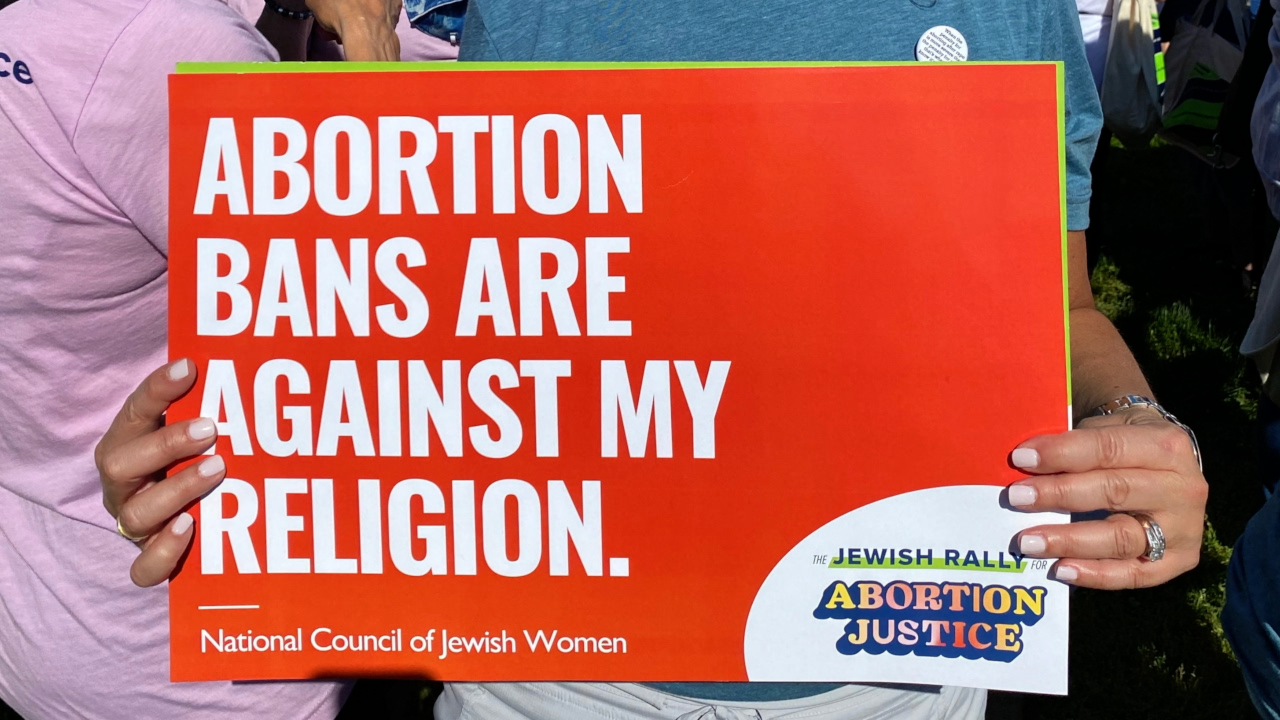
    Members of the Jewish community have spoken out against abortion bans in Ohio, saying it infringes on their religious freedom. Photo by Morgan Trau, WEWS.

    BY: ARIANA FIGUEROA – Ohio Capital Journal

    WASHINGTON — Thousands of years of Jewish scripture make it clear that access to abortion care is a requirement of Jewish law and practice, according to Rabbi Karen Bogard.

    “We preserve life at all costs,” she said in an interview with States Newsroom. “But there is a difference between that which is living, and that which is not yet living.”

    Bogard is a rabbi at Central Reform Congregation in St. Louis, which is in the  progressive tradition of Reform Judaism. She said that whether it’s the Torah — the first five books of the Old Testament in the Hebrew Bible — or the Talmud — the central text of Rabbinic Judaism and the primary source of Jewish religious law and theology — those pieces of Jewish literature “really draw the difference between life and potential life.”

    But with the fall of Roe v. Wade in late June, some members of the Jewish faith as well as other religious groups find their beliefs in deep conflict with state laws that ban or greatly restrict abortion — especially if a pregnant patient’s life is in danger.

    Since the Supreme Court’s Dobbs v. Jackson Women’s Health Organization decision, states now are permitted to craft their own laws regarding abortion, and in Bogard’s home state of Missouri, the procedure is banned.

    “Our congregants are heartbroken,” she said. “It’s really violating to be told what you can and can’t do with your own self.”

    Legal challenges are resulting. The enactment of state laws that ban or restrict access to abortion has already sparked a lawsuit in Florida from a liberal Jewish congregation in the Sunshine State. In Ohio, another liberal Jewish congregation is joining the American Civil Liberties Union in a lawsuit against the state’s six-week abortion ban.

    A coalition of three dozen rabbis also filed a brief on a separate lawsuit in the Buckeye State, where physicians are challenging the new abortion law in the Supreme Court of Ohio.

    Similar lawsuits are anticipated, not only from liberal Jewish congregations, but other religious groups as well.

    There’s currently a lawsuit in the U.S. District Court for the Southern District of Texas Houston Division filed by the Satanic Temple — not to be confused with the Church of Satan — on behalf of a member who argues the state’s abortion ban violates that temple member’s religious beliefs allowing access to an abortion ritual.

    The ritual involves members repeating verses in a mirror to affirm body autonomy and repel any guilt, shame or discomfort that can surface when undergoing an abortion.

    “There’s going to be a wave of religious freedom lawsuits,” Rabbi Daniel Bogard, who’s married to Rabbi Karen Bogard, said. “We’re going to find out if this country really believes in religious freedom, or whether this country believes in the freedom of a small minority to impose its will on the rest of us.”

    But it’s unclear if these religious-based lawsuits challenging state abortion laws can win in court.

    “We’re very much in the wild, wild west of abortion law and religious law,” said Candace Bond-Theriault, the director of racial justice policy and strategy at Columbia Law School’s Center for Gender and Sexuality Law.

    Jewish law

    According to Jewish law, a fetus is not considered a full human being and the biblical foundation for this is found in Exodus 21:22 of the Torah, Rabbi Daniel Bogard said.

    The translation reads: “When men fight, and one of them pushes a pregnant woman and a miscarriage results, but no other damage ensues, the one responsible shall be fined according as the woman’s husband may exact from him, the payment to be based on reckoning. But if other damage ensues, the penalty shall be life for life, eye for eye, tooth for tooth, hand for hand, foot for foot, burn for burn, wound for wound, bruise for bruise.…”

    Rabbi Daniel Bogard said that the Jewish legal interpretation of these passages states that a fetus is not a person, because the miscarriage results in only monetary compensation, rather than the “life for life” punishment.

    There are several other passages in Jewish literature that make the distinction that the life of the person who is pregnant is prioritized.

    “If we’re going to live in a religiously free society, we are each allowed to interpret these verses on our own for our own traditions and a minority in this country can’t impose their conservative white Christian religiosity on the rest of us,” Rabbi Daniel Bogard said.

    The lawsuits challenging abortion laws are predominately filed by congregations that practice Reform Judaism, but Conservative Judaism also supports access to abortion.

    The question of access to abortion gets more restrictive when it comes to Orthodox Judaism, but access to the medical procedure isn’t barred, says Yedida Eisenstat, a fellow at the Center for the Study of Law and Religion at Emory University in Atlanta.

    “Abortion in Judaism absolutely does have a place, and within Jewish law, there absolutely is a place for abortion,” she said. “Judaism is not anti-abortion, like Christianity is, so it absolutely does make sense for Jewish congregations to be saying, ‘Hey, this is a violation of our religious rights.’”

    Eisenstat specializes in Jewish biblical interpretation and also works as an editorial associate at the Posen Library of Jewish Culture and Civilization.

    “Judaism doesn’t have one voice or one opinion or one ruling about everything,” she said, adding that every situation is different and “there’s all this other gray area,” when it comes to theoretical cases in Jewish law pertaining to abortion.

    And interpretations on abortion in Jewish law, or Halacha, vary across American Jewish denominations.

    “We use the theoretical cases to illuminate other cases — just like in American law — so there isn’t one blanket answer for every situation, every situation has its own nuances,” she said. “And again, that’s why this is a decision, a very personal decision, not one that the government should be making.”

    The Rabbinical Assembly, a major institution of Conservative Judaism, condemned the Supreme Court’s ruling in Dobbs.

    “Denying individuals access to the complete spectrum of reproductive healthcare, including contraception, abortion-inducing devices and medications, and abortions, among others, on religious grounds, deprives those who need medical care of their Constitutional right to religious freedom,” the organization said in a statement.

    Orthodox Judaism is typically more aligned with Christian conservative views on religious liberty issues, Eisenstat said, but differs on the belief that life begins at conception.

    Following the Dobbs decision, the Rabbinical Council of America and Agudath Israel, large organizations that represent Orthodox Jewish communities, urged states to consider exceptions to expand abortion access.

    “As the debate over abortion rights enters this new phase, we encourage states to craft policies that will simultaneously express the great value we place on life as well as protecting the rights to abortion when warranted by Jewish law,” the Rabbinical Council of America said in a statement.

    Florida lawsuits

    Rabbi Barry Silver is a self-proclaimed “rabbi-rouser.”

    He’s an attorney, a social activist, a former Democratic legislator in the Florida House of Representative and the leader of the Congregation L’Dor va-Dor, a synagogue practicing progressive Judaism in Palm Beach, Florida.

    Silver, along with three rabbis, a United Church of Christ reverend, a Unitarian Universalist minister, an Episcopal Church priest and a Buddhist lama, each have filed separate lawsuits challenging the state’s 15-week abortion ban that went into effect July 1. Those suits argue that the new abortion law violates Florida’s state constitution, as well as U.S. constitutional protections for freedom of speech and religion.

    The suits also claim the law creates “substantial” burdens on individuals’ ability to practice their faith, and creates a “potential” burden on religious leaders to advise their members. Because of the vagueness of the law, Silver said, rabbis or other religious leaders who counsel their clergy members on abortion could face criminal charges.

    “It criminalizes the practice of Judaism as well as all the other religions that are not aligned with fundamentalist Christianity, which is pretty much everybody,” Silver said of Florida’s new abortion law.

    Silver’s Congregation L’Dor Va-Dor also filed a separate suit in June in state court that argues the 15-week abortion ban violates the right to privacy guaranteed by the Florida state constitution.

    “For Jews, all life is precious and thus the decision to bring new life into the world is not taken lightly or determined by state fiat,” according to the lawsuit. “As such, the act prohibits Jewish women from practicing their faith free of government intrusion and this violates their privacy rights and religious freedom.”

    Silver said he still plans to counsel his congregants who need or are considering abortion care, despite Florida’s new law.

    “We do the right thing and if they want to come after us, they can make our day, we’re not going to stop saying what we need to say. We’re not gonna stop practicing Jewish law,” he said.

    A spokesperson with GOP Gov. Ron DeSantis’ office did not answer questions from States Newsroom about whether the newly passed abortion law prevents Jewish people from practicing their faith.

    “Governor DeSantis is pro-life, and we believe HB 5 will ultimately withstand all legal challenges,” a spokesperson with DeSantis’ office wrote in an email to States Newsroom, referring to the abortion law. “The struggle for life is not over.”

    Congregation L’Dor Va-Dor’s suit claiming Florida’s constitution has an explicit right to privacy is “fairly straightforward, and would generally be unremarkable,” said Caroline Mala Corbin, a law professor at the University of Miami School of Law.

    “Under the existing law, it’s a no-brainer challenge,” Corbin said.

    She added that the Florida Supreme Court has interpreted that language to cover abortion.

    “Except that, like the U.S. Supreme Court, the Florida Supreme Court has taken a sharp turn to the right, so just as you have the U.S. Supreme Court completely remake abortion law, it’s a possibility the Florida Supreme Court will as well,” she said.

    Corbin said the court could rule several ways in the congregation’s case.

    “They might argue, ‘We question your sincerity,’ which would be shocking given how deferential they are to other claims of religious liberty,” she said.

    The court could also rule that the congregation did not prove Florida’s abortion law created a substantial burden, or that even if the law prevents someone from practicing their religion, “the state has a compelling reason for its law, and therefore, the state must prevail,” she said.

    “So the state might respond, even if this does affect your ability to live your religious truth, the state has a compelling interest in saving lives and therefore the state still prevails,” Corbin said.

    Future cases

    Micah Schwartzman, the director of the University of Virginia School of Law’s Karsh Center for Law and Democracy, and the Hardy Cross Dillard professor of law, said lawsuits brought on behalf of a group of people, like the one from Silver’s congregation in Florida, rather than a particular individual, will have more procedural hurdles to prove the group has standing to sue under state and federal law.

    “I’m not terribly confident about these early lawsuits,” Schwartzman said.

    He pointed to the case in Texas, the one by the Satanic Temple, which the religious organization filed in federal court on behalf of one of its members, and said he expects to see similar cases.

    “I think in the future, we’re going to see cases that are brought on behalf of particular individuals who are burdened by abortion restrictions or prohibitions,” he said. “And those types (of cases) will have a stronger chance of surviving the preliminary stages of litigation.”

    Schwartzman said there’s also the question of religious exemptions, particularly in states that have enacted trigger law bans or near total bans on abortion, and whether those laws impose a burden on people trying to practice their religion.

    State abortion laws are going to have some exemptions for abortion, he said, such as in cases of rape and incest and to protect the life and health of the mother.

    “And in those circumstances, courts are going to face the question if these laws have certain secular exceptions, why shouldn’t they also grant exceptions on religious grounds?” he said. “And I think that will be the structure of many challenges that we will see in the future.”

    Elizabeth Sepper, a religious liberty, health law and equality scholar at the University of Texas School of Law, said that over the last couple of decades the Supreme Court has “reduced the establishment clause to rubble,” which under the First Amendment prohibits the government from establishing a religion.

    When Roe v. Wade was initially issued, Congress passed the Hyde Amendment, which prohibits the use of federal funds to cover the cost of abortions, with some limited exceptions.

    Sepper said Congress’ decision to pass a restriction related to abortion in the case of the Hyde Amendment, is an example of “an establishment of religion because when legislators pass abortion bans that say ‘Well, human beings come into life at the moment of conception,’ that’s a doctrine — is a theological stance — that’s rooted in a particular religious faith, and we all know religious faith that is.”

    “I think some large segment of the population on both sides of the abortion issue understands (that) to be the truth, which is that many abortion bans require religious reasoning,” Sepper said.


  • Biden to wipe out $10,000 in student loan debt for many borrowers

    Biden to wipe out $10,000 in student loan debt for many borrowers

    BY: ARIANA FIGUEROA – Ohio Capital Journal

    WASHINGTON — President Joe Biden announced Wednesday that he will cancel up to $20,000 in federal student loan debt for Pell Grant borrowers and up to $10,000 for all other borrowers with an income of less than $125,000 for an individual and $250,000 for a household.

    Biden also announced his administration is extending a pause on student loan repayments until Dec. 31. The decision comes one week before the expiration of a pause of student loan repayments put in place at the beginning of the coronavirus pandemic.

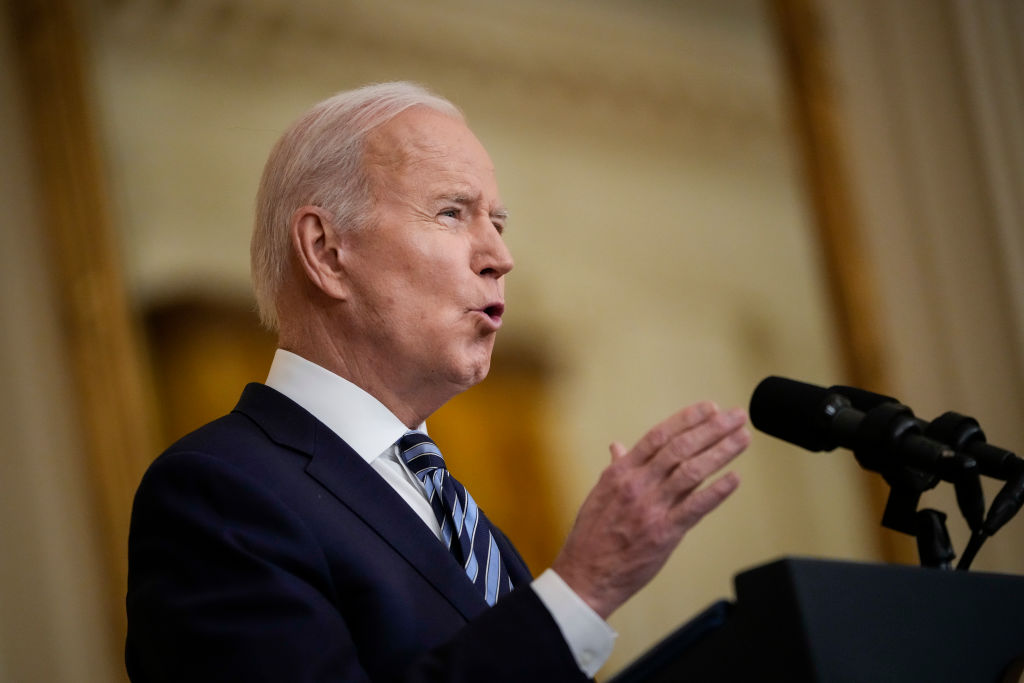
    “Here’s the deal, the cost of education beyond high school has gone up exponentially,” Biden said at the White House.

    Biden stressed that the people who would benefit the most are low-income and middle class families and individuals.

    “No high income household, will benefit from this action, period,” Biden said.

    Biden said that many Americans with student loan debt have put off starting families because of the cost and have been unable to qualify for mortgages to buy a home because of the student loan debt they carry.

    “All this means is an entire generation is now saddled with unsustainable debt,” Biden said.

    Despite numerous reports in recent weeks that Biden would take action on student loans, the White House had remained silent, but on Wednesday the president tweeted out his decision, prior to his remarks.

    “In keeping with my campaign promise, my Administration is announcing a plan to give working and middle class families breathing room as they prepare to resume federal student loan payments in January 2023,” Biden wrote on Twitter.

    Following the announcement, the Department of Education said it will release an application in the weeks ahead that will allow millions of borrowers to claim this new relief.

    “[S]tudent loan debt has hindered their ability to achieve their dreams — including buying a home, starting a business, or providing for their family,” U.S. Secretary of Education Miguel Cardona said in a statement. “Getting an education should set us free; not strap us down!”

    The cancellation of student debt will only apply to current borrowers, not future ones, and income levels for the 2020 and 2021 tax years will be considered, a senior administration official said during a Wednesday call with reporters.

    The Department of Education estimates that about 8 million borrowers will automatically receive relief because the agency already has those borrowers’ income information on file. That means those borrowers do not have to submit applications.

    Borrowers who received Pell Grants, who will benefit from the most relief, are among the students who had the lowest household incomes while in college. They will also be subject to the $125,000 and $250,000 income caps.

    New rule on loans

    The Biden administration is also directing the Department of Education to propose a rule to help current and future borrowers with their loan repayments.

    The rule would eliminate monthly interest  payments on loans, “so that unlike other existing income-driven repayment plans, no borrower’s loan balance will grow as long as they make their monthly payments — even when that monthly payment is $0 because their income is low,” according to the department website.

    The proposed rule would also forgive loan balances “after 10 years of payments, instead of 20 years, for borrowers with loan balances of $12,000 or less.” It would also require “borrowers to pay no more than 5% of their discretionary income monthly on undergraduate loans.”

    “Middle class borrowers struggle with high monthly payments and ballooning balances that make it harder for them to build wealth,” a senior administration official said.

    While many Democrats and progressive advocates were pleased with the announcement, it falls short of the student debt relief campaign platform that Biden ran on.

    In a Medium post during the 2020 presidential election, Biden said under his administration he would “forgive all undergraduate tuition-related federal student debt from two- and four-year public colleges and universities for debt-holders earning up to $125,000, with appropriate phase-outs to avoid a cliff.”

    He also promised he would “immediately cancel a minimum of $10,000 of student debt per person,” but this recent student debt announcement comes two years into his administration and only after continual pressure from congressional Democrats and advocates.

    Some congressional Democrats have urged the White House to cancel up to $50,000 worth of student loans, arguing that because about 92%  of that debt is held by the Department of Education, the administration has the authority to cancel those loans through executive action.

    More than 43 million Americans have student loan debt, and the Federal Reserve estimates that the total U.S. student loan debt is more than $1.75 trillion.

    A Penn Wharton budget model released Tuesday found that a one-time loan forgiveness of $10,000 would mostly benefit borrowers in the four lowest quintiles of incomes.

    Earlier this month, more than 100 Senate and House Democrats urged the Biden administration to extend the pause on repayment of student loans beyond the Aug. 31 deadline. The lawmakers argued that due to inflation and the ongoing coronavirus pandemic, student loan borrowers should get an extension on pausing their loan payments. They did not give another deadline for repayments to begin in their letter to the president.

    Democrats praise Biden

    Democrats did welcome the President’s announcement.

    “By delivering historic targeted student debt relief to millions of borrowers, more working families will be able to meet their kitchen table needs as they continue to recover from the challenges of the pandemic,” House Speaker Nancy Pelosi said in a statement. “Importantly, this action will help those most in need, easing a financial burden disproportionately harming women and people of color.”

    She has previously said that the president does not have the authority to cancel student loans and that the process needs to be done through Congress. She did not mention her previous comments in the statement.

    Biden also had said earlier, while in the White House, that he would only cancel up to $10,000 in student loan debt, and only if Congress passes legislation to do so. Administration officials did not address the shift in policy.

    While the Democrat-controlled House likely could pass legislation canceling some portion of student loan debt, the evenly divided Senate would need all 50 Democrats on board along with an additional 10 Republicans to get a bill to the president’s desk.

    House Education and Labor Committee Chairman Bobby Scott, a Virginia Democrat, said that while the student loan cancellation will provide relief for borrowers, it doesn’t solve the “underlying problems that caused the student debt crisis in the first place,” such as high tuition costs.

    “Without reversing the chronic underinvestment in higher education that has driven up tuition costs, and without fixing our student loan system that has made student loans more expensive to take out and harder to pay off, students will continue to take on more debt and borrowers will continue to face rising debt levels,” Scott said.

    Republicans critical

    GOP lawmakers sharply criticized the cancellation move.

    “At a time of skyrocketing inflation, declining wages, and a national recession, Washington has again turned its back on hardworking Americans in Iowa and across this country,” Iowa Gov. Kim Reynolds, a Republican, said in a statement. “President Biden isn’t canceling student debt, he’s shifting the costs to the taxpayer and to those who worked to pay off their loans in full.”

    Senate Minority Leader Mitch McConnell, a Kentucky Republican, said in a statement the move was a “slap in the face to every family who sacrificed to save for college, every graduate who paid their debt, and every American who chose a certain career path or volunteered to serve in our Armed Forces in order to avoid taking on debt.”

    Overall in Kentucky, there are about 600,000 student loan borrowers who have an average balance for federal and private student loans of $30,794.  

    In March 2020, President Donald Trump issued an emergency pause on student loan repayments, which has now been extended several times by both administrations. The pandemic is still ongoing, and the U.S. has surpassed 1 million COVID-19 deaths.

  • Diabetes activists applaud drug reforms, say more needs to be done

    Diabetes activists applaud drug reforms, say more needs to be done

    Getty Images photo of diabetes patient injecting insulin.

    BY: MARTY SCHLADEN – Ohio Capital Journal

    Pricing reforms under a sweeping law signed on Tuesday by President Joe Biden are great for diabetics, but much more needs to be done, an activist said Wednesday.

    As part of the Inflation Reduction Act, monthly out-of-pocket insulin costs for Medicare recipients were capped by the law at $35 a month. Together with capping all drug costs for Medicare patients at $2,000 a year, the new law is being lauded as a boon for seniors struggling to balance their drug costs with all their other expenses.

    Among medicines, insulin is one that is particularly difficult for those who need it to live without. For diabetics, it helps regulate blood-glucose levels that, if left untreated, can cause blindness, nerve and kidney damage and even death.

    But even though it’s been around for a century, insulin prices aren’t as cheap as one might think for a class of drugs that has been researched, manufactured and marketed for so long. In fact, until recently, list prices have been increasing rapidly.

    “The list price of insulin per milliliter in the United States increased, on average, 2.9% annually from 1991-2001, 9.5% per year from 2002 and 2012, 20.7% annually between 2012 and 2016, and 1.5% per year from 2016-2018,” the American Action Forum reported in 2020.

    And that can lead to some excruciating choices if you can’t afford it. The Commonwealth Fund in 2020 reported that among non-Medicare patients, huge numbers had difficulty affording their insulin between 2014 and 2017; from nearly half of the uninsured living below the poverty line to 3% of people with good insurance and who were making five times the poverty level, or nearly $100,000 for a family of four.

     Source: The Commonwealth Fund

    “Bottom line for diabetics, we can’t afford to wait,” said John Kennedy, an advocate with Ohio Insulin 4All, said Wednesday in a press conference hosted by the group Protect Our Care. 

    Kennedy added, “We’re impatient, but our impatience comes from a really good place. It’s because the more time that passes means more diabetics are going to have to make really difficult choices that nobody should have to make; whether to put food on the table or to take the whole dose of their insulin. As we know, about a quarter of all diabetics have said that they ration their insulin supply because they just can’t afford it.”

    For Medicare patients, the Kaiser Family Foundation reports that average monthly out-of-pocket insulin costs increased 39% between 2007 and 2020. Now those monthly costs range from $16 to $116, or $192 to $1,392 a year.

    With average out-of-pocket insulin expenses for Medicare patients at $54 a month in 2020, the $35-a-month cap in the Inflation Reduction Act represents a more than a 50% savings, KFF reported last month.

    While capping those costs — and directly negotiating Medicare insulin prices with drugmakers — is surely welcome news to seniors with fixed incomes, it won’t do much for many other diabetic Americans.

    One reason is that the new law keeps intact the opaque system under which giant drug middlemen extract big discounts from drugmakers in exchange for covering them. The three largest middlemen — or pharmacy benefit managers — in the U.S. control more than 70% of the marketplace and each is owned by a corporation that also owns a top-10 insurance company.

    And because the system isn’t transparent, it’s unknown how much of the rebates the middlemen and their affiliated insurers are pocketing.

    In a paper published last year in the Journal of the American Medical Association’s Health Forum, three researchers at the University of Southern California assed what happened with the prices of 32 insulin products between 2014 and 2018. And despite the fact that drugmakers such as Eli Lilly, Sanofi and Novo Nordisk tend to get most of the blame for rising costs, it shows that others are also culpable:

    • List prices went up by 40% while net, or post-rebate, prices received by drugmakers dropped by 31%.
    • The share of insulin expenditures retained by pharmacy benefit managers such as CVS Caremark, OptumRx and Express Scripts increased by 154.6%
    • The share retained by pharmacies, the largest of which is CVS, increased by 228.8%
    • The share retained by wholesalers such as Cardinal Health, AmerisourceBergen and McKesson increased by 74.7%.

    While he lauded the insulin measures in the Inflation Reduction Act, Kennedy, the diabetes advocate, they were far from sufficient.

    “The way that pricing is done is so hidden; it’s not transparent at all and that’s a big, big, big problem,” he said. “And yes pharmacy benefit managers have played a big role in this secret process — hidden process — that is used to determine what the costs are going to be. But they’re just one player in this game. PBMs certainly share a chunk of the blame, but there’s a lot of blame to go around.”

    Follow Marty Schladen on Twitter.