
Tag: ohio

  • What the Ohio EPA says about protection from forever chemicals

    What the Ohio EPA says about protection from forever chemicals

    David Miller is the Managing Editor of Loveland Magazine

    by David Miller

    Loveland, Ohio – Look for products identified as certified to NSF International’s Standard P473. Products tested and certified by the Water Quality Association can be found here: https://www.wqa.org/find-products#/. (Source OEPA)
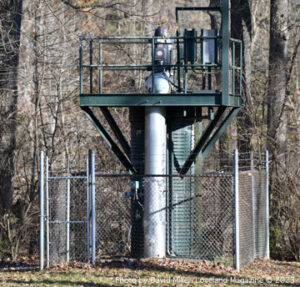
    Loveland’s water wells are located on the East side of Bodly Park at the end of 10692 Bettyray Drive on the bank of the Little Miami River. 9Photo by Loveland Magazine)

    Loveland’s water wells are located on the East side of Bodly Park at the end of 10692 Bettyray Drive on the bank of the Little Miami River. The source of the underground water is rainfall and other discharges onto the surrounding land and hillsides, and the Little Miami River. There are approximately 900 homeowners outside the Loveland City limits who also drink water from these wells. A small number of Loveland residents in Warren County receive water from the Western Water Company. There are approximately 13,000 residents of the City.

    ________

    For More information read what the Ohio EPA says about forever chemicals

    What are the health effects of exposure to PFAS?

    It is important to keep in mind that exposure to PFAS does not always mean a person will have health effects. Whether or not a person gets sick from exposure to PFAS depends on how long a person was exposed (duration), how often they were exposed (frequency), and how much PFAS they were exposed to (dose). Personal factors like age, lifestyle, and other illnesses may also determine whether or not a person gets sick from exposure to PFAS.

    There are many chemicals in the PFAS family, and they may cause different health effects if you are exposed to them. The health effects of PFOS, PFOA, PFHxS, and PFNA have been more widely studied than other chemicals in the PFAS family. Some, but not all, studies in humans with PFAS exposure have shown that certain PFAS may: Affect growth, learning, and behavior of infants and children; Lower a woman’s chance of getting pregnant; Interfere with the body’s natural hormones; Increase cholesterol levels; Affect the immune system; or Increase the risk of certain cancers.

    Scientists are still learning about the health effects of exposures to mixtures of PFAS. For the most part, laboratory animals exposed to high doses of one or more PFAS have shown changes in liver, thyroid, and pancreatic function, as well as some changes in hormone levels. Because animals and humans process these chemicals differently, more research will help scientists fully understand how PFAS affect human health.

    Pregnant and nursing women

    Pregnant and nursing women may be more at risk than the general population to the health effects of PFAS. Pregnant and nursing women may want to consider treating their water source if they know or suspect it is contaminated with PFAS. They may also consider using an alternate source of water for drinking, making ice, preparing food, and brushing teeth.

    Women who are planning to become pregnant may wish to take steps to reduce their exposure to PFAS. PFAS take a long time to leave the human body, and chemicals like PFOA, PFOS, and PFHxS can build up in a woman’s body if she is exposed for a long time. When she is pregnant, her fetus is then exposed to the chemicals that have built up inside her body. Research suggests that fetuses and babies are more vulnerable to exposure to PFAS than adults.

    Breastfeeding provides many health benefits for mother and baby. Research has shown that babies who are breastfed are at less risk of ear and respiratory infections, asthma, obesity, and sudden infant death syndrome (SIDS). Mothers who breastfeed are at less risk of high blood pressure, type 2 diabetes, and ovarian and breast cancer. Although PFAS can be passed from a mother to her child through breastmilk, the benefits of breastfeeding are far greater than any risks. ODH recommends that women currently breastfeeding continue to do so even if they have been exposed to PFAS. For information about breastfeeding, see the Ohio Department of Health Breastfeeding webpage or the Agency for Toxic Substances and Disease Registry (ATSDR) PFAS and Breastfeeding webpage.

    Babies who are bottle-fed may also be at greater risk from drinking PFAS than adults because they drink more in proportion to their body weight. If your baby is bottle fed using a powdered or liquid formula, be sure the water mixed with the formula comes from a safe alternate source, such as a public or private water supply that has been tested for PFAS chemicals. This will reduce your baby’s exposure to PFAS. If your usual drinking water source is contaminated with PFAS, treat the water or use a safe alternate source for mixing formula or preparing food. Information about treating water for PFAS can be found by going to the main Ohio PFAS in Drinking Water page, clicking the “Private Drinking Water” tab, and expanding the “Home Treatment Options” menu.

    Please consult with your healthcare provider or your child’s pediatrician with any PFAS exposure concerns.

    Children

    Children have different exposure circumstances that make them especially sensitive to environmental contaminants, like PFAS. Understanding these differences is key for evaluating potential for environmental hazards from pollutants.

    Children consume more of certain foods and water relative to body weight than adults. That means the same glass of water with the same PFAS concentration level results in greater exposure to a child versus an adult, even though they are drinking the same amount. Children also do not excrete chemicals as easily as adults, because the enzymes in their bodies that break down contaminants are still developing. That increases the chances for contaminants such as PFAS to interfere with a child’s growth and development.

    In addition, young children tend to play close to the ground and come into contact with contaminated soil outdoors. To ensure the protection of children and other sensitive populations, the Ohio PFAS Action Levels are set to protect the most sensitive populations, thereby protecting the health of all populations in Ohio.

    Household Pets

    Since many household pets are smaller than people, they also consume more of certain foods and water relative to their body weight than people. That means that the same bowl of water with the same PFAS concentration results in greater exposure to household pets, even though they may be drinking the same amount. As a precaution, if you have elevated levels of PFAS in your water, you should consider using alternative water for your household pets.

    Home Treatment Options

    Water treatment in a home to reduce levels of PFAS can be:

    At the point of entry (POE) where treatment all of the water entering the household plumbing system occurs, or;

    At the point of use (POU) which is often at the kitchen sink or primary source of water for drinking or cooking (potentially also including a water line to the refrigerator if it has a plumbed in water line).

    Either type of water treatment has pros and cons that should be considered before selecting the best treatment option for a home. The type of treatment system chosen should consider the volume of water that will be used in the home, the number and location of sites where water is consumed in the home, and the type of PFAS chemical identified in the laboratory result.

    If water for drinking, cooking and making ice is primarily obtained from the kitchen sink, then the installation of a treatment unit below the sink or on the sink faucet is an option. If drinking water and ice are obtained from the refrigerator, then it is important to consider treating the water line to the refrigerator also.

    If drinking water is obtained from multiple locations in a home, then a point of entry, or whole house treatment system may be preferred.

    If possible, it is important to choose a treatment system that has been tested and certified to remove the PFAS present in the water based on data provided from the public water system provider or from a laboratory analysis.

    Certified Water Treatment Products to Remove PFOA and PFOS

    Currently, certified products are only for point of use (POU) treatment, which means they are products designed to treat the water at only one or two locations, usually at the kitchen sink and possibly the refrigerator if it has water connected. Certified products are either granular activated carbon (GAC) filtration or reverse osmosis (RO) treatment systems. It should be noted that some of the products certified to treat water at the point of use are counter-top products or pour through (like a pitcher filter that you fill from the tap yourself as needed).

    NSF International and the Water Quality Association are independent third-party testing agencies that currently test and certify products to remove the specific PFAS PFOA and PFOS.

    Look for products identified as certified to NSF International’s Standard P473. The NSF International consumer information team can also be contacted at info@nsf.org or 1-800-673-8010 for assistance in finding a certified product.

    Products tested and certified by the Water Quality Association can be found here: https://www.wqa.org/find-products#/.

    NSF Standard P473 was retired in March of 2019 when the testing protocol was incorporated into existing water treatment standards, so new products certifications are tested to meet either NSF/ANSI Standard 53: Drinking Water Treatment Units – Health Effects for the reduction of PFOA and PFOS with granular activated carbon filtration systems or to NSF/ANSI Standard 58 Reverse Osmosis Drinking Water Treatment Systems for the reduction of PFOA and PFOS with reverse osmosis systems. There is currently not a standard for certification of other types of treatment systems.

    Treatment System Products to Remove other PFAS

    There are currently no certified standards for removing PFAS other than PFOA and PFOS, however, consideration of the type of PFAS chemical can inform the selection of the best water treatment system. PFOA and PFOS are longer chain PFAS than other chemicals in the PFAS family. Longer chain chemicals are larger which makes it easier for a filter or membrane to trap them. Shorter chain PFAS are harder to remove with granular activated carbon treatment alone. Though there is no product certification standard at this time, research has shown that reverse osmosis treatment systems can effectively remove a wide range of PFAS, including the shorter chain chemicals in the PFAS family.

    Considerations for point of use (POU) granular activated carbon (GAC) treatment:

    • Physical filter cartridge traps contaminant(s) which is then removed and disposed of at the end of its rated lifecycle.

    • Filter must be replaced on a regular schedule (identified by the manufacturer).

    • Generally, granular activated carbon filters provide more water flow than a reverse osmosis system.

    • May not effectively treat shorter chain PFAS if present in addition to the longer chain PFOA and/or PFOS.

    Considerations for point of use (POU) reverse osmosis (RO) treatment:

    Typically requires pre-filtration to be installed to remove any sediment and small particles as well to maximize the life and effectiveness of the membrane.

    Large volumes of water are wasted in the treatment process. Typically, for every 10 gallons sent into the treatment unit, 7-8 gallons are sent down the drain as waste, and 2-3 gallons of treated water are produced.

    Membranes must be replaced on a regular schedule (identified by the manufacturer) in addition to any pre-filtration cartridges.

    Research has shown it to effectively reduce shorter chain PFAS in addition to the longer chain PFOA and/or PFOS.

    Point of Entry Water Treatment

    Point of entry water treatment is where all the water entering the home is treated for the removal of PFAS. Though there are not currently any products certified to treat all water that enters a home (also called point of entry or POE treatment) for removing any of the PFAS family of chemicals, research has shown that a point of entry granular activated carbon treatment can be effective if properly designed.

    These systems are commonly referred to as a lead-lag granular activated carbon system. This system consists of two flow through vessels filled with granular activated carbon with a water sample faucet installed between the two vessels (after the lead vessel, before the lag vessel). Water samples are collected periodically and analyzed for PFAS to monitor the lifespan of the first carbon vessel. When the first vessel starts to lose its ability to remove PFAS, it is removed, the second carbon vessel which was in the lag position is moved to the lead carbon vessel position and new granular activated carbon media is placed into the other vessel, and it is moved to the lag position. This design relies on the lag vessel to provide protection for the water consumer in case the lead vessel is no longer able to trap the PFAS before periodic sample collection identifies that the lead carbon vessel is no longer able to perform effective PFAS removal.

    The installation of a point of entry water treatment system to treat water received from a public water system may require a local plumbing permit. Please check with the local building or health department to determine if a plumbing permit is needed.

    The installation of a point of entry water treatment system to treat water received from a private water system (water well, spring, pond, rainwater cistern or hauled water storage tank) will require an installation permit form the local health district. These treatment systems may only be installed by a private water systems contractor registered by the Ohio Department of Health. These contractors are bonded and the list of registered contractors may be found at: https://odh.ohio.gov/wps/portal/gov/odh/know-our-programs/private-water-systems-program/info-for-homeowners/.

    Please be an informed consumer and request complete information on the components that will be installed, product certification as applicable, the maintenance requirements and cost, and appropriate disposal of the treatment media.

    An Ohio resident can find which local health jurisdiction they live in using the directory of local health districts: https://odh.ohio.gov/wps/portal/gov/odh/find-local-health-districts.

    Water Treatment System Costs

    Please note that testing a water sample for PFAS at a lab certified to perform analysis of drinking water by U.S. EPA Standard Method 537.1 varies by private lab but is estimated to cost approximately $400 per sample. Water samples should be collected and analyzed prior to the selection of an installed treatment unit to help size and select the appropriate treatment device. After the treatment device is installed, water samples should be periodically analyzed to ensure the treatment unit is working properly. Initial and on-going sampling will add to the cost of the installation of treatment systems. Countertop or pitcher type devices will not require routine sampling but media should be replaced in accordance with the manufacturer’s recommendations. U.S. EPA cost estimates for different types of treatment types are below:

    Treatment Type

    Approximate Initial Cost of Equipment

    Approximate Media Replacement Cost

    NSF P473 certified Point of Use Granular Activated Carbon (GAC)

    $100 -$1200

    $200 – $300 each year

    NSF P473 certified Point of Use Reverse Osmosis (RO)

    $400 – $700

    $200 each year

    Non-certified Lead-Lag Point of Entry Granular Activated Carbon (GAC)

    $1,200

    $2000 each 3-5 years (depending on periodic testing results*)


    Testing your blood for PFAS

    While a PFAS blood test measures how much of specific PFAS are in a person’s body at the time of the test, there are limitations.

    A PFAS blood test cannot:

    • Tell you where or how you were exposed to PFAS found in your body;

    • Tell you what, if any, health problems might occur or have occurred because of PFAS in your body; or

    • Be used by your doctor to guide treatment decisions.

    Measuring a person’s exposure to PFAS and monitoring potential impacts on human health is best addressed through consultation with a physician. ODH has and will continue to provide information and recommendations to healthcare providers to help providers and patients make informed decisions about what PFAS exposure might mean for an individual’s health. There is no recommendation from ODH or the Centers for Disease Control and Prevention (CDC) that clinicians should test patients for PFAS. Please consult your healthcare provider if you have concerns regarding PFAS exposure.

    PFAS Testing for Individuals

    ODH does not generally recommend testing your blood for PFAS. Physicians will not be able to treat a specific health issue using the result from this test. Please consult your healthcare provider if you have concerns regarding PFAS exposure.

    A blood test for PFAS can tell you what your levels are at the time the blood was drawn, but not whether levels in your body are safe or unsafe.

    Most people in the U.S. have measurable amounts of PFAS in their body because PFAS are commonly used in commercial and industrial products.

    The PFAS blood test is not a clinical test and cannot tell you whether your health has been or will be affected.

    Many health issues associated with PFAS, such as increased cholesterol and decreased thyroid hormone levels, commonly occur in the population as a whole – even when not associated with high levels of PFAS in the blood.

    These health issues can be caused by many factors, and there is no way to know or predict if PFAS exposure has or will cause your health problem.

    If you have specific health concerns, please consult your doctor for the best treatment choices for you.

    It is complicated to get a PFAS blood test.

    It is not a routine clinical test, so you would need to contact a private lab directly to arrange the test and it is unlikely that insurance would cover the cost.

    There are hundreds of PFAS around us. Labs can only test for a small number of PFAS in blood.

    Laboratories that Offer PFAS Testing

    ODH is aware of three private laboratories that offer PFAS testing in blood. ODH does not recommend specific labs and does not know specifics regarding the different tests they offer. The cost for PFAS blood testing is in the $500-800 range, not including fees that a clinic might charge for drawing and shipping the blood.

    • Vista Analytical Laboratory; 916-673-1520, vista-analytical.com

    • Quest Diagnostics; 1-866-697-8378; www.questdiagnostics.com

    • SGS AXYS; 1-888-373-0881; www.sgsaxys.com

    What you can do with your test results

    You can compare your levels to those in groups of people nationwide. The National Biomonitoring Program by the U.S. Centers for Disease Control and Prevention (CDC) tests a very large group of people for PFAS and other chemicals and tells us about average exposures in the U.S. population. These studies can be used to compare your blood test result to what is known about levels in people throughout the country.

    ____________________

    Certified Water Treatment Products to Remove PFOA and PFOS

    (*1) The Devil they Knew: Chemical Documents Analysis of Industry Influence on PFAS Science by The Annuals of GlobbalHealth

    (*2) PFAS in Drinking Water (OEPA)

    (*3) Do I need to take special precautions? Western Water
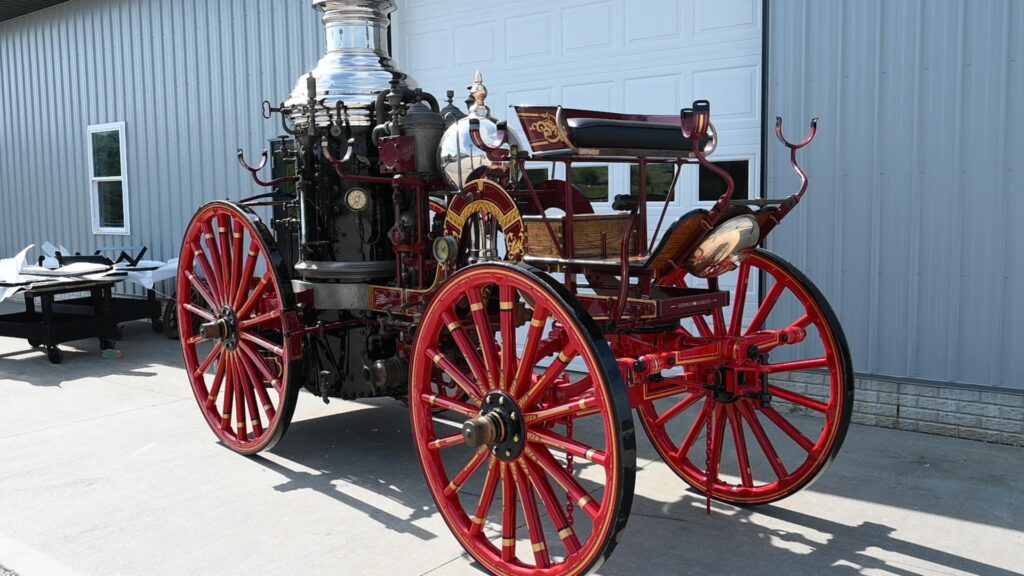
  • Refurbished steam engine will be in the Loveland 4th of July Parade

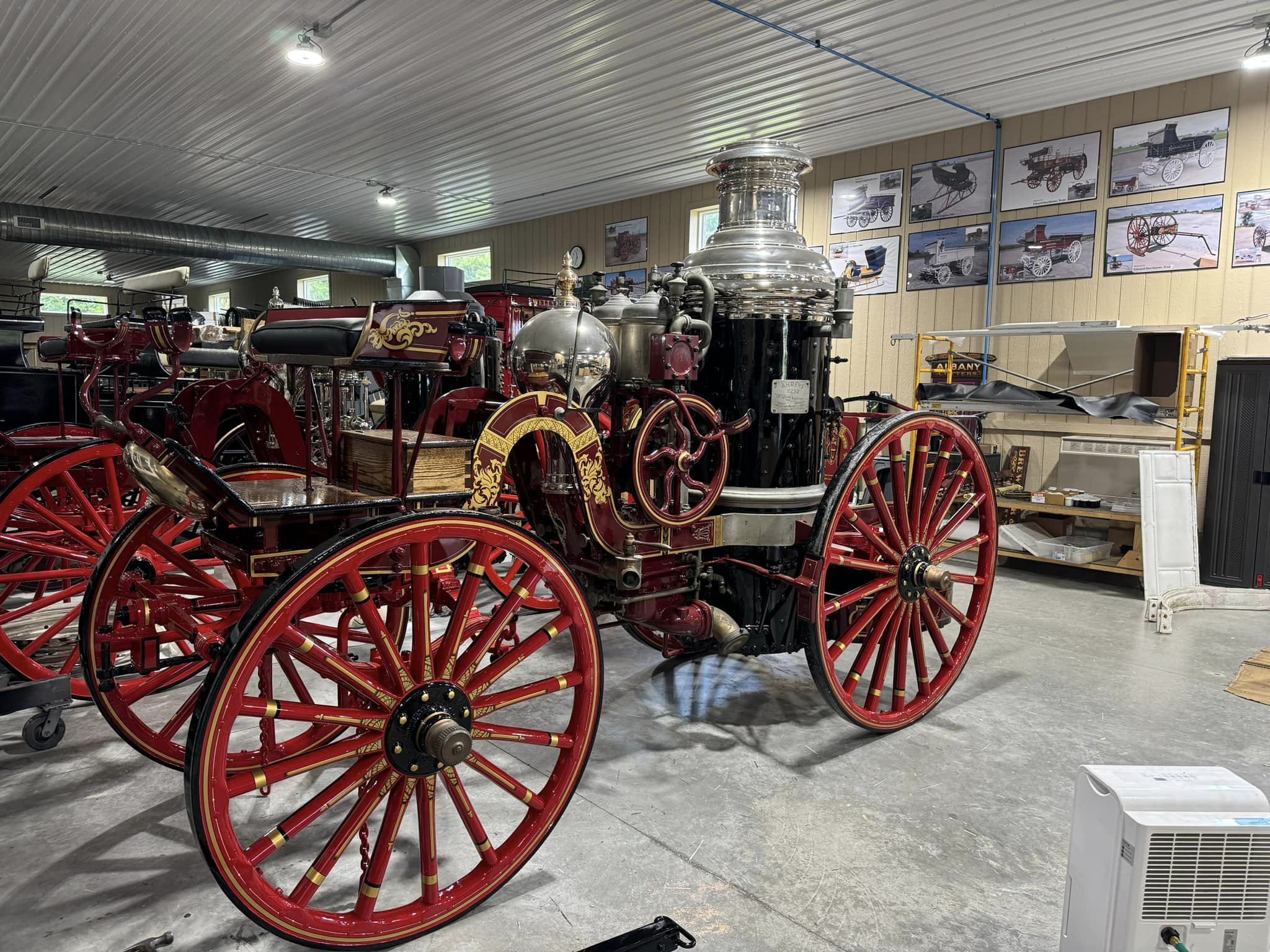
    Refurbished steam engine will be in the Loveland 4th of July Parade

    Photos via Loveland/Symmes Fire Department on FaceBook

    Loveland, Ohio – The Loveland/Symmes Fire Department giving the horses a trial run as they prepare to unveil their refurbished steam engine at the Loveland 4th of July Celebration.”

    _______________

    David and Cassie will be heading to the Historic District to bring you the Parade “Live” on our FaceBook channel.

    Cassie Mattia will broadcast “live” from the 4th of July Parade

  • Cassie Mattia will broadcast “live” from the 4th of July Parade

    Cassie Mattia will broadcast “live” from the 4th of July Parade

    David and Cassie will be heading to the Historic District to bring you the Parade “Live” on our FaceBook channel.

    Loveland, Ohio – On Thursday, July 4, starting at 7 PM Cassie Mattia will begin her FaceBook Live broadcast from the heart of Historic Downtown during the 4th of July Parade. Cassie will talk about the fun floats, the participants in the parade, and tell you who they are as they pass by.

    Cassie Mattia is the President and Publisher of Loveland Magazine.

    “I am beyond excited to back for another year to commentate the annual Loveland 4th of July Parade,” Cassie said. “I was told by the Assistant City Manager, Misty Clark, that the parade this year is going to be the largest parade yet, which is really exciting for the city and its local businesses. For those of you that can’t make it to the celebration this year I hope that I can make you feel as though you have front seats at the parade and are a part of all the patriotic action!”

    Be sure to tune into our FaceBook page before 7 PM to catch all the action!

    Below are all of the fantastic activities happening through the afternoon into the late evening, ending with the famous Loveland fireworks show around 10 PM. Bookmark this page on your smartphone so you will have the activity schedule and this handy map with you throughout the day.

    [pdf-embedder url=”https://lovelandmagazine.com/wp-content/uploads/2024/06/4th-Map-2024-2.pdf” title=”4th Map-2024-2″]

    Activity Schedule

    Family Fun Zone — 4 to 6:30 p.m. — Nisbet Park
    Festivities kick off in the afternoon at Nisbet Park. Free fun is planned for all ages:

    • Crown & Cape Events – Glitter tattoos, face painting & photo ops
    • Loveland High School Robotics Team – Demonstrations
    • Mathnasium of Loveland – Giant Connect Four
    • NEST Community Learning Center – Lawn games including sack races, egg toss, etc.
    • Premier Martial Arts – Demonstrations
    • Premier Tumbling & Dance – Demonstrations

    Buddy Badges — 4 to 9 p.m. — Nisbet Park Gazebo
    New this year! The city is selling buddy badges for $1 each during the event. Each badge is numbered. Search the crowd to find the person who has your matching number. When you find your buddy, go as a pair to the gazebo in Nisbet Park to collect a matching set of prizes, while supplies last. Prizes will be given in the order of proof of match; highest value prizes first, lowest value last. People can purchase multiple badges. Proceeds will help offset the cost of producing the event. CASH SALES ONLY & MUST BE AGE 18+ TO PARTICIPATE.

    From concert tickets to Yeti-style coolers to private wine tastings, there is something fun for everyone (if you’re lucky enough to find your buddy). Prizes are valued at more than $12,000! Win prizes from our partners:

    Alley Boutique Hops & Berry Taproom Plaid Room Records
    At Home Kauffman Chiropractic Playa Bowls
    Ben Morrison Memorial Foundation LaRosa’s Raising Cane’s
    Berri Eyecare LCNB National Bank Ramsey’s Trailside
    Better Blend Montgomery Cyclery Cincy Shirts
    Blooms & Berries Lemons and Limes Rosé Boutique & Wine Bar
    Cappy’s Taproom & Bottle Shop Let’s Glow Crazy RP Diamond
    Castle Skateland Love Our Land Servatti’s
    Cincinnati Reds Loveland Farmers Market Simply Zero
    Cincinnati Zoo Loveland Police Dept. Soaring Soul Wellness
    City of Loveland Loveland-Symmes Fire Dept. Trailside Provisions
    DoitforJack Jack Quehl Foundation Loveland Stage Co. Paxton’s Grill
    Fleet Feet Loveland Sustainability Council Pet Wants
    Game Show Battle Rooms Matt Haverkamp Foundation HOMEARAMA®
    Grunder Landscaping Co. MegaCorp Pavillion Montgomery Cyclery
    Hilltop Farms Mike’s Carwash Loveland Shorts Film Festival
    Cincinnati Nature Center Dayton Dragons Baseball

    Split the Pot — 4 to 9 p.m. — Near Jackson Street Market/Fleet Feet
    New this year! The city is selling split-the-pot tickets during the event. Tickets will be $5 each or five tickets for $20. Proceeds will help offset the cost of producing the event. CASH SALES ONLY & MUST BE AGE 21+ TO PARTICIPATE.

    Food Trucks — 4 to 10 p.m.
    Food truck vendors will be available throughout the downtown area. Try out Bagel & Deli TruckFabulous Funnel Cakes & MoreGranny’s Goodies on the GoIndigenous ChefJ’s Fish TacosSEA CuisineSchmidt’s Sausage TruckSmokin Bark BBQSteak It EazyRapid Fired Pizza, and Street Fried.

    Meet George Foster — 4 to 5:30 p.m. — City Hall
    Meet the parade’s Grand Marshal! Cincinnati Reds Hall of Famer George Foster will be available to sign autographs at City Hall. Bobbleheads will be available for purchase ($40). If you would like to bring memorabilia, he will sign it ($40). CASH SALES ONLY.

    Bingo — Two sessions: 4 & 5 p.m. — City Hall
    Take a break from the heat to play a few rounds of bingo! Prizes for game winners. Monetary donations will be accepted with all proceeds going toward the Ben Morrison Memorial Fund, which provides scholarships to Loveland High School seniors.

    Game Show Battle Rooms — Two sessions: 5 & 8:30 p.m. — Fountain Green at Fleet Feet
    New this year! Game Show Battle Rooms is the #1 new game show experience for everyone to enjoy. This will be an immersive mix of your favorite gameshows presented by a host. Step up to the challenge and play, or enjoy watching from the crowd!

    Kids’ Bike Decorating Contest — 6:15 p.m. — Loveland Elementary School
    Decorate your bike/scooter/tricycle for the holiday, and meet at Loveland Elementary School (600 Loveland-Madeira Road) to take part in this annual tradition. Kids will gather and then take part in the parade at 7 p.m. Prizes sponsored by Trailside Provisions.

    Parade — 7 p.m.
    The parade will leave from Loveland Elementary School (600 Loveland-Madeira Road), turn on West Loveland Avenue, and travel through the downtown district, ending at the intersection of State Route 48/Second Street and East Loveland Avenue. George Foster — a Cincinnati Reds Hall of Famer, a member of the Big Red Machine World Series Champions, and 1977 MLB MVP — will be the Grand Marshal!

    Concert — 8 p.m.
    Don’t miss a free concert by the Trailer Park Floosies! They are known for being one of Cincinnati’s most fun party bands, playing hits from the 80s, 90s, and today. Jam to Top 40, rock, and dance favorites.

    Pie Eating Contest — 8:30 p.m. — City Hall Front Lawn
    Serving up a slice of Americana! Get ready for some old-fashioned fun when the city hosts its 2nd annual pie eating contest. No hands allowed. Must be age 18 or older. Contestants, please pre-register online to ensure you have a spot! Limited sign-ups/waitlist may be available the day of event.

    Fireworks — 10 p.m.
    Downtown Loveland will be the best place to view the show, as the fireworks will be staged from Kiwanis Park.  The Matt Haverkamp Foundation Dog Park (located at Kiwanis Park) will close at noon on July 4 to allow for event prep.


    Shuttle Transportation

    FREE parking shuttles will be running continuously from 4-11 p.m.

    • Shuttle pick-up locations will be at Loveland High School (1 Tiger Trail) and the Loveland Early Childhood Center (6740 Loveland-Miamiville Road).
    • Drop-off locations will be at Riverside Drive (near Veterans’ Memorial) and Third Street (near fire station).
    • Please note eventgoers will need to walk to the festivities from the drop-off locations.

    Road & Parking Closures

    This large event requires temporary road closures and parking restrictions.

    Temporary Road ClosuresJuly 4

    • Railroad Avenue at West Loveland Avenue (near Paxton’s Grill) from 8 a.m. to 11 p.m.
    • Railroad Avenue at Harrison Avenue/First Street intersection (near Nisbet Park) from 8 a.m. to 11 p.m.
    • Beginning at 4 p.m., West Loveland Avenue will be closed between Karl Brown Way and State Route 48/Second Street. Police will open the road for the parade to travel through downtown and then close it again until after the fireworks at approx. 10:30 p.m.
    • From 6:30-8:30 p.m., there will be temporary road closures for the parade route. The parade route is as follows:
      • Starts at Loveland-Madeira Road from Loveland Elementary School
      • North on Loveland-Madeira Road to West Loveland Avenue
      • West Loveland Avenue to the State Route 48/Second Street intersection

    Parking Restrictions: July 3-4

    Due to parade and shuttle routes, some or all parking spaces will be affected in the following locations:

    • Harrison Avenue
    • Kiwanis Park
    • Park Avenue
    • Railroad Avenue near Paxton’s Grill
    • Railroad Avenue near Nisbet Park
    • Railroad Depot Lot (Public lot near Fleet Feet)
    • Riverside Drive
    • Third Street
    • West Loveland Avenue in Historic Downtown
  • Firefly Walk at Grailville is free and open to the public

    Firefly Walk at Grailville is free and open to the public

    Monday, June 24th, at 9PM

    Meet outside Oratory at Grailville 

    FREE and Open to the Public!

    Wear mosquito repellant, and good walking shoes, boots if muddy, bring flashlight or come with a buddy who has one.

    Don’t miss out this is the height of Firefly Season and Shangri-lLa at Grailville is absolutely magical.

  • Residents of Loveland & Symmes Township: Upcoming Citizens Fire Academy

    Residents of Loveland & Symmes Township: Upcoming Citizens Fire Academy

    Loveland, Ohio. – The Loveland Symmes Fire Department (LSFD) is looking for City of Loveland and Symmes Township community members to attend their Citizens Fire Academy, starting Wednesday evening, July 31. 
     
    The Citizens Fire Academy offers adult citizens from our community the opportunity to learn about their fire department. As an academy participant, you will get an introduction to the fire department and learn how firefighters and paramedics do their jobs.

    Classes will be held on Wednesday evenings from 7 PM to approximately 9 PM starting July 31 with graduation Monday, September 9th.

    The LSFD Citizens Fire Academy has a great history of success that we are very proud of. Past participants reported that they truly enjoyed the training and developed a much better understanding of the level of training and dedication firefighters need to perform their tasks. One participant said that she expected that most of the training would be in the classroom and was surprised that it was hands-on education as well.

    “Our Citizens Fire Academy is a fun and easy way to see demonstrations and participate in hands-on training at your own comfort level. You will meet some of our firefighters and have the opportunity to handle some of our equipment” said LSFD Chief Otto Huber. Examples include hose and ladder operations, the use of firefighting equipment, and the ability to see the vehicles and other equipment up close. Huber said, “Naturally this is done in a safe and supervised level and is for people of any ability whatsoever-everyone is welcome.”

    How to Sign up for the LSFD Citizens Fire Academy:

    SCAN THE QR CODE

    EMAIL: TFOUST@LSFD.org

    CALL: 513-697-2384

  • Tee Higgins ends holdout and signs Franchise Tender with Bengals

    Tee Higgins ends holdout and signs Franchise Tender with Bengals

    by Chris Ball

    Queen City Sports from Loveland, Ohio


    On Monday, Bengals wide receiver Tee Higgins officially ended his holdout and signed his franchise tender. He’ll now make $21.816 million fully guaranteed for the 2024 season. Higgins played in 12 games last year and caught 76 passes for 656 yards and 5 touchdowns. His season high in receiving yards came on December 23 when he had 5 receptions for 140 yards and a touchdown in a 34-11 loss to the Pittsburgh Steelers. He spent much of 2023 dealing with lingering rib and hamstring injuries but hopes to put those behind him next year and show that he is indeed a top receiver in this league.

    Photo courtesy of the Cincinnati Bengals on Twitter

    The impact of Higgins’s signing his franchise tender in June and reporting to Bengals training camp can’t be anything but beneficial. Having a healthy Joe Burrow throwing passes and working on the critical element of timing with one of his key receivers in July instead of August is absolutely critical to doing what the Bengals have often struggled to do in years past: start the season strong.

    They lost 3 out of their first 5 in both 2022 and 2023. Joe Burrow’s injury no doubt played a large role in that last year. However, having both he and Higgins healthy, in sync, and on the field ready to go for the first part of 2024 will be a welcome sight for all of Who Dey Nation.

    While there was never really a significant belief that Higgins would sit out the 2024 season, there was plenty of uncertainty about just when he would sign and/or report for offseason workouts. With those questions safely behind them, the hope is that the team can focus on their work on the practice field.

    Bengals Training Camp presented by Kettering Health kicks off on Wednesday, July 24. Training camp practices will take place at the Kettering Health Practice Fields located just west of Paycor Stadium. Practices will continue through August 20th. The Bengals first preseason game is on August 10th against the Tampa Bay Buccaneers.

    What do you think about Higgins’ extension? Let us know in the comments here or on Facebook, or drop us a line at the email below!

    _______________________

    Hey readers… have an opinion about sports? How about a topic you’d like to see written about in Loveland Magazine or a thought about one of our articles?

    Just need to vent and get out your frustration about the Reds, Bengals, or any other sports issues?

    Feel free to share with an email to lovelandmagazinesports@gmail.com!

    We would love to hear from our readers, and we thank you for your support and engagement.


    Christopher Ball is a longtime Loveland resident and an attorney. He graduated from Loveland High School in 2003 and was a member of the football team before going on to become a coach’s assistant at DePauw University in Greencastle, Indiana. He has been following and rooting for the Reds and Bengals since the early 1990s and has been through the many ups and downs that fandom has wrought over the years.

  • Air Quality Alert has been declared for Loveland on Sunday and Monday

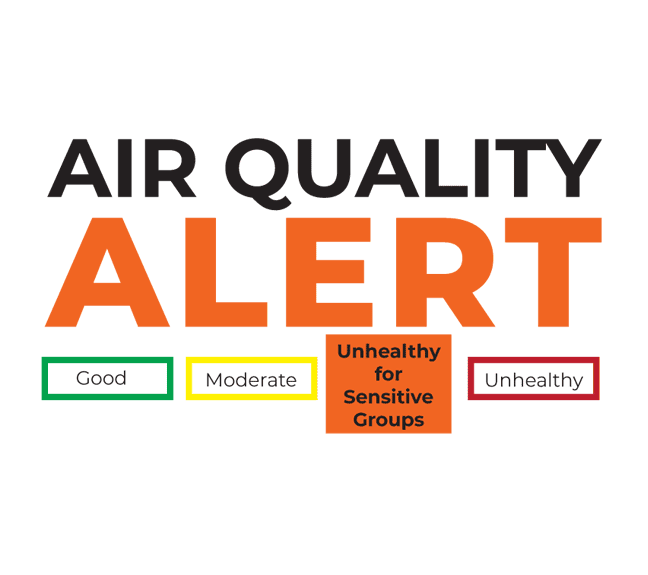
    Air Quality Alert has been declared for Loveland on Sunday and Monday

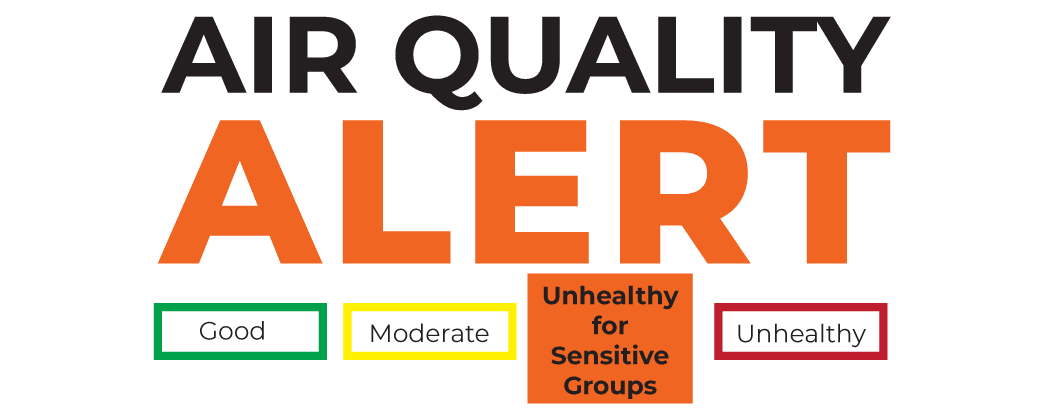
    Loveland, Ohio – Air Quality Alert has been declared for Loveland and the surrounding area for Sunday and, Jun 16 and 17.

    Sunday, Jun 16: 120 AQI Unhealthy for Sensitive Groups Ozone

    Extended Forecast
    Monday, Jun 17: 110 AQI Unhealthy for Sensitive Groups Ozone


    Sensitive groups include people with lung disease such as asthma, older adults, children and teenagers, and people who are active outdoors.

    Sensitive groups:

    Make outdoor activities shorter and less intense. Take more breaks. Watch for symptoms such as coughing or shortness of breath. Plan outdoor activities in the morning when ozone is lower. People with asthma: Follow your asthma action plan and keep quick-relief medicine handy.

    Everyone else: Consider making outdoor activities shorter and less intense.

    The Southwest Ohio Air Quality Agency (a division of Hamilton County Department of Environmental Services) has issued an Air Quality Alert for Butler, Clermont, Hamilton and Warren counties in Ohio and Boone, Campbell and Kenton counties in Kentucky.
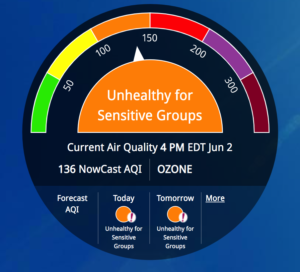

    For “real-time” checks on Loveland’s air quality use this tool on your smartphone, tablet, or computer:

  • Loveland Art Craw will be Saturday, June 22

    Loveland Art Craw will be Saturday, June 22

    Loveland, Ohio – The Loveland Art Craw will be Saturday, June 22 from 4 until 9 PM.

    Here are Highlights from the organizers:

    • OHIO PLEIN AIR SOCIETY: We’re hosting the Ohio Plein Air Society for the first time, which means plein air artists from around Ohio will be hanging around the Loveland area painting various Loveland scenes outside from June 21-22. On Saturday, June 22, they’ll be showing/selling their artwork fresh from their easels beginning at 4 PM at the Loveland Art Studios on Main (or somewhere around the downtown Loveland area).

    Screenshot 2024-05-29 at 9.17.35 AM.png OHIO PLEIN AIR SOCIETY

    In addition, this year at LASM we are proud to be hosting Artists from the Ohio Plein Air Society (OPAS), which was established in August 2002. OPAS is at the forefront of the resurgent plein air  movement in the US.

    • FROGMAN T-SHIRTS: Thanks to some cool artwork by fine artist Tom Post, we’ll be incorporating the legendary Loveland Frogman into our event by selling LAGC promo FROGMAN t-shirts ($20 each). Who knew it was a “thing,” right? They will be available on the day of the Art Crawl at the Loveland Studios on Main. Any leftover shirts from the Art Crawl will be sold at Frogman events such as the upcoming Return of the Frogman Festival. Proceeds from the sale of the shirts support the Art League of Loveland, with a percentage going back to the artist.

    Loveland Art Crawl_Frogman T-Shirt_FreshRags.jpgLoveland Frogman 3 tshirt.jpg

    • CITY OF LOVELAND HOSTING THE LOVELAND WATERCOLOR GUILD: This year the City of Loveland is involved! They’ve opened a small gallery this year in their front foyer area, and they will be featuring the Loveland’s Watercolor Guild.
    • 14 ART GALLERY VENUES/BUSINESS LOCATIONS: This year we’ve added Cappy’s Tap Room and Bottle Shop as a host venue, and they will be featuring the artist and organizers (David Jonathan and Stacey Lund) of the mural “Angels on the Trail,”
  • Cassie Mattia interviewed by Julie O’Neill on Fox 19

    Cassie Mattia interviewed by Julie O’Neill on Fox 19

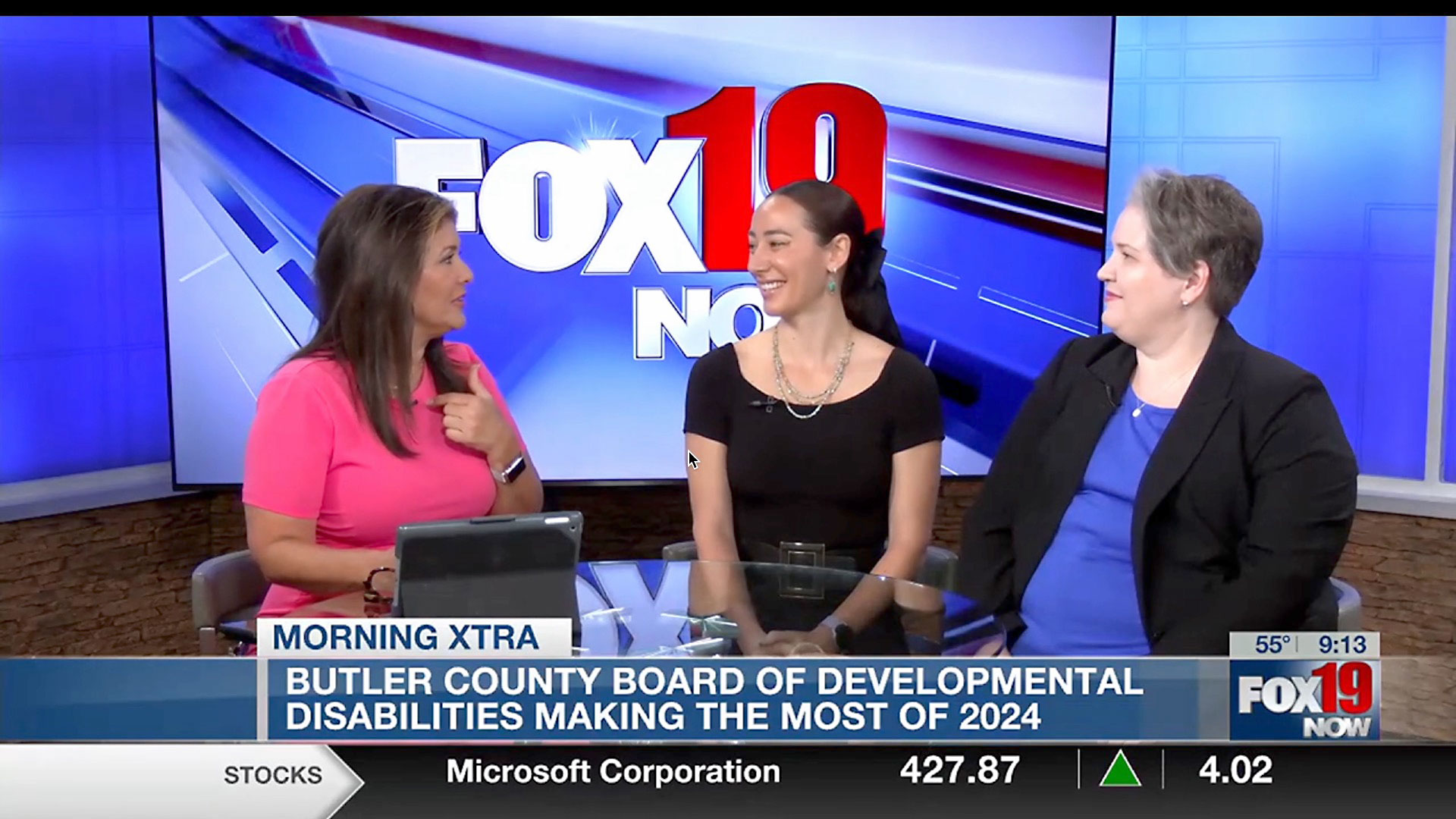
    FOX19 Now morning anchor Julie O’Neill, Cassie Mattia, and Butler County Department of Developmental Disabilities Superintendent, Lee Ann Emmons

    (Screen Grab from Fox 10)

    David Miller is the Managing Editor of Loveland Magazine

    by David Miller

    Loveland, Ohio –  On Tuesday, Loveland Magazine President Cassie Mattia and the new Butler County Department of Developmental Disabilities (BCBDD) Superintendent, Lee Ann Emmons got the opportunity on FOX19 Now News to share with the community all the fun and exciting things they have going on at the agency.

    Julie O’Neill interviewed Superintendent Lee Ann Emmons and BCBDD’s Public Relations Coordinator Cassie Mattia about their new mission statement, gaining their 3-year accreditation, being named one of the top workplaces in Enquirer – Cincinnati and Kentucky for 2024, and what it’s been like for Lee Ann thus far as a new Superintendent for the BCBDD.

    If you would like to meet Lee Ann attend the meet and greet on Tuesday, June 25 from 4:30 until – 5:30 PM at the Janet Clemmons Center located at 282 N Fair Ave. in Hamilton.

    President and Publisher of Loveland Magazine, Cassie Mattia is a resident of Historic Downtown Loveland and the Public Relations Coordinator at Butler County Board of DD. Cassie was awarded the Little Miami River Chamber Alliance 2021 Young Business Professional of the Year.
    _______________

    Map to Janet Clemmons Center
  • Air Quality Alert for Thursday

    Air Quality Alert for Thursday

    Loveland, Ohio – The Southwest Ohio Air Quality Agency (Agency) has issued an Air Quality Alert for Thursday, June 13,  effective at 12:00 a.m. midnight through 11:59 p.m. for Butler, Clermont, Hamilton, and Warren counties in Ohio; Boone, Campbell, and Kenton counties in Kentucky; and Dearborn County in Indiana.

    The Agency expects to see levels of ozone in the “unhealthy for sensitive groups” range on the Air Quality Index (AQI).

    Air quality tips:

    • Take the bus, carpool, bike, or walk instead of drive.
    • Refuel your vehicle after 8 p.m.; do not top off when refueling and tighten the gas cap.
    • Do not idle your vehicle; exhaust contributes considerably to ozone formation.
    • Combine trips or eliminating unnecessary vehicle trips.
    • Keep your vehicle maintained with properly inflated tires and timely oil changes.
    • Avoid use of gasoline-powered lawn equipment on Air Quality Alert days.
    • Avoid use of oil-based paints and stains on Air Quality Alert days.
    • Never burn leaves or other yard trimmings.
    • Suspend use of fire pits, campfires and charcoal grills on Air Quality Alert days.
    • Conserve electricity by turning out lights and unplugging unused appliances and electronics.