Loveland, Ohio – “This has always made me mad, but even more so this year since I helped plant the flower boxes a few weeks ago, said resident Sue Peterson on Saturday. She lives a block and a half from the Col. Thomas Paxton Bridge over the Little Miami River in the West Loveland Historic District.
Peterson explained, “Last night 9 of the 16 begonias in the flower boxes on the north side of the bridge disappeared. Guessing someone now has a large grouping of begonias in their yard.”
Peterson asked Loveland Magazine, “I Would appreciate it if you put something out asking people to keep their eyes and ears open.”
Peterson says that this is what the flower boxes should look like
Each year the Loveland Beautification Committee plants seasonal flowers around the City.
Cassie Mattia is the Associate Editor of Loveland Magazine and lives in Historic Downtown.
by Cassie Mattia
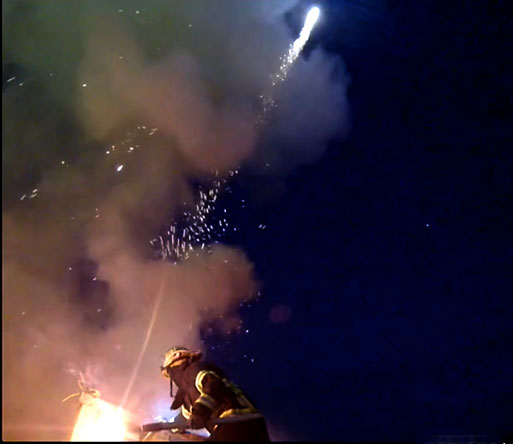
Loveland, Ohio – Loveland videographer Bob Kessler wanted to get a unique perspective of this year’s 4th of July fireworks by getting up close and personal with the launch zone! Kessler was able to not only show the launch of the fireworks but the explosions as well in one wide-angle shot. Loveland Magazine and Kessler teamed up this year for the 4th so that he could receive credentials to be on the actual launch site. By doing this, Kessler was able to witness the firework preparations and be there when the fuses were lit.
Loveland’s and Symmes Township’s annual Independence Day celebrations were canceled this year, however, the City and Township were able to hold two simultaneous, “park and watch” firework shows on Saturday, July 4th.
Kessler positioned himself at Loveland’s launch site inside Philips Park which was closed to the public for the day. Symmes Park, which was also closed to the public for the day, acted as the launchpad for the Township.
Kessler explained that previously he shot video from various street views in Downtown Loveland and on the bridge of the Little Miami River. Typically, Loveland launches its annual show from inside Kiwanis Park on Wall Street but, this year, because of COVID 19 the City was concerned about having thousands of people crowd into Historic Downtown, which is known as the best viewing spot for the fireworks. City Hall ended up deciding to move the launch to a higher location in order to take advantage of the area’s church and school parking lots. Spectators were either encouraged to watch the shows, drive-in movie style and practice social distancing, or residents who lived near the parks were asked to stay at home to enjoy the show. Those that decided to watch the fireworks from their cars went to Loveland High School, Home of the Brave Park, church parking lots, and surrounding subdivisions while of course remaining socially distant.
Kessler told us that the launch locations were chosen to accommodate the use of larger shells, which go higher into the air and allow spectators to watch from a much wider area.
Here is Kessler’s favorite still shot from his vantage point at the launch pad inside Phillips Park. “This is my favorite picture from the batch I shot last night. I was about 250′ from the launch site, behind the exhibitors running the show. Nikon D850, 14mm, ISO 400, f/10, 8 seconds,” said Bob Kessler.
Kessler said he was excited about the addition of a second launch site at Symmes Park this year.
“The second launch site promised to make for a unique experience. That’s why I settled on Phillips Park as the best location for me to photograph both stills and video images.”
Dave Miller, Loveland Magazine’s Editor-in-Chief, covered the wide shots from the top of the stands at LHS’s stadium where he was able to view both Loveland’s and Symmes’ fireworks. He used two cameras, one acted as a live feed so LOVELAND MAGAZINE TV could have a live broadcast of the shows.
Kessler and Miller were in constant communication in the days leading up to the show as times and locations rapidly changed with not much notice to the public. Luckily Loveland Magazine had a firework “inside man,” which allowed us to communicate quick and accurate firework updates to the public.
A few minutes before launch time Kessler sent a message to Miller saying, “I passed the cop-test. The patrol came through and the Rozzi guy said, ‘He’s with us!”
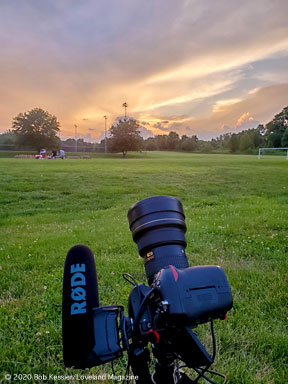
Some of the camera equipment Bob Kessler used at the launch site of the Loveland Fireworks show.
Loveland was the first to set off their rockets, then Symmes followed shortly after. Each firework show lasted about fifteen minutes. After the two shows finished both launch pads put on a simultaneous Grand Finale.
“I first contacted the Loveland Symmes Fire Department about getting permission to be close, as they previously ran the show and knew me and my work with Loveland Magazine,” Kessler explained, “I then approached Rozzi’s Famous Fireworks and got the permission of the exhibitor running the show to shoot within the normally closed firing zone.”
Kessler positioned himself in a ditch behind the show operator. Using a wide-angle lens and shooting 4K, he was able to capture a high definition video that allowed him to digitally “zoom-in” on the image without compromising quality. “I concurrently shot digital images with my still camera, the equivalent to an 8K image,” Kessler said.
Kessler experimented with various settings on his camera as the show progressed, mostly shooting still frames at various time exposures of 4, 6, 8, 10, and 12 seconds. “All this fussing had to be done quickly, as I knew the show would only last 15-20 minutes. I managed to get about 75 images and several videos,” Kessler said, “Out of that, I ended up with 11 shots that I liked enough to post on Facebook.”
Kessler learned from the Rozzi folks that the firework shells are able to go up to 100′ in the air for each inch of shell diameter. For example, a 4′ shell would go 400′ feet into the air while a 6′ shell would go about 600 feet into the air.
“I always look forward to working with Bob Kessler on video projects because I learn so much,” David Miller said, “My only regret is there wasn’t enough of him to go around that night so he couldn’t be in the stadium with me to adjust my camera. If he could have been there then all I would have had to do was hit the record button. My video would have been so much better!”
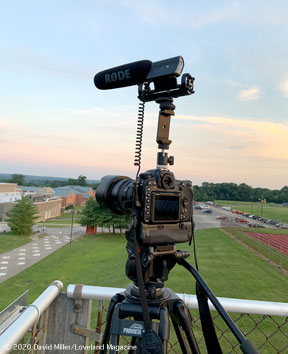
Some of the video equipment David Miller used to shoot video and live-stream the fireworks show from the high vantage point of the stands at Tiger Stadium
Miller also said that when Kessler offered to shoot the show he knew that he would expend countless hours readying his equipment and making adjustments. “Doing something like shooting fireworks is seat-of-pants. There are so many variables such as the rapidly setting sun. Will it be completely dark, well it will be if it’s a cloudy day. If the sun is out and going over the horizon which way will it be heading in relation to where the camera is? Fifteen minutes can make a huge difference in the ambient light that time of day,” Miller explained, “Bob sees all these variables in the days before and has the brainpower to take most of the guesswork out of the equation.”
Miller said he really enjoyed watching the evening unfold from the highest elevation in town. “When I got to the stadium there were already about 20 teens playing frisbee football and before the show, someone new showed up with a cooler of water balloons to cool them off with.”
At showtime, many of the teens and some adults joined Miller at the top of LHS’s bleachers to enjoy the vantage point of seeing both shows. “The pre-show of all the neighborhood fireworks displays going off from the high vantage point I had was pretty cool as well,” Miller added.
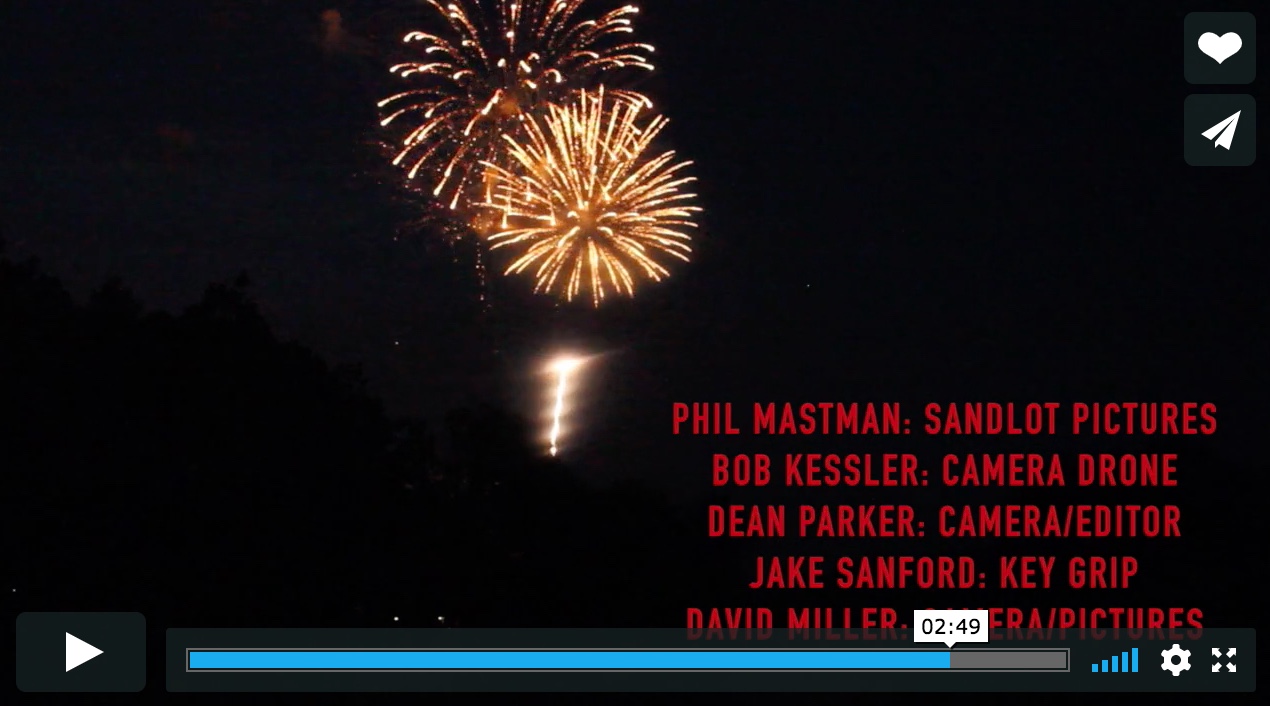
Did you miss the 4th of July firework shows this year? Well, we have you covered! Click below to relive Bob Kessler’s 4th of July Fireworks video production!
Kessler also produced a short clip of Loveland’s Finale which Loveland Magazine ended up using as an experiment of a “Video Cover Photo”.
Loveland Magazine sends out a special thanks to Rozzi’s Famous Fireworks for giving us access to the launch site and showing us such wonderful hospitality!
Check out these previous firework shows that Bob Kessler produced for Loveland Magazine TV. In this first video from 2015, Bob showed close-ups as the fuses were lit by a crew of Loveland Firefighters in full protective gear. Deputy Fire Chief Don Books talks about the show and how safe it was for the crew.
Loveland, Ohio – I met local singer/songwriter Javan Pourvakil last Saturday while I was trying to find Joe Timmerman so I could interview him about the river cleanup he had organized. ([Interview] Joe Timmerman Founder of “A Neighborhood Cleanup”)
In that interview, I mentioned how popular the Little Miami River had become for young people this Spring.
Javan and several friends were on Cones Road on the East bank of the river – hanging!
I was rushed trying to find Joe, so Javan and I barely had a chance to introduce ourselves, but I just couldn’t resist asking if I could record him singing and playing. He shared one of his songs he has been working on.
David Miller is the Editor and Publisher of Loveland Magazine
by David Miller
Loveland, Ohio – Joe Timmerman seems to be awfully young to be so old-school, but he’s both. I got reacquainted with him underneath the home-team basket at a winter basketball game in the Chuck Schmidt Gymnasium at Loveland High School. A Senior at the time, Joe had also been taking photos of the action and he came over and sat down on the floor with me and introduced himself,
He wanted to know if I would publish some of his photographs in Loveland Magazine.
His old-schoolness was when he described his approach to using film cameras and in very creative ways.
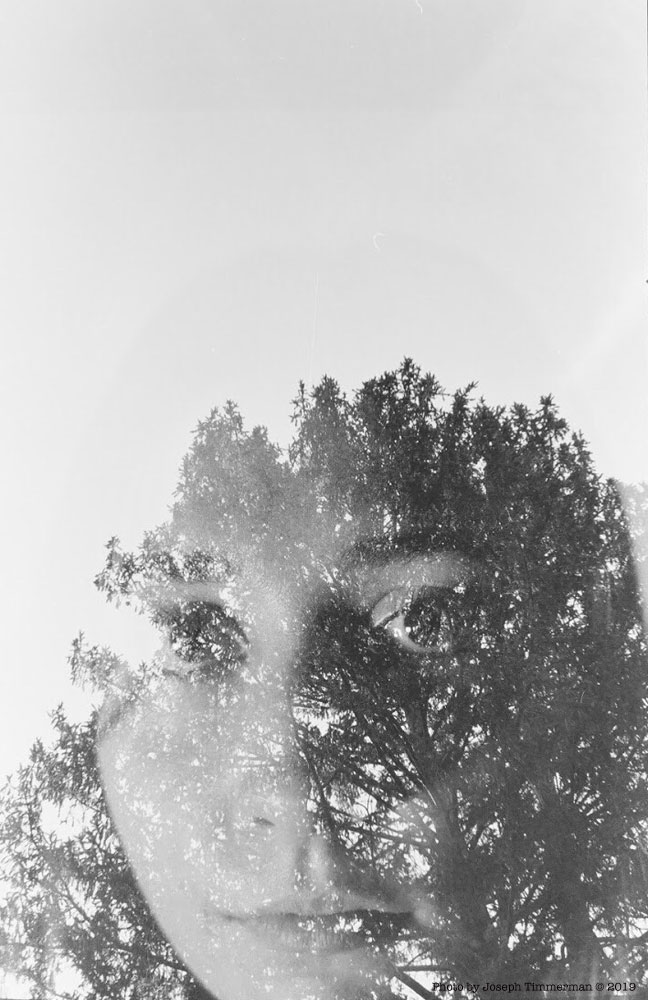
‘Liiife’ is within the borders of this black and white double exposure. I used Ilford HP5 Plus film when shooting these two photos — Laine’s face and a tree in my backyard — which share a single exposure. When I put the roll of film in my camera, I wanted to capture 24 portraits, underexposed in studio lighting, to fill the roll. Then, I chose to reel it back in to the point where the first exposure returned to the beginning, and capture 24 nature/lifestyle photos to randomly share a place on the film with the original portraits. The overarching risk factor of losing some personal pictures was left behind after developing the film and seeing what had come to life in the process. – Joseph Timmerman
I was fascinated by his love of negative film and how sometimes he would be very deliberate in shooting a roll of 35 mm negatives in a way that each captured portrait could be used as the foreground for another image. The second image, a double exposure, involved Joe re-loading the already exposed roll of negatives back into his camera and then exposing a second image over the top of each of the portraits he shot on the first go-around.
The results Joe showed me were a wonderful experiment in photography because of the hit/miss nature of composing a second image over the first. There is also the mastery of the correct exposure for each frame. Many of the double-exposures were taken of his girlfriend on their walks into Historic Downtown Loveland from his home. The final products have a rather ghost-like quality.
I had given up film as soon as I purchased my first digital camera to use for Loveland Magazine reporting. It was out of the necessity to cut costs and be able to have the results almost instantly on my laptop and into a story. From my perspective after so many years of traveling to a camera store to buy the film, traveling back again to have the film developed and prints made, and back again for pick-up – Joe is old-school.
Joe Timmerman smiles outside the Cintas Center after he graduated from Loveland High School in 2019. Timmerman is studying photojournalism at Ohio University
I also discovered that night under the basketball hoop that I had known Joe since he was very little but didn’t recognize him. We once attended the same church. I was inspired by Joe that night and did some of my own experiments.
Joe’s old-schoolness even involved making his own paper from scratch for a photo project during his first year at Ohio University.
Joe’s old-schoolness is also how he will credit the way his parents raised him for his concern for the immediate environment around him. I think it more than just that though and appreciate another old-school quality he possesses – Joe is very humble always giving credit to others and he is generous with a “Thank you.”
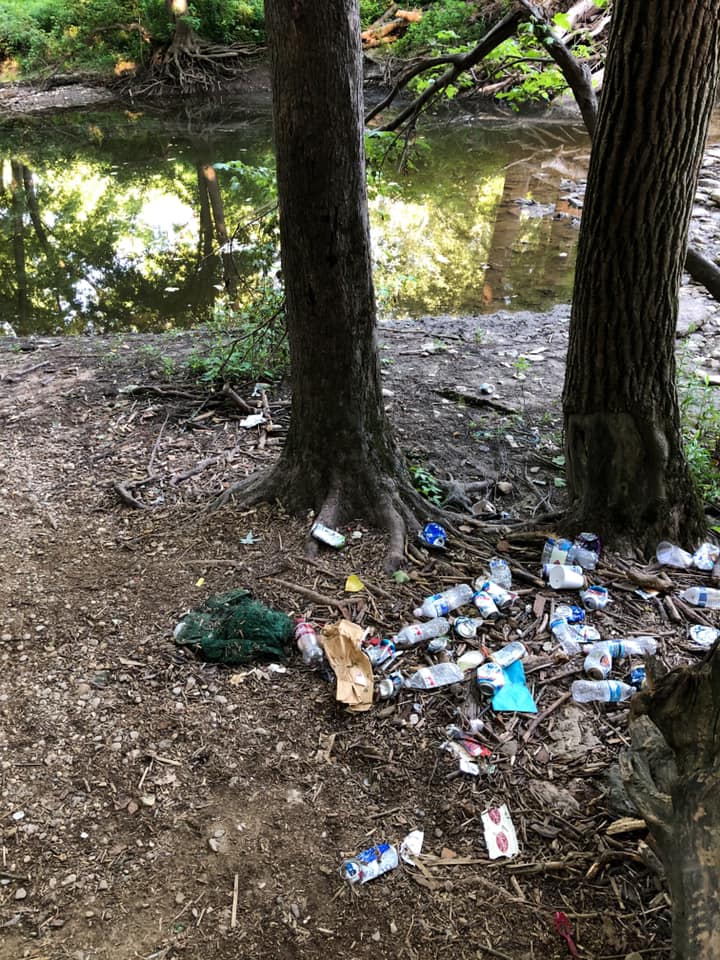
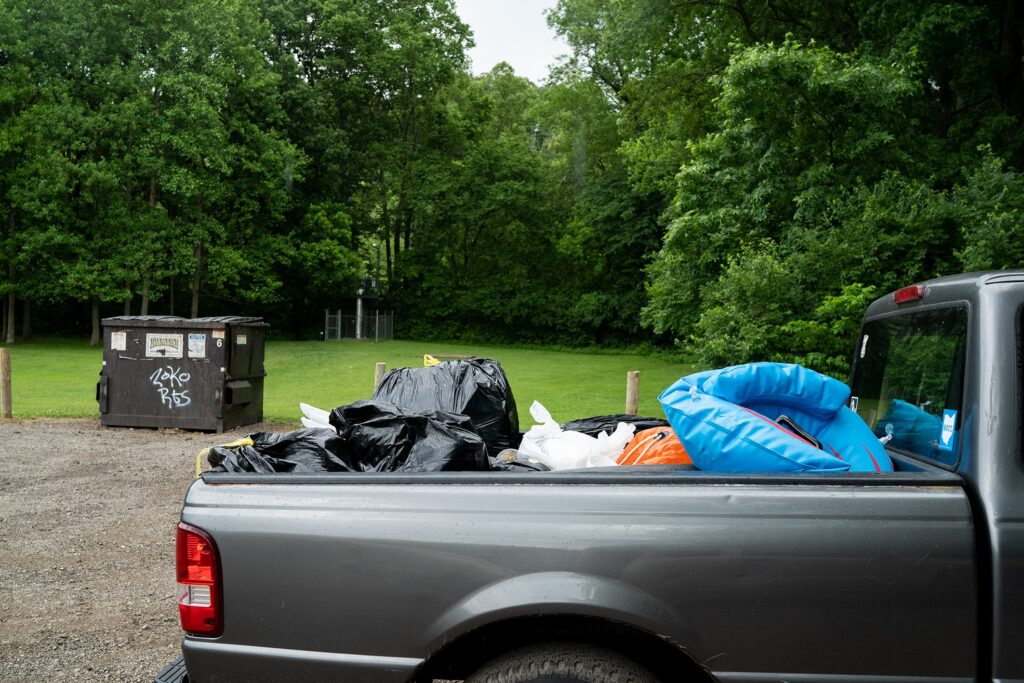
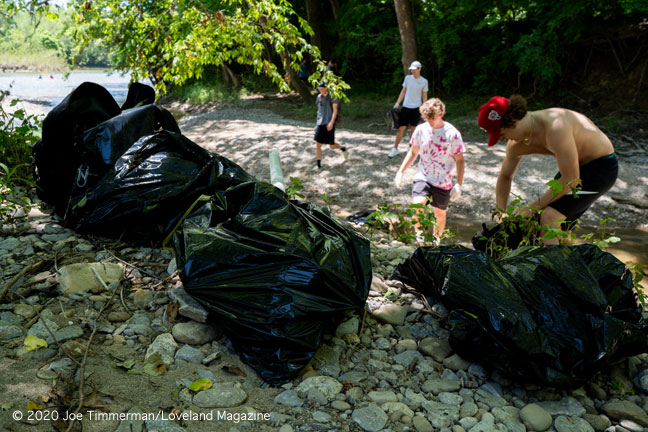
Joe founded “A Neighborhood Cleanup” in 2019. The inspiration was walking in the East Loveland Nature Preserve with his mother and seeing so much trash left by other visitors. He says that growing up his father taught him to always pick up trash when he sees it, especially in his own neighborhood and the places he loves. Last August A Neighborhood Cleanup cleaned the nature preserve and another spot he loved, the rope swing on the bank of the Little Miami just north of Nisbet Park in Historic Downtown.
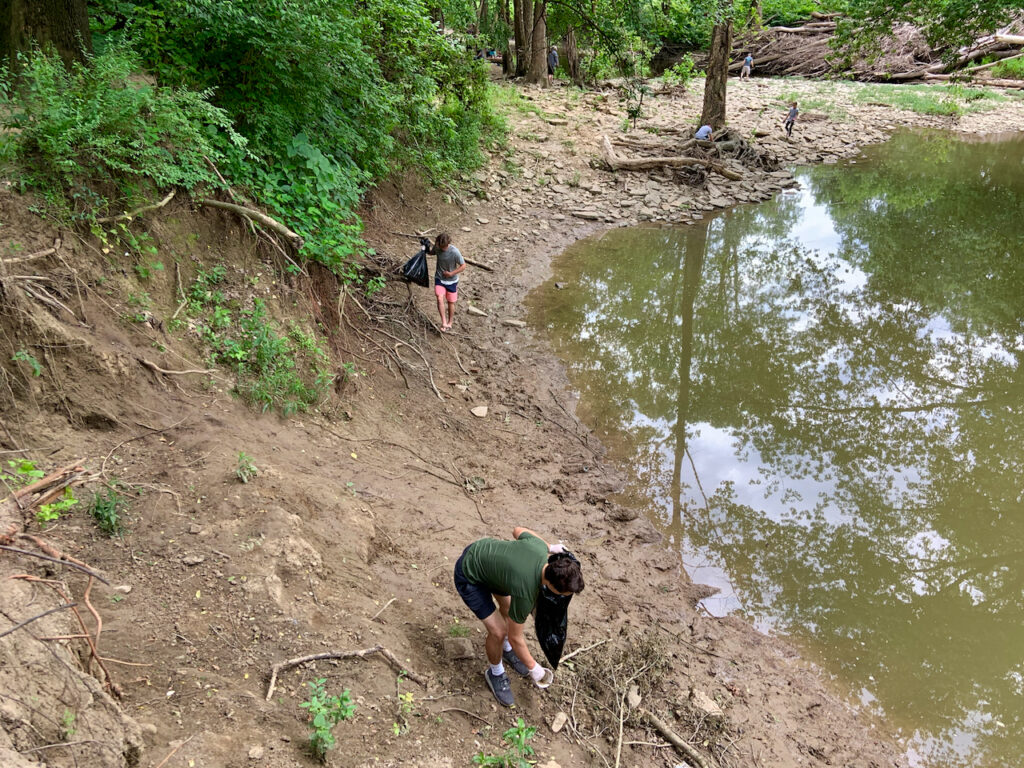
Joe has been back to cleaning the rope swing area this spring and last Saturday expanded the cleanup to include the river from Nisbet Park to the rope swing on the opposite river bank – along Cones Road.
An interesting note is that Loveland’s most famous old-school photographer Nancy Ford Cones once lived at the Roads Inn Farm on Cones Road when she took her famous Loveland photos, Her favorite subjects were family and friends she posed on those same river banks that Joe and friends are now restoring to their intended beauty. The Loveland Musem Center has a nice collection of Cone’s photos and many of them have an ethereal, ghost-like quality similar to Joe Timmerman’s double exposures.
This interview took place along the riverbank Joe and volunteers were cleaning last Saturday afternoon.
Joe inspires his own generation, those to come, and those beyond.
“Like” and “follow” A Neighborhood Cleanup on FaceBook and you will be able to support the efforts and know when the next group cleanup is planned. You might also contact Joe and offer to donate garbage bags and gloves as a way of helping.
Here is a link to Joe’s photography website where you can read more about him and see some of his inspiring art.
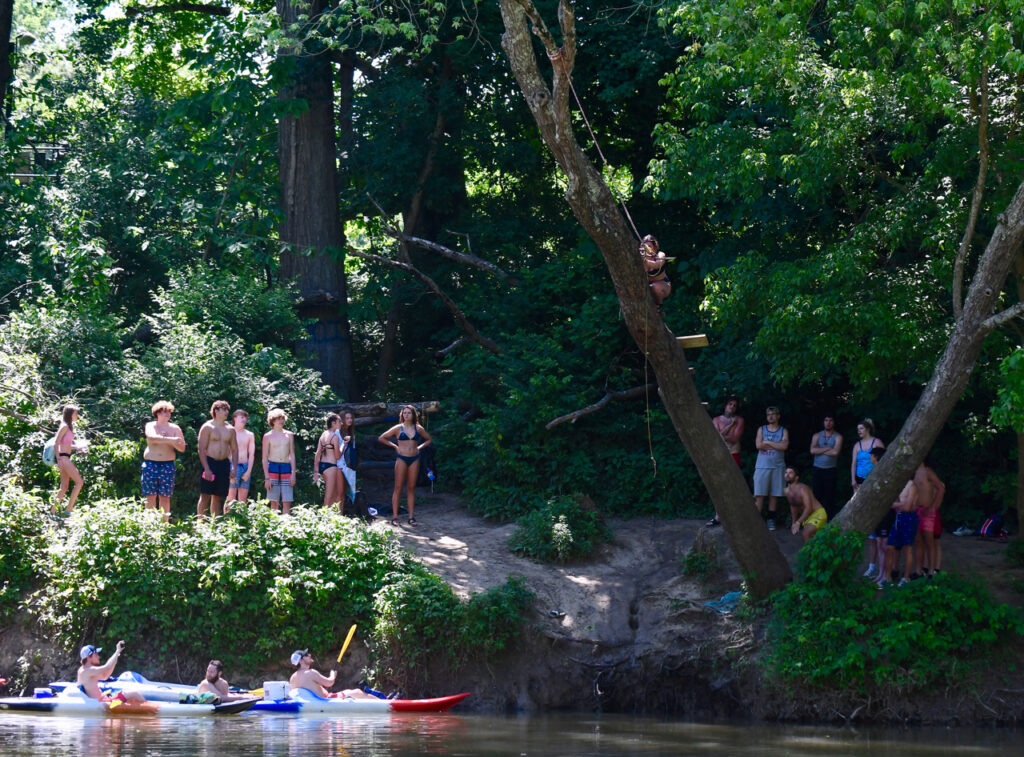
This is the rope swing seen from the opposite side of the river that A Neighborhood Cleanup worked on last Saturday. As you can see, the river has become a very popular spot that many young people call home. Joe Timmerman and his supporters cleared the robe swing area of trash on June 2.
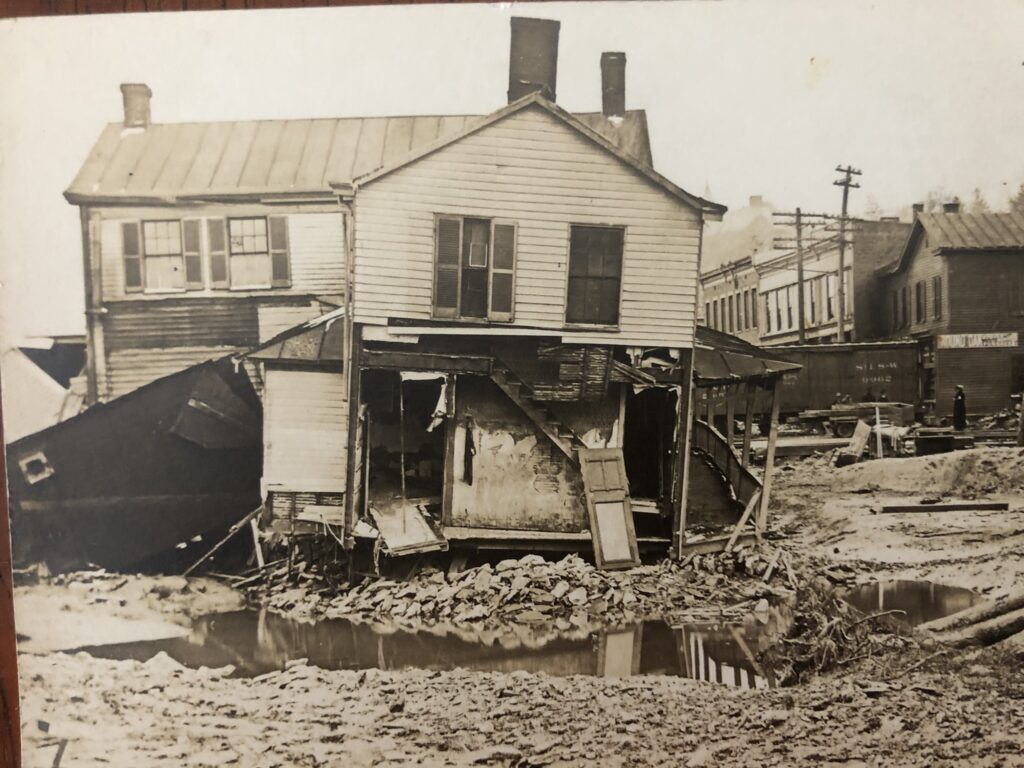
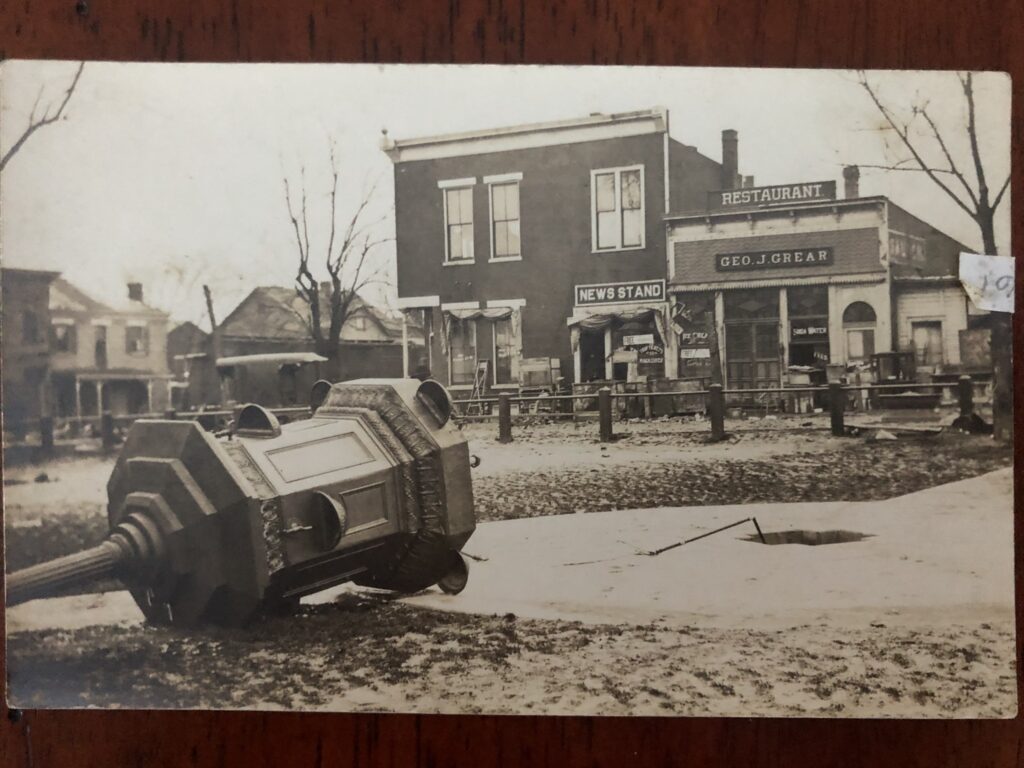
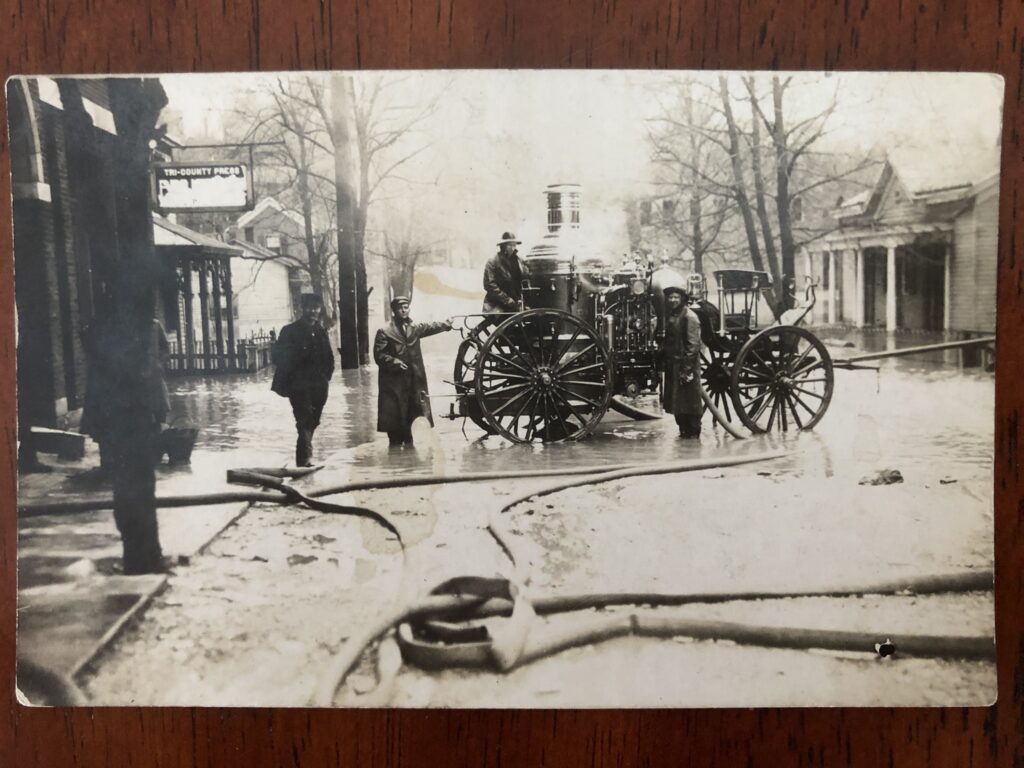
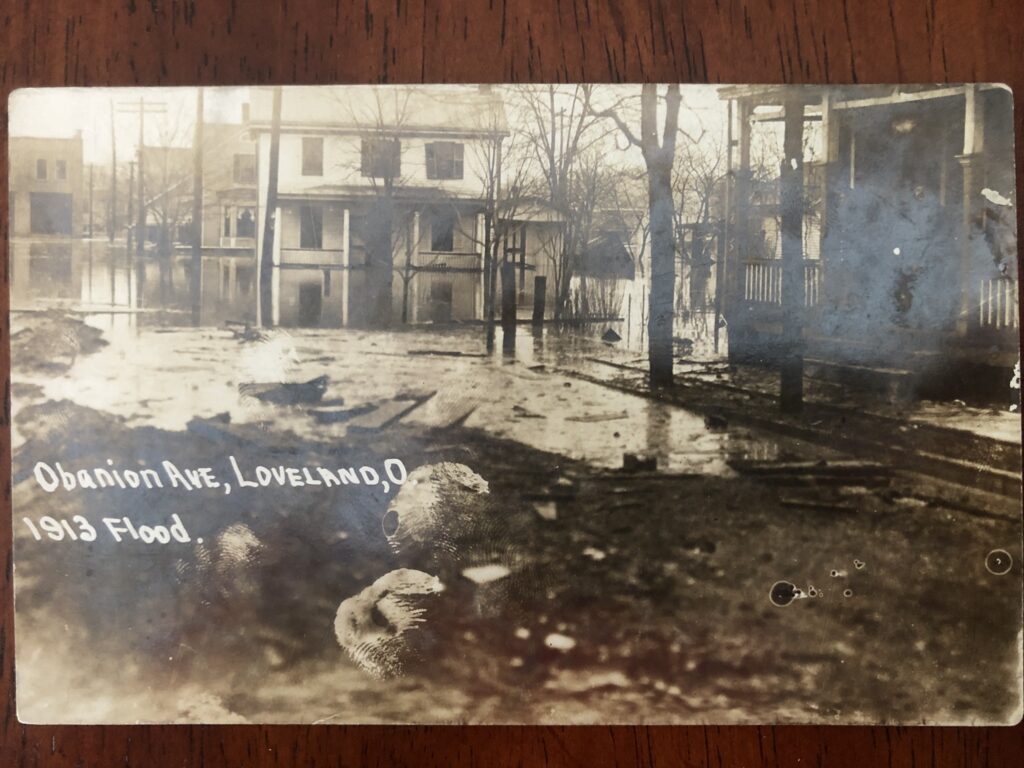
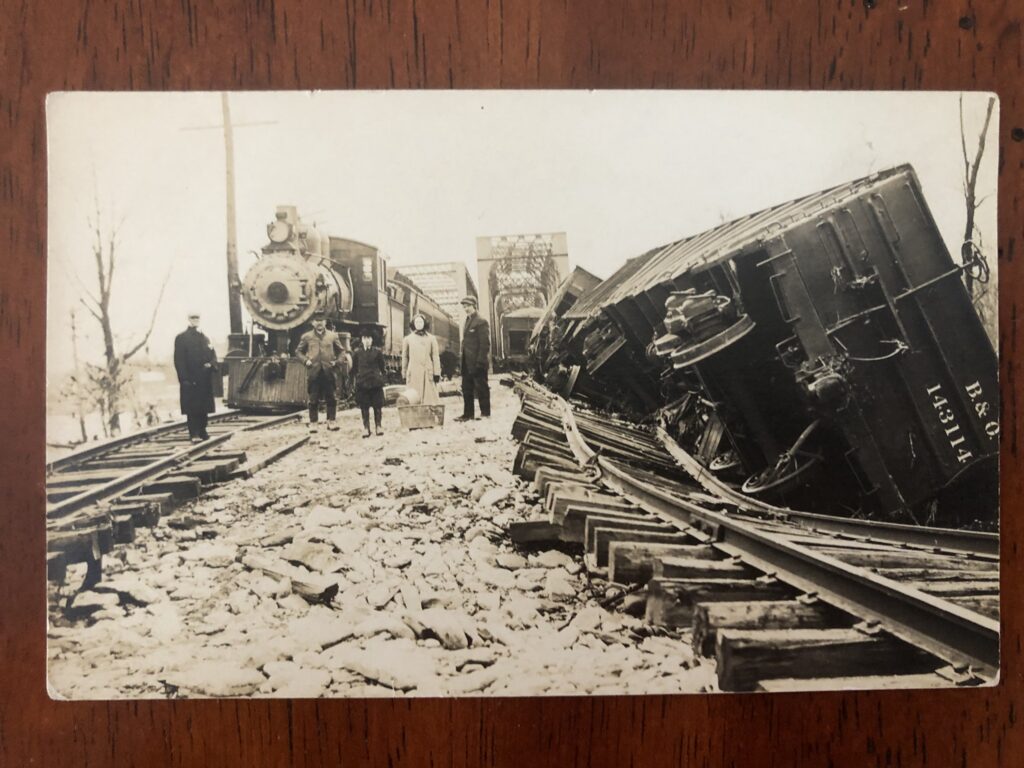
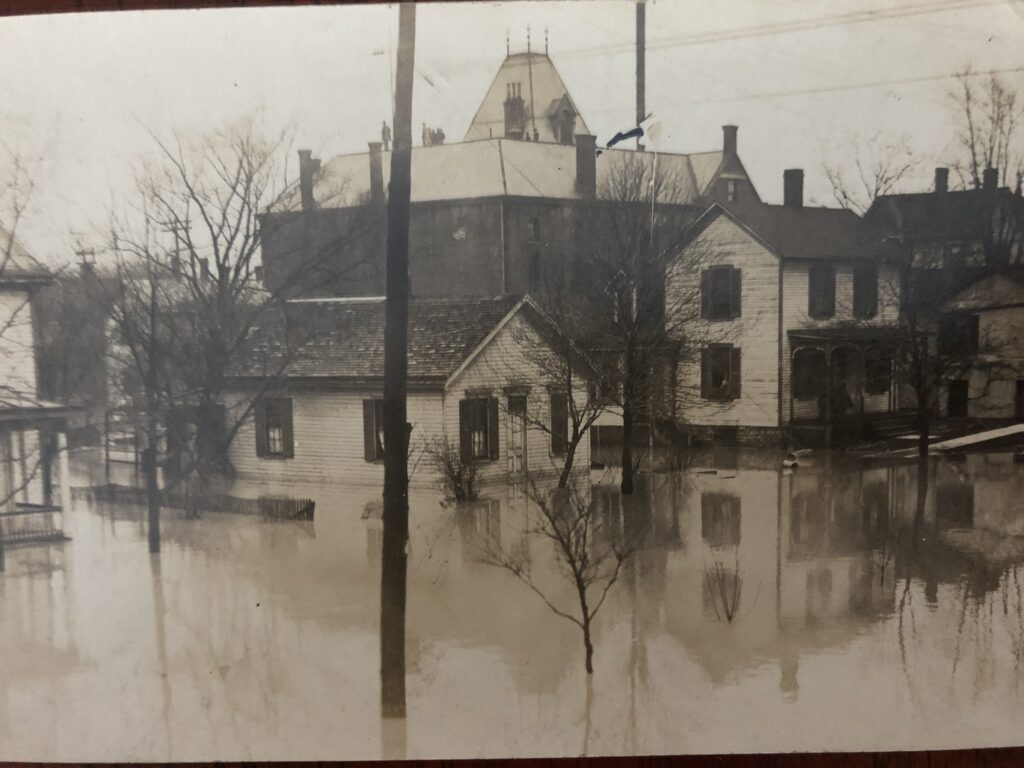
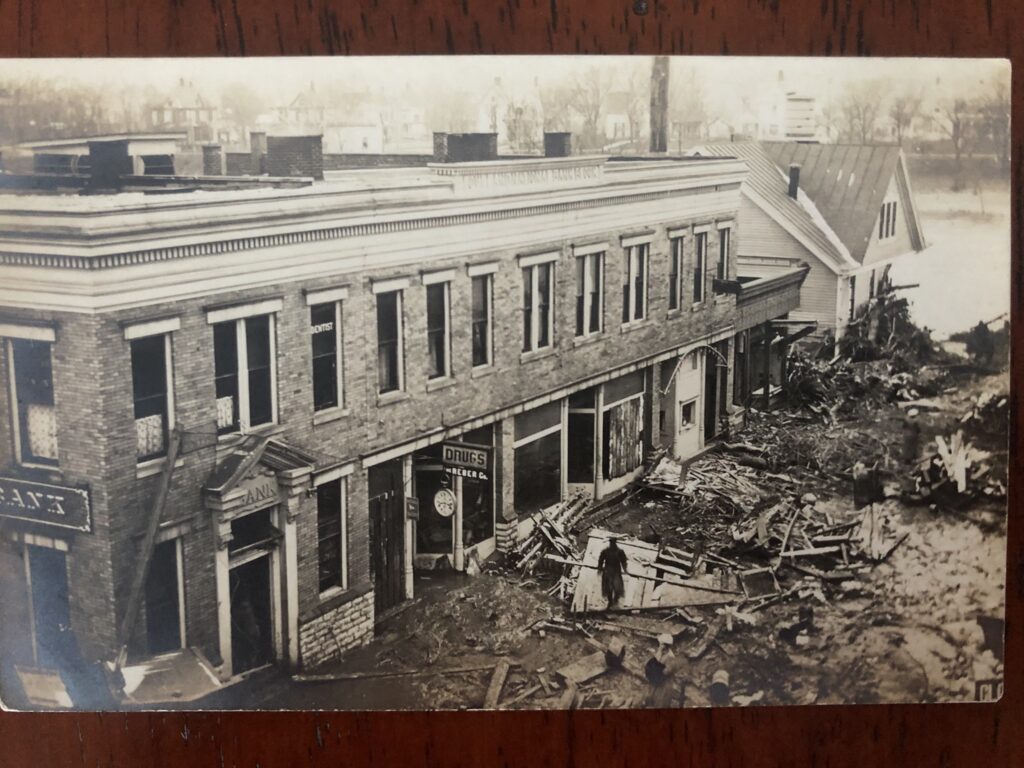
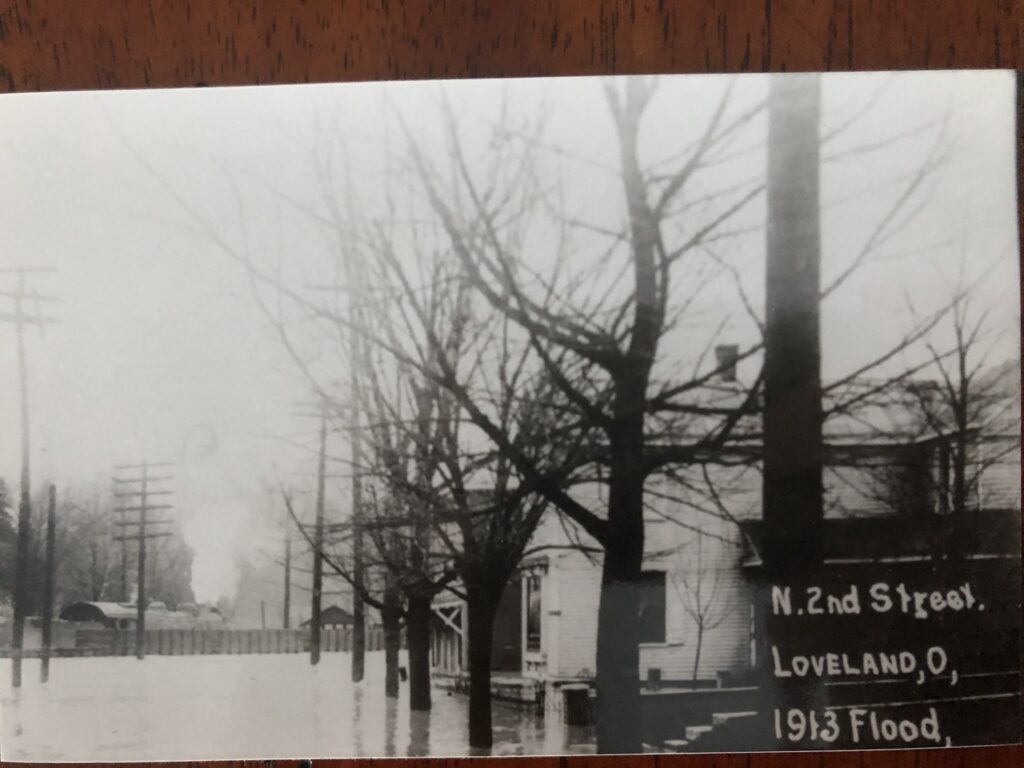
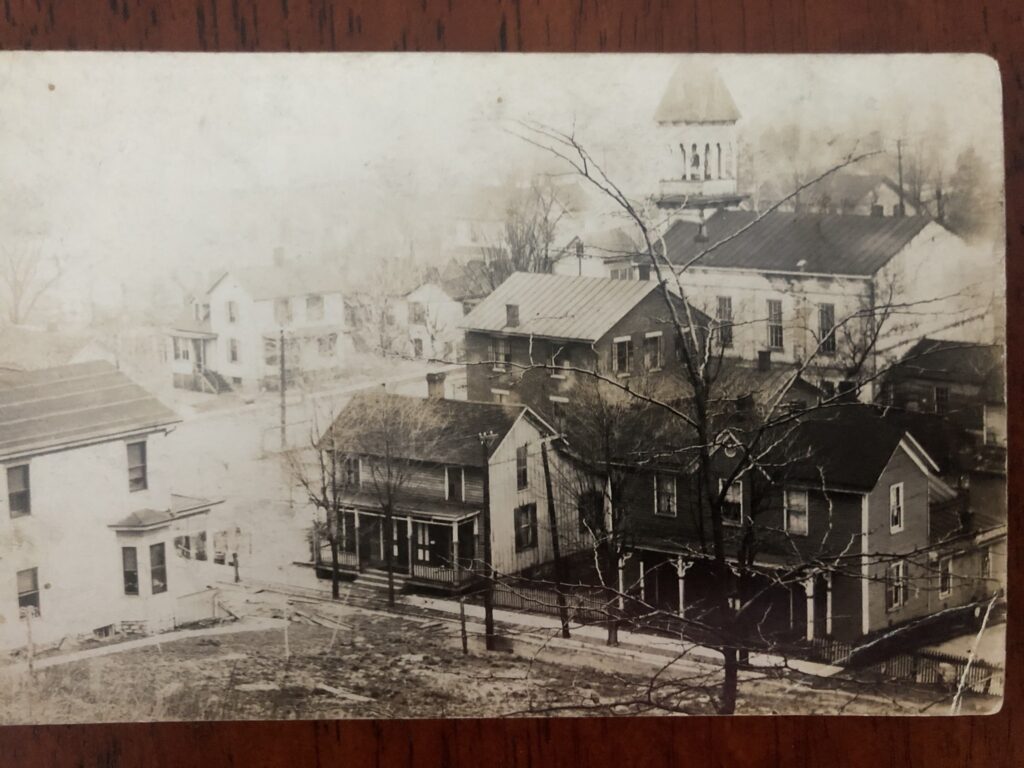
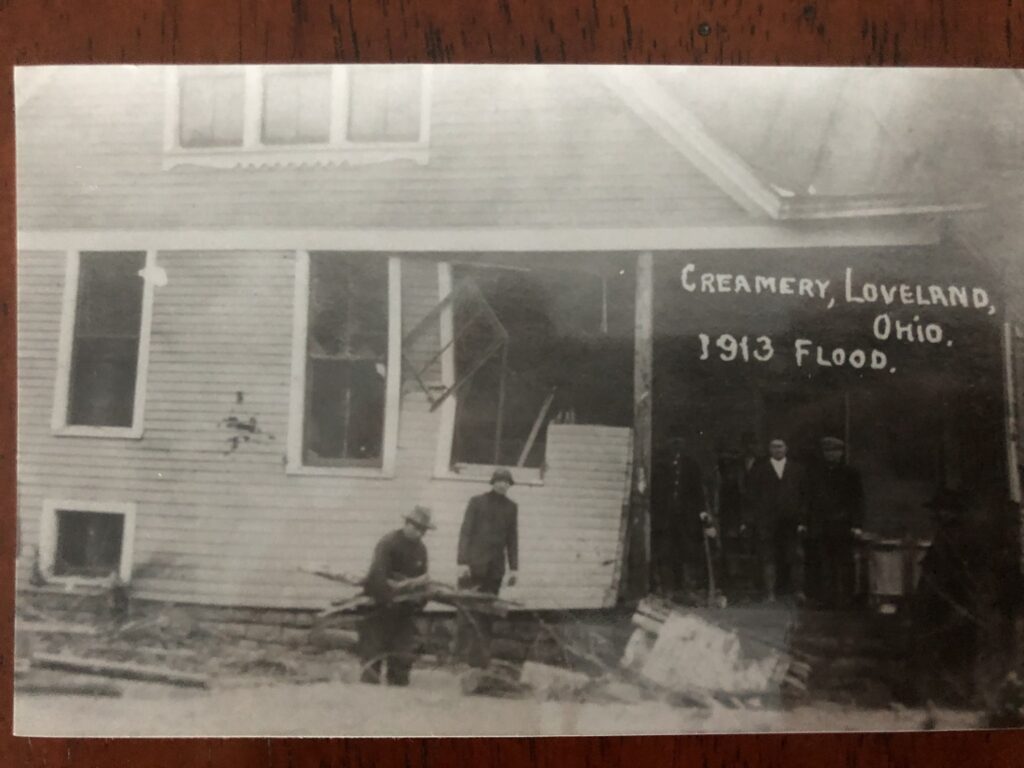
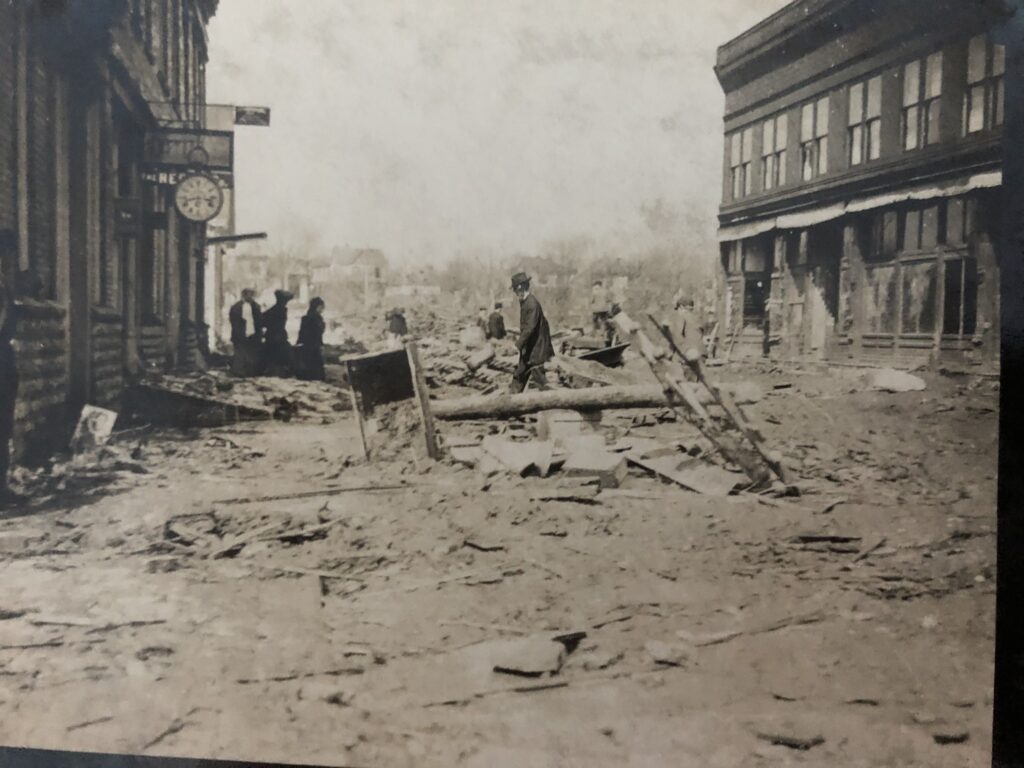
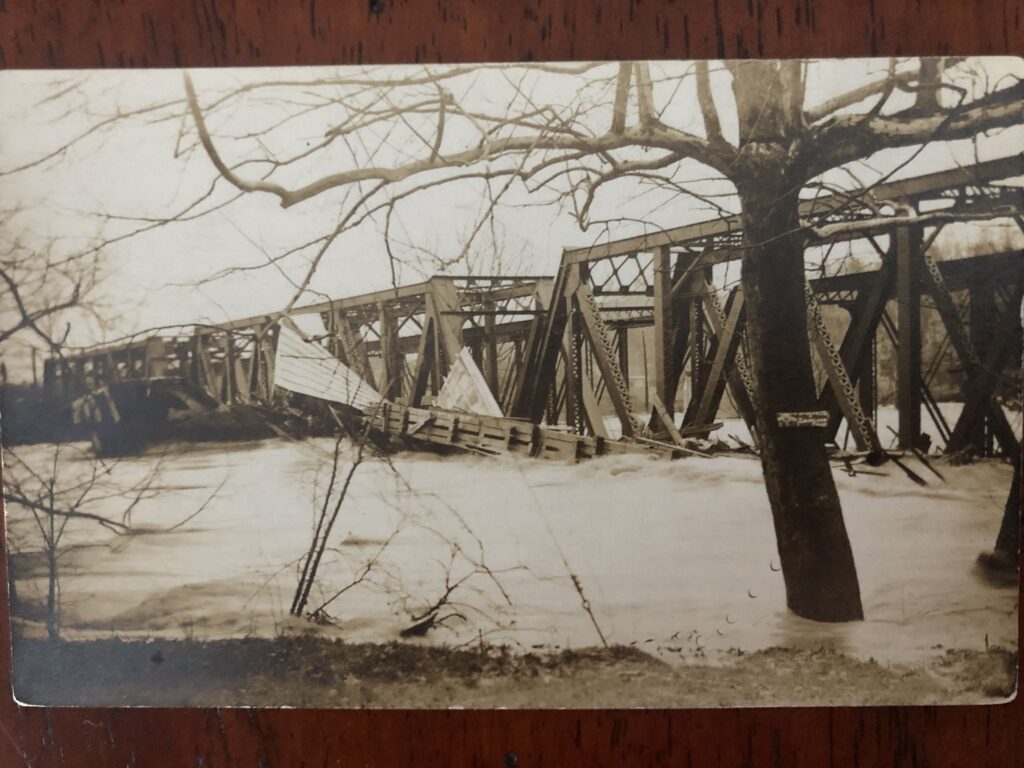
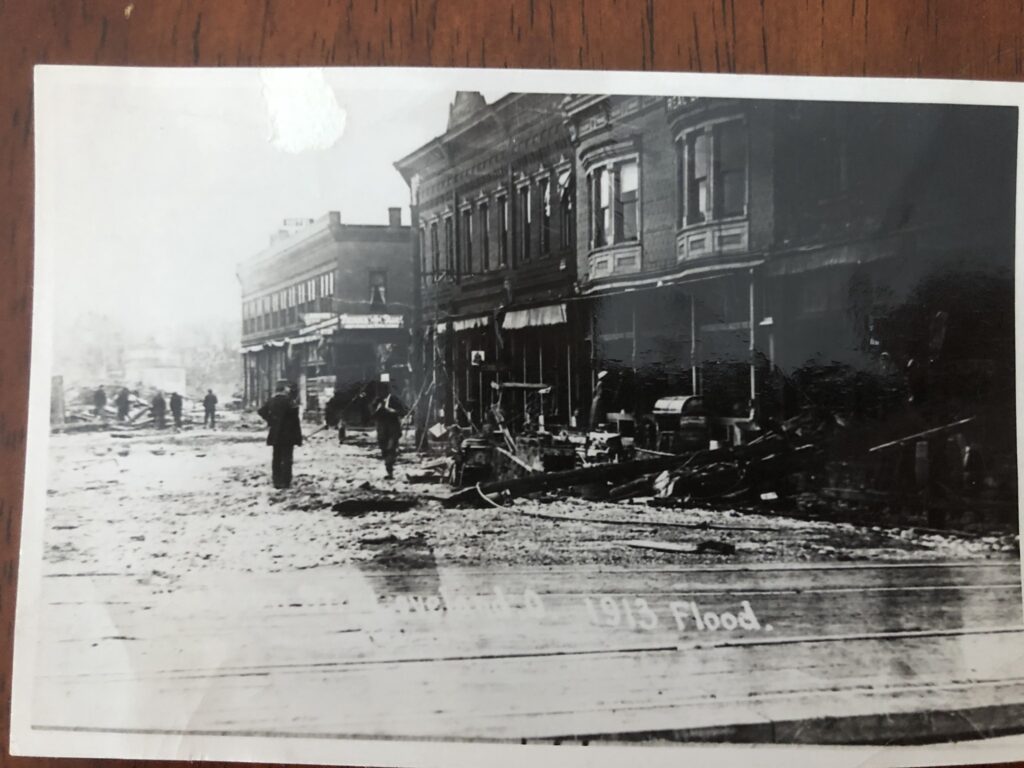
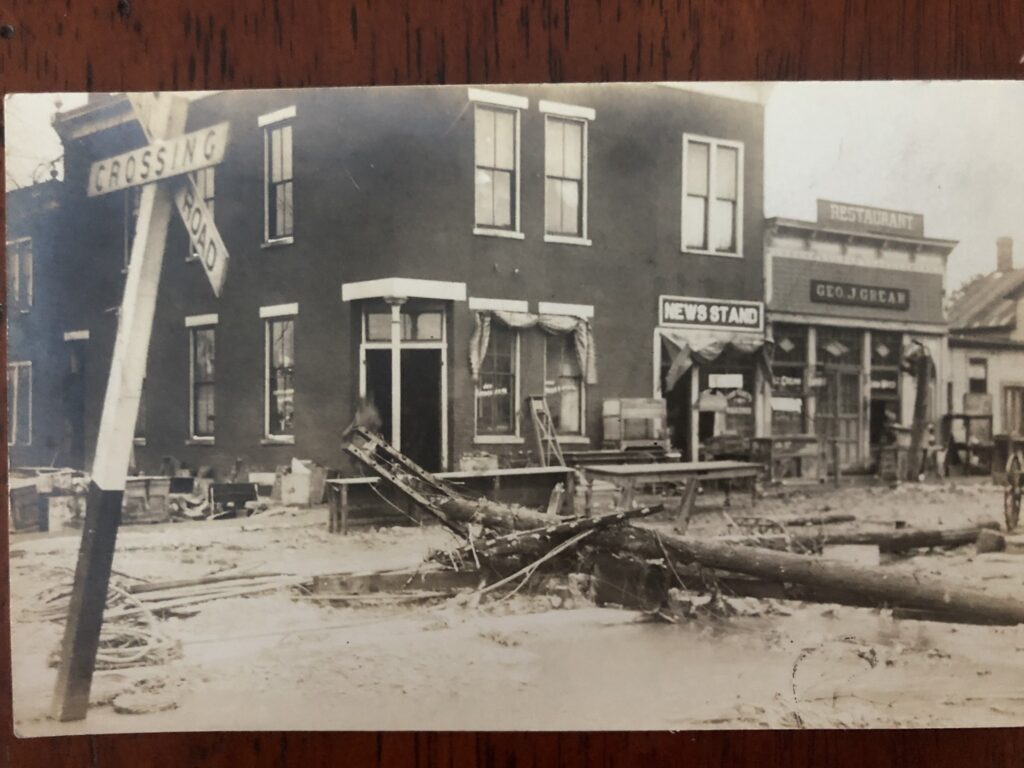
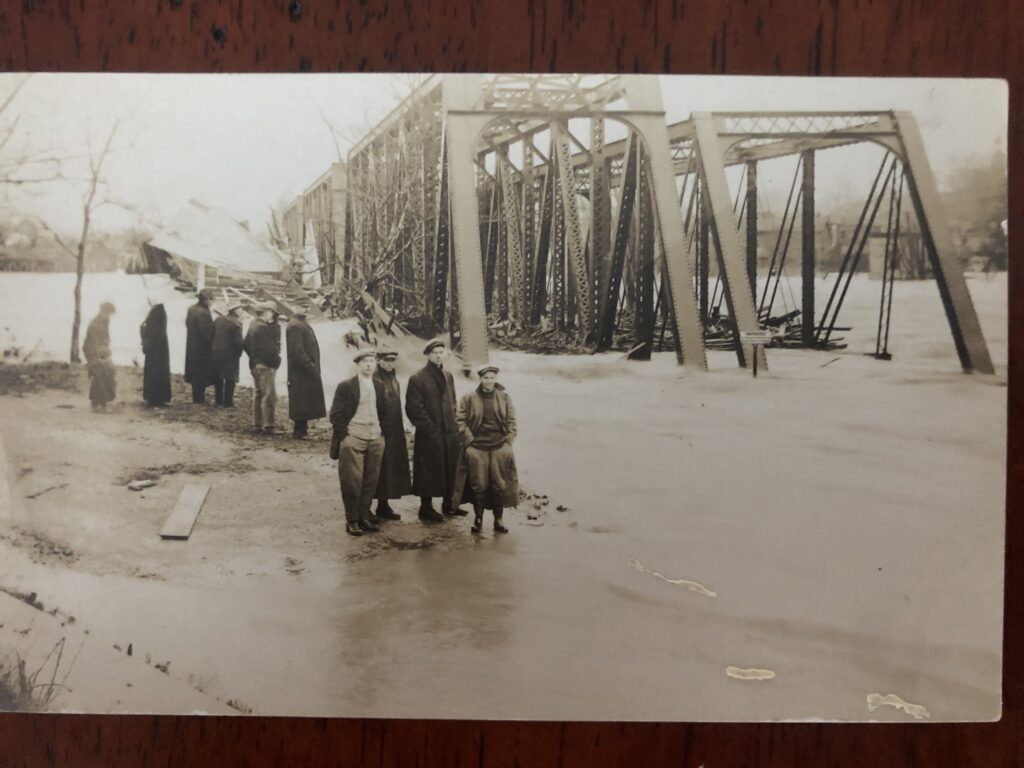
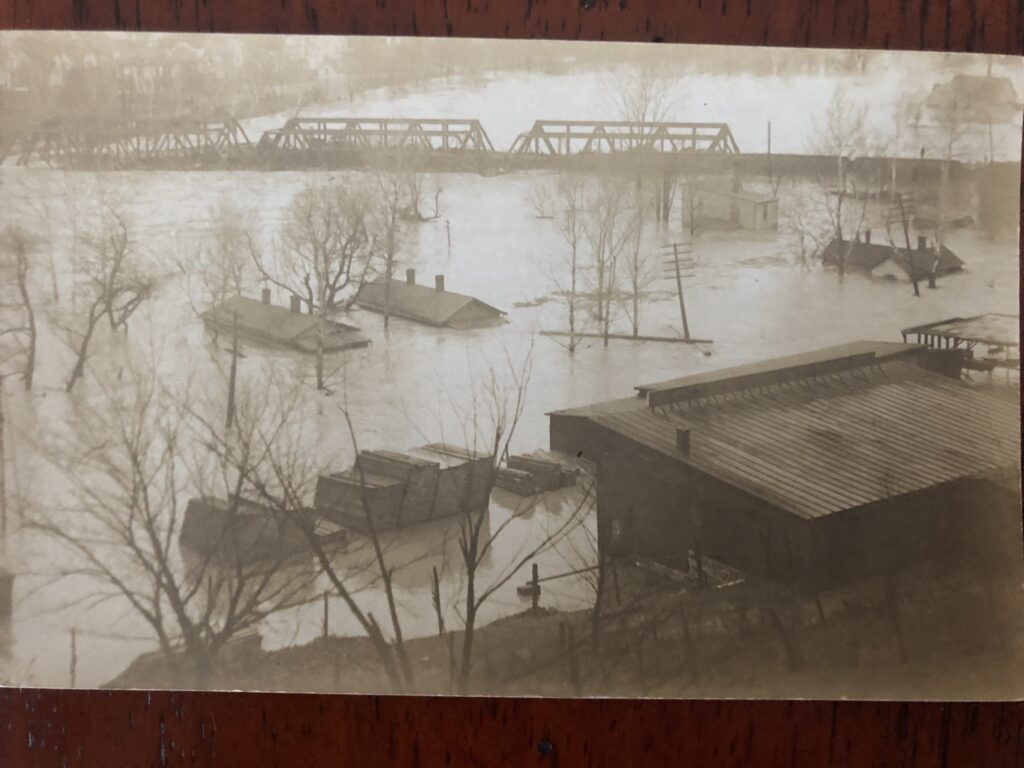
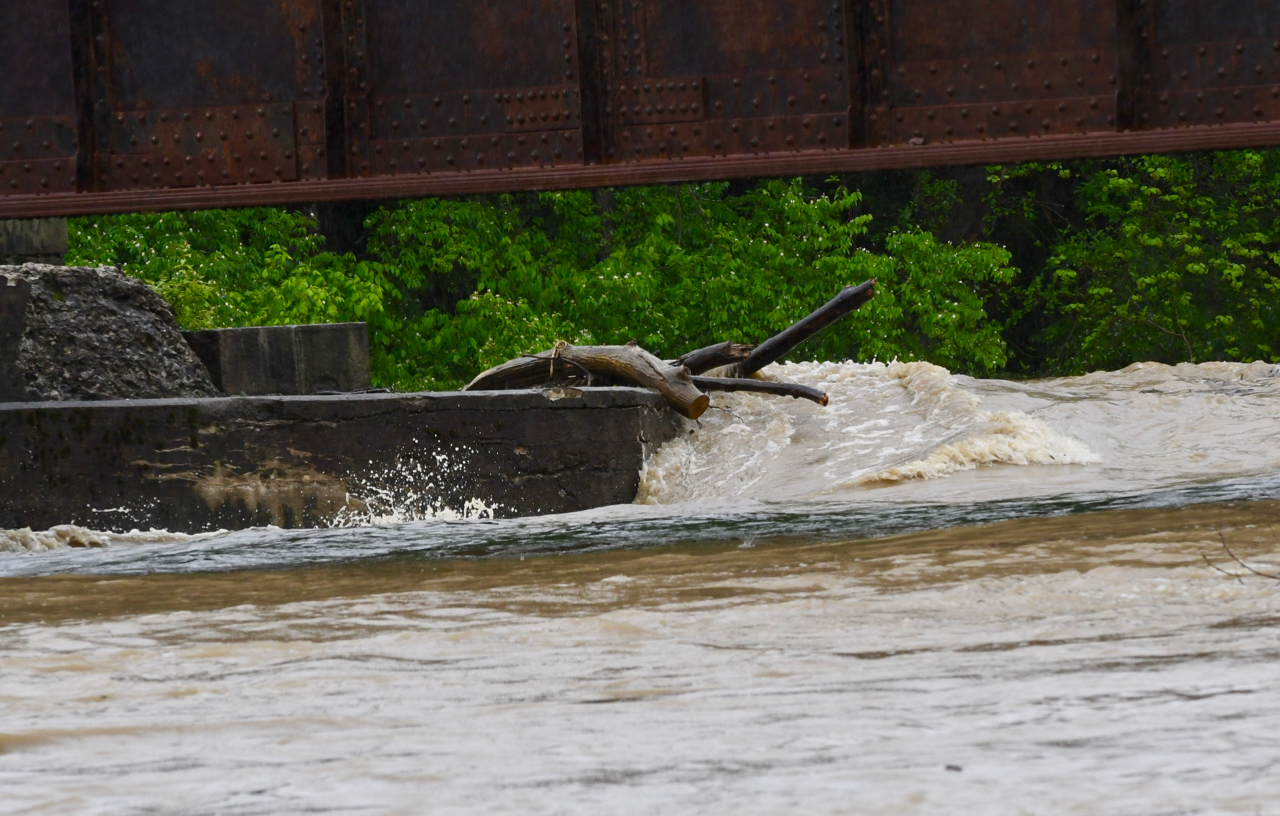
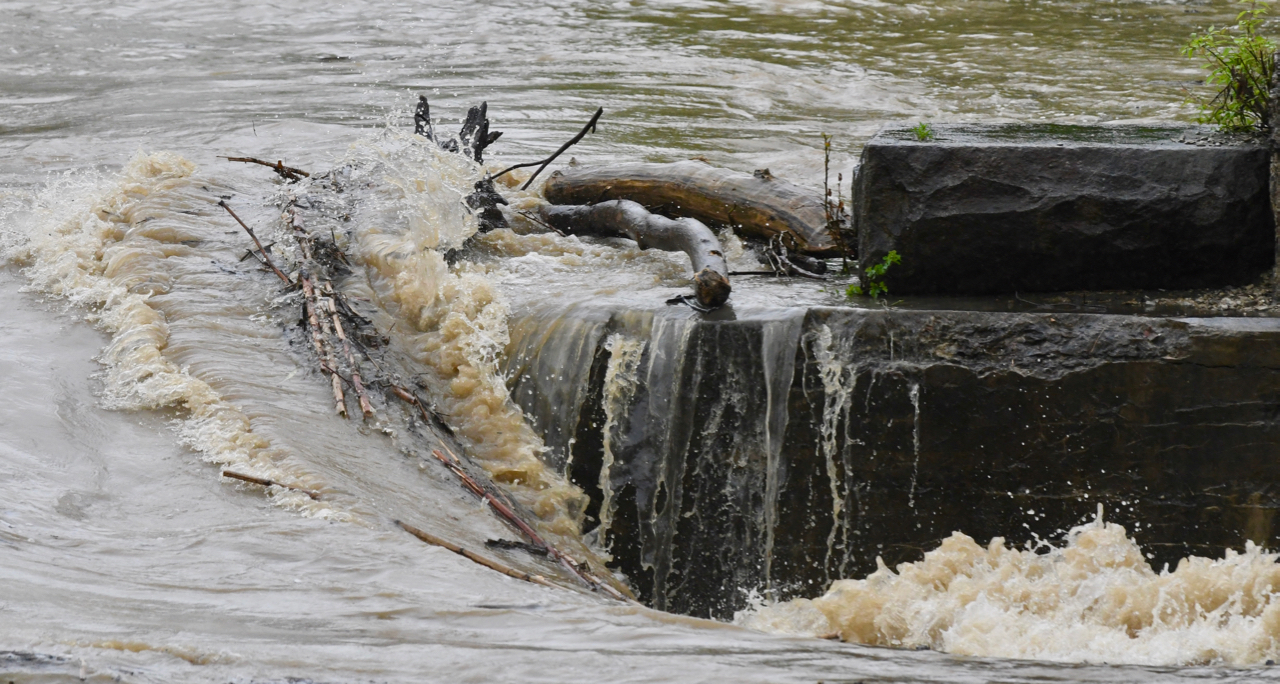
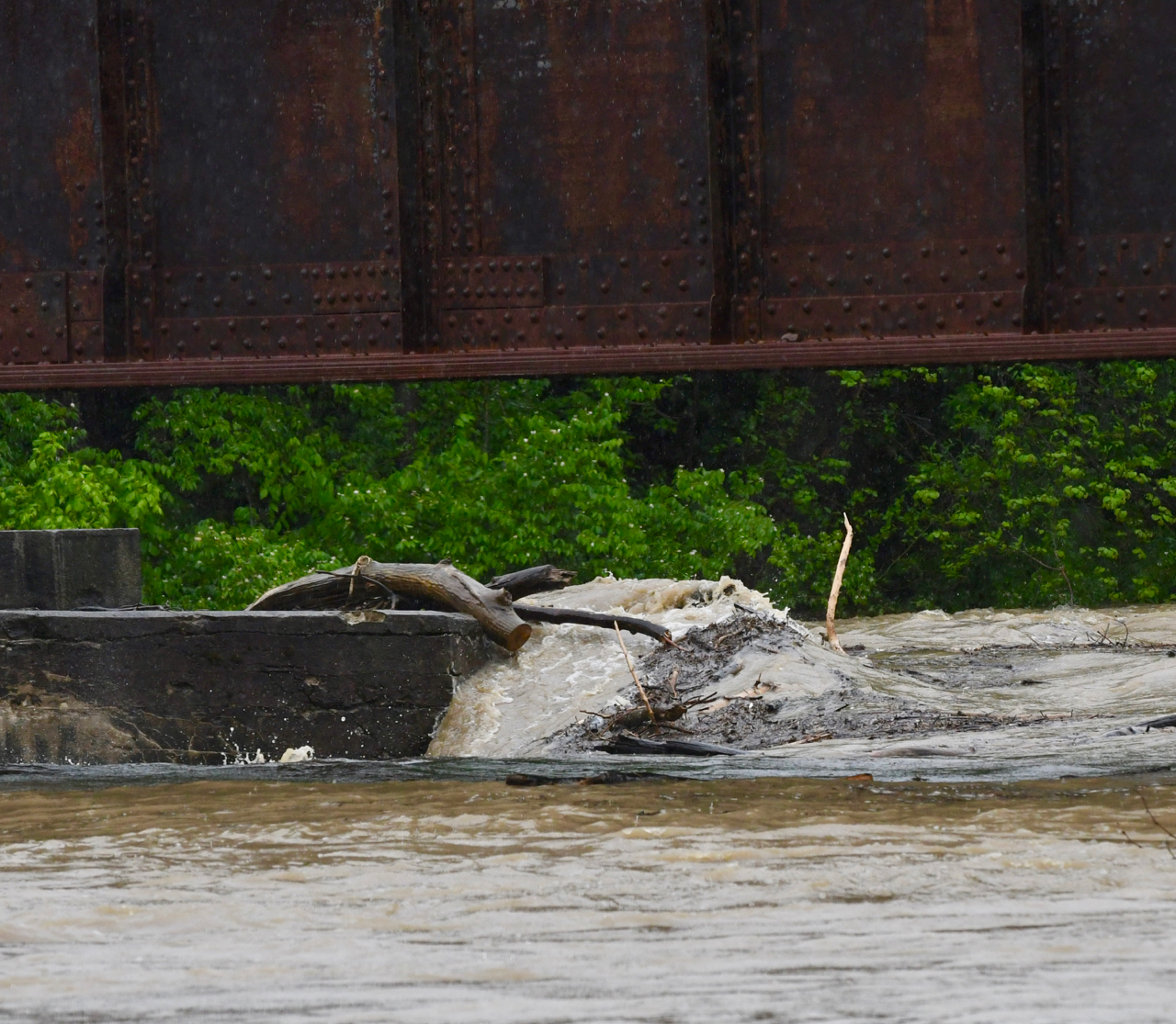
Loveland, Ohio – Given the recent heavy rains and high water, the Loveland Museum Center thinks you will enjoy this “look back” at the Loveland flood of 1913. “It seems appropriate,” says the Museum Center.
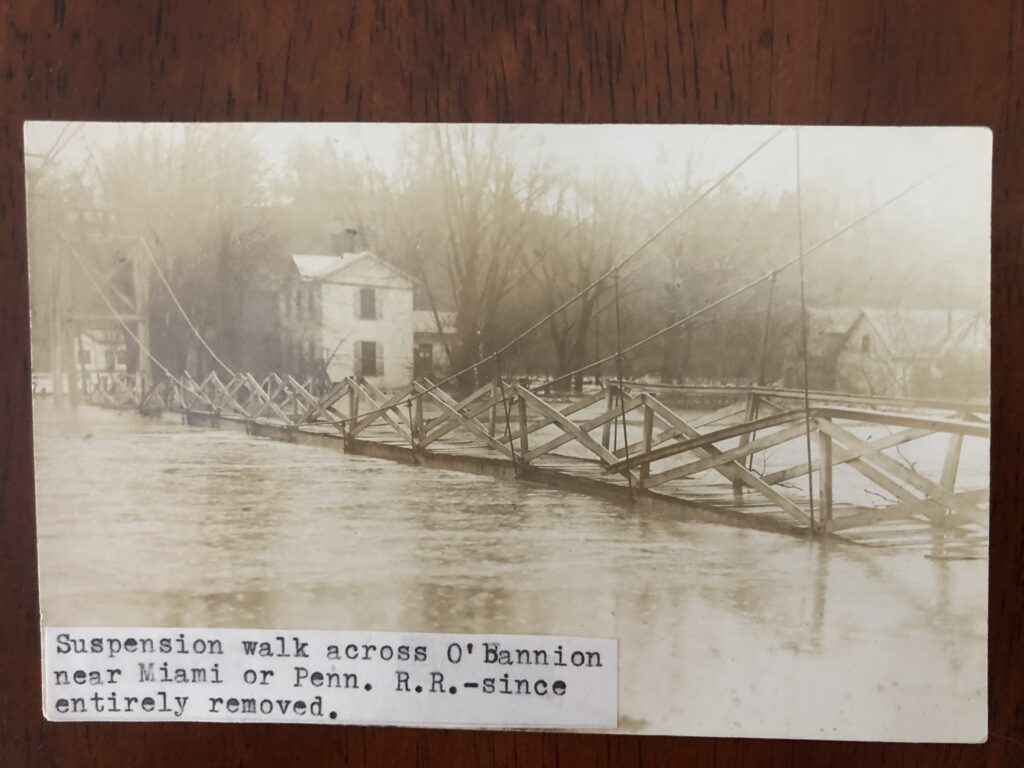
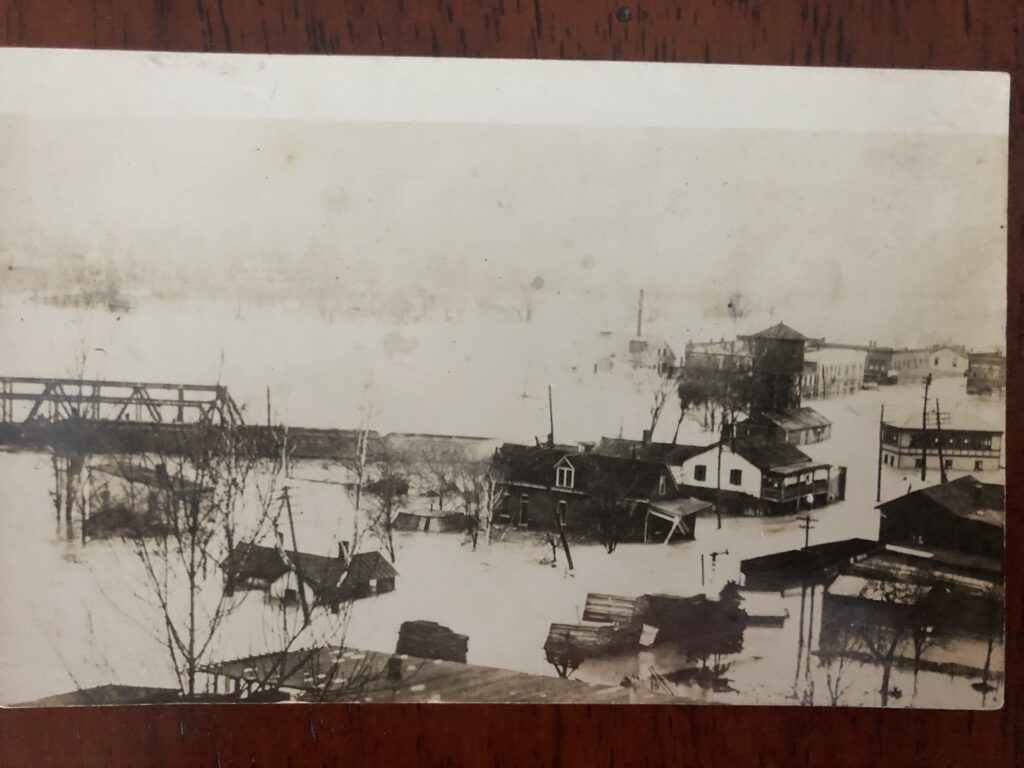
In the early morning of March 25, 1913, the Little Miami River and Obannon Creek over-ran their banks and wreaked havoc in downtown Loveland.
The flood broke all prior high water marks by 7 feet!
The wagon bridge crossing the Little Miami was carried away and an evening train on the B&O Railroad, attempting to cross had the engine knocked off the rails. Passengers were forced to spend the night on the roof of the rail cars.
When the waters receded, the extensive damage was evident.
All the merchants on the main downtown streets and many family homes were destroyed or badly damaged.
There was no government relief in those days, but Cincinnati and Norwood stepped up and contributed generously to Loveland, donating food and clothing.
Local churches provided temporary quarters to feed and shelter the homeless.
Very quickly, Loveland residents pulled together and restored services faster than officials believed possible.
The bridge was replaced in a little over a year’s time.
Meanwhile, people were able to cross the Little Miami River via walking across the train bridge or by use of wagon teams entering/exiting at the eastern point of Park Ave and the northern point of Taylor.
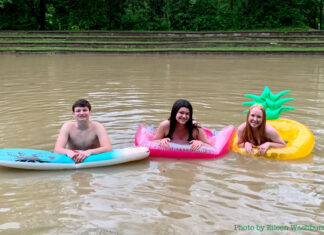
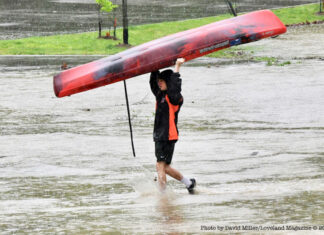
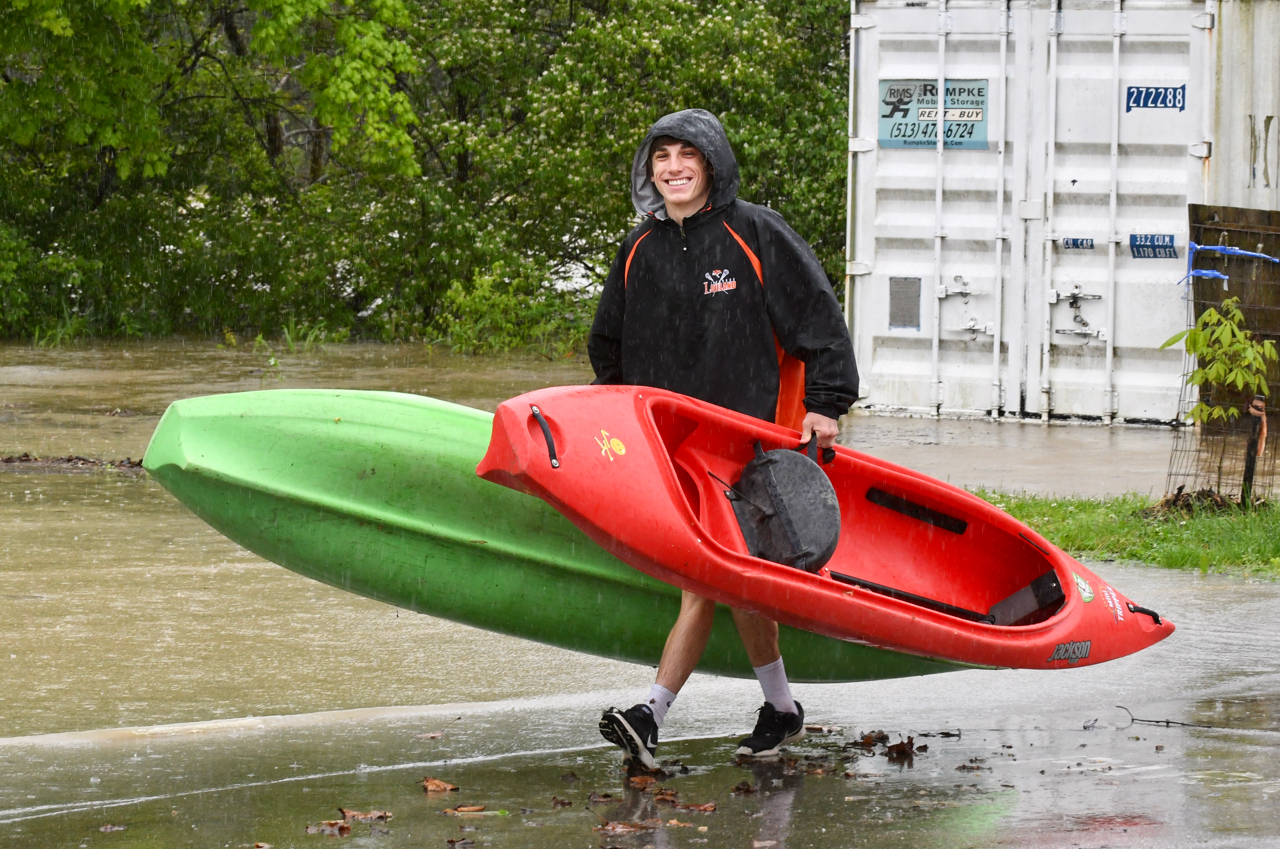
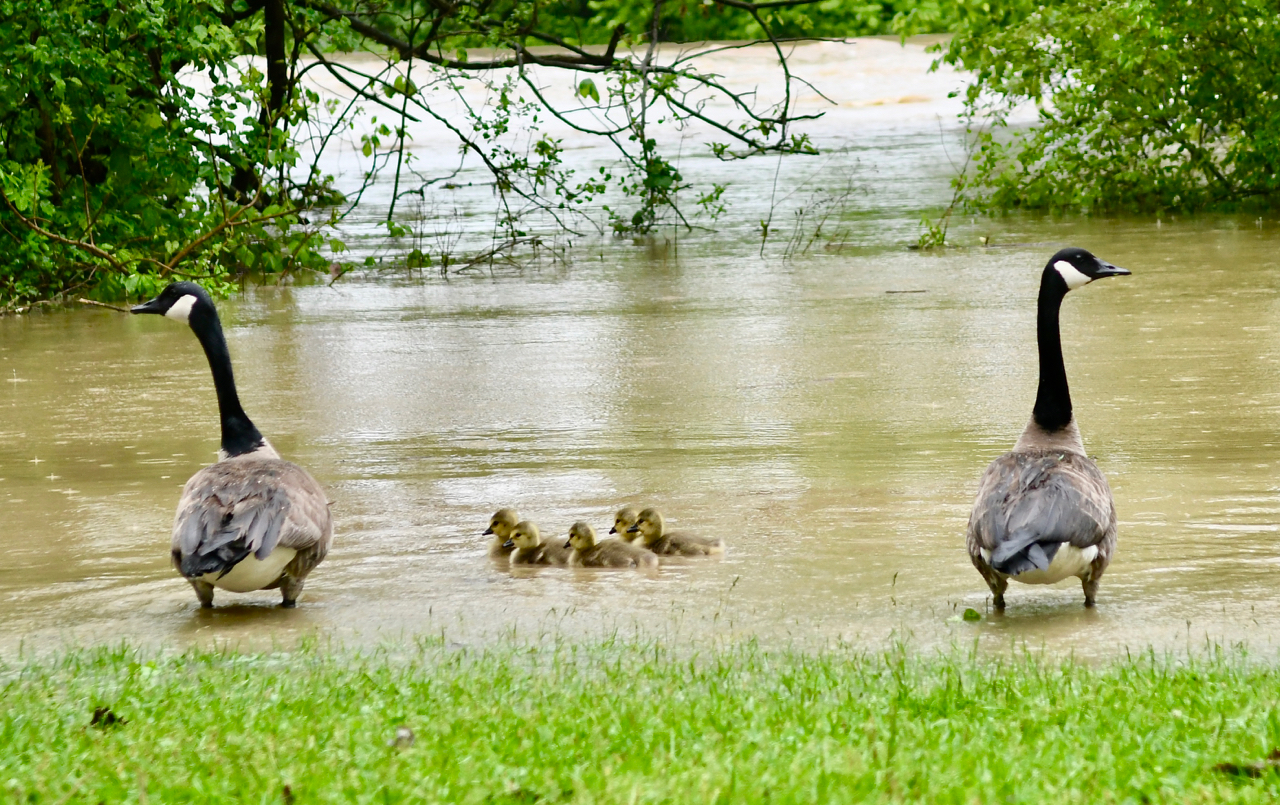
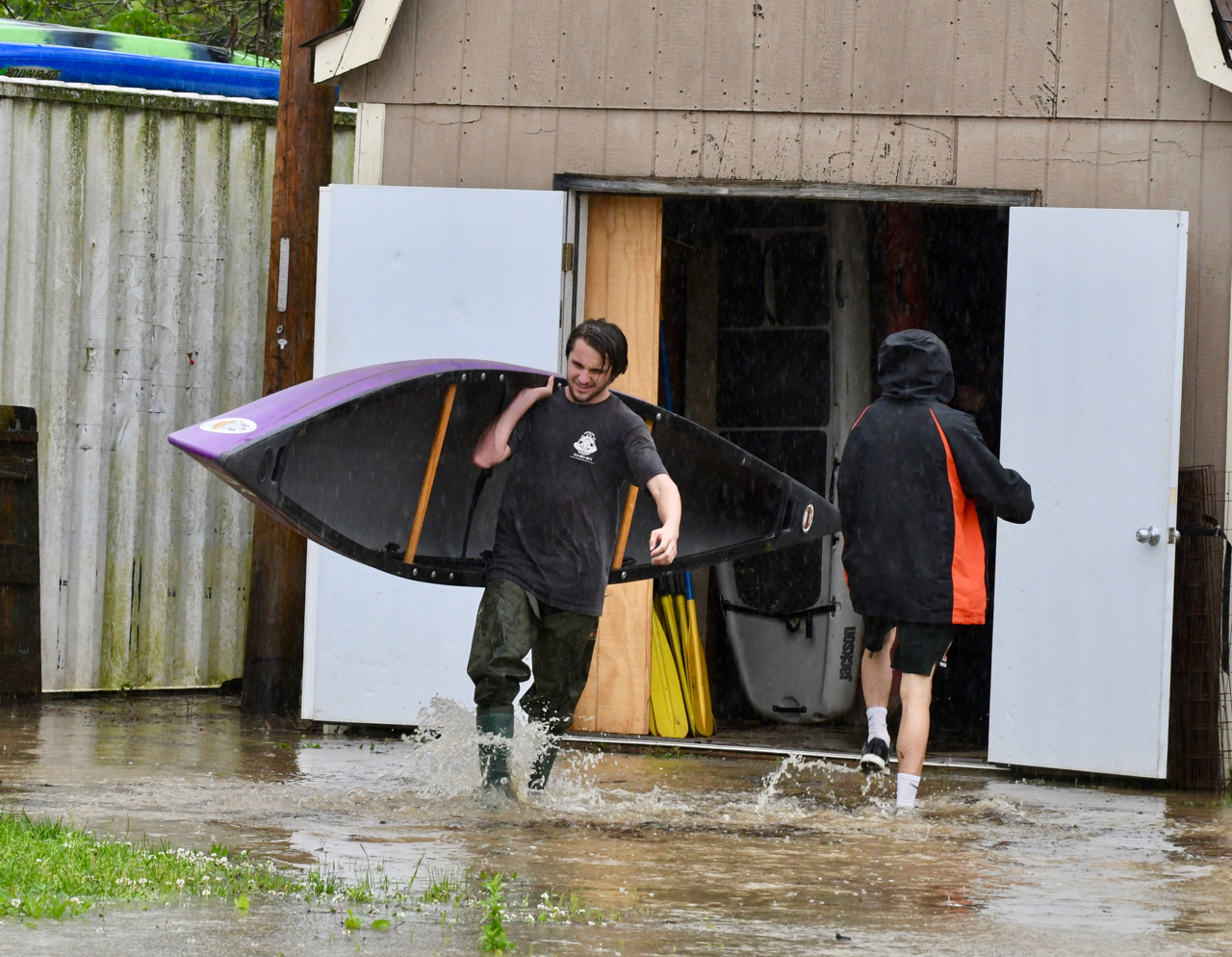
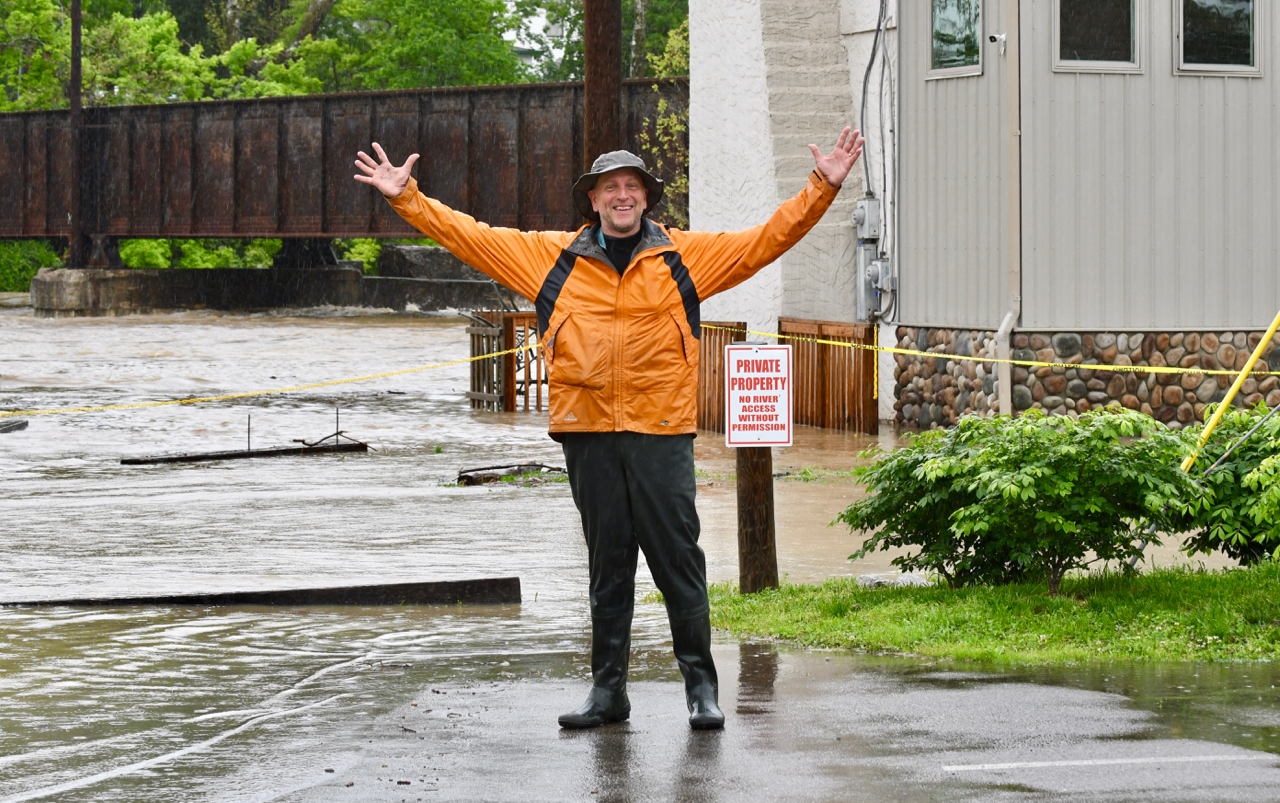
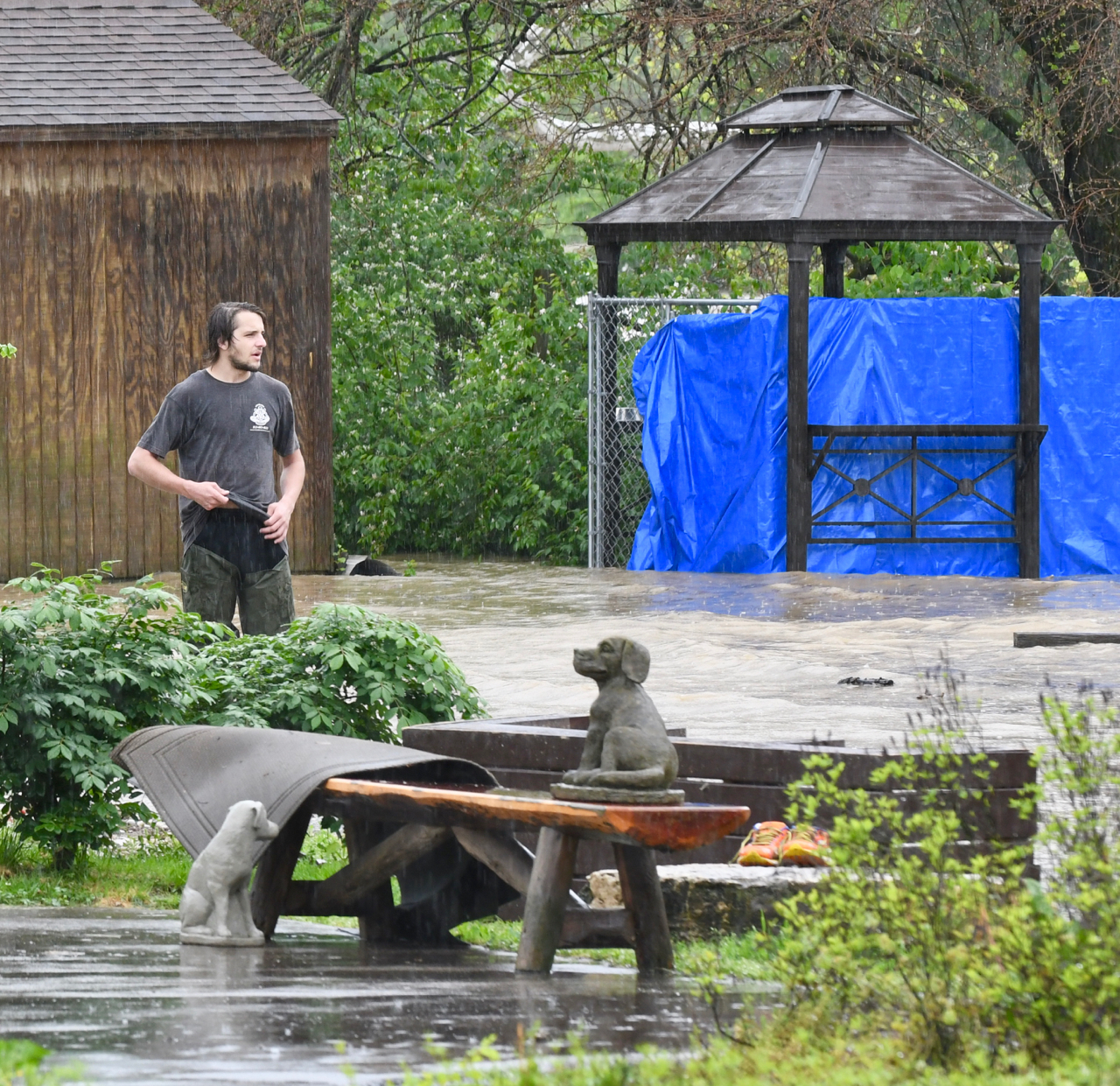
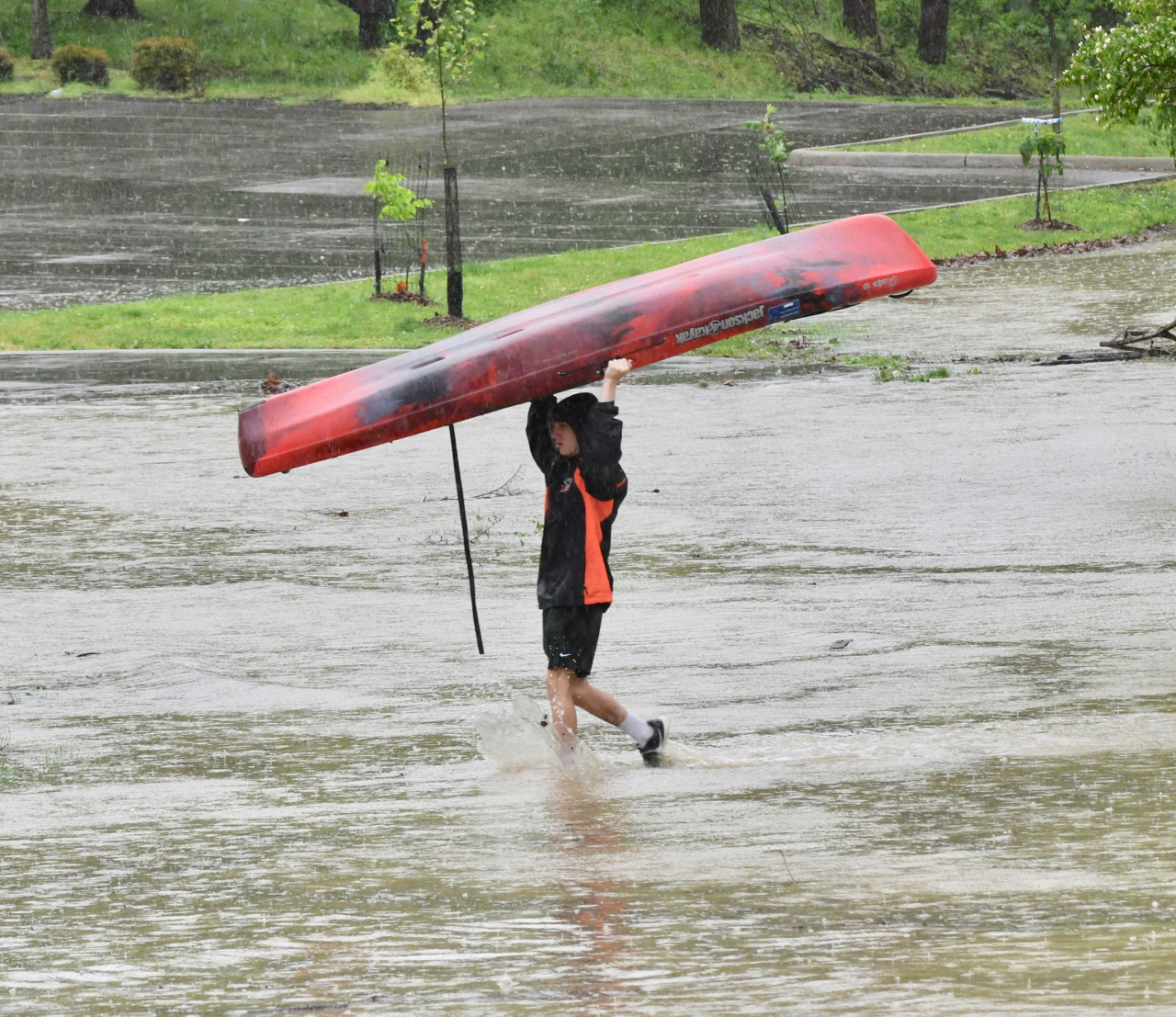
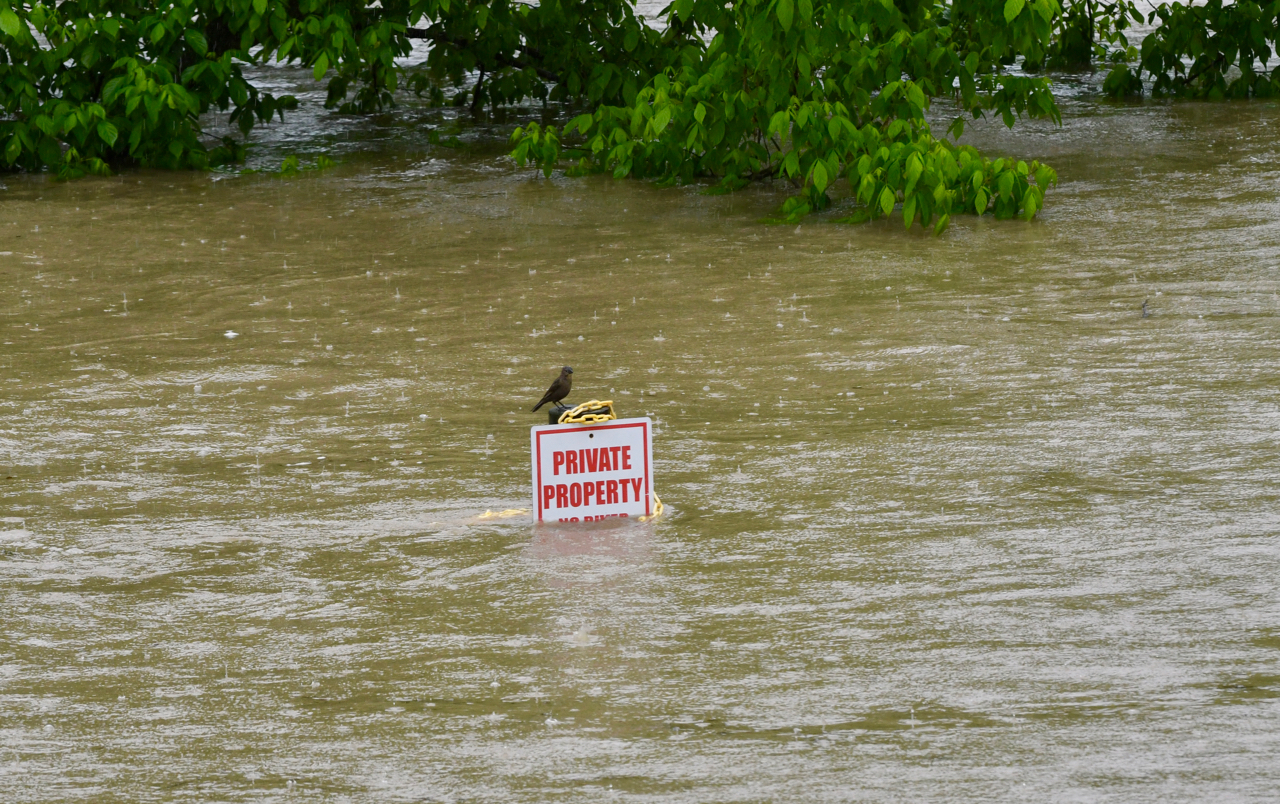
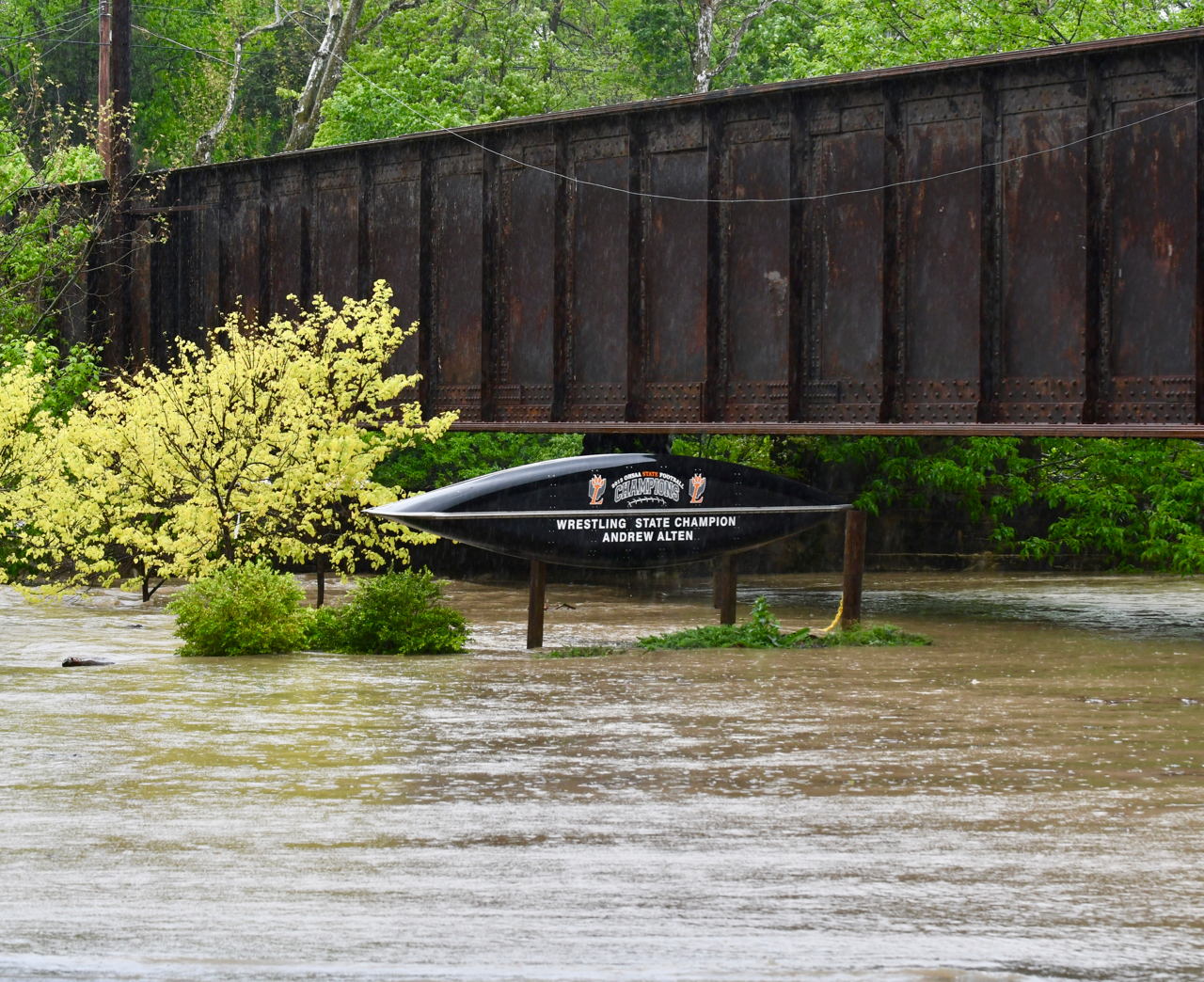
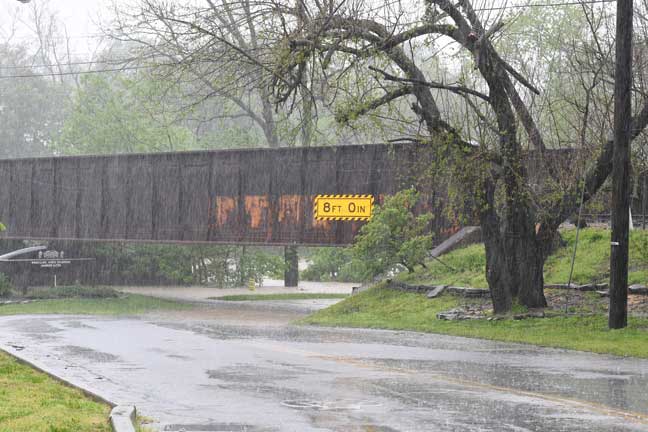
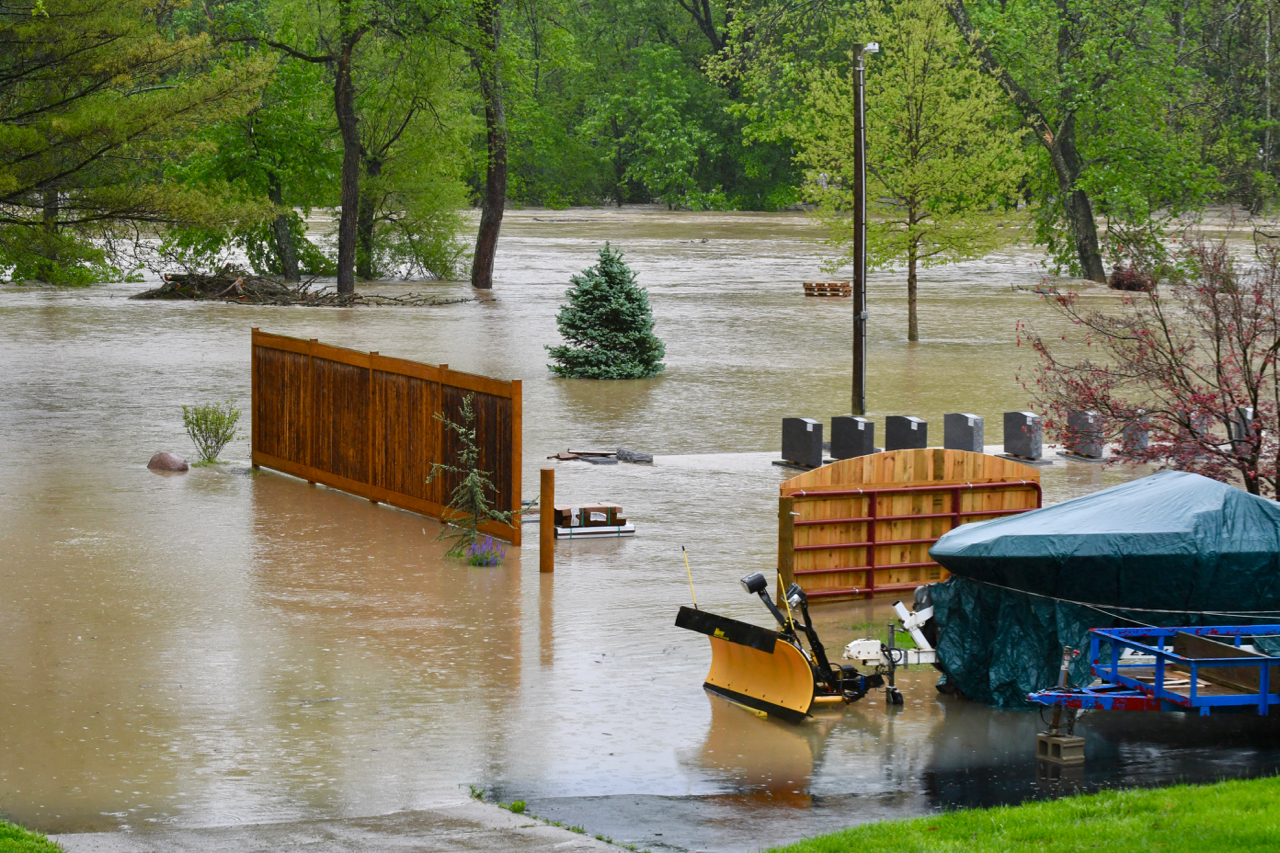
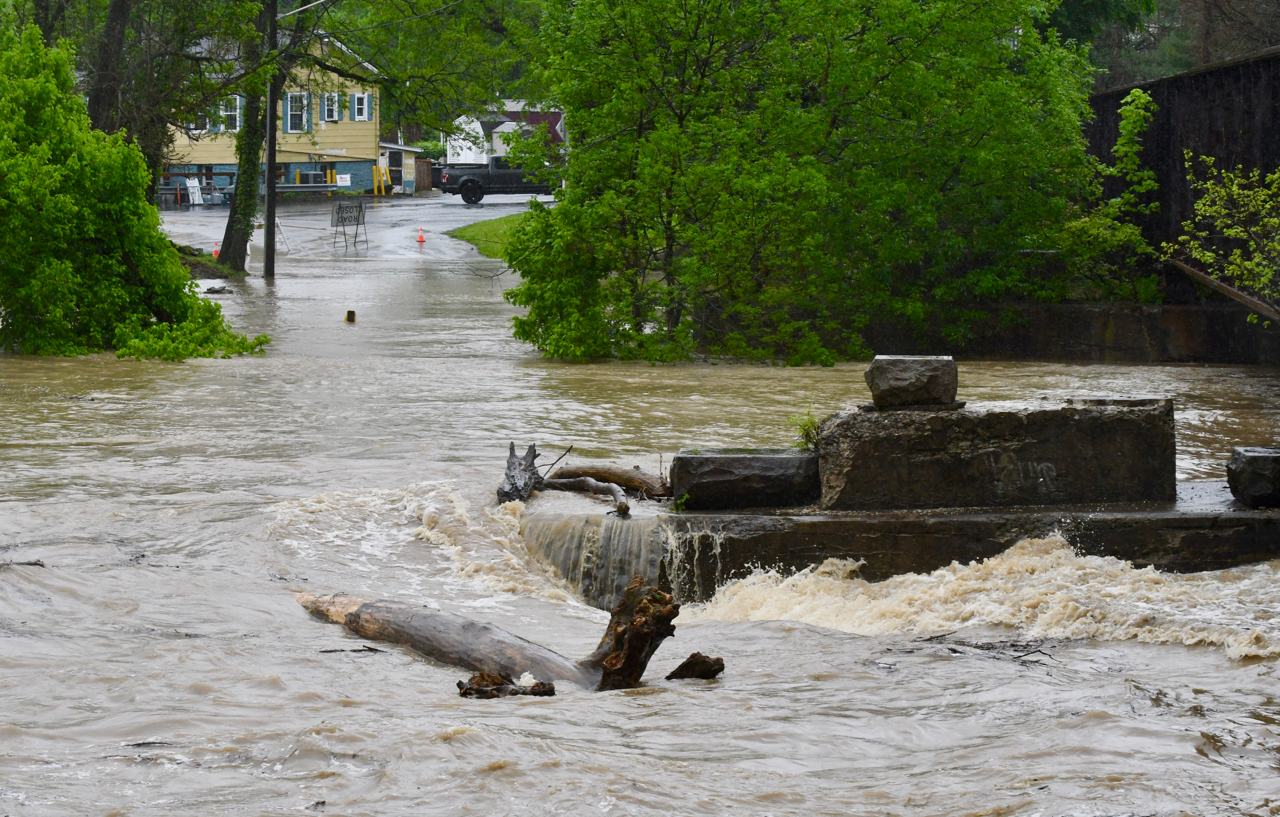
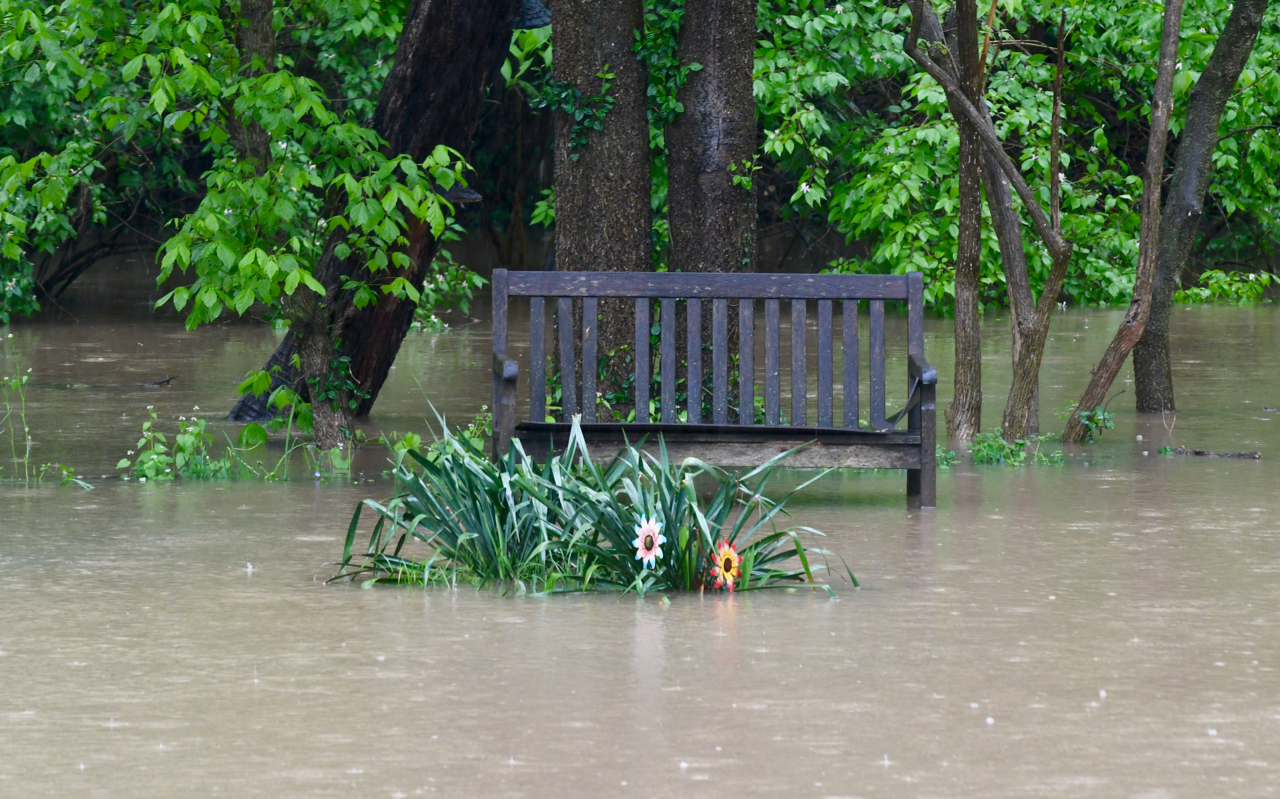
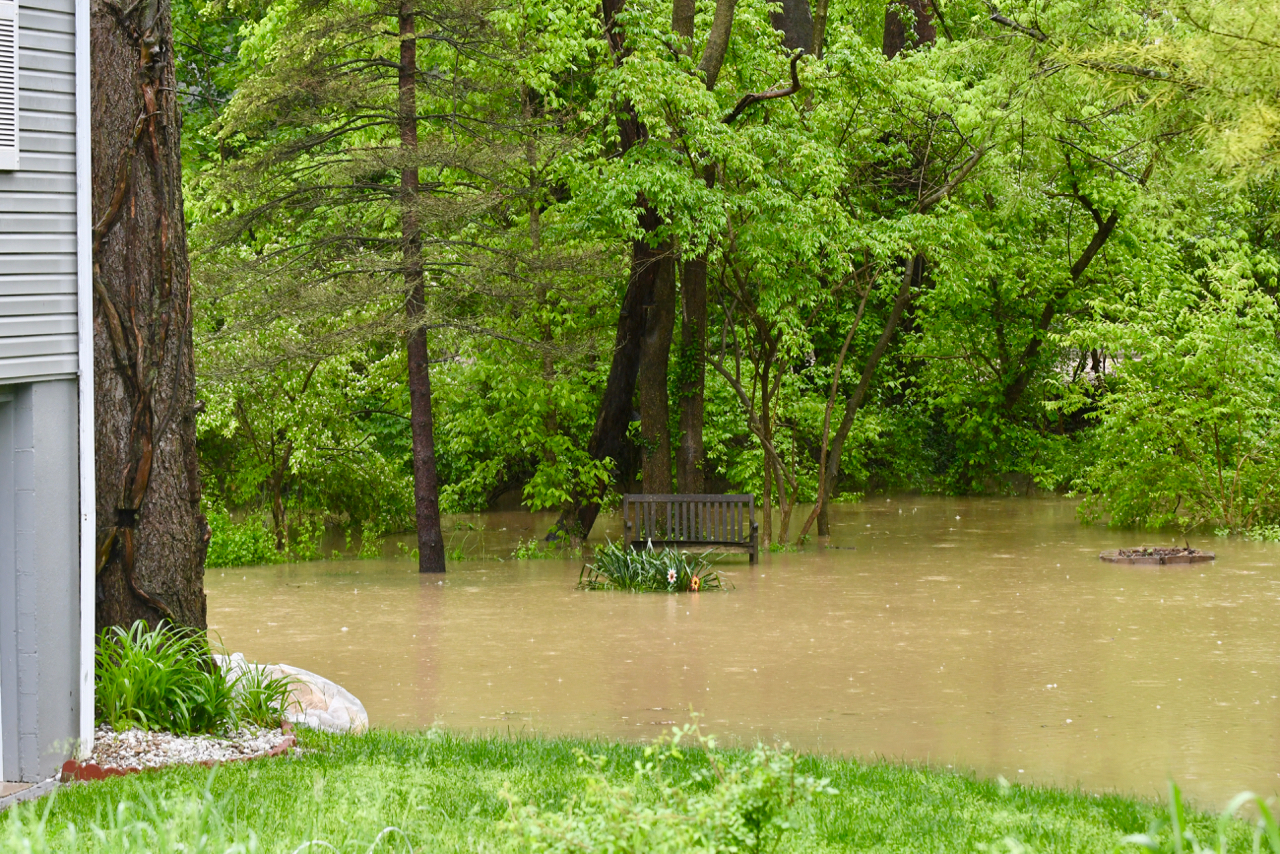
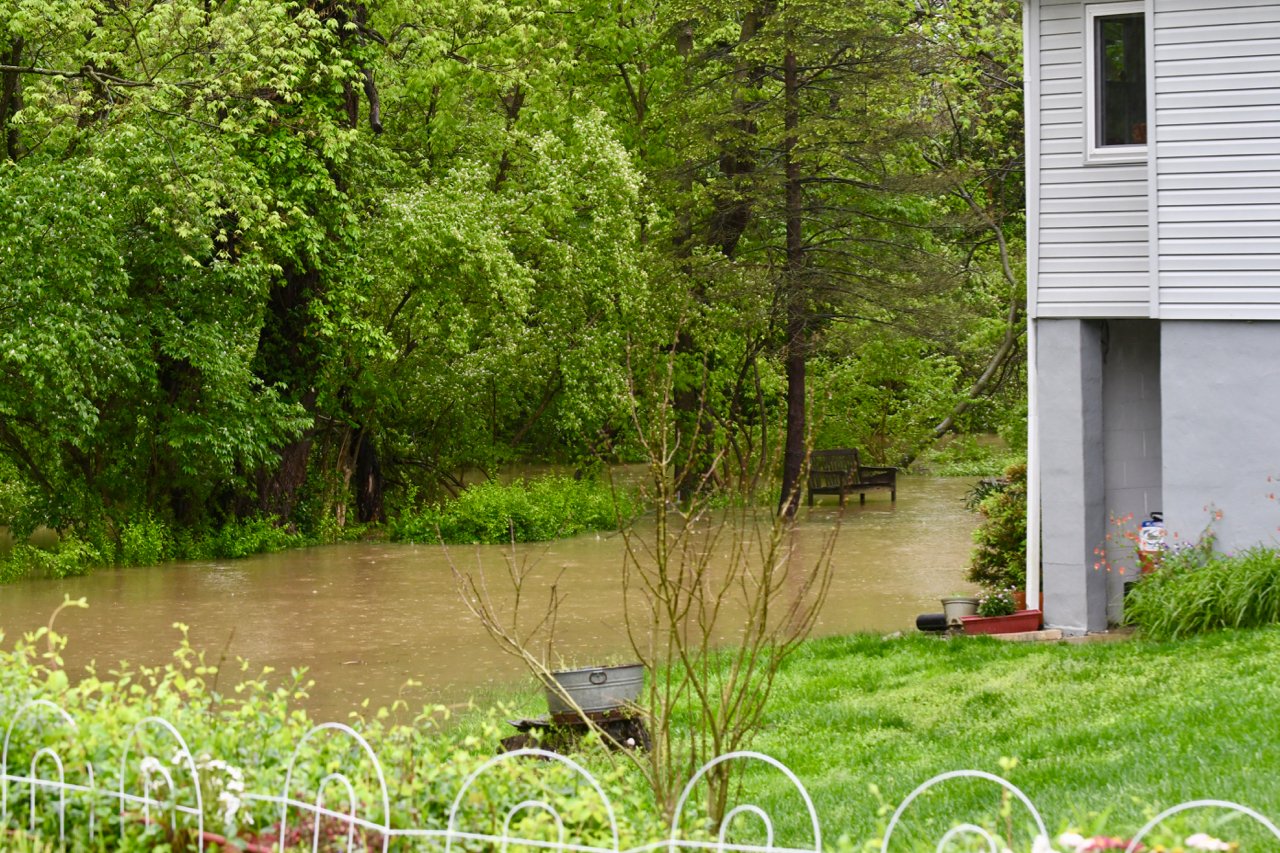
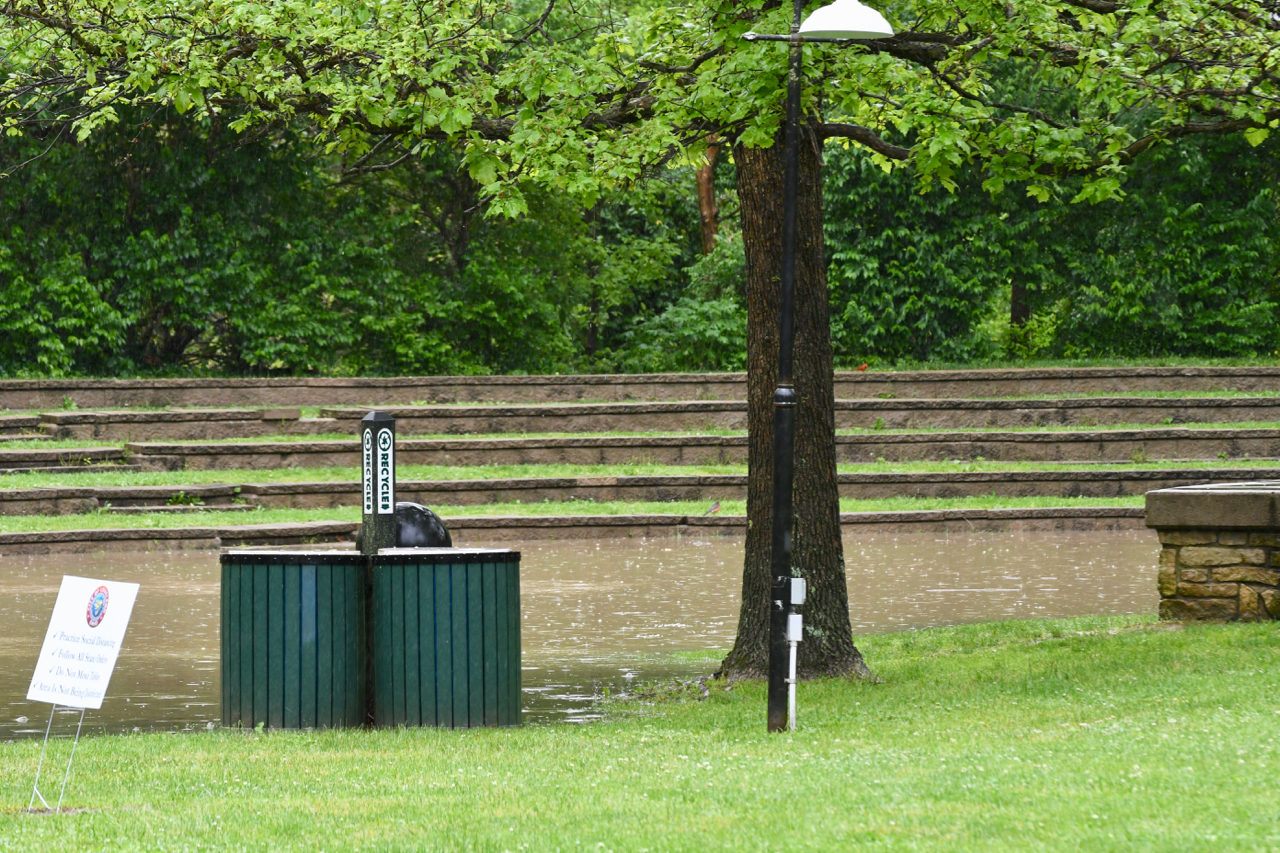
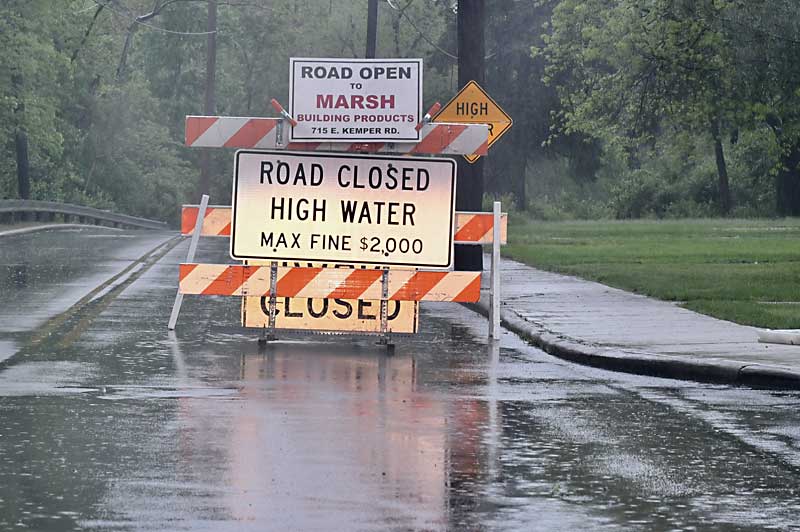
Loveland, Ohio – These photos were taken between 10:30 and 11 AM from Ohio Avenue, Tufts Schildmeyer Funeral Home, Nisbet Park, Loveland Canoe and Kayak, and from Riverside/East Kemper looking towards Cindy’s Friendly Tavern.
Loveland Canoe and KayakBishop’s Park on Riverside DriveLoveland Canoe and KayakLoveland Canoe and KayakLoveland Canoe and KayakLoveland Canoe and KayakLoveland Canoe and KayakLoveland Canoe and KayakKarl Brown Way/BroadwayTufts Schildmeyer Funeral HomeLooking toward Cindy’s Friendly TravernOhio AvenueOhio AvenueOhio AvenueNisbet Park in Historic DowntownRiverside leading to E. Kemper Road
David Miller is the Publisher and Editor of Loveland Magazine
by David Miller
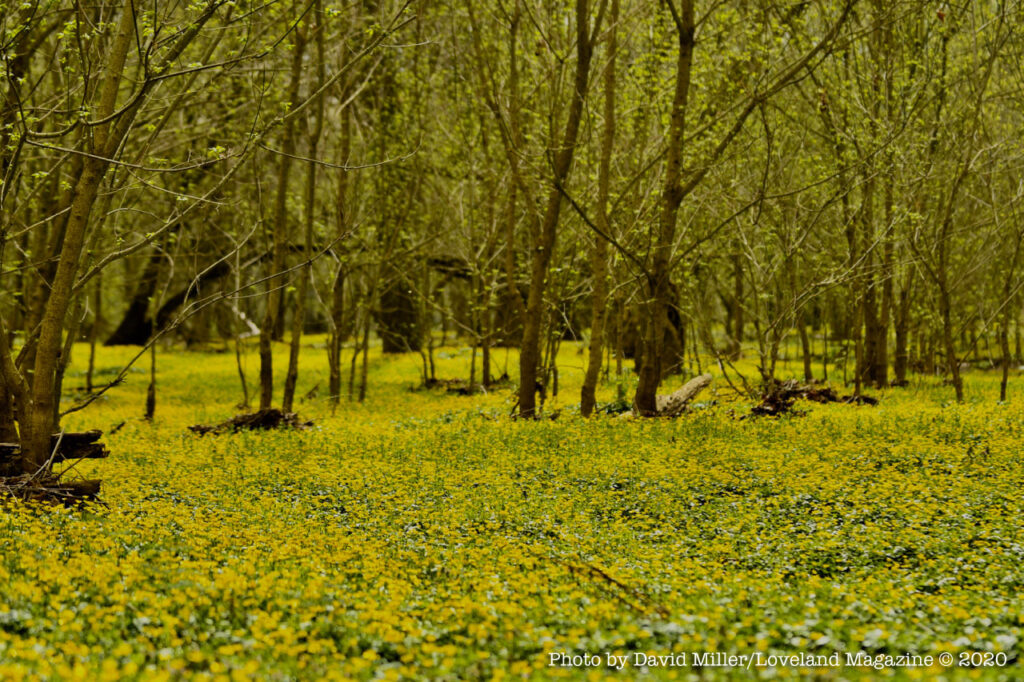
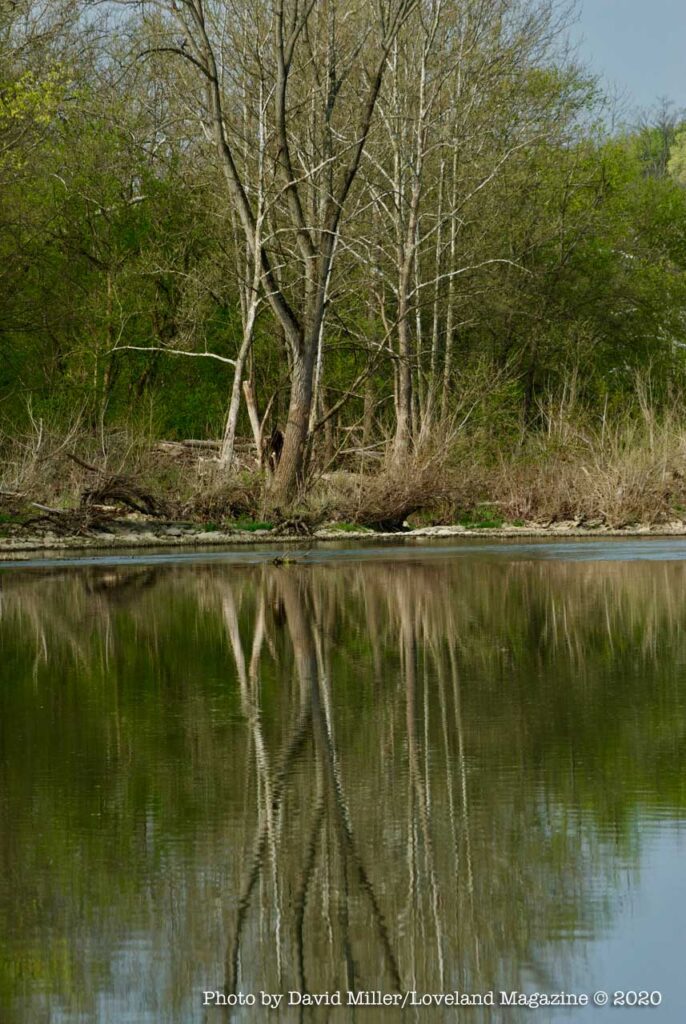
Loveland, Ohio– I’ve always called it the South Island because just north of Nisbet Park there is a similar island I call the North Island. During dry spells, you can walk across dry creek beds formed by erosion to get onto the islands, but during higher river levels the water channels merge into one wider, Little Miami River.
Both channels of water may someday form into permanent and complete oxbow ponds, but for now, they only occasionally do.
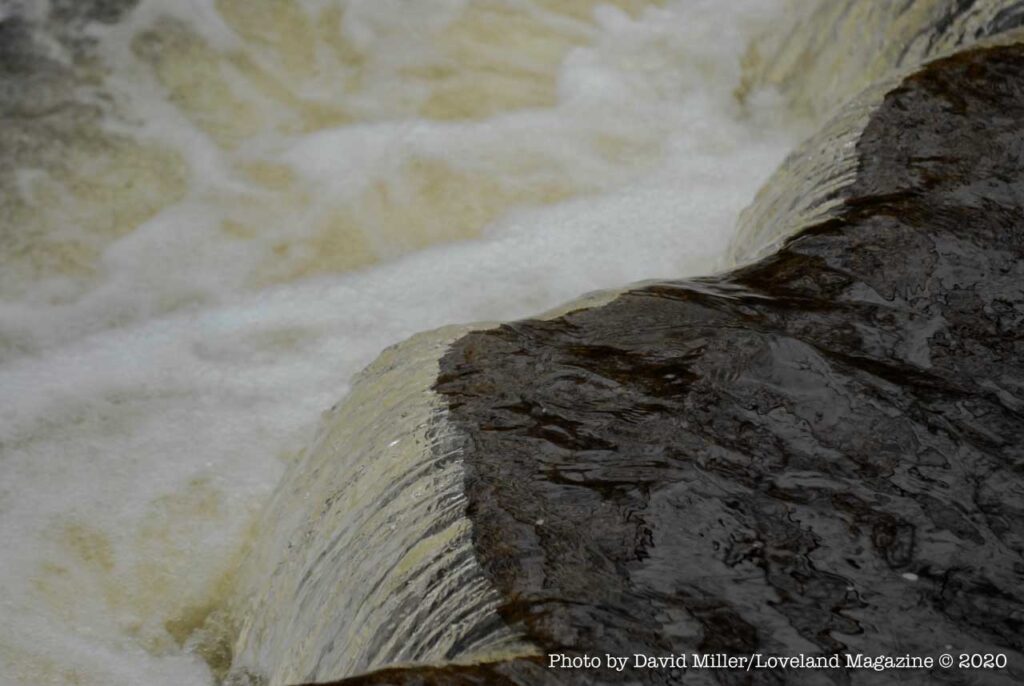
Both islands are one of nature’s ways to prevent downstream and localized flooding. Because of their unique soil composition, they can absorb rainfall from the hills high above and hold water when the Little Miami rises. River floodplains are low, flat areas that periodically flood, collecting water that would otherwise rush downstream, threatening people and property. They temper the river flow.
According to American Rivers: “A single acre of wetland, saturated to a depth of one foot, will retain 330,000 gallons of water – enough to flood thirteen average-sized homes thigh-deep. Wetlands also help provide clean rivers and drinking water by naturally filtering out run-off pollution.”
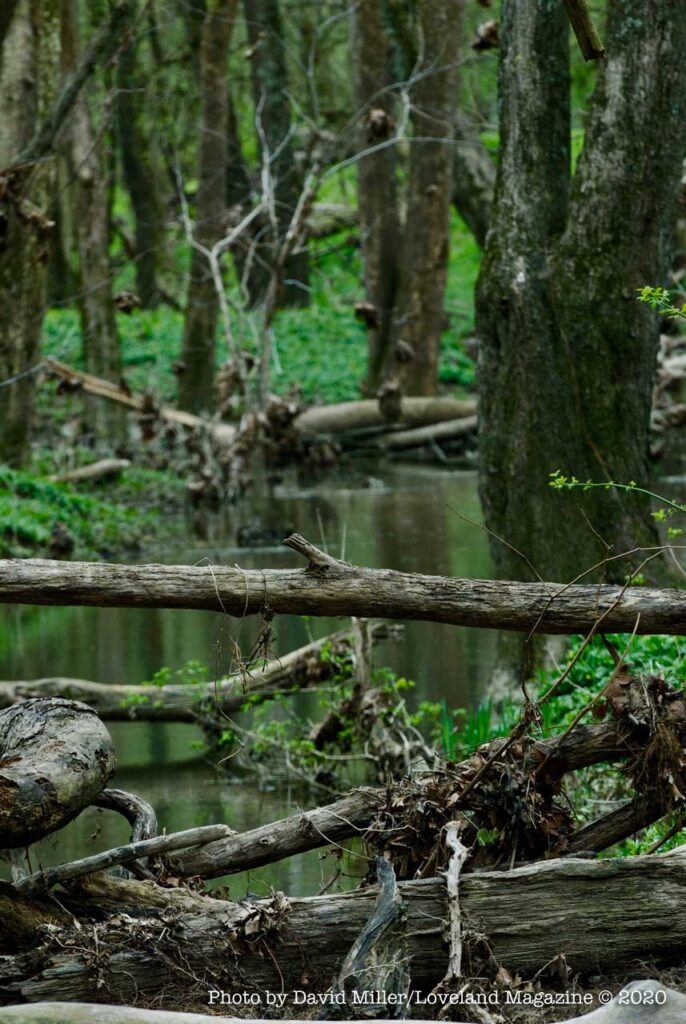
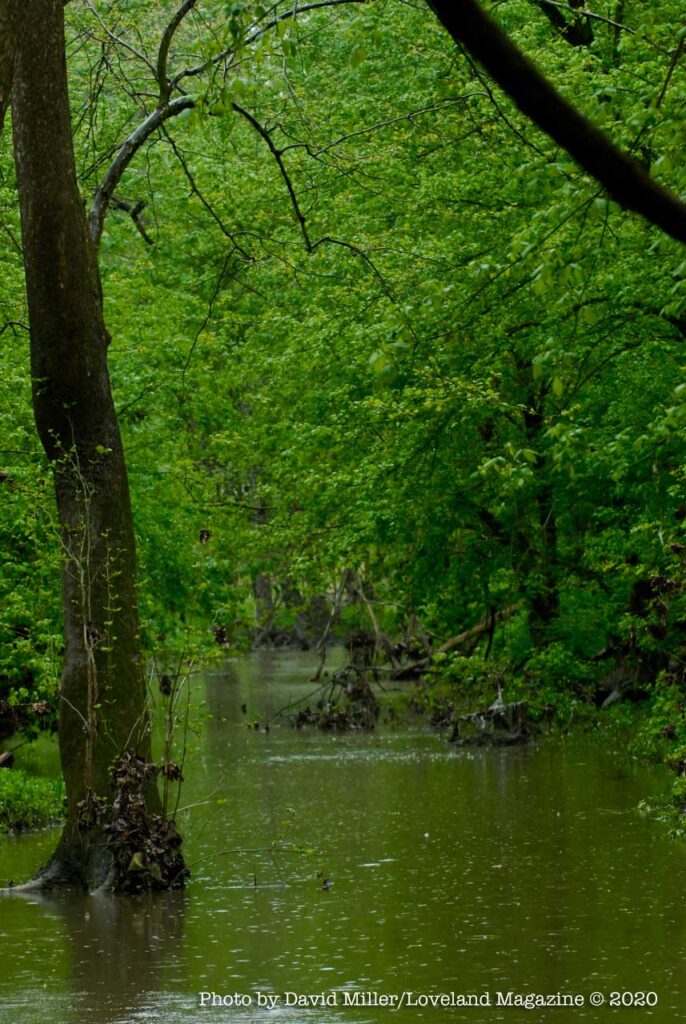
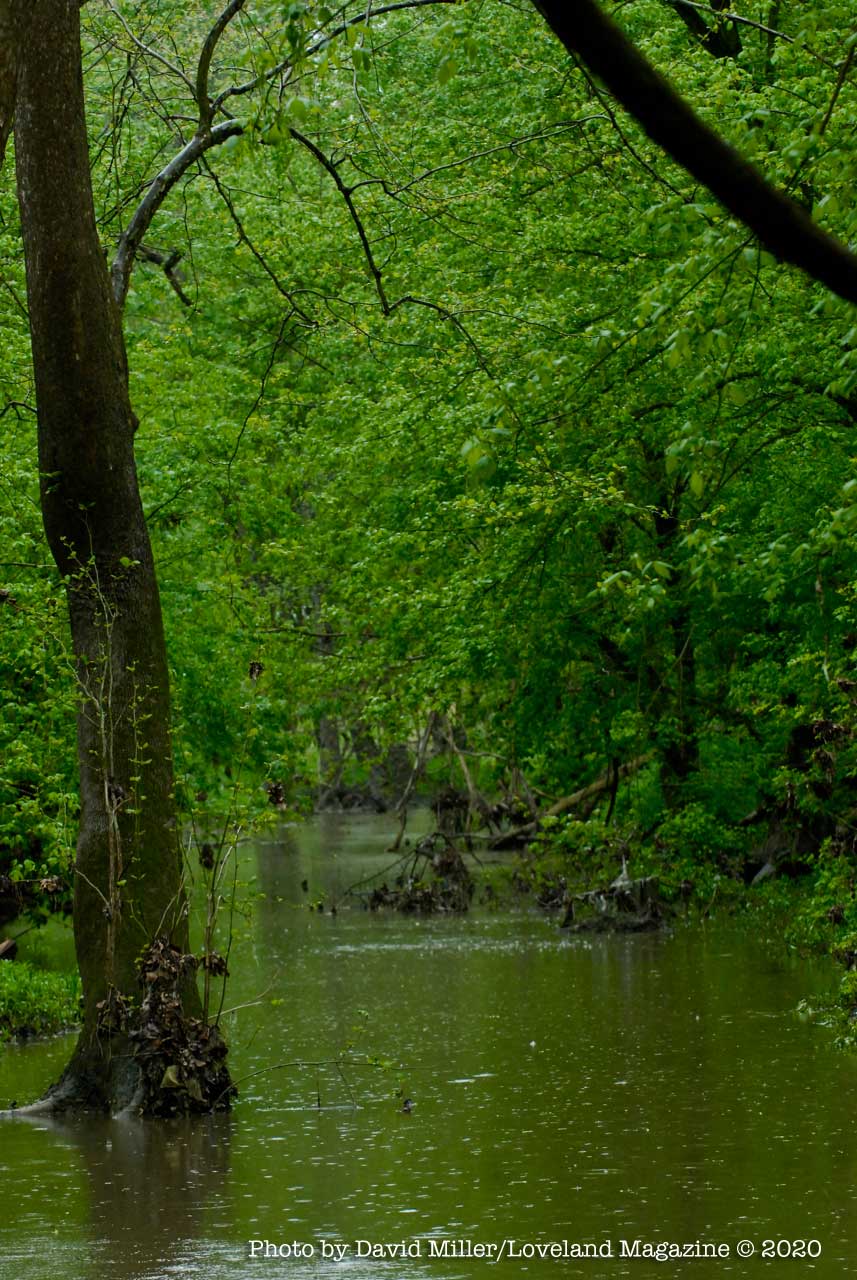
The channel of water flowing through the east side of the South Island.
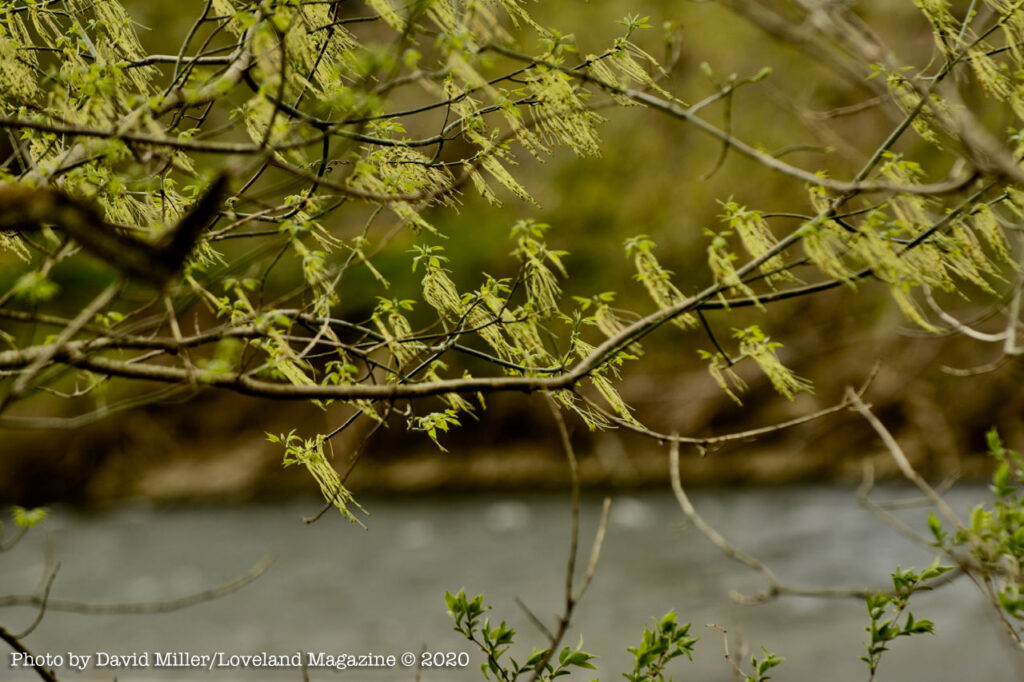
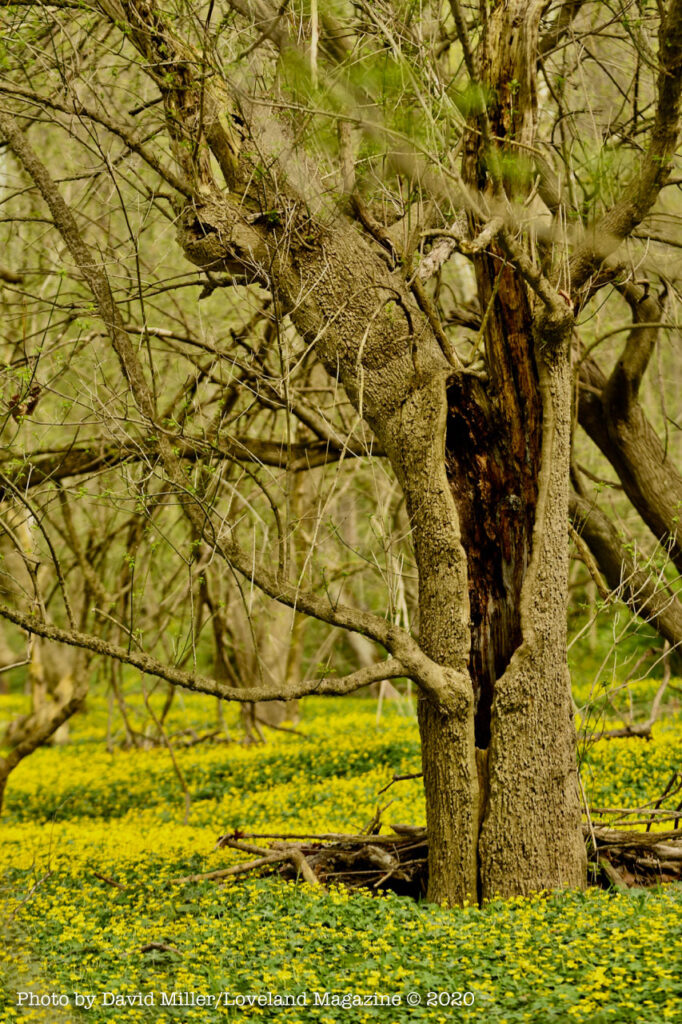
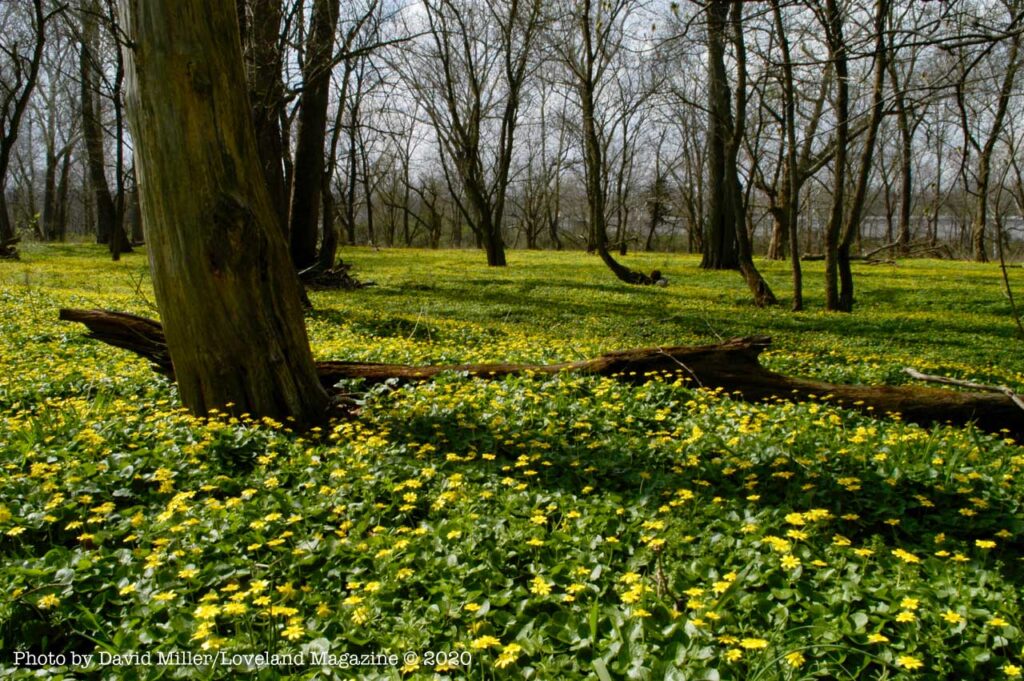
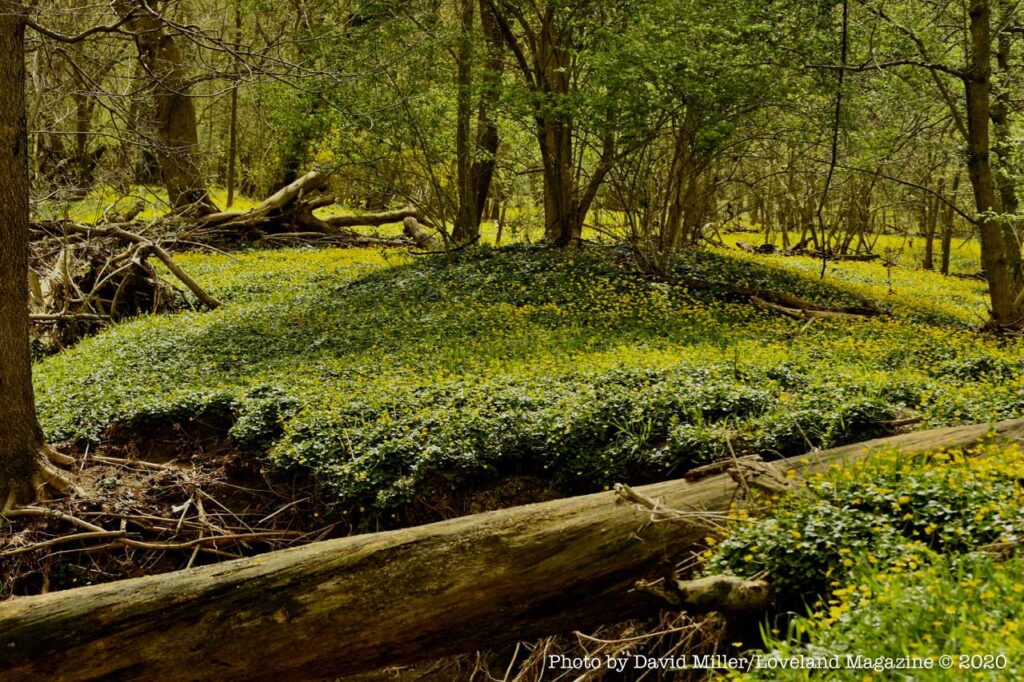
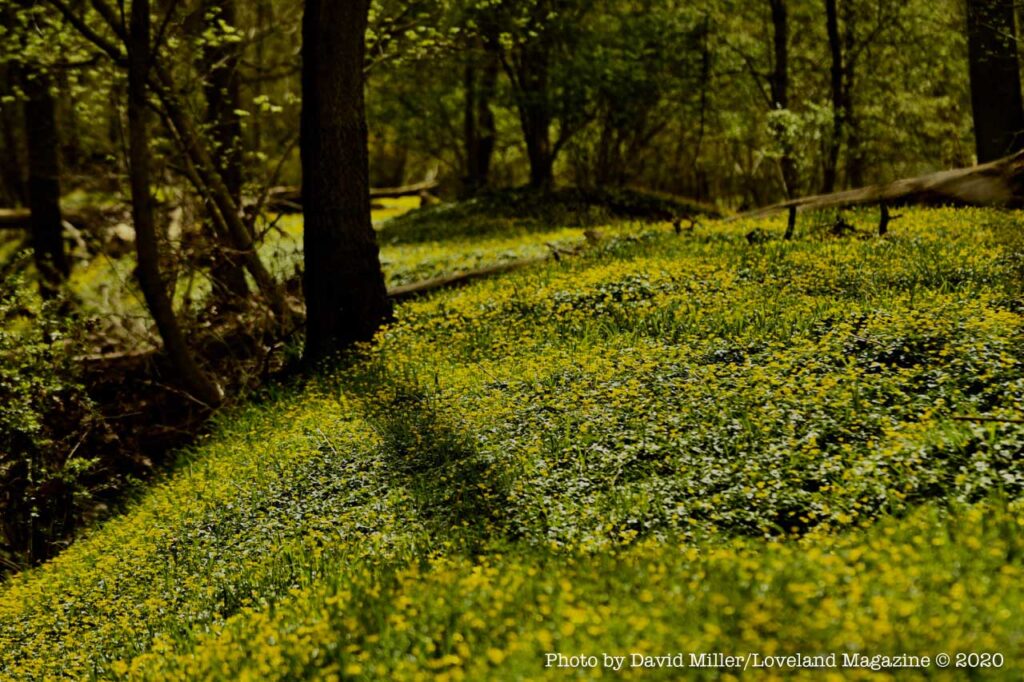
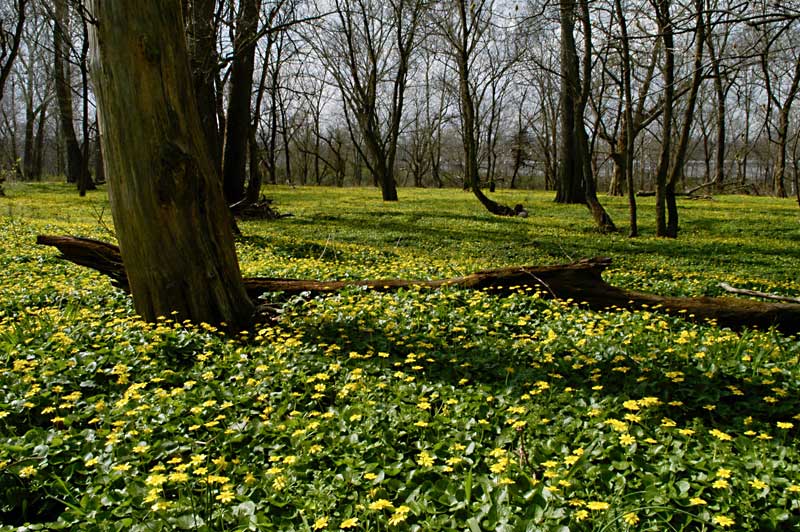
The topography of the approximately 12 acres South Island benefits from both the erosion caused by the flow of the Little Miami and the deposits of silt left during flooding. It’s an ever-changing physical environment, but the flora and fauna remain pretty consistent. The emerging spring-time growth and the natural decay of the ancient tree trunks, including those trees that fall prey to the eroding effects of spring rains and fast river current are the seasonal changes you will notice.
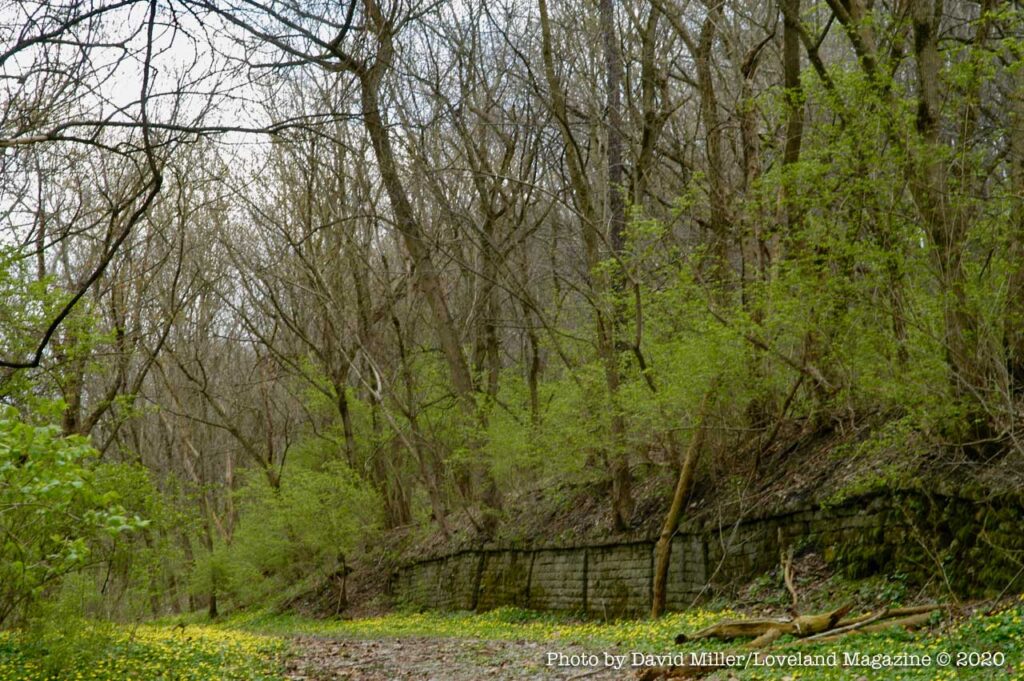
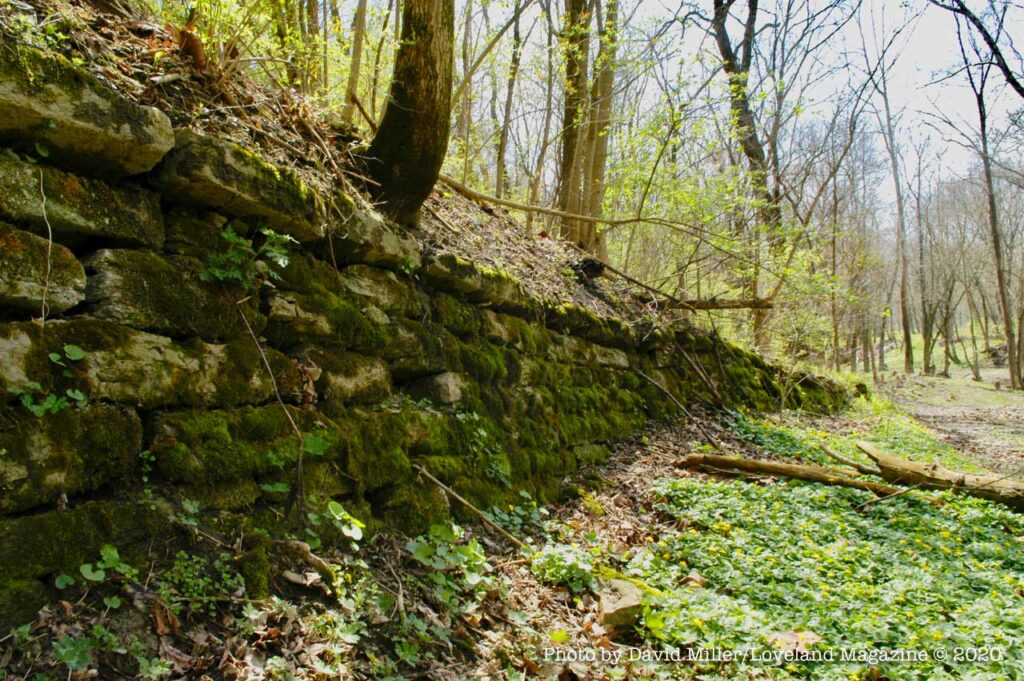
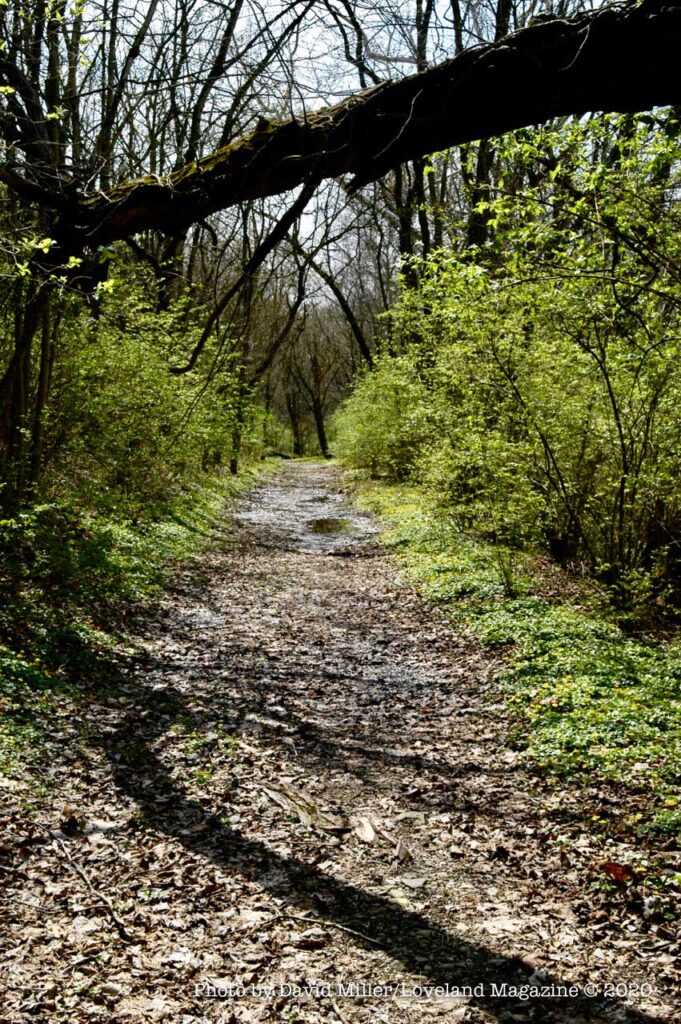
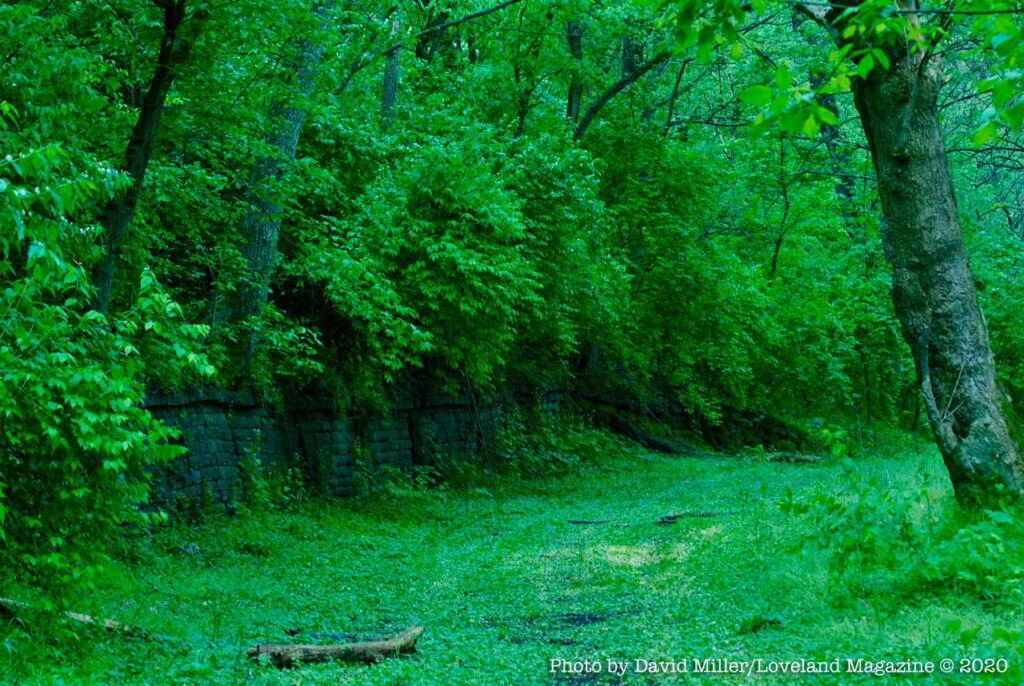
The South Island is the City of Loveland owned property just south of the Linda Cox Parking lot on Broadway in Historic Downtown. When you enter the lot, head to the last parking spaces and walk south between the Loveland Bike Trail and the Little Miami River. The path you begin on is the abandoned section of Lower River Road. You will be walking towards Branch Hill.
This is a remarkable spot in the City and perfect for solitary exploring, dog walking, or picnicking with friends or family. Use caution and good judgment during periods of rain or storms and waterproof boots are recommended although occasionally you will find that some fellow explorer has placed convenient river stones to keep you dry and less muddy.
You will enjoy the large lawn-like open spaces, however, it is not a place for throwing a ball or frisbee – beware of the hidden groundhog holes.
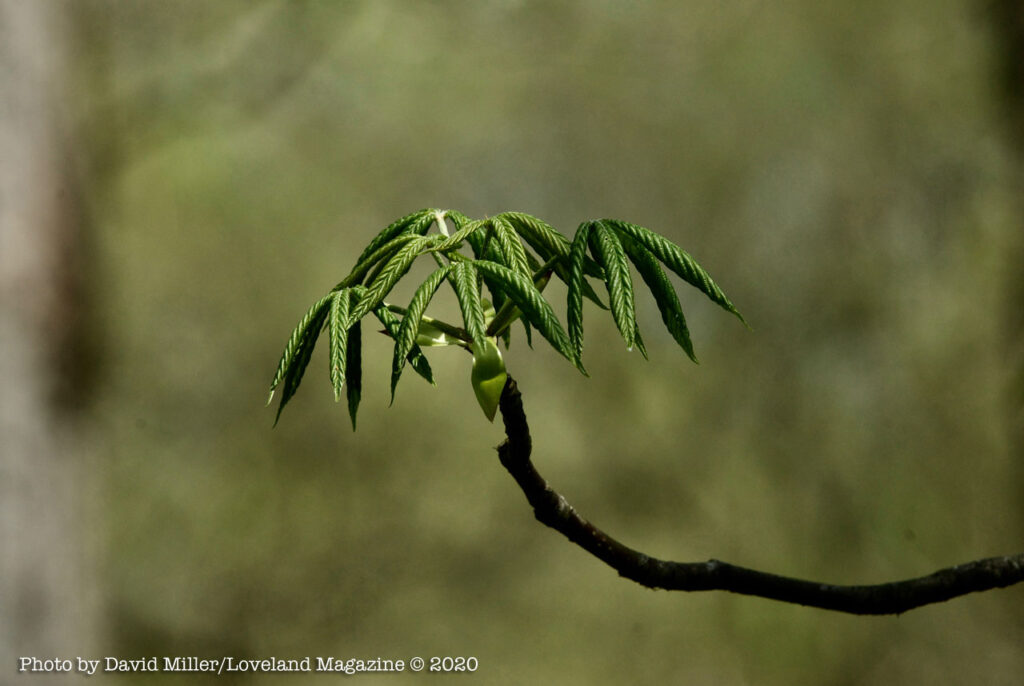
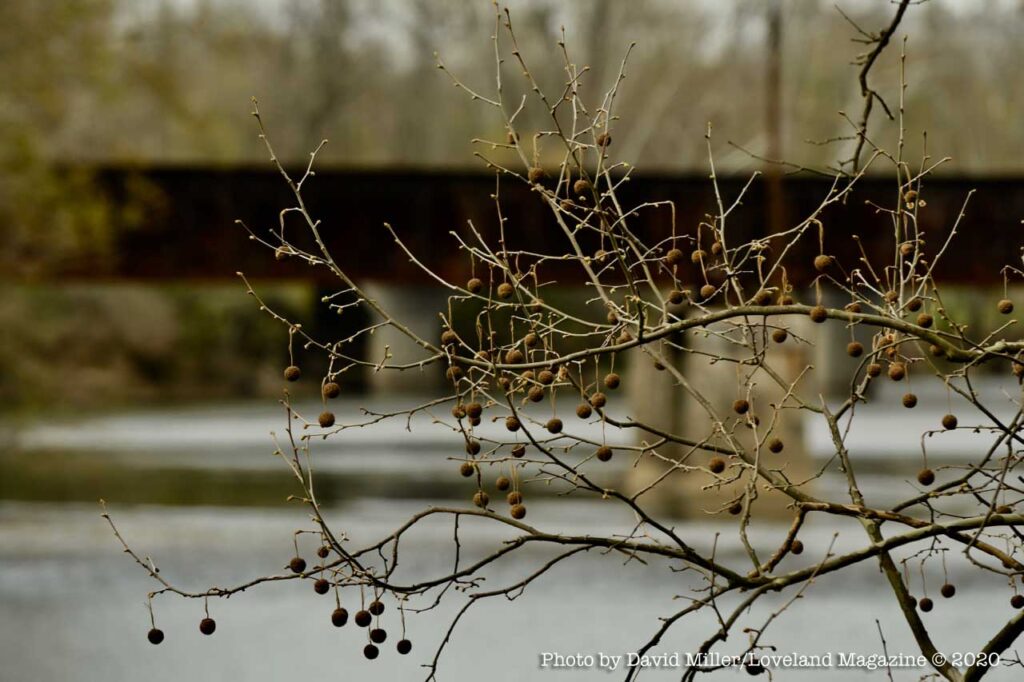
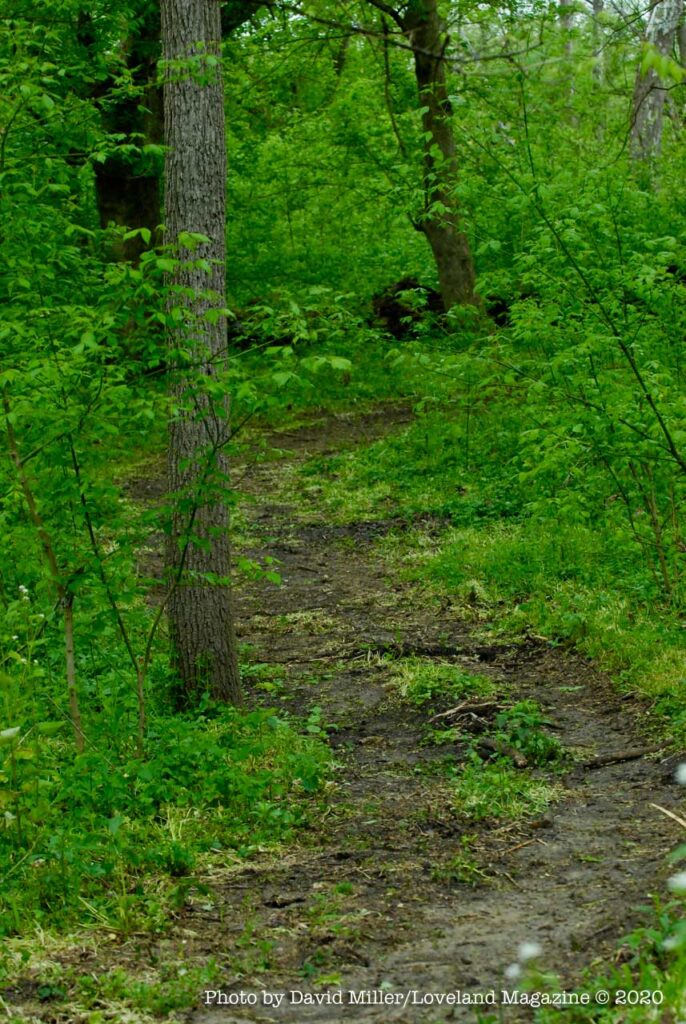
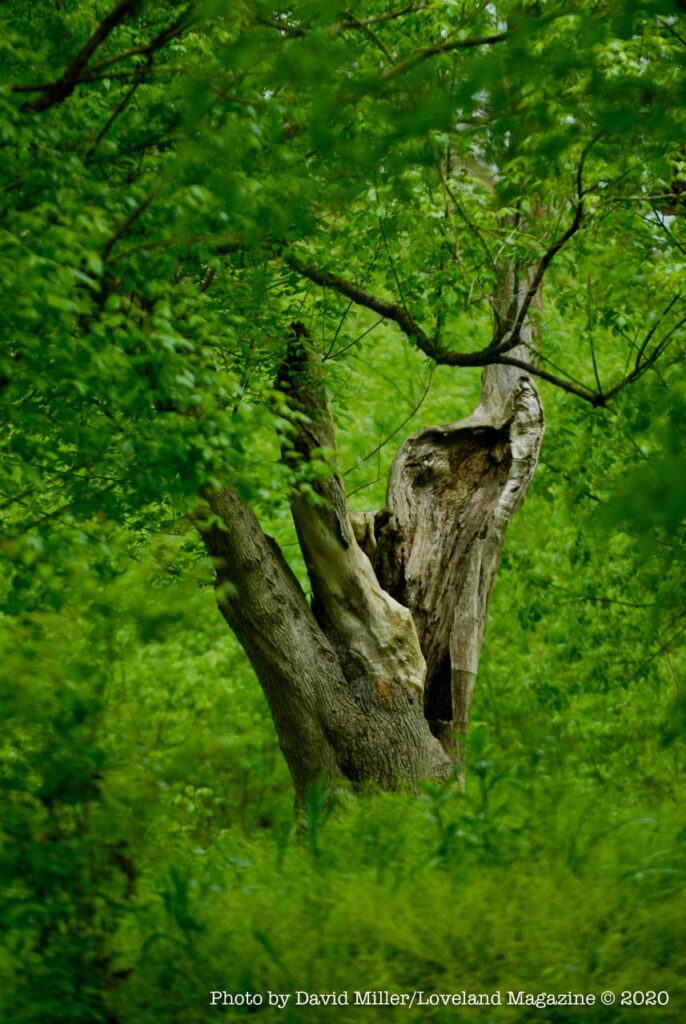
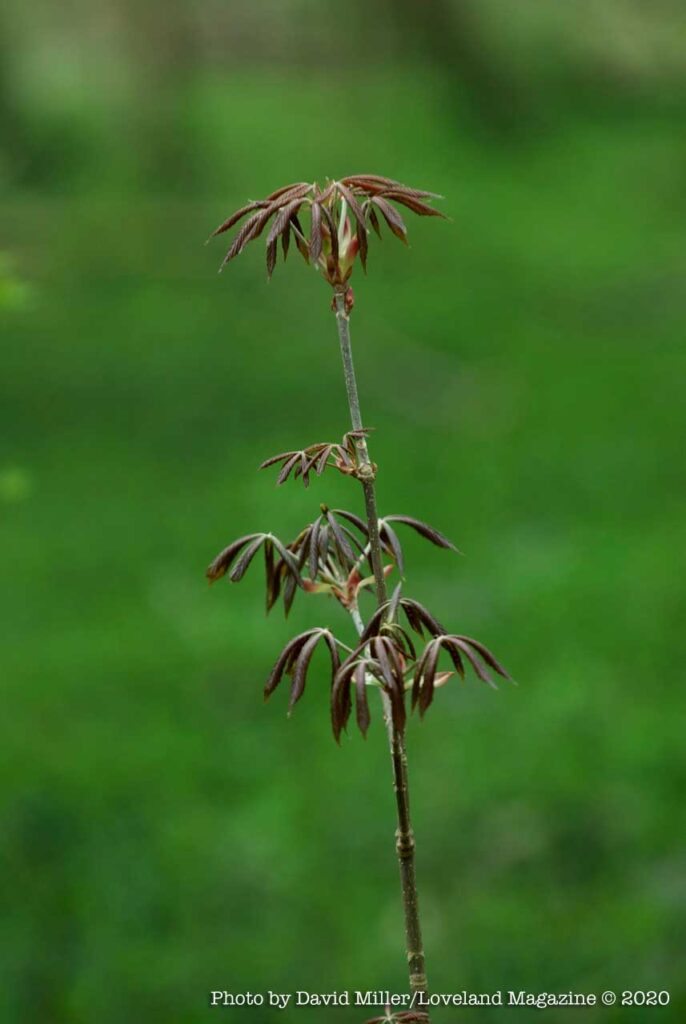
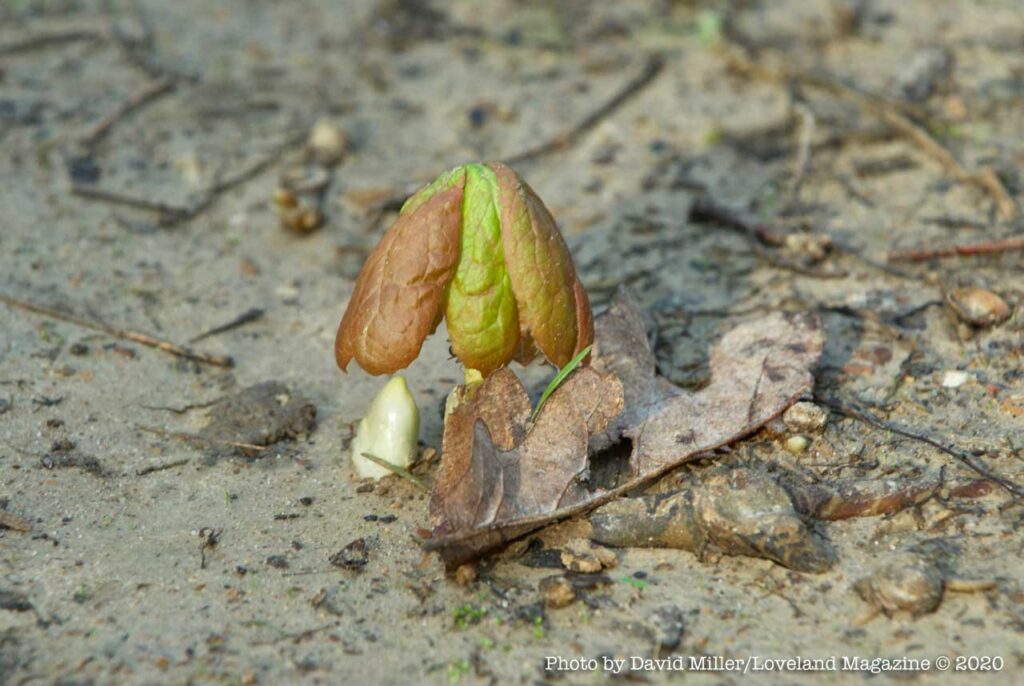
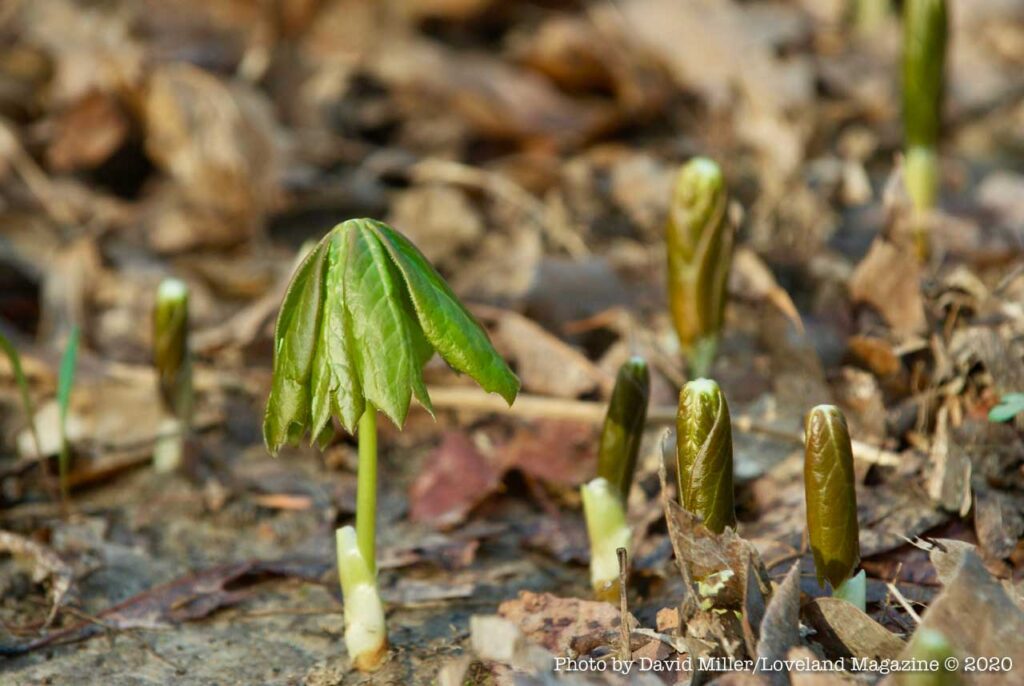
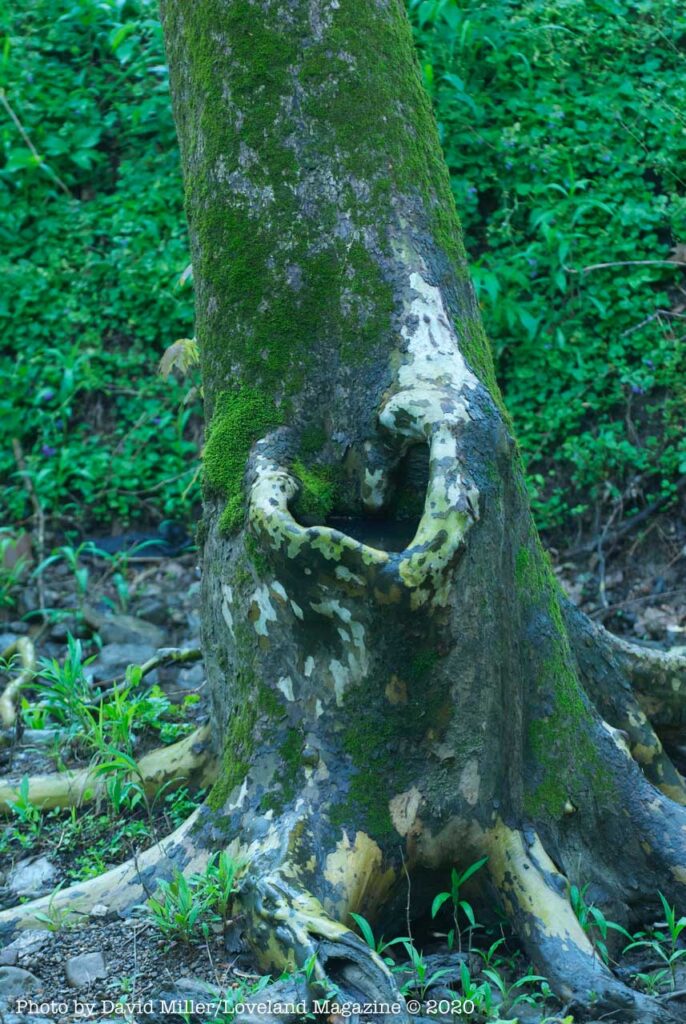
These photos have been taken over the past 14 years. Most of them in the springtime.
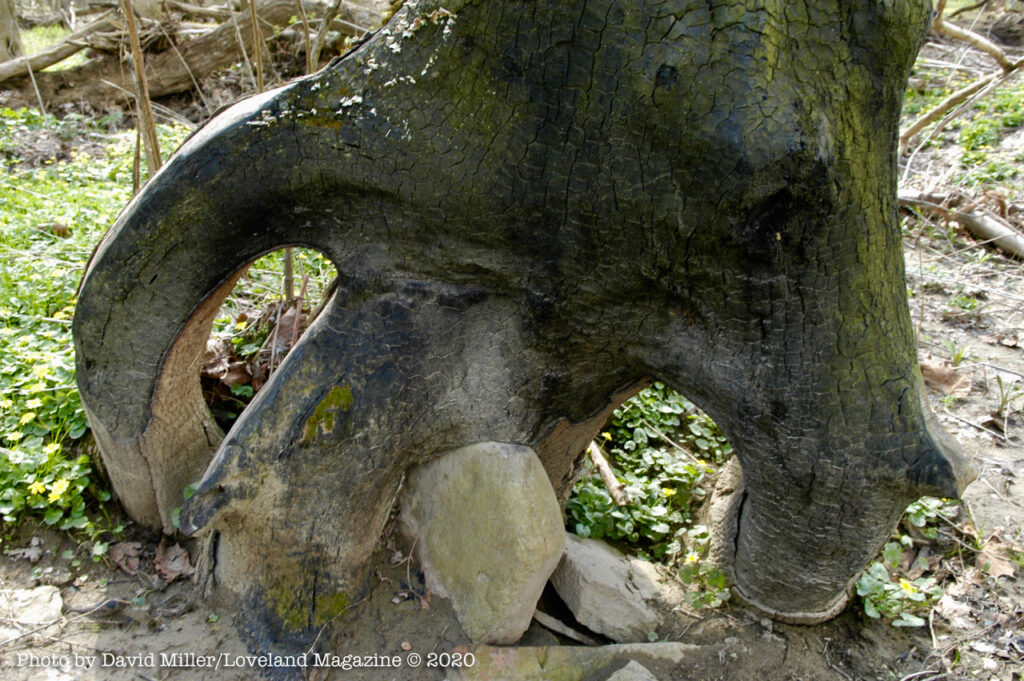
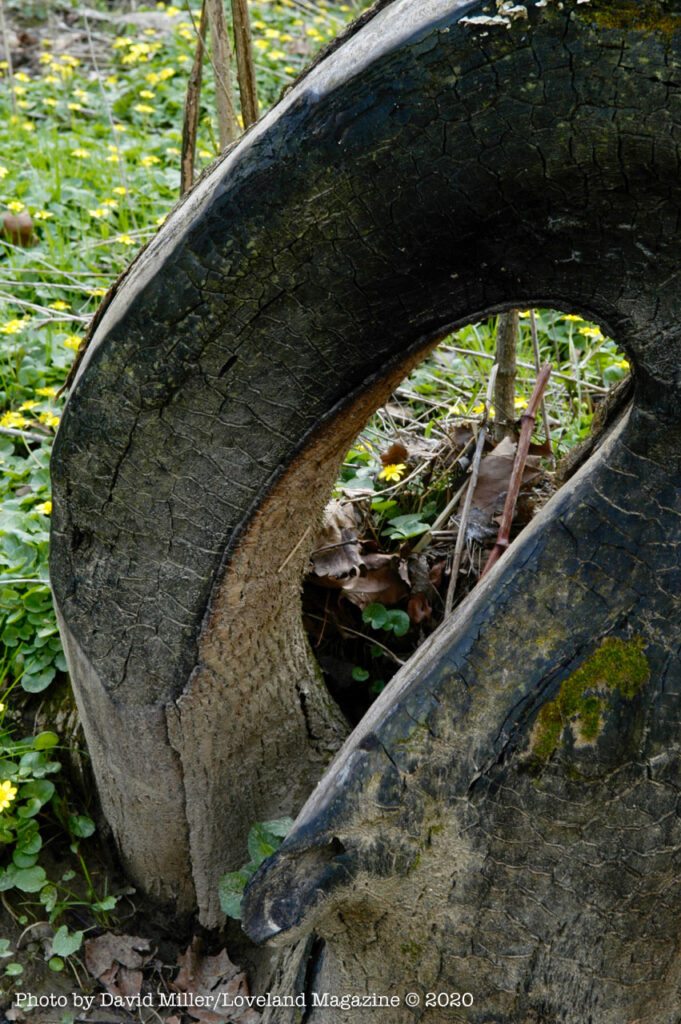
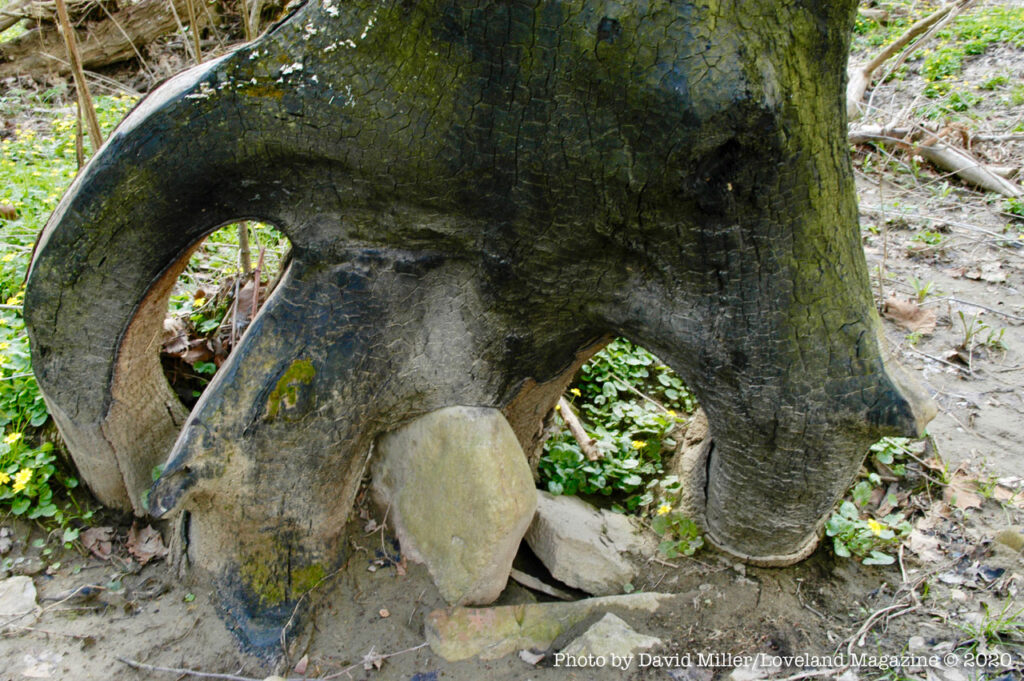
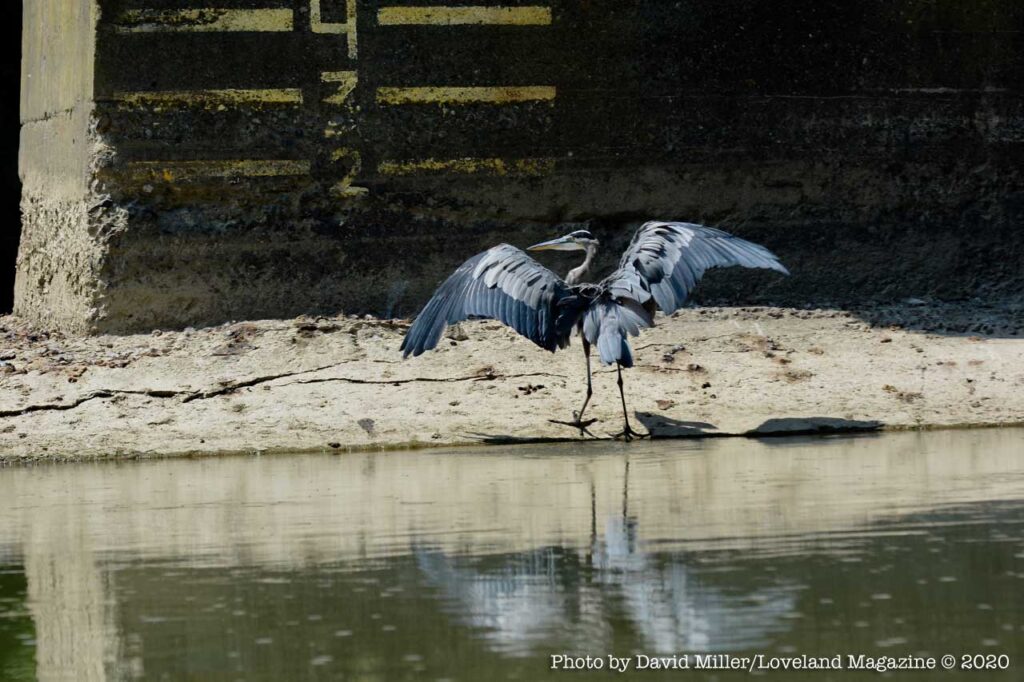
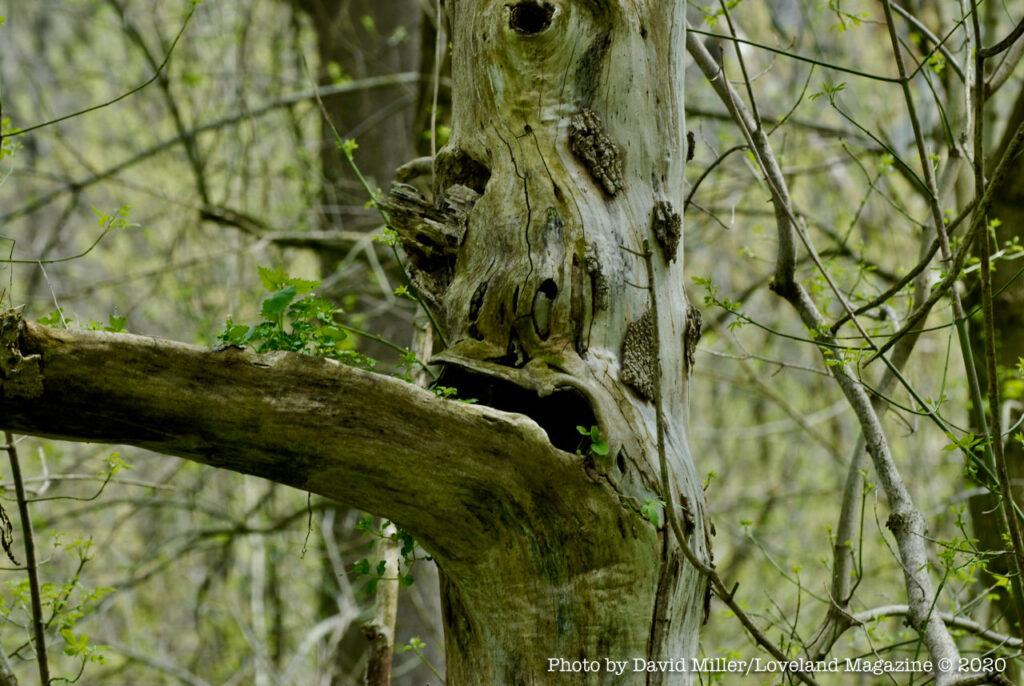
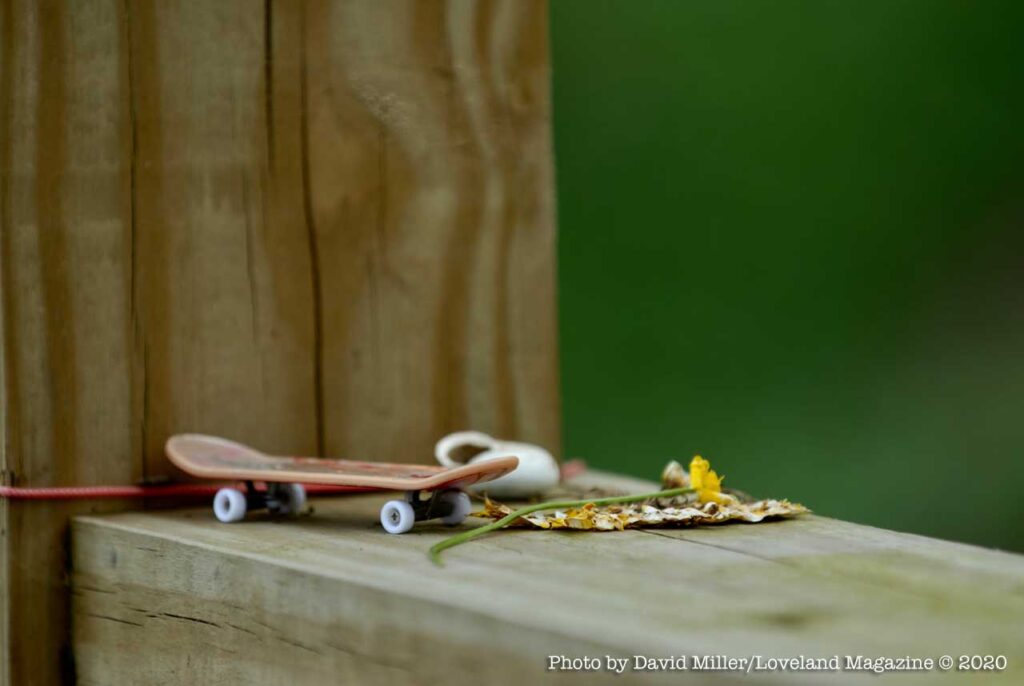
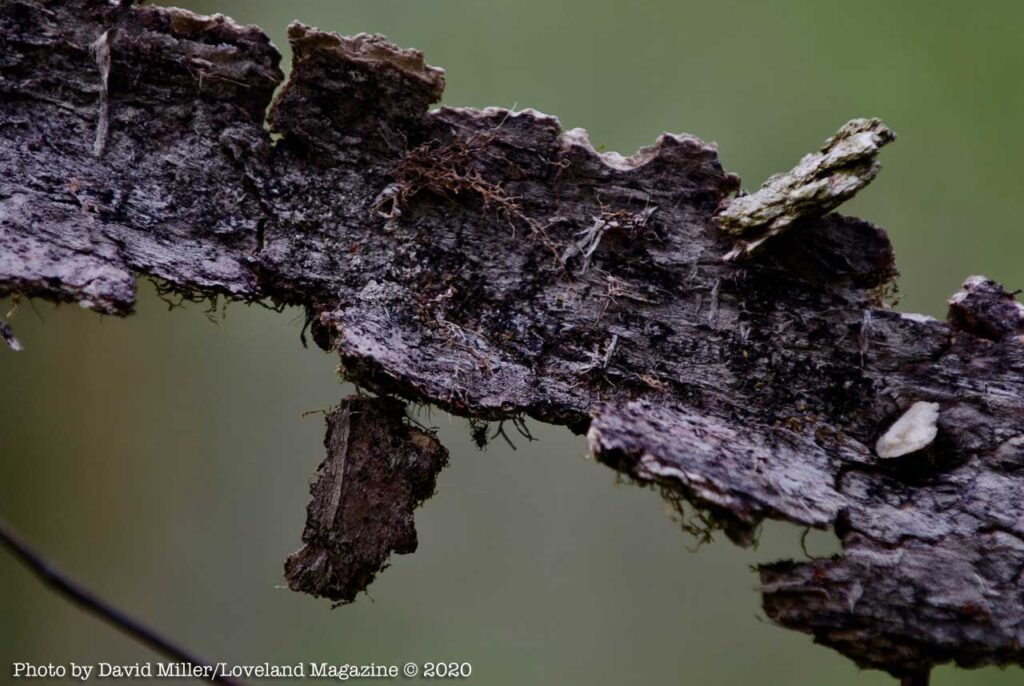
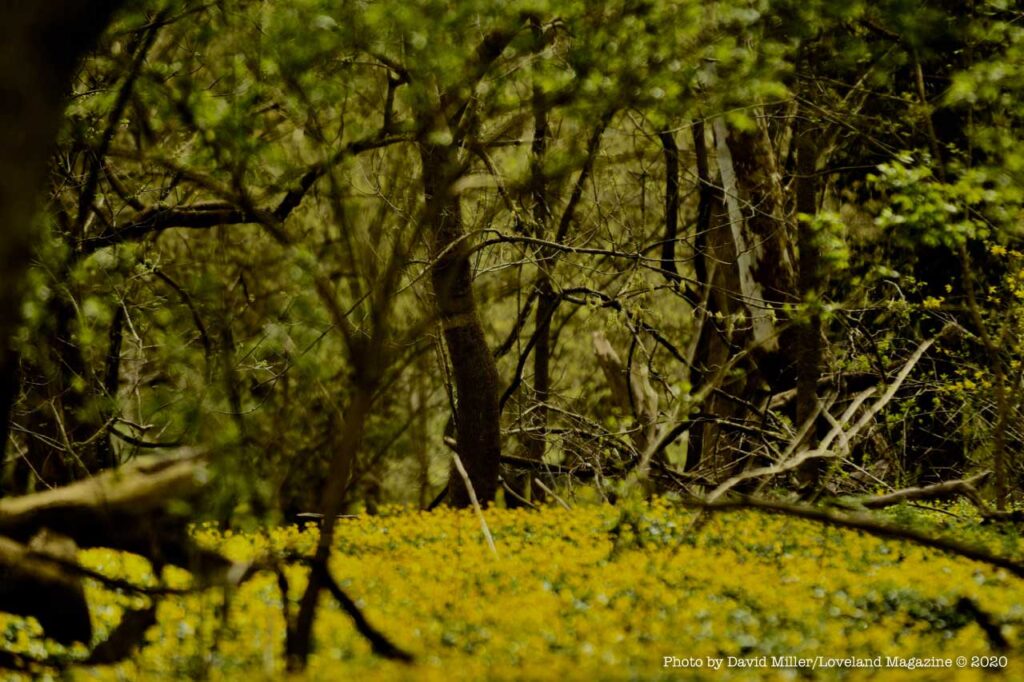
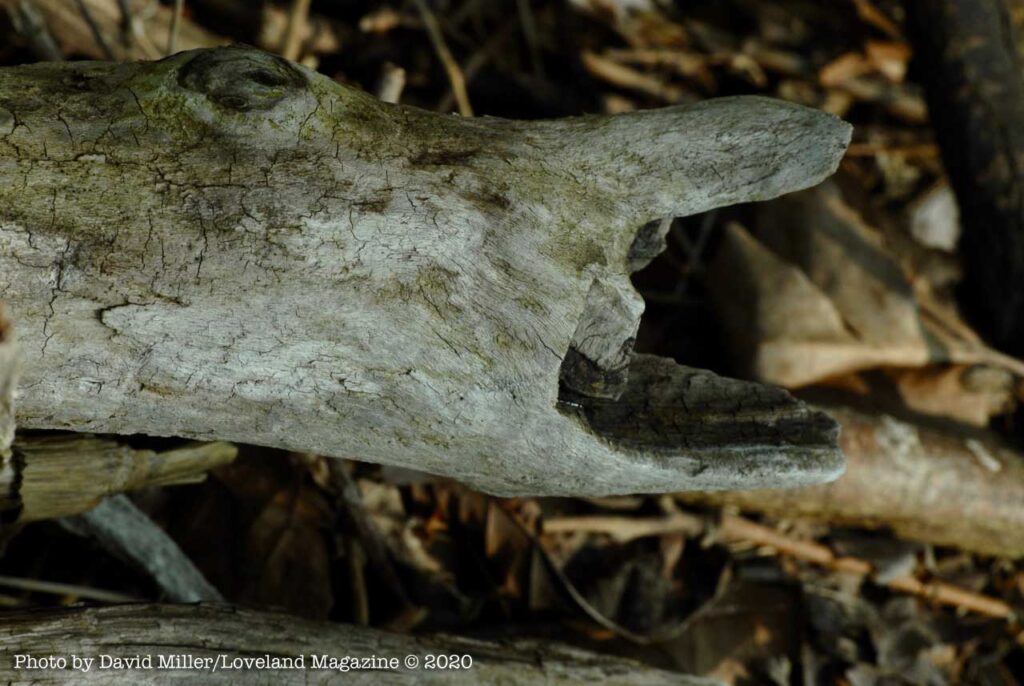
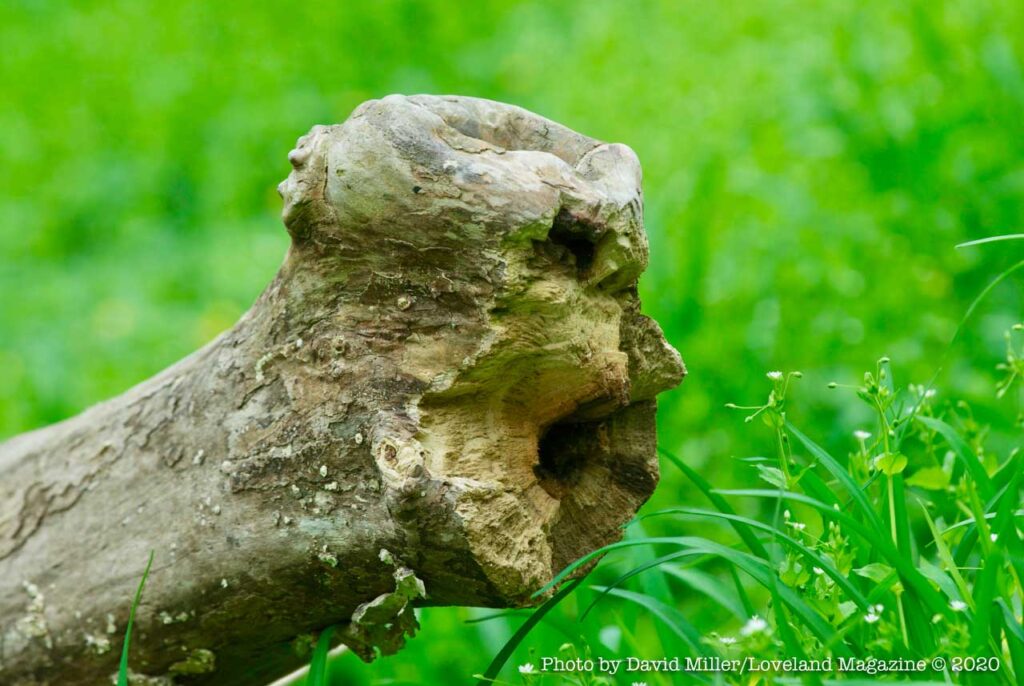
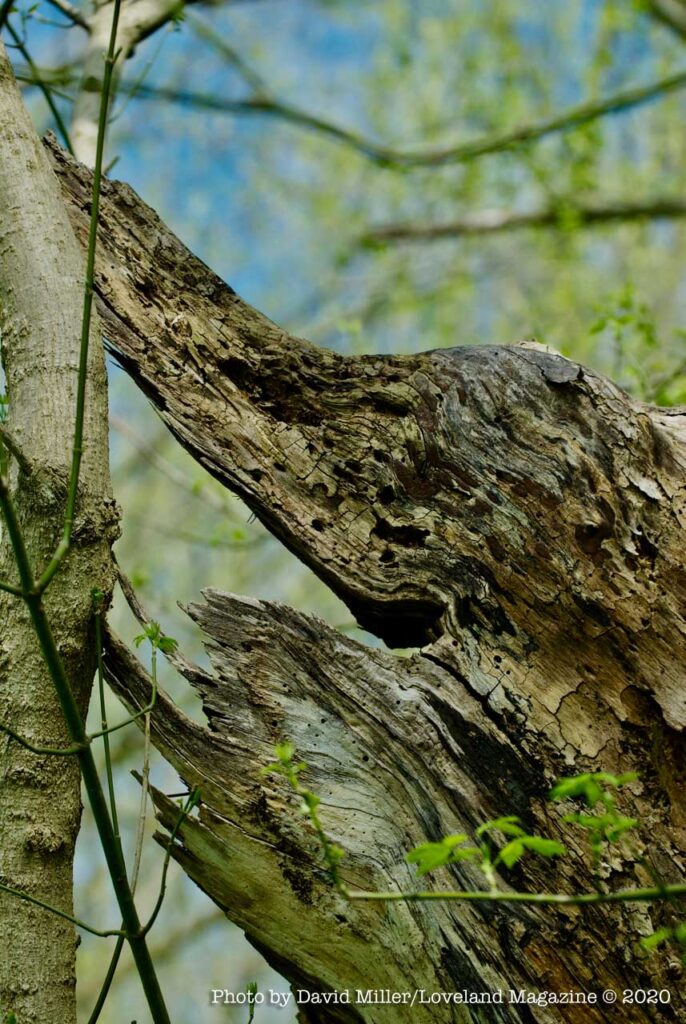
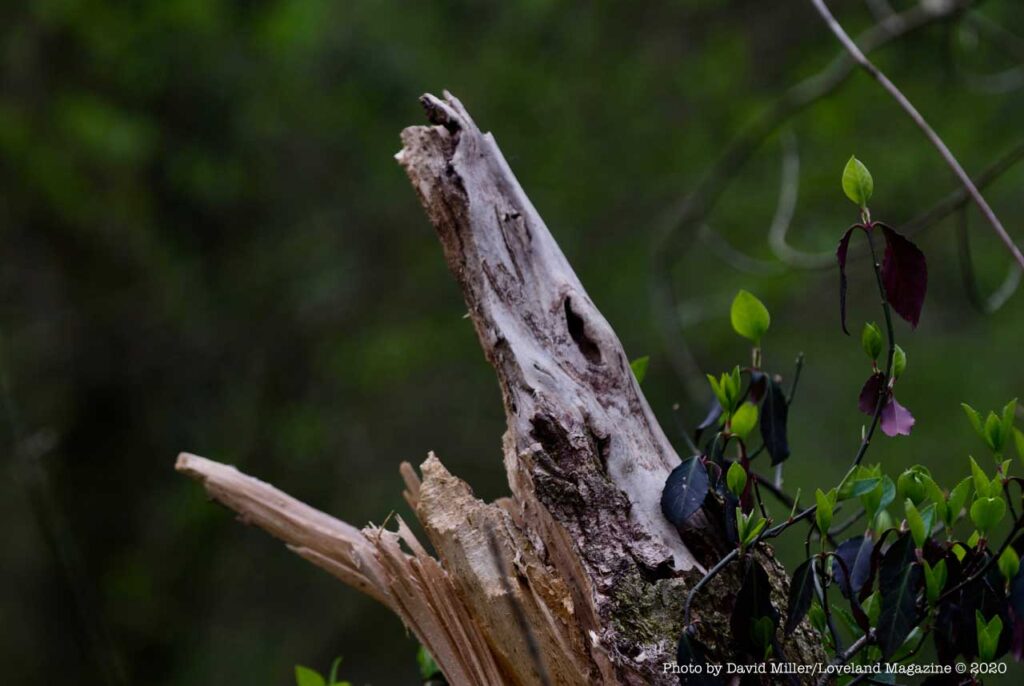
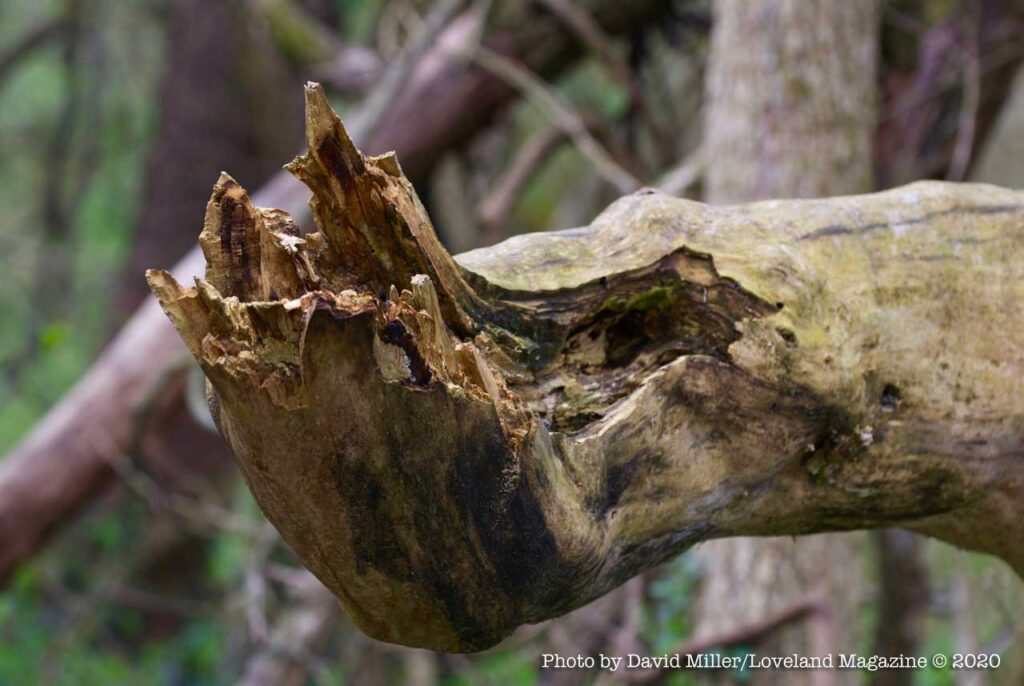
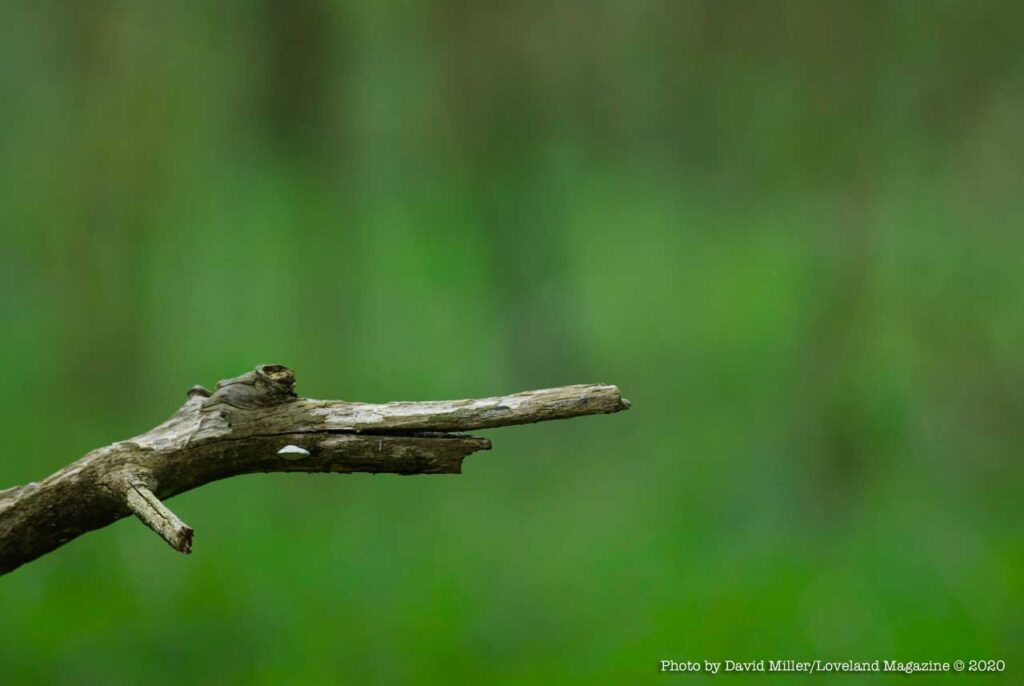
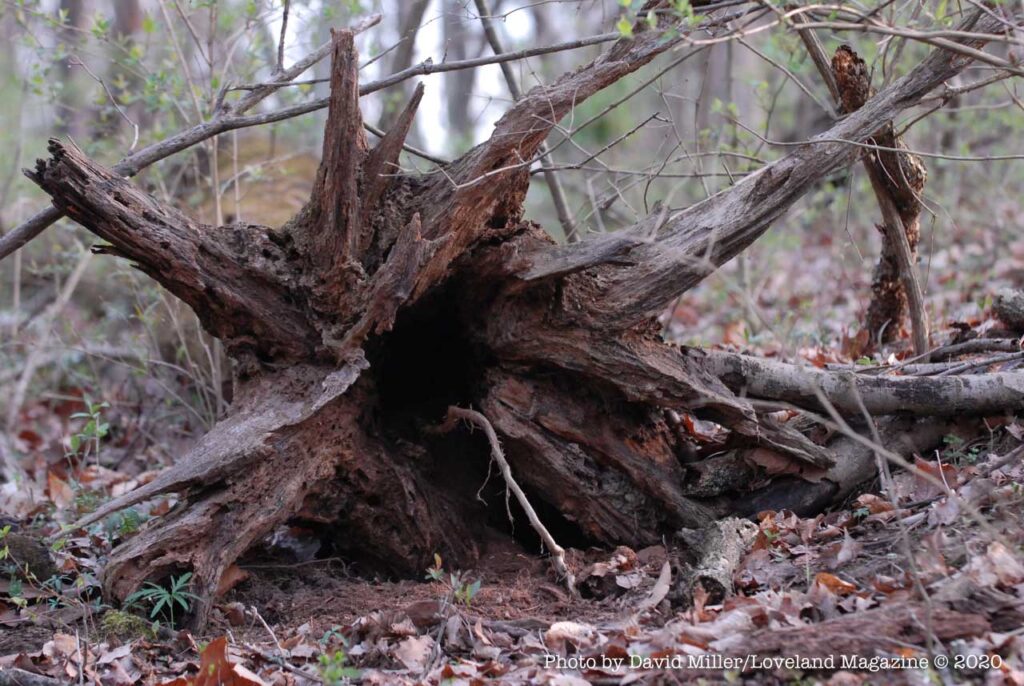
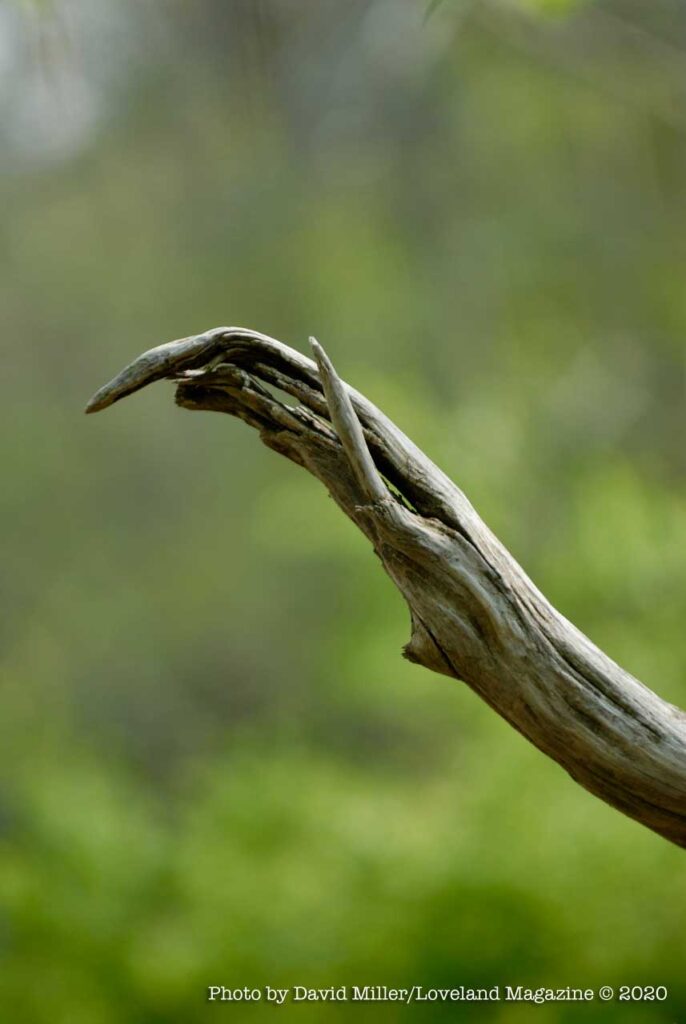
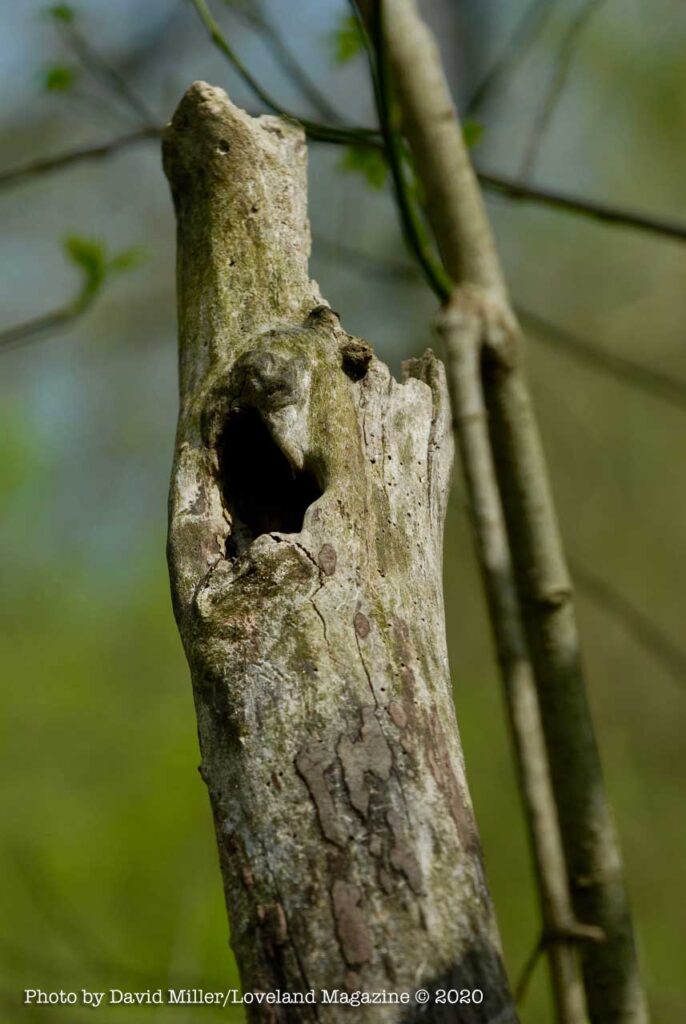
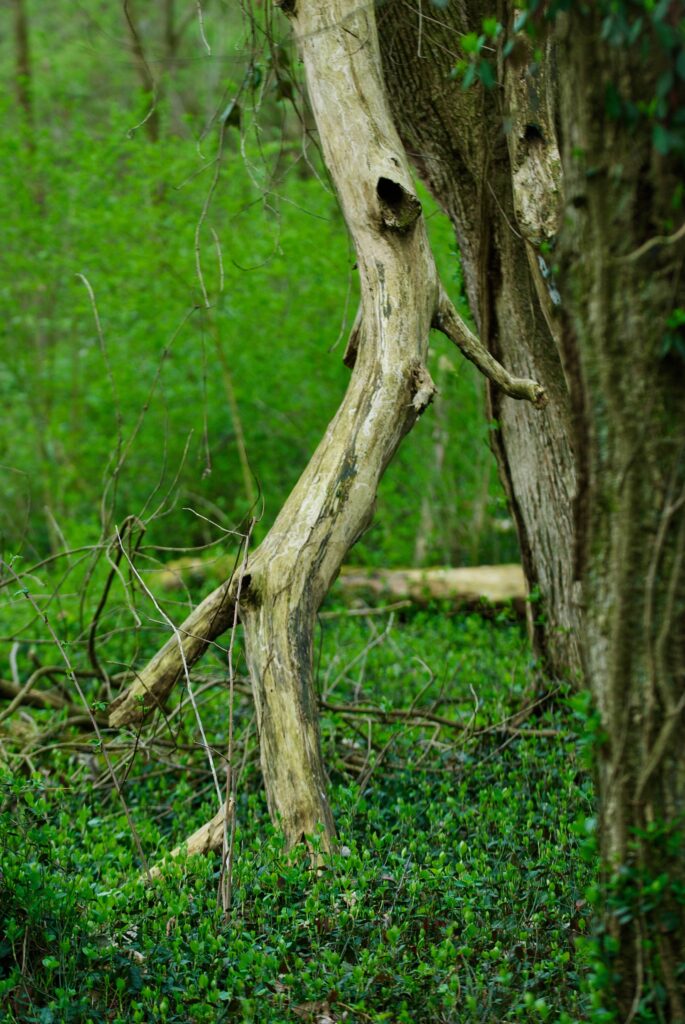
Perhaps because of the insane beauty of the South Islands, I always called the second set of mages below “Spring Rorschach Photos” because one day on one of my many treks I started noticing what I imagined stick-like animal figures entering my camera lens. A “wide-opened” telephoto lens that blurs the background can help you discover things you will not ordinarily notice. You have to look for eyeballs.
Some psychologists used to use the Rorschach Test to examine a person’s personality characteristics and emotional functioning. It was employed to detect underlying thought disorder, especially in cases where patients are reluctant to describe their thinking processes openly.*So there you go… I confess.
Feeling a little insane right now? This insane beauty might be your balm.
Another place to visit in our resort-like town is the Simpson Farm
Loveland, Ohio – The City was notified in November that its NatureWorks Grant application was approved by the Ohio Department of Natural Resources (ODNR). The grant amount of $18,294 will
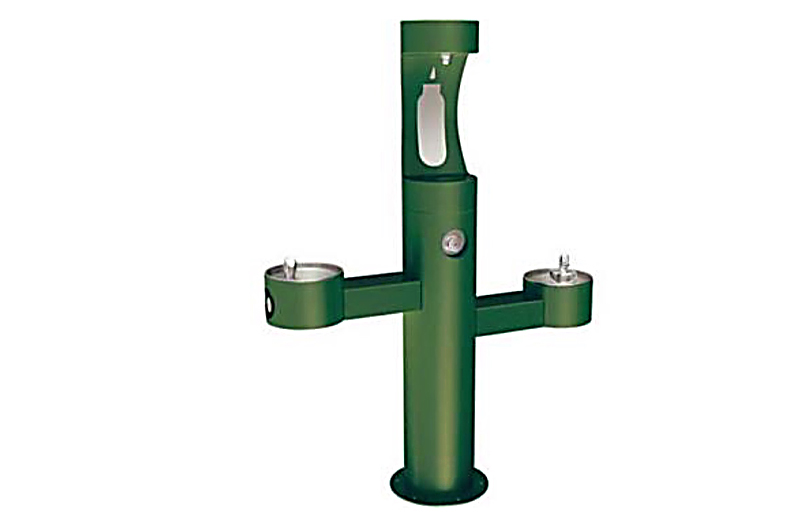
include a local match of $6,098 to complete repairs to the Nisbet Park restrooms. Repairs include roofing, exterior doors, interior/exterior painting, skylights, and lighting. Also included in the project, is a new ADA compliant drinking fountain with bottle filler.
Nisbet Park is the heart of what local folks have always called the “Loveland Bike Trail”, and where the Little Miami Scenic Trail was first paved in 1989. Construction of the first paved miles of the Little Miami Scenic Trail began in Loveland and headed north into Warren County to Morrow. For decades the park and its related parking were the most accommodating spot on, and perhaps still the most popular place to access the trail. The trail runs parral to the Little Miami River along much of its length, a State and National Scenic and Wild River.
Dedicated on December 20, 1991, the Little Miami Scenic Trail runs from Spring Valley in Greene County to the limits of Terrace Park. The Little Miami Scenic Trail is the third-longest paved trail in the United States, running 78.1 miles (125.7 km) through five southwestern counties. Most of the trail runs along the banks of the Little Miami River, in a dedicated, car-free corridor known as Little Miami State Park. The Little Miami Scenic Trail is signposted as State Bike Route 1 south of Xenia and State Bike Route 3 throughout. It is the backbone of a nearly continuous network of paved multi-use trails, centered on the Miami Valley area, that stretches 330 miles (530 km) and connects the Cincinnati, Dayton, and Columbus metropolitan areas. The Little Miami trail is an incrementally growing section of the Buckeye Trail and North Country National Scenic Trail, while the trail south of Xenia also forms the southern leg of the Ohio to Erie Trail. Together with the Ohio Department of Natural Resources, the local governments of Xenia and Yellow Springs purchased land along the abandoned railroad from 1973 to 1983. In 1979, the land became an Ohio State Park. The Loveland Bike Trail was added to the state park in 1984*
Loveland, Ohio – Our community has a lazy river flowing down its center – the main artery of the “SweetHEART of Ohio”. It is the Little Miami, with State and National “Scenic River” designation.
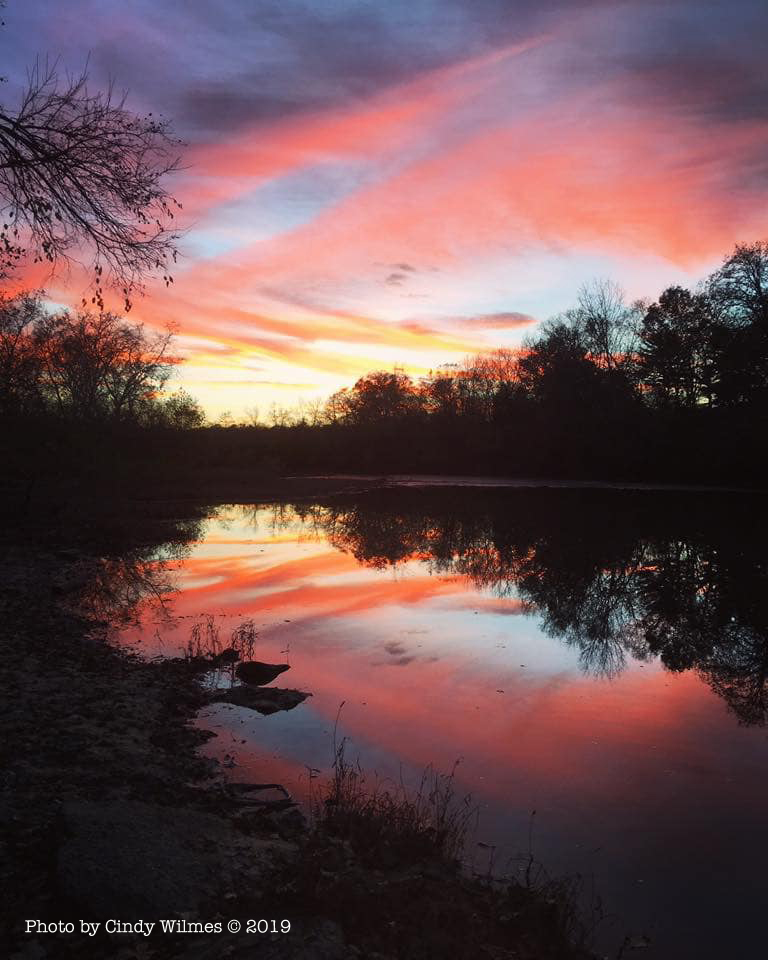
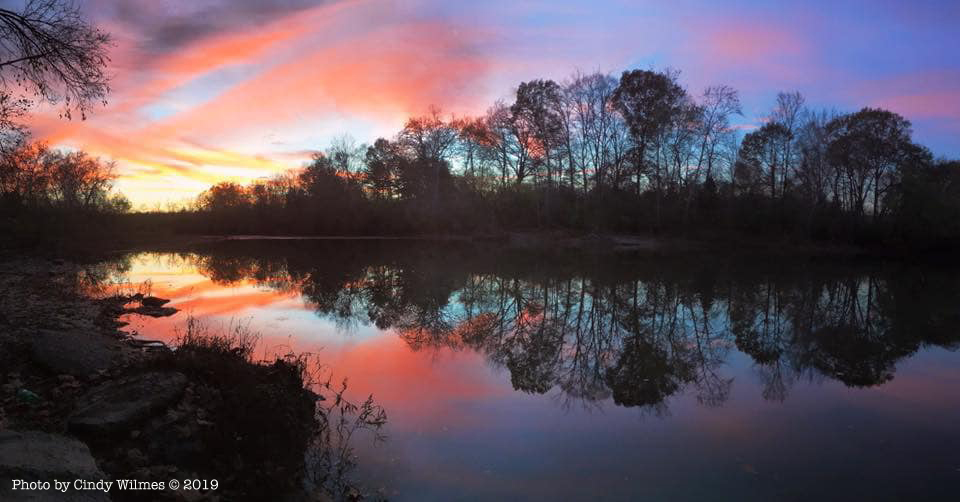
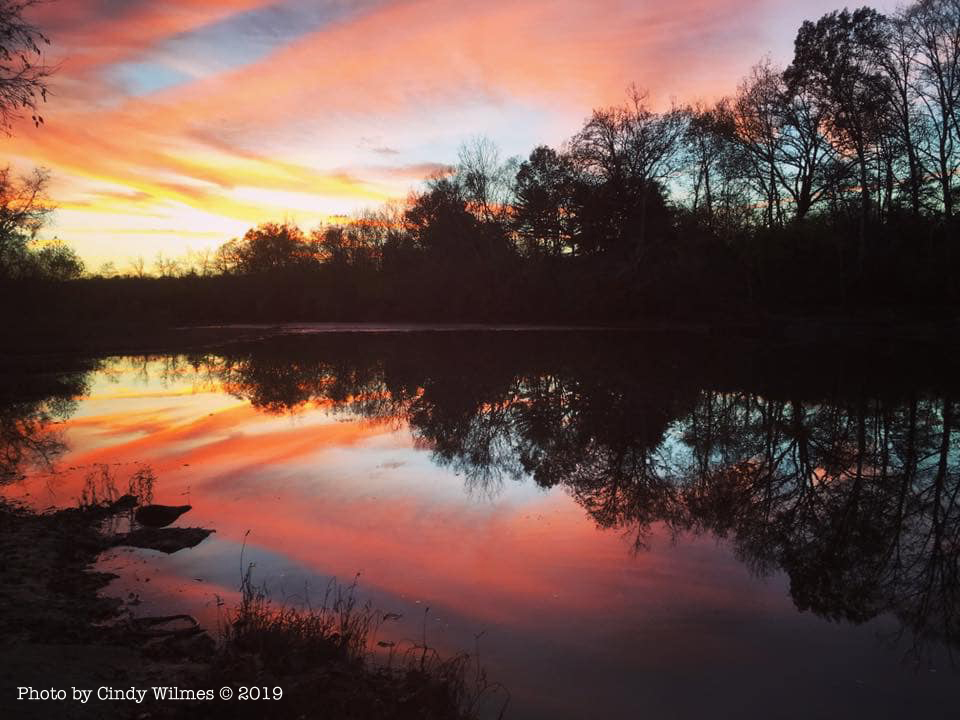
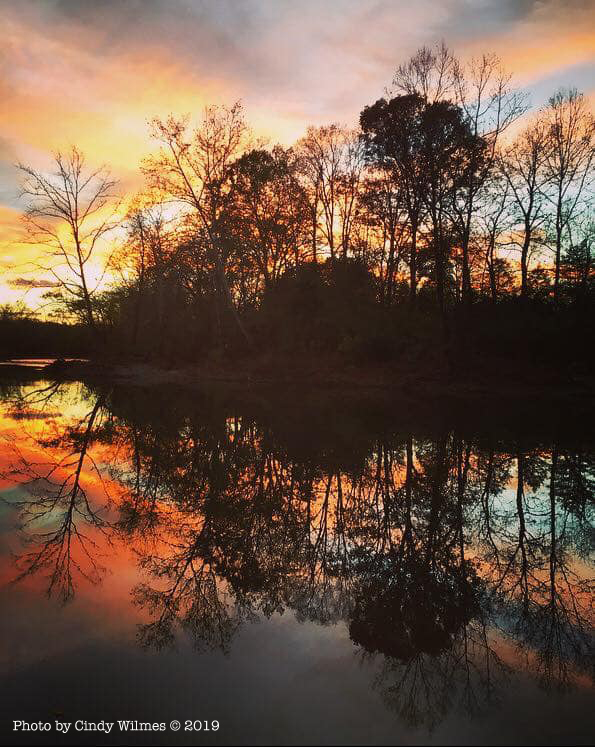
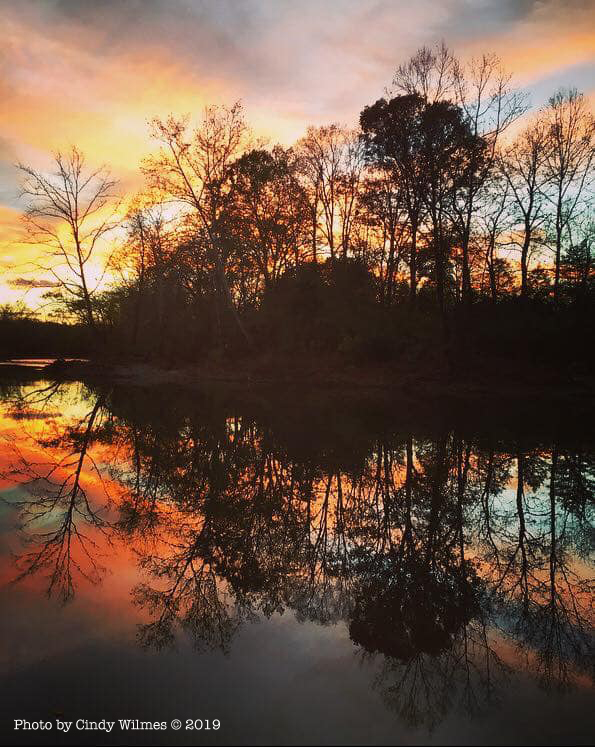
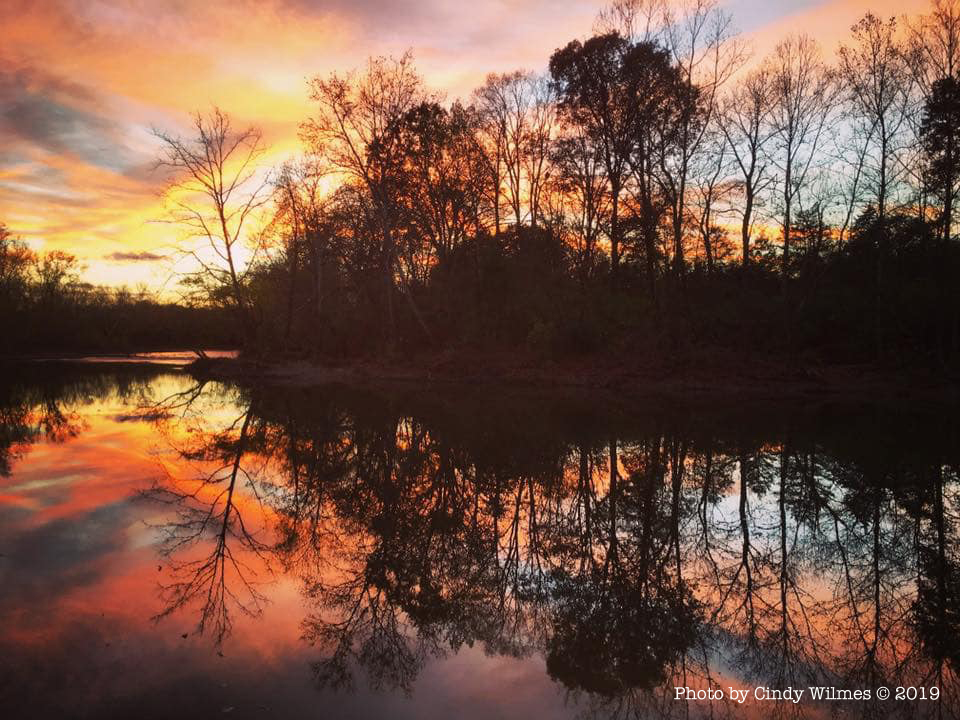
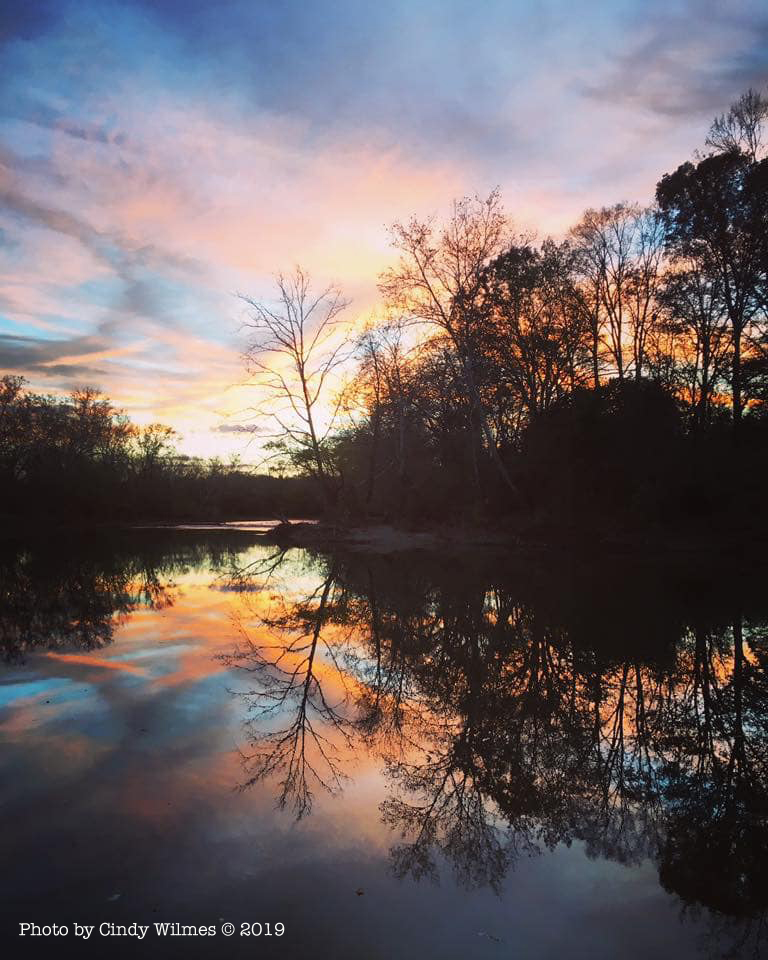
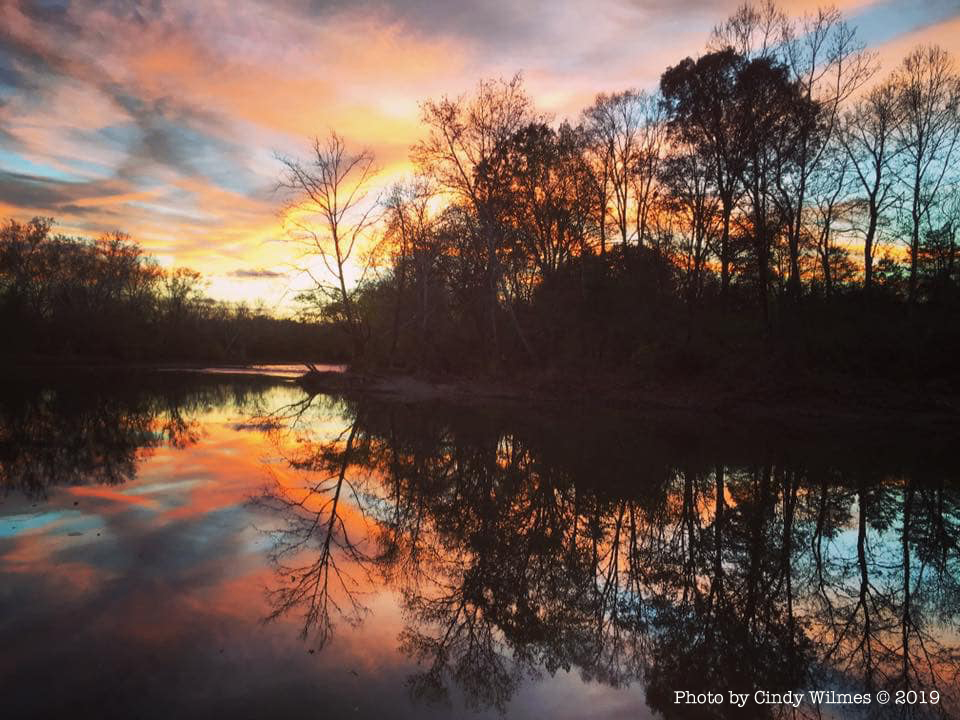
“Thank you for the opportunity to share some of the beautiful photos I captured of Loveland,” said Cindy Wilmes, a long-time resident of our quaint town. Here’s a little bit about Cindy to help set the tone for her passion for living in the land of love.
“It soothes my soul and feeds my love for adventure.”
Cindy is Loveland native; her parents went to Loveland schools, met in Loveland, and decided to raise a family here. “When I moved out after college, I chose to continue the legacy and buy a house in Loveland – close to my community and a huge fan of this small town, I’m thankful to put roots down in this city,” she said. She tells Loveland Magazine that she is on the Loveland Bike Trail almost every day running or biking. “The bike trail has been an avenue of fresh air, amazing wildlife, and views I can’t ignore. It soothes my soul and feeds my love for adventure.”
About the photographs
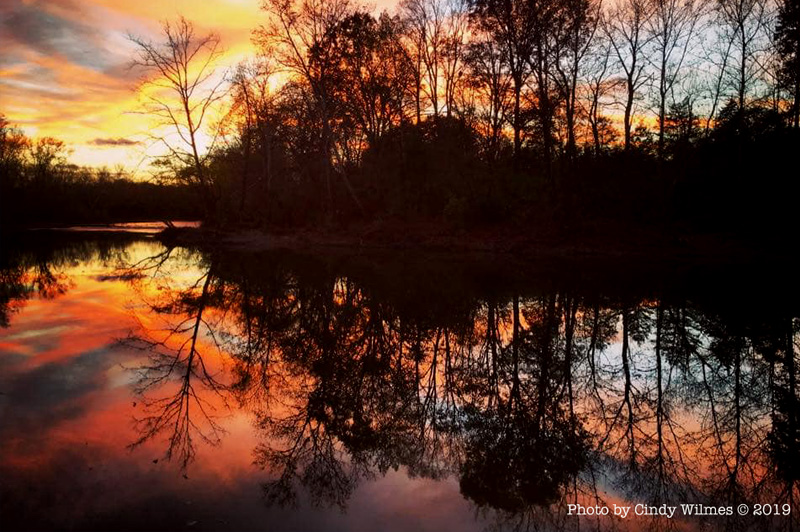
I caught this spectacular sunset on the trail while out for a cold evening run. It’s my favorite spot on the bike path, as the river curves around part of the woods before heading downstream. No matter how many times I catch this view, I still stand in awe.
Cindy said, “Proud to call this town my home, my goal ever since I was little was to grow up and be the Loveland Valentine Lady—and it still is. As a young adult, I want to advocate for my city and love capturing those moments that make this town so unique.”
Click the photos for a larger view…
See MORE of Cindy’s photos in the Facebook album she calls…
I love my small town! Some days feel like you may be stuck in a Gilmore Girls episode—the bells chime every hour, people wave as you run by, there are small shops to peruse—not to mention, the beautiful bike trail. Lots of time spent around town taking in the view—love my hometown!
Health District encourages river users to follow these typical precautions including:
Avoid drinking river water
Avoid swallowing water when swimming.
Avoid getting water shot up your nose when swimming, especially in warm shallow water. Avoid swimming or wading in with open wounds or cuts.
Don’t swim if you are ill.
Shower with soap and clean water after swimming.
Contact your local canoe livery – It appears most have reopened
Loveland, Ohio – The Warren County Health District sent out a press release this afternoon advising that untreated sewage is no longer being discharged to the Little Miami River and they have removed their advisory not to enter or fish in the Little Miami River south of Old 3C Highway in Warren County.
On Thursday the District advised citizens not to enter or fish in the River because of increased health risks associated with coming into contact with wastewater that may contain, parasites, viruses, and bacteria that can cause a range of conditions including; diarrhea, dysentery, gastroenteritis and hepatitis A.
A “breach in a sewer main” resulted in untreated wastewater being directed to the River.
The repair of Warren County’s force main was completed at 4:15 AM this morning and the illicit discharge to Simpson Creek and the Little Miami River was stopped at approximately 5:00 AM. The District said in that press release, “Our pump stations are operational and untreated wastewater is no longer being discharged to the river and/or streams.”


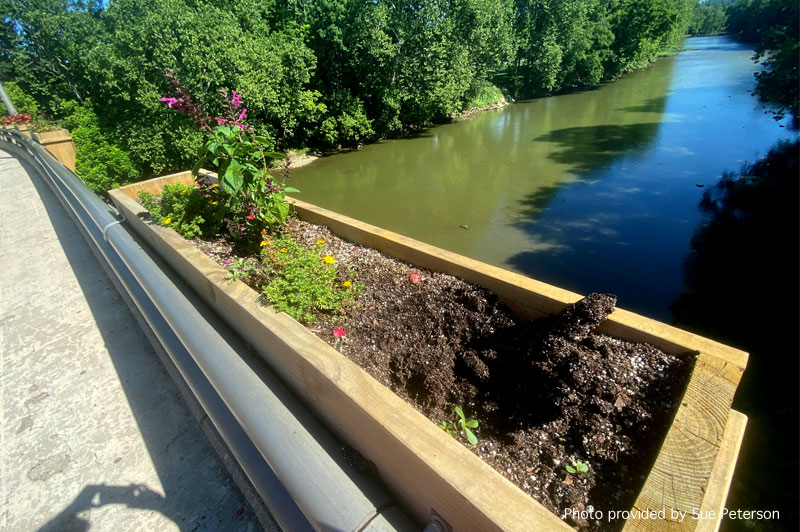
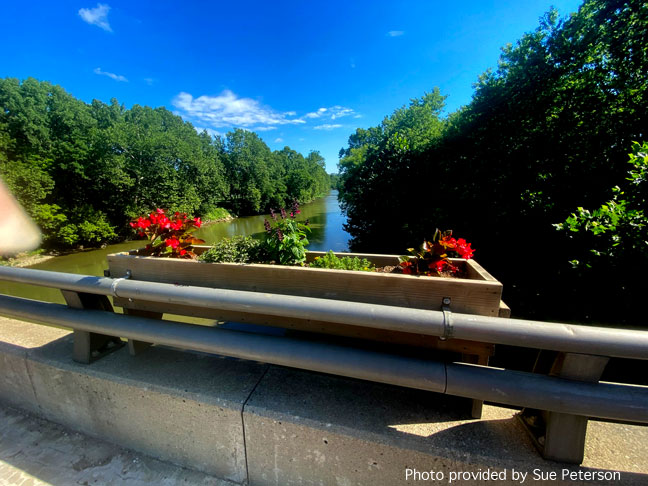 Peterson says that this is what the flower boxes should look like
![[VIDEO] Bob Kessler gets intimate with 6″ shells on the 4th of July!](https://lovelandmagazine.com/wp-content/uploads/2020/07/feature-kessler-fireworks.jpg)


![[Video] Listen to local singer/songwriter Javan Pourvakil](https://lovelandmagazine.com/wp-content/uploads/2020/06/maxresdefault-8.jpg)
 by David Miller


![[Interview] Joe Timmerman Founder of “A Neighborhood Cleanup”](https://lovelandmagazine.com/wp-content/uploads/2020/06/maxresdefault-6.jpg)



![[Photo Gallery] A look back at the Loveland flood of 1913](https://lovelandmagazine.com/wp-content/uploads/2020/06/1913-flood.jpg)


![[Photos] Higher-Ground needed today in Loveland](https://lovelandmagazine.com/wp-content/uploads/2020/05/feature-higher-ground.jpg)
 The South Island is the City of Loveland owned property just south of the