Tag: Ohio Capital Journal

  • No Ohio redistricting meetings in sight, despite Dem demands

    No Ohio redistricting meetings in sight, despite Dem demands

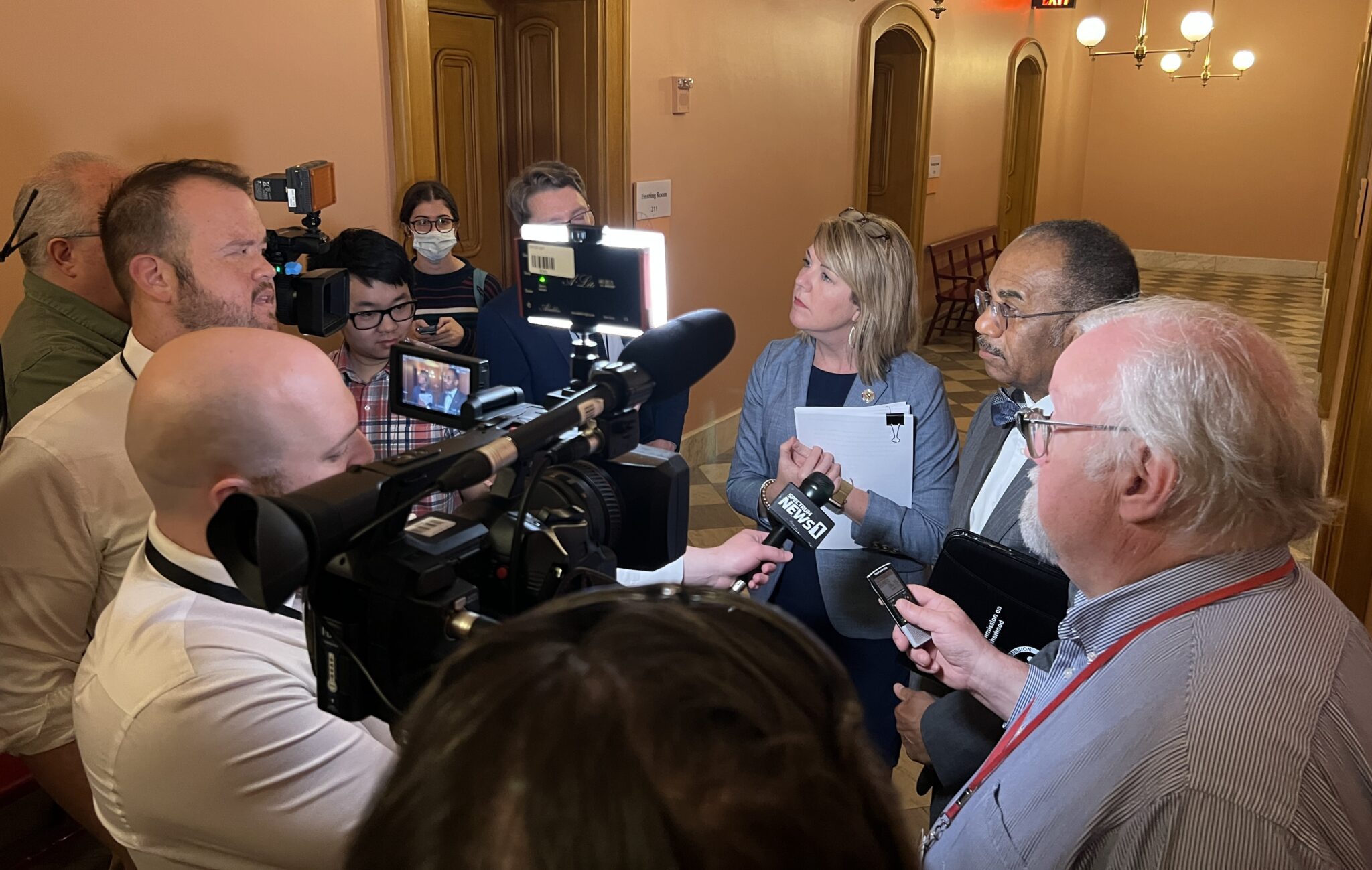
    House Minority Leader Allison Russo and state Sen. Vernon Sykes speak to media outside of Room 313 of the Ohio Statehouse. The two Dem members of the Ohio Redistricting Commission tried to convince GOP members to renew talks on legislative redistricting plans, but no other members showed. (Photo: Susan Tebben, OCJ)

    BY: SUSAN TEBBEN – Ohio Capital Journal

    Members of the Ohio Redistricting Commission have not publicly announced any plans to meet and discuss legislative redistricting, despite requests by Democratic members, and a mandate by the Ohio Supreme Court.

    Commission co-chair, state Sen. Vernon Sykes, D-Akron, and House Minority Leader Allison Russo, D-Upper Arlington, met with reporters Monday outside the committee room that has been used for ORC meetings, the most recent of which was March 28, when a simple majority passed a fourth version of legislative maps.

    Those maps were subsequently rejected as unconstitutional by a majority of Ohio Supreme Court justices, who then gave the commission until May 6 to come up with a new plan.

    Since then, a three-judge panel in U.S. District Court has said unless a plan is in place by May 28, the state will be ordered to use the third set of maps passed by the ORC, also rejected by the state’s high court.

    “This is a state process, these are state legislative maps,” Russo said. “This is, I think, terrible precedent that is being set that we will have federal courts come and overrule what our state process is in these partisan gerrymandering cases.”

    The two Democrats asked the rest of the commission members to meet with them and start the legislative process again, but no other members showed up Monday morning. Commission rules state that three members are needed to call for a meeting of the whole.

    Sykes said fellow co-chair, House Speaker Bob Cupp, agreed to talk with Sykes this week about the future of the process. A spokesperson confirmed the Friday conversation, but said a public meeting has yet to be scheduled.

    “We’ll be sure to let you know when a meeting is scheduled,” said Aaron Mulvey, spokesperson for Cupp.

    Secretary of State Frank LaRose’s spokesperson simply said he had no plans to attend the Monday event with Sykes and Russo, and a spokesperson for Senate President Matt Huffman said there was “no meeting scheduled this morning.”

    Any questions about official meetings would be for the co-chairs, spokesperson John Fortney said.

    Gov. Mike DeWine’s office had previously told reporters he had a scheduling conflict.

    Requests for follow-up comments from Auditor Keith Faber’s office went unanswered, but he had previously stated through a spokesperson he would not be available Monday morning.

    While the date for Statehouse races to be on a primary ballot is still up in the air, all other races in the state are continuing on the May 3 primary ballots. Early and absentee voting is ongoing for those races.

  • Nine rare cancers tied to burn pit exposure added to VA benefits list

    Nine rare cancers tied to burn pit exposure added to VA benefits list

    BY: JENNIFER SHUTT Ohio Capital Journal

    WASHINGTON — The U.S. Department of Veterans Affairs is adding nine rare respiratory cancers linked to burn pit exposure to the list of illnesses eligible for disability and health benefits.

    President Joe Biden, who has said his son Beau Biden’s exposure to toxic fumes from the pits could have led to his death, announced the policy change Monday, saying in a statement he hopes to avoid repeating mistakes of the past.

    “We learned a horrible lesson after Vietnam, when the harmful effects of exposure to Agent Orange sometimes took years to manifest, and too many veterans were left unable to access the care they needed,” Biden said. “I refuse to repeat that mistake when it comes to the veterans of our wars in Iraq and Afghanistan.”

    The VA said Monday that it will begin processing disability compensation claims for former U.S. military members who were in Southwest Asia from Aug. 2, 1990, to the present or in Afghanistan, Djibouti, Syria, or Uzbekistan from Sept. 19, 2001, to the present.

    The cancers include squamous cell carcinoma of the larynx, squamous cell carcinoma of the trachea, adenocarcinoma of the trachea, salivary gland-type tumors of the trachea, adenosquamous carcinoma of the lung, large cell carcinoma of the lung, salivary gland-type tumors of the lung, sarcomatoid carcinoma of the lung and typical and atypical carcinoid of the lung.

    The VA said it plans to contact veterans who fall under the new rule, which will be published on Tuesday, or survivors, to tell them how to apply for benefits.

    Veterans or survivors who had prior claims denied can file a supplemental claim for benefits, according to the VA announcement.

    VA Secretary Denis McDonough said in a statement the change in policy will ensure “veterans who suffer from these rare respiratory cancers will finally get” the health care and benefits they “deserve, without having to prove causality between their service and their condition.”

    The VA said “a focused review of scientific and medical evidence” determined that “there is biological plausibility between airborne hazards and carcinogenesis of the respiratory tract — and the unique circumstances of these rare cancers warrant a presumption of service connection.”

    Biden originally announced the VA would add nine cancers to the eligibility list during his State of the Union address in March. 

    At the time, Biden said burn pits — which incinerated medical and hazard material, jet fuel and other substances — were one of the many dangers U.S. soldiers faced during deployments.

    “When they came home, many of the world’s fittest and best trained warriors were never the same,” Biden said during his speech. “Headaches. Numbness. Dizziness. A cancer that would put them in a flag-draped coffin.”

    Biden, in his State of the Union address and his statement Monday, called on Congress to “pass bipartisan legislation to comprehensively address toxic exposures and further deliver the vital benefits our veterans have earned.”

    The U.S. Senate unanimously approved a bipartisan bill from Montana Democratic Sen. Jon Tester and Kansas GOP Sen. Jerry Moran in mid-February that is the first of three pieces of legislation meant to address health care needs linked to burn pits.

    When announcing the $1 billion legislation in early February, Moran said that 3.5 million combat veterans have experienced some level of toxic exposure since 9/11.

    “This is the first step on a continuum of trying to make certain that those who experienced toxic exposure, and as a result are suffering in their health and well-being, receive medical benefits,” Moran said at the time.

    The U.S. House voted 256-174 in early March to approve a separate bill that would be much larger in scope and price.

    That legislation, referred to as the Promise to Address Comprehensive Toxics or PACT Act, would cost about $280 billion during the next decade.

    House Majority Leader Steny Hoyer, a Maryland Democrat, said during floor debate the legislation would “expand veterans’ health care access and benefits to address the effects of these toxic exposures that occurred during their military service.”

    “We asked our veterans to go to battle for America, and they answered that call,” Hoyer said. “When they return home, veterans should not have to go to battle against red tape to receive the medical treatment and benefits they have earned through their service.”

  • How much a map costs: one law firm accounts for 1/3 of redistricting expenses

    How much a map costs: one law firm accounts for 1/3 of redistricting expenses

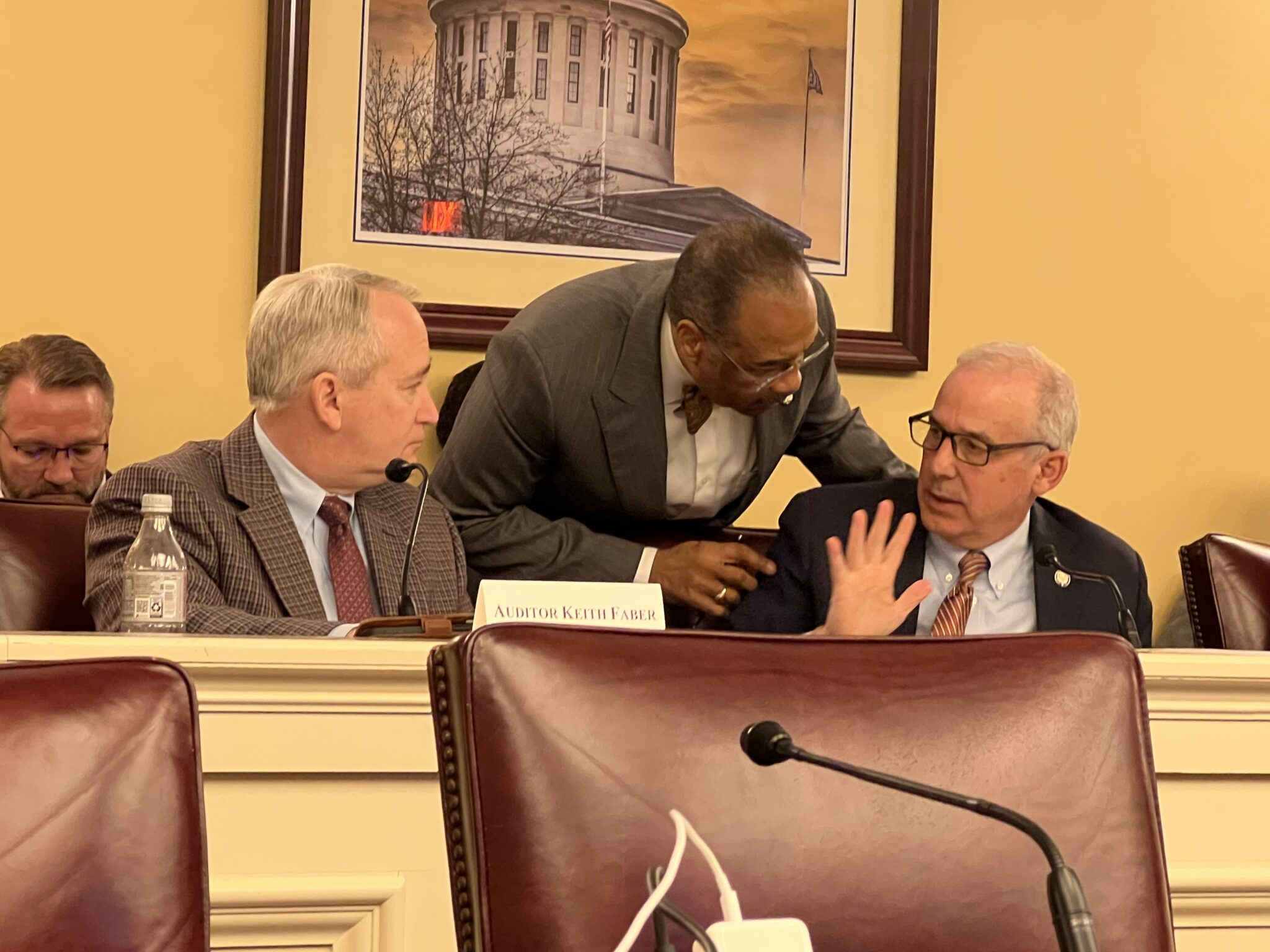
    Ohio Redistricting Commission co-chair state Sen. Vernon Sykes talks to Senate President Matt Huffman during Sunday’s meeting of the ORC. The commission ended up throwing out independent mapmaker work and adopting a slightly revised version of the third map, already rejected by the Ohio Supreme Court. (Photo: Susan Tebben, OCJ)

    BY: NICK EVANS – Ohio Capital Journal

    As lawmakers consider their next move on redistricting, the overall cost has ballooned to nearly $1.8 million, according to an accounting through April 19 provided by the Legislative Services Commission.

    The bulk of that expense has been charged to the Legislative Task Force on Redistricting, which has accounted for $983,283 going back to August of 2019. Their biggest single line item was a $282,271 expenditure to Ohio University, the school tasked with preparing census data for mapmakers. All told, the school received $427,597 for its efforts.

    The second biggest line item charged to the Legislative Task Force was $103,000 to the law firm Nelson Mullins Riley & Scarborough. GOP lawmakers hired two Nelson Mullins attorneys, Thomas Farr and Phillip Strach, at a total cost of $114,500 to advise the General Assembly on redistricting. Farr and Strach made a name for themselves in part by defending North Carolina’s racially gerrymandered maps in court.

    That advice might be expensive, but their representation costs more. Once the maps were challenged in court, Senate President Matt Huffman and House Speaker Bob Cupp again turned to Nelson Mullins to serve as their defense team. So far, they’ve run up nearly $475,000 in attorneys’ fees.

    Between the firm’s work as special counsel advising mapmakers and its work unsuccessfully defending those maps in court, Nelson Mullins has earned $589,512.62 — roughly a third of the total cost of redistricting already, with more billable hours to come.

    And that’s not the only firm making money representing the Republican leaders — Taft, Stettinius & Hollister has made $30,986 representing Huffman and Cupp. In addition, a different law firm, Organ Law, has brought in $68,022 representing the Ohio Redistricting Commission.

    Across the aisle, meanwhile, the law firm Ice Miller has raked in $174,792 representing Democratic members of the Commission, Sen. Vernon Sykes and House minority leader Allison Russo.

    In all, Ohio has spent nearly $750,000 on litigation through April 19.

    The $1.8 million accounting provided by the Legislative Services Commission could be far from the end of redistricting’s expenses. Late last month Republican members of the Ohio Redistricting commission decided to ignore the proposals offered by a pair of independent mapmakers they brought in to draft boundaries. That episode cost the state $89,000, but the invoice from only one of the mapmakers is reflected in the current accounting.

    Similarly, there are more bills coming on the legal front. The most recent invoice is dated April 11 — four days before the state supreme court tossed lawmakers’ fourth try at drawing legislative boundaries.

  • LGBTQ community, people of color in the crosshairs of banned book movement

    LGBTQ community, people of color in the crosshairs of banned book movement

    A display of banned books at the San Jose Public Library (Photo courtesy of San Jose Public Library via Flickr | CC-BY-SA 2.0).

    BY: ARIANA FIGUEROA – Ohio Capital Journal

    Students in one Pennsylvania school district were not allowed to read a biography of the first Black President, Barack Obama. (The ban was reversed following student protests.)

    In some Tennessee classrooms, a nonfiction comic book about the atrocities of the Holocaust is banned.

    And one school district in Wisconsin banned from libraries a picture book about a gay rights activist who was assassinated.

    In the last nine months, hundreds of books across dozens of states are being banned at an alarming rate. A majority of the bans feature books written by authors who are people of color, LGBTQ+, Black and Indigenous, and feature characters from marginalized groups.

    And now, state Republicans lawmakers are joining the movement, spurred by ultra conservative groups, to ban books from public schools and libraries.

    This year in Arizona, state Republicans put forth a measure that would ban schools from teaching or directing students to study any material that is “sexually explicit.” In Florida, Gov. Ron DeSantis recently signed a bill to allow parents greater opportunity to review, and potentially object to, school library books that they find “inappropriate.”

    And in Idaho, state House Republicans passed a bill that would allow librarians to be prosecuted for allowing minors to check out material deemed harmful.

    Some of the states with the most aggressive book bans include Texas with 713 bans, Pennsylvania with 456 bans and Florida with 204 bans.

    Deborah Caldwell-Stone, the director of the American Library Association’s Office for Intellectual Freedom, said book bans the last 10 years have dealt “with the lives of LGBTQIA persons, either reflecting their experiences, or talking about issues of concern to the LGBTQIA community.”

    She said those bans have ranged from picture books depicting same-sex couples to young adult books talking about gender identities.

    Caldwell-Stone said, “the one thing that has interrupted this” trend of banning books centered around LGBTQ+ themes comes after the 2020 murder of George Floyd by Minnesota police officer Derek Chauvin.

    “There was an increased number of challenges to books dealing with race and racism that accelerated when we started seeing complaints from organized groups about critical race theory,” she said.

    “And so when I say critical race theory, I’m not using it in the sense that it actually should be used, which is to describe a graduate level academic analysis of law and political systems, but this use of it to describe books and materials that offer alternative perspectives on American history that reflect the lives of Black persons and their experience of slavery, their experiences with police violence, and so we’ve seen a rising number of challenges to those books.”

    Some of those groups that have challenged school boards include Moms for Liberty, an organization that has strong GOP ties and has local chapters that “target local school board meetings, school board members, administrators, and teachers” to push right-wing policies, as reported by Media Matters. Moms for Liberty has more than 100 local chapters across 35 states.

    “We’re seeing nationally organized groups create local chapters, and use social media to amplify their demands,” Caldwell-Stone said. “They will tell you that they’re asserting parental rights to direct their children’s education, but the impact of their activities is to deny other parents the right to make decisions about their own children’s education, and particularly for older adolescents denying the First Amendment rights and agency for elder adolescents to read and access the materials they find important for their lives.”

    Congressional Democrats have also raised concerns about the increase in book bans across the country. At a recent hearing, Maryland Democrat Rep. Jamie Raskin, cited a report by PEN America — an organization that advocates for the protection of free speech — that found from July 2021 to the end of March this year, more than 1,500 books were banned in 86 school districts in 26 states.

    Ruby Bridges, a civil rights icon who was the first Black child to desegregate an all-white Louisiana school, was a key witness at the hearing. Children’s books about her story – “Brand New School, Brave New Ruby,” and “The Story of Ruby Bridges” – have been banned from classrooms in Pennsylvania.

    “The truth is that rarely do children of color or immigrants see themselves in these textbooks we are forced to use,” Bridges told lawmakers. “I write because I want them to understand the contributions their ancestors have made to our great country, whether that contribution was made as slaves or volunteers.”

    Banning books is not a new thing, and since the 1980s, the American Libraries Association has celebrated those books that are taken off the shelves for its yearly “Banned Books Week.”

    Books have been banned for racist depictions or language, such as “Huckleberry Finn” by Mark Twain and “Of Mice and Men” by John Steinbeck because of its racial slurs. And in 2021, Dr. Seuss Enterprises announced it would no longer reprint six Dr. Seuss books, including “And to Think That I Saw It on Mulberry Street,” and “If I Ran the Zoo.”

    “These books portray people in ways that are hurtful and wrong,” Dr. Seuss Enterprises said in a statement.

    But the uptick and rate at which books are now being challenged and banned in schools, has alarmed many freedom of speech advocates such as Jonathan Friedman, the Director of PEN’s Free Expression and Education program, and author of the report Raskin referred to during a House hearing.

    “It’s not just a parent getting angry about a book in a one off fashion,” he said in an interview with States Newsroom.

    Friedman said some parents or local activists will submit hundreds of books to be challenged and removed off shelves.

    “It’s happening all over, so it’s not just one part of the country. A list of books that might be deemed illicit by a group of parents in one state is being used in other states as well,” he said.

    Friedman said he’s noticed most of the escalation of book banning happened in the fall of 2021, and pointed to a large swath of book bans that started in Leander, a school district in Texas.

    “I think a lot of the energy around that (trend), set off of anti-mask energy, and you know, sort of frustrations of a pandemic,” Friedman said.

    During a school board meeting, a parent read an excerpt of “Out of Darkness” by Ashley Hope Pérez that has a euphemism for anal sex that is historically accurate for the time the book takes place in, which is the 1930s.

    That book was one of 120 that students could choose from based off of an optional curriculum, such as a book club.

    “And in response, the district suspended the entire curriculum and launched a review, a kind of book by book review, much of it seemingly developing on the fly,” he said. “So they went through a year-long process, but some have serious questions about how much that process was conducted in a way that was fair.”

    Banning books in the classroom is an issue the Supreme Court took up in 1982 in Island Trees School District v. Pico. In a 5-4 decision, the Court ruled in the student’s favor, affirming that the First Amendment limits the power of junior high and high school administrative officials to remove books from school libraries based on the books’ content.

    But in that court decision, because “given the sensibilities of young people” schools were given discretion to remove books that were deemed “pervasively vulgar,” or “educationally unsuitable,”Caldwell-Stone said.

    “Because the court really didn’t define these terms, they become a kind of magic word,” she said. “If we say those magic words that will make it legal for us to remove this book when, in fact, the actual motivation behind removing the book is because the book is about two gay teens finding each other and falling in love.”


    Ohio HB 616: This type of legislation and mentality must be…


  • Ohio Supreme Court rejects legislative maps, sets fifth redistricting deadline

    Ohio Supreme Court rejects legislative maps, sets fifth redistricting deadline

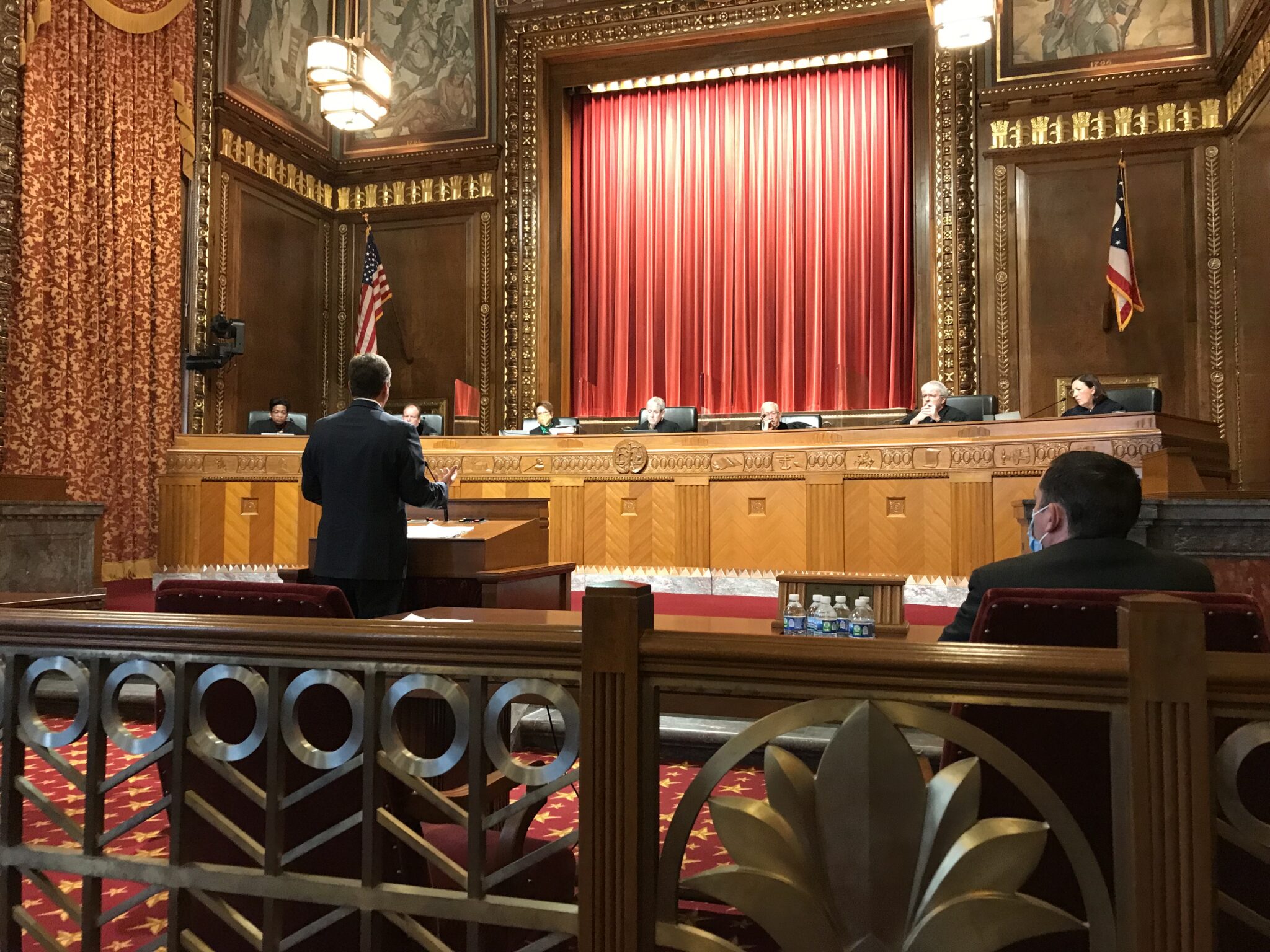
    Attorney Phillip Strach speaks before the Ohio Supreme Court in December, arguing for the constitutionality of legislative district maps. The court heard arguments on three cases asking it to reject the maps approved in September. (Photo: Susan Tebben, OCJ)

    Commission members won’t be held in contempt

    BY: SUSAN TEBBEN – Ohio Capital Journal

    The Ohio Supreme Court turned away a fourth set of redistricting plans from the Ohio Redistricting Commission in a 4-3 decision on Thursday, but left the responsibility with the commission to redraw the maps yet again.

    In a separate announcement, the court also denied requests to hold commissioners in contempt of court for violating court orders. Justice Patrick DeWine, son of governor and commission member Mike DeWine, recused himself from the contempt proceedings, but not from the redistricting rulings.

    The fourth set of maps was similar to the third maps, as admitted by Senate President Matt Huffman, the member of the commission who proposed they be adopted by the ORC at the end of March.

    The supreme court spelled out in its Thursday ruling the way in which objections to the maps showed “beyond a reasonable doubt” that the plan once again violated the constitutional regulations surrounding redistricting, but they didn’t order any other remedies offered by the map challengers, which included taking the map-drawing power away from the ORC.

    The commission started off on the right foot this time, the justices in the majority said, when they “began to heed our suggestions” given in the previous map rejection, which advised the commission to hire independent mapdrawers, hold near-daily meetings, and give mapdrawers “a neutral set of instructions” that they would use to publicly draw maps.

    In the week leading up to the March 28 deadline for the most recent maps, the commission hired Dr. Douglas Johnson, as proposed by the GOP, and Dr. Michael McDonald, as proposed by the Democrats. The two were paid at a rate of $450 per hour, with a cap set at $49,000 each.

    The commission also partnered with the Ohio Channel to set up a room with cameras showing Johnson and McDonald working, and the computers on which they were collecting data and drawing district lines. The commission met several times during that week to answer questions from the mapmakers and give them instructions, up until the day of the deadline.

    On that day, Huffman made a move to bypass the Johnson/McDonald maps because he said time was running short, too short for the commission members to offer amendments and make changes by the deadline.

    The best option, he then said, was to make a few changes to the previously rejected map, and submit it to the court, with the argument that it was better to get a map in on time than to wait for the mapmakers to be done with their map and possibly go past the March 28 date set by the court.

    To do so, he tasked Blake Springhetti, a House GOP staffer who had worked on the previous maps, to make the changes that night.

    “The evidence suggests that Springhetti … modified the second revised plan in one afternoon to produce the (fourth map),” the majority justices wrote in their rejection of the most recent maps.

    Broken ‘parachute’

    Despite the fact that the court told the commission to come up with an “entirely new” map this time, the court said the commission acted as though a tweaked version of an invalidated plan was a “parachute” to get it over the finish line. They also said there was evidence of efforts to block McDonald and Johnson from finishing their maps.

    “The timeline of events demonstrates convincingly that the commission — or at least some members of the commission — when faced with one or more plans that closely matched constitutional requirements in the form of Dr. McDonald’s and Dr. Johnson’s plans, reverted to partisan considerations when time was running short, even though the potential for successful completion was high,” the majority justices wrote.

    “Particularly problematic,” those justices said, was Huffman’s “last-minute insistence” that the mapmakers consider the addresses of incumbent House and Senate members in their district drawing, which the court said “pulled the rug out from under the independent map drawers.”

    In throwing forth the revised version of the third plan, commission members sent the court “a nearly identical one-sided distribution of toss-up districts,” the court rules. The number of toss-up districts — those districts whose partisan “advantage” is less than 2 percentage points — went from 26 to 23 from the third maps to the fourth. The fact remained, though, that all the toss-up districts were considered “Democratic-leaning” in the GOP analysis of the maps, and none were similarly toss-ups for Republican districts.

    “Senate President Huffman and House Speaker Cupp point out that the (fourth plan) improves upon the (third plan),” court justices noted. “While this may be true, the improvement falls short of landing in constitutional territory.”

    The court is now giving the commission until 9 a.m. on May 6 to come up with an “entirely new” plan. They again pushed for transparency and public viewing of the process. They also retained jurisdiction on the map, meaning they hold on to the authority to reject or approve the map as they have in previous instances.  This wasn’t the case in the congressional maps, forcing challengers of that map to file brand new lawsuits to fight against what they see as gerrymandered federal districts.

    Adopting another new plan…again

    The majority justices, while acknowledging that they do not have the power to adopt a map of their own, suggested a more “efficient way” of moving forward with a new plan.

    “No matter what the primary date is to be, time is of the essence,” the justices wrote. “With time in mind, it appears that the most efficient way for the commission to proceed may well be to continue working with Dr. McDonald and Dr. Johnson to complete the plan on which they have made considerable progress — if they are willing and available and if the commission has the authority to timely retain them for additional work.”

    The court argued that “by certain measure” the Johnson/McDonald plan “is on track to being constitutionally compliant.”

    Seemingly responding to sticking points that came up along the way, the court’s majority gave new guidance on adopting a new legislative plan.

    During the late hours of March 28, Cupp and Huffman both argued the commission couldn’t push past the deadline because the court had said it would not allow any other extensions of time. The court was more specific this time in saying no request for extension of time could be filed for objections to the adopted maps.

    The commission, however, could file a motion for an extension to their time with the secretary of state if they can prove it is needed.

    Justices also took time in their decision to argue against a federal intervention in state redistricting, something being discussed by a three-judge panel in U.S. District Court. Those judges are considering a lawsuit by Ohio voters asking that the federal court decide on a map for the state to use, under the argument that voters are losing their constitutional right to do so without a map to establish candidate districts.

    “While the process has proved challenging for the commission, as evidenced by four legislative plans falling short of (the constitution’s) requirements, the difficulty of the task is not a reason for federal-court intervention,” the majority of supreme court justices wrote.

    Dissents

    The three votes against rejecting the maps came from expected sources: Justices Sharon Kennedy, Patrick DeWine and Patrick Fischer, all of whom voted against rejection in the last three court decisions.

    Kennedy, who is running for chief justice in this year’s election, used her Thursday dissent to again discredit the majority opinion for overuse of judicial power. She criticized the justices who rejected the last three maps for moving constitutional goalposts and abusing their power in previous dissents over redistricting.

    “The majority’s continued denial of the limitation of this court’s power may end up costing the taxpayers millions of dollars,” Kennedy wrote in her dissent to the newest ruling. “Money that is being consumed by the never-ending cycle of map drawing, litigation, and now, two primaries, one on May 3 and the other perhaps on Aug. 2, all ordained by the majority’s overreach.”

    Justice Patrick DeWine claimed the majority had “long ago forsaken any concern about the actual words of the Constitution – it simply demands a General Assembly-district plan that achieves its policy goals.”

    “With each iteration of these cases, it becomes more evident that a rogue majority is simply exercising raw political power,” Justice DeWine wrote in his own dissent. “No one should be deceived.”

    The justice goes on to say the authors of the constitutional amendment overhauling redistricting “were overly optimistic,” and the threat of a four-year map instead of 10-year map “was not the stick it was thought to be” to incentivize bipartisan work.

    Whatever the reason for the “mess” redistricting has become, Patrick DeWine said court overreach is not the solution.

    “(The court’s job) is not to impose extraconstitutional standards on the commission in an attempt to achieve political outcomes that the court finds desirable,” DeWine wrote.


  • Federal court won’t intervene in Ohio’s congressional districts

    Federal court won’t intervene in Ohio’s congressional districts

    Decision matches ruling to wait out resolution on legislation redistricting

    BY: SUSAN TEBBEN – Ohio Capital Journal

    A federal three-judge panel still waiting on an Ohio legislative redistricting plan said Tuesday it won’t jump into congressional redistricting right now either.

    Chief Judge Algenon Marbley and judges Amul Thapar and Benjamin Beaton, representing the U.S. District Court’s Southern District of Ohio said a request by two Youngstown voters to wipe out the congressional maps “exceeds the scope of their intervention.”

    “The court did not contemplate sweeping congressional redistricting, which is a wholly distinct process, into this lawsuit,” the judges wrote in a decision filed Tuesday.

    The voters, represented by attorney Percy Squire, wanted the most recent congressional maps to be removed, arguing GOP mapmakers did not include racial data when drawing district lines, thus discriminating against marginalized Ohioans. Their arguments were added by the judges to another lawsuit filed by GOP voters. That lawsuit specifically addressed legislative districts, and asked that a legislative map rejected by the Ohio Supreme Court be used in the May 3 primary.

    The congressional map, which was passed by the GOP-controlled Ohio Redistricting Commission last month, hasn’t been rejected by the Supreme Court, unlike previous versions of the map. The state’s highest court rejected a challenge to the maps, with justices saying a new lawsuit would need to be filed to bring jurisdiction of the maps back to the court. Those new lawsuits came in quickly after the court’s ruling, but since then, the ACLU chose to challenge the map for the 2024 election rather than 2022, effectively opening the door for the maps to be used in this year’s election.

    Congressional races were included on ballots for the May primary, for which absentee and early voting has already started.

    The federal judges said claims to change congressional redistricting plans “would not have passed this court’s intervention analysis” in the first place, despite the fact that both plans came through the Ohio Redistricting Commission.

    “Though both varieties of redistricting involve the commission, they are separate tasks utilizing independent standards and resulting in different district boundaries for General Assembly members versus Congressmembers,” the three-judge panel ruled.

    The best course of action for the Youngstown residents was to file a new lawsuit in the Northern District court (the federal court closest to Youngstown) and start the process over again, the judges wrote.

    That said, the judges allowed the residents to stay in the lawsuit still being decided by the federal court, “for the purposes originally identified: addressing their constitutional challenge to the remedy or remedies sought with respect to the General Assembly redistricting.”

    The federal court has given the state until April 20 to resolve legislative plan issues, which includes hearing a decision from the supreme court on the newest legislative maps, which only are slightly different from the third map rejected by the Supreme Court.

    Also open-ended at this point is the possibility of a contempt hearing for members of the redistricting commission, for which the Supreme Court asked for reasoning as to why the members shouldn’t be held in violation of orders from that court. The GOP redistricting members have said contempt wouldn’t be appropriate because they passed a map before the deadline.

  • Pause on federal student loan repayments extended by Biden through Aug. 31

    Pause on federal student loan repayments extended by Biden through Aug. 31

    BY: ARIANA FIGUEROA – Ohio Capital Journal

    The Biden administration Wednesday announced its plans to extend the pause on federal student loan repayments until the end of August.

    “I recognized in recently extending the COVID-19 national emergency, we are still recovering from the pandemic and the unprecedented economic disruption it caused,” President Joe Biden said in a statement. 

    “If loan payments were to resume on schedule in May, analysis of recent data from the Federal Reserve suggests that millions of student loan borrowers would face significant economic hardship, and delinquencies and defaults could threaten Americans’ financial stability.”

    The White House will extend the deadline for student borrowers to pause on federal loan repayments, interest, and collections until Aug. 31. The announcement also provides a “fresh start” on loan repayments by removing any prior defaults to allow those borrowers to re-enter repayment in good standing.

    The current pause would have ended on May 1.

    “The Department of Education is committed to ensuring that student loan borrowers have a smooth transition back to repayment,” U.S. Secretary of Education Miguel Cardona said in a statement. 

    “This additional extension will allow borrowers to gain more financial security as the economy continues to improve and as the nation continues to recover from the COVID-19 pandemic.”

    Cristina Tzintzún Ramirez, the president of NextGen America, an organization that mobilizes young voters, released a statement calling the announcement “another short-term fix to a crisis that demands a long-term solution.”

    “Young voters feel frustrated with President Biden’s failure to fulfill his promise on student debt cancellation,” Tzintzún Ramirez said. “While borrowers surely appreciate the help paying rent and making ends meet, what they really need is a debt cancellation that will allow them to buy a house and build a future.”

    During Biden’s campaign for the presidency, he pledged to cancel student loan debt during a town hall in Miami.

    “I’m going to eliminate your student debt if you come from a family (making less) than $125,000 and went to a public university,” he said, according to Black Enterprise.

    Biden has since called on Congress to pass legislation to cancel up to $10,000 of student debt, but many congressional Democrats argue that Biden could reduce debt through an executive order. They’ve pushed him to cancel up to $50,000 in student loan debt.

    The Federal Reserve estimates that the total U.S. student loan debt is more than $1.75 trillion. The Department of Education owns about 92% of that student loan debt.

    Democrats push for debt cancellation

    A handful of U.S. Senate and House Democrats released a joint statement that said they welcomed the extension, but stressed the need to cancel student loan debt.

    “While the extension is welcome, a looming restart of student loan payments in September underscores the importance of swift executive action on meaningful student debt cancellation,” they wrote. “We continue to implore the President to use his clear legal authority to cancel student debt, which will help narrow the racial wealth gap, boost our economic recovery, and demonstrate that this government is fighting for the people.”

    Those lawmakers include Sens. Elizabeth Warren of Massachusetts, Chuck Schumer of New York, Alex Padilla of California and Raphael Warnock of Georgia, as well as Reps. Ayanna Pressley of Massachusetts, Ilhan Omar of Minnesota, Pramila Jayapal of Washington, and James E. Clyburn of South Carolina.

    The chair of the House Education and Labor committee, Rep. Bobby Scott, released a statement in which he did not call for the cancellation of student debt, but praised the administration for its decision to continue the pause.

    “By extending the pause on student loan repayments, collections, and interest accrual, the Biden-Harris Administration has demonstrated that it remains committed to helping borrowers get back on their feet,” the Virginia Democrat said.

  • Ohio House Speaker says no primary election legislation coming soon

    Ohio House Speaker says no primary election legislation coming soon

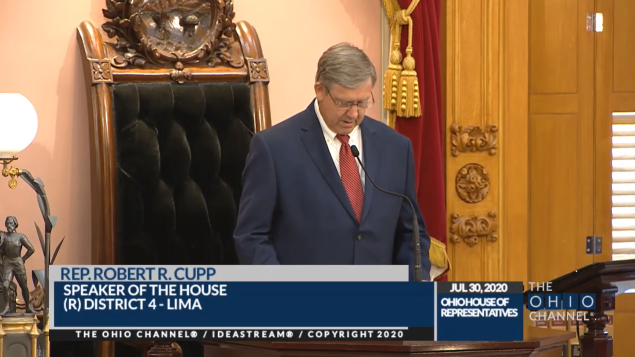
    Speaker of the House Bob Cupp addresses the chamber.

    BY: SUSAN TEBBEN – Ohio Capital Journal

    Ohio’s House Speaker said Wednesday legislation is not coming to change the May primary date.

    Speaker Bob Cupp said the process was “in the hands of the federal court,” despite various court documents in which he argued that the election is a legislative issue and any changes should be made in the General Assembly.

    The Ohio Capital Journal asked Cupp directly to confirm the House had no plans for legislation to set a new primary date in the next two weeks.

    “That is correct, we’re not in session,” Cupp said during a gaggle after Wednesday’s House session.

    He was asked about potential changes to the election earlier in the press gathering, and he deferred the job.

    “We’ll let the federal court process proceed,” Cupp said.

    federal lawsuit was filed by GOP voters earlier this year, claiming voters are losing their right to vote with the chaos surrounding redistricting. Originally, the plaintiffs, including Ohio Right to Life leader Michael Gonidakis, asked for the third map adopted by the Ohio Redistricting Commission to be forced into use by a three-judge panel of the U.S. District Court.

    That map was rejected by the Ohio Supreme Court before the federal lawsuit was filed, but the process of adopting a fourth version of legislative districts had not come to fruition.

    The fourth map ended up being a near-copy of the third, rejected version, with Senate President Matt Huffman acknowledging as he moved for its approval that the map had “97%” similarity to the third version.

    Because the process, which started in September, has taken so long, the Secretary of State’s Office was forced to remove legislative races from ballots for the May 3 primary, all but assuring a split primary.

    Lawsuits have been filed with the Ohio Supreme Court asking for the fourth map to be invalidated for many of the same reasons the third map was, and map challengers have also asked the court to hold GOP commission members in contempt for violating court orders.

    Cupp and Senate President Matt Huffman argued in previous court filings that the power for elections and drawing maps lies solely with the redistricting commission and legislators, seemingly contrary to Cupp’s Wednesday statements.

    “It is the commission and the general assembly who solely possess the legislative authority to create legislative and congressional districts,” attorneys for the legislative leaders wrote in a court filing for lawsuits on congressional districts.

    Secretary of State Frank LaRose in more recent court filings urged the judicial system to stay out of the process. In his filing countering objections to the most recent maps, he posited that the Ohio Redistricting Commission has more time to figure out legislative maps.

    “More importantly, there is still time for the legislature to take steps to extend the time within which such a decision must be made,” LaRose said. “This court should not give up on the constitutional process even if the petitioners have.”

    The federal court has chosen twice not to intervene in the state process to give it time to come to a resolution. The first time the court withheld judgment was just before the March 28 deadline for the commission to complete new maps.

    At a hearing before Chief Judge Algenon Marbley, Judge Benjamin Beaton and Judge Amul Thapar last Wednesday, parties from the Secretary of State’s Office gave Aug. 2 as a potential date for a second primary to include the legislative races.

    The judges entertained the idea of not just the third map, but also the map drawn by independent mapmakers during the latest redistricting commission hearings, and also debated whether or not the 2010 map could be used for one more year.

    They decided to give the state until April 20 to come up with an official map and to give the state’s highest court time to make its rulings. A status conference was scheduled for April 11.

    Jake Zuckerman contributed to this report.

  • Ohio Secretary of State says he didn’t call for Supreme Court chief’s ouster

    Ohio Secretary of State says he didn’t call for Supreme Court chief’s ouster

    (Photo by Susan Tebben, OCJ.) 

    BY: MARTY SCHLADEN – Ohio Capital Journal

    Ohio Secretary of State Frank LaRose on Tuesday denied that he had called for the impeachment of Ohio Supreme Court Chief Justice Maureen O’Connor after she had repeatedly ruled against LaRose and the rest of her fellow Republicans on the Ohio Redistricting Commission.

    LaRose’s comments come four days  after he told a group of Union County Republicans that Justice O’Connor had “violated her oath of office” and that for the legislature to impeach her  “may be the right thing to do”.

    Audio obtained by the OCJ of Secretary Frank LaRose speaking at a Union County Republicans breakfast last week.

    The state’s top elections official was at the Franklin County Board of Elections on Tuesday as he kicked off early voting for most of this year’s primaries. It won’t include ballots for state legislative candidates because of a dispute over gerrymandering — a fracas over the boundaries of the districts in which members of the state House and Senate will run. 

    Tired, apparently, of partisan gerrymandering, Ohio voters in 2015 overwhelmingly approved a constitutional amendment that requires districts be drawn so that the partisan makeup of the legislature resembles the partisan breakdown in recent statewide elections. 

    That’s not how things stand now. Republicans have won recent elections with about 54% of the vote, but they control 65% of the seats in the state House and 78% of the state Senate.

    This year, using the new system for the first time, the five Republicans on the seven-member redistricting commission have passed four sets of maps that O’Connor and the three Democrats on the Supreme Court have ruled are too partisan.

    Republican Justice Pat DeWine has continued to sit in the case even though several ethics experts have said he has a clear conflict because his father, Gov. Mike DeWine, is a member of the redistricting commission. Justice DeWine has voted in favor of upholding the maps that his father and the other Republicans have passed.

    Meanwhile, Republican frustration with O’Connor, who will leave the court at the end of the year, has been boiling over. Some Republican members of the legislature last month floated the idea of impeachment.

    Gov. DeWine called the notion “extraordinary” and said it’s a bad idea to talk about removing judges whenever one disagrees with their decisions. But LaRose, the secretary of state, wasn’t so reticent on Friday when asked at a Union County Republican breakfast if O’Connor should be impeached.

    “I think that she has not upheld her oath of office, and that to me is a basic test of a public servant,” he said. “That’s up to the state legislature, whether they want to impeach the chief justice or not. I certainly wouldn’t oppose it.”

    LaRose stipulated that any impeachment would take so long that “it may feel really good, and it may be the right thing to do because she’s violated her oath of office by making up what she wants the law to say instead of interpreting what it actually says. But I don’t know if it would accomplish much, but I’d be fine with it if they did.”

    At Tuesday’s event, LaRose tried to draw a distinction between saying impeachment may be the right thing to do and actually calling for it.  

    “The thing that I did was not call for anybody to be impeached,” he said. “I answered a question that was asked at a little breakfast gathering where I was with a group of supporters in Union County and what I said was, ‘It’s up to the state legislature.’ There are 33 senators and 99 representatives. If they gather evidence and hold that trial for an impeachment, if they decide as the people’s representatives to do that, then I don’t oppose that.”

    LaRose and some legislative Republicans are not alone in being frustrated by the redistricting battle. For the second time, the Supreme Court has ordered members of the commission to show why they shouldn’t be held in contempt for failing to pass maps that comply with the court’s interpretation of the state Constitution. Responses were submitted on Monday.

    Some members have argued that they shouldn’t be held individually liable for the actions of a seven-member body they don’t control. And some have argued for the court to simply impose maps on the commission would overstep its powers as a judicial body.

    LaRose on Tuesday said holding contempt proceedings is another overreach.

    “It’s a ridiculous idea that a co-equal branch of government would be held in contempt for doing our job in a way that the court doesn’t like,” he said. “What we have attempted to do all throughout this process is follow the rules that are set out in the Constitution — and not just the one part of the Constitution that the court seems to be focusing on, but all of the line-drawing rules in the Ohio Constitution.”

    LaRose was asked if he was attacking a co-equal body by publicly saying that he, a statewide official, was OK with the impeachment of a Supreme Court justice who had ruled against him.

    “Certainly not,” he said. “The Constitution lays out the process for impeaching and removing a justice from the Ohio Supreme Court or other elected officials. That’s not a power I have. I can express my opinion as a citizen just like any of us can and what I was telling this group of supporters in Union County a couple days ago is that if the state legislature found evidence and carried out that process, then I wouldn’t stand in the way of that.

    “And I certainly have concerns that the court has delved into really the politics of this more than they should have. But that’s a choice up to the General Assembly and certainly not a choice I get to make. I was simply expressing my opinion,” he said.

    Democratic Secretary of State candidate Chelsea Clark said LaRose’s comments about O’Connor make him unfit for his office.

    “It’s now obvious to anyone that Frank LaRose can’t be trusted to administer organized elections and now when he’s called out for the chaos, he wants to blame the referees,” she said in an email. “To claim ‘it would feel good’ to impeach the chief justice because he disagrees with the court’s rendering is pathetic. For someone who claims to believe in separation of powers, Secretary LaRose has no problem trying to overturn the will of the people.”

    LaRose on Tuesday said primary elections for legislative seats most likely will take place in August.

  • Early voting starts today. Here are the basics

    Early voting starts today. Here are the basics

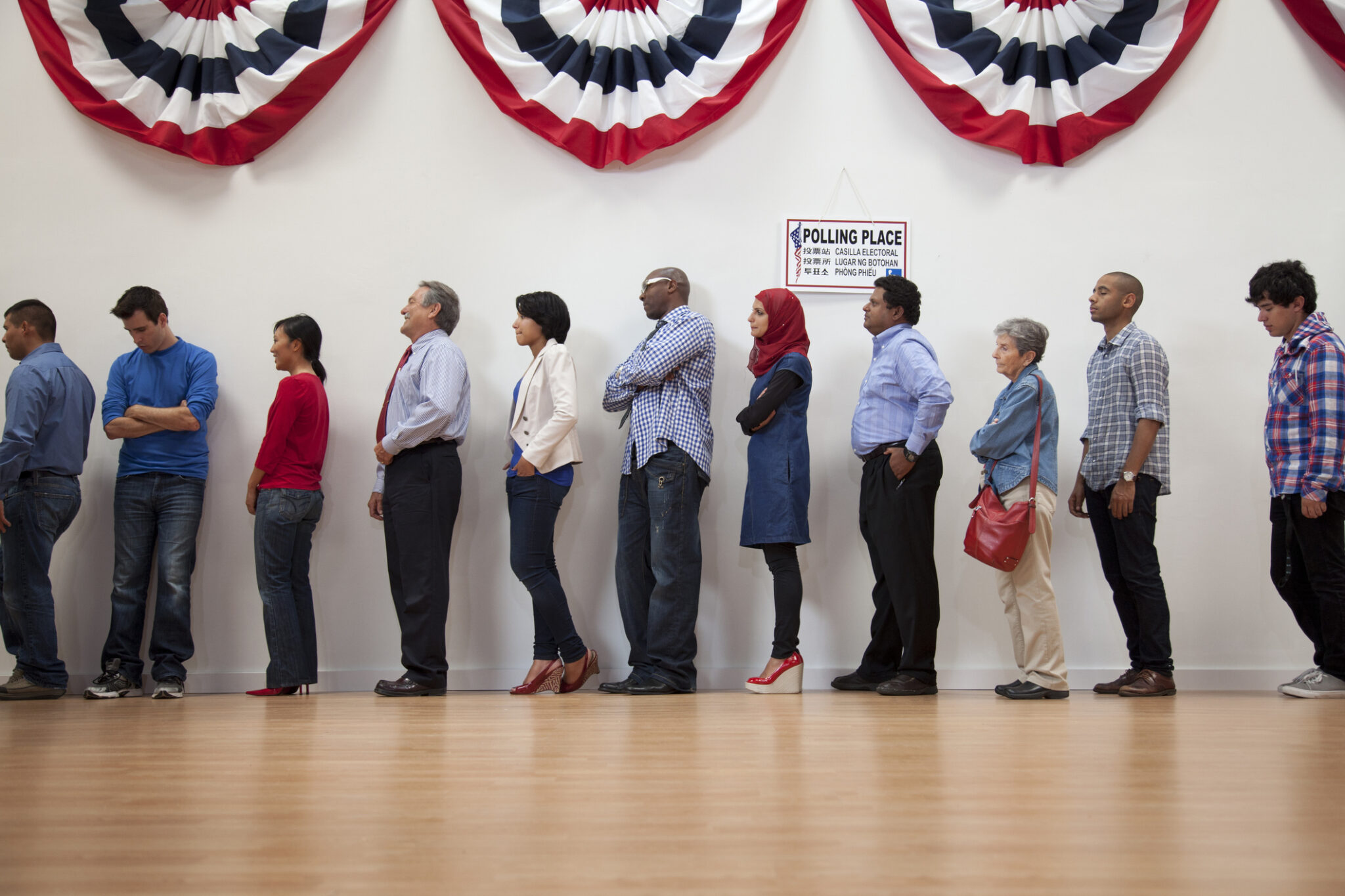
    Getty Images photo of voters in line.

    BY: JAKE ZUCKERMAN – Ohio Capital Journal

    Despite drawn out legal battles over district lines for state legislative and U.S. House seats, yes, there’s still a May 3 primary in Ohio.

    Monday was the final day to register to vote in time to participate in the May 3 primary. Early voting starts Tuesday. Here are some of the basics from there.

    What are we voting on?

    May’s election will finalize who will represent the Democratic and Republican political parties in the 2022 elections. That includes:

    • Governor
    • Statewide offices (attorney general, auditor, treasurer, secretary of state)
    • U.S. House and Senate
    • Ohio Supreme Court

    Some races, like the Republican primary for the U.S. Senate or Democratic gubernatorial primary, are hotly contested. Some, like the Supreme Court races, are uncontested. Depending on where you live, various political subdivisions have local judicial and municipal candidates and ballot issues like school levies on the ticket as well.

    What aren’t we voting on?

    Ohio House and Senate races. Those district lines, which form 99 state House seats and 33 Senate seats, are typically reconfigured every 10 years. However, in the maiden voyage of an anti-gerrymandering amendment added by voters into the state Constitution, the Ohio Supreme Court has rejected three maps proposed by the Ohio Redistricting Commission along party lines. State Central Committee elections for both parties missed the May 3 ballot as well.  Last week, Ohio Secretary of State Frank LaRose issued a directive calling for elections to proceed, minus the races caught in the redistricting quagmire.

    State lawmakers, who control when primary elections occur, have yet to set a date for the legislative primary contests.

    Read about the third rejection here and the latest fallout here.

    How can I vote absentee?

    Complete an absentee ballot request form by April 30 and mail it to your county board of elections. The board should then provide absentee ballots. The ballot can be sent by mail by May 2 but must be received by no later than 10 days after the election, so the earlier the better.

    Voters should ensure they fill their applications out accurately and thoroughly, include their email and phone number, and track their ballot online, to ensure it’s counted, according to Secretary of State Frank LaRose.

    It can also be delivered to the board in person.

    And early voting?

    Early, in-person voting in Ohio starts April 5. It runs weekdays from 8 a.m. until 5 p.m. in the first three weeks of April and for an extra two hours in the final week of the month. It is also available the Saturday and Sunday (April 30 and May 1) before the primary.

    Do I need identification to vote?

    Yes. Acceptable forms of identification include a current, federal or Ohio government-issued photo identification card; a military identification card; a utility bill; a bank statement; a government check; or a paycheck. The Ohio Secretary of State offers further guidance and specifics on its website. Identification issued by non-Ohio states, passports, insurance cards, birth certificates and social security cards do not suffice.

    People who vote at their precincts without such identification can vote provisionally. Their vote will be counted if they return within seven days to provide qualifying identification.