Tag: Ohio Capital Journal

  • LaRose would ‘be fine with’ chief justice’s impeachment over redistricting rulings

    LaRose would ‘be fine with’ chief justice’s impeachment over redistricting rulings

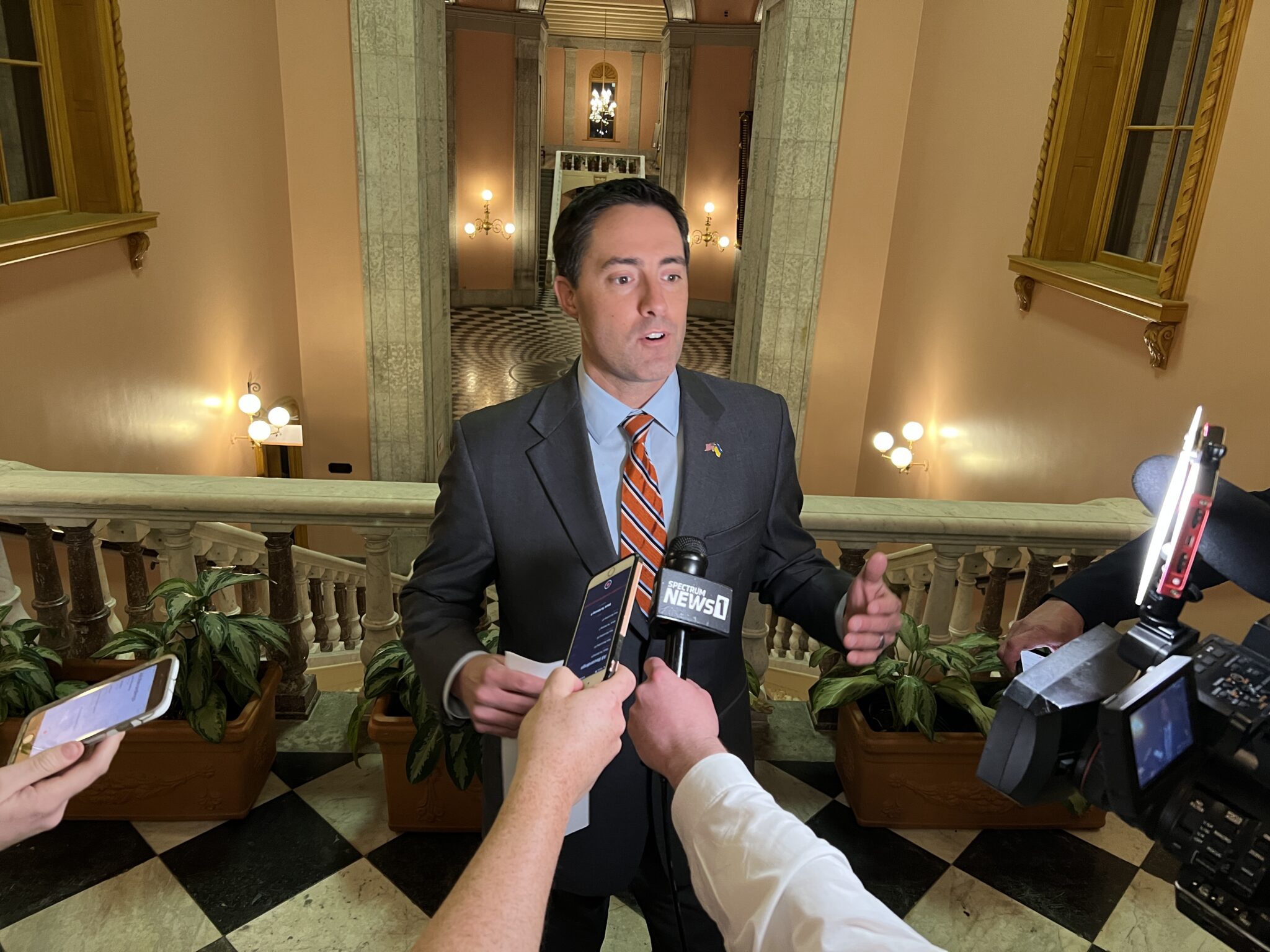
    Ohio Secretary of State Frank LaRose talks to reporters. (Photo by Susan Tebben, OCJ.)

    Ohio elections chief says O’Connor ‘violated her oath’ by rejecting GOP-drawn districts

    BY: MARTY SCHLADEN – Ohio Capital Journal

    Ohio Secretary of State Frank LaRose on Friday said he “certainly wouldn’t oppose it” if the legislature impeached Ohio Supreme Court Chief Justice Maureen O’Connor over her joining in rulings rejecting GOP-generated maps for Congress and the legislature, according to a recording of a breakfast meeting with Union County Republicans.

    LaRose, who is not a lawyer, said in the recording his fellow Republican “violated her oath of office by making up what she wants the law to say instead of interpreting what it actually says.”

    O’Connor joined the court’s three Democrats in ruling multiple times that the congressional and legislative maps approved by a majority vote of Republicans violated the Ohio Constitution by unfairly favoring the GOP. 

    Some Republican members of the legislature had previously raised the possibility of impeaching O’Connor, who will leave office at the end of the year. But LaRose, the state’s top elections official, is apparently the first of the five Republicans on the state’s seven-member redistricting commission to say he’d go along with it.

    Such calls to effectively end the career of a judge because her rulings didn’t go the GOP’s way have been too extreme for at least one other Republican on the commission — Gov. Mike DeWine.

    “This is an extraordinary measure to take,” he said when the idea was floated earlier this month. “I think we don’t want to go down that pathway, because we disagree with a decision by a court, because we disagree with a decision by an individual judge or justice. Not a good idea.”

    LaRose’s spokesman was sent a transcript of the secretary’s comments about O’Connor. The spokesman was also asked whether LaRose believes judges should be removed whenever LaRose thinks they misinterpret the law — and whether such a belief undermines the entire purpose of having courts. The spokesman, Rob Nichols, didn’t respond to an email and a phone call.

    LaRose made his comments about O’Connor at the Union County Republican Breakfast on Friday, according to a recording obtained by the Capital Journal. The source of the recording provided it on the condition of anonymity.

    County Republican Party Chairman Justin Hogan didn’t immediately respond to an email requesting comment.

    On the recording, the secretary of state was asked, “Can you talk about the ex-Republican O’Connor, should she be impeached?”

    LaRose replied: “I think that she has not upheld her oath of office, and that to me is a basic test of a public servant. That’s up to the state legislature, whether they want to impeach the chief justice or not. I certainly wouldn’t oppose it.”

    He was referring to repeated rulings in which O’Connor sided with the court’s Democrats in saying that maps passed by the Republican majority on the redistricting commission were illegally gerrymandered. 

    In recent statewide elections, voters have supported Republicans by roughly a 54-46 margin. But the maps produced by Republicans favor the party to have much greater representation in the legislature and Congress.

    They violate constitutional amendments overwhelmingly passed by Ohio voters requiring that the partisan makeup of the state legislature and congressional delegation resemble the general partisan makeup of the state, O’Connor has ruled.

    GOP members of the commission were called to the state Supreme Court on Monday to show why they shouldn’t be held in contempt after ignoring maps generated by independent commissioners and passing another set of maps that again heavily favors Republicans.

    The impasse has created a constitutional crisis in Ohio, with deadlines approaching for the primary, but no district boundaries in which candidates can run. LaRose on Friday acknowledged that impeaching O’Connor wouldn’t end the crisis, but on the recording said it might “feel really good.”

    “I don’t know if it will solve our current problem because the impeachment process would take a couple months and we’re going to need to have district lines way before that,” he said. “And so it may feel really good, and it may be the right thing to do because she’s violated her oath of office by making up what she wants the law to say instead of interpreting what it actually says, but I don’t know if it would accomplish much, but I’d be fine with it if they did.”

    LaRose didn’t explain how O’Connor misinterpreted the law, much less how such a misinterpretation would violate a justice’s oath of office.

    The secretary of state’s sharp partisan tone is a stark departure from the bipartisan one LaRose struck when he initially ran for office in 2018.

    At the time, he told The Columbus Dispatch that he wanted to “bring a sense of civility and bipartisanship to how we conduct elections.”

    He added: “I want to be part of a party that wins elections because we work harder, have better candidates and we have better ideas.”

    More recently, LaRose has taken a harsher line, including taking to Twitter twice in February to make sweeping, misleading attacks on a supposedly partisan news media, and saying former President Donald Trump is right to make his claims about voter fraud.

    The Associated Press noted on Thursday that LaRose posted the first such tweet a day after learning he’d drawn two opponents in the Republican Primary. Both have parroted Trump’s false claims about rampant voter fraud in the 2020 presidential election, AP reported.

  • Ohio Supreme Court denies Dem request to change primary

    Ohio Supreme Court denies Dem request to change primary

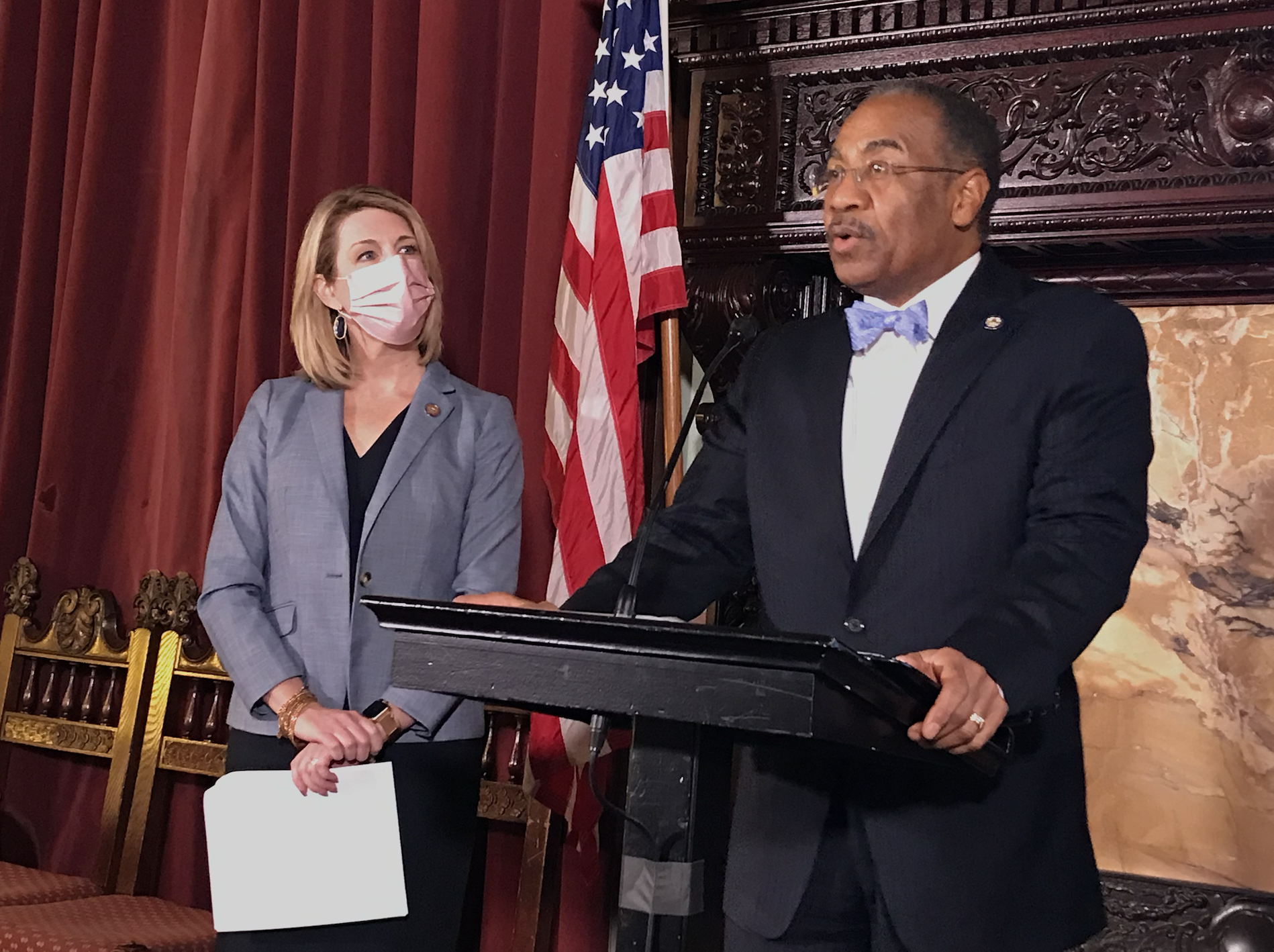
    State Sen. Vernon Sykes, D-Akron, speaks with press alongside House Minority Leader Allison Russo in a February press conference. (Photo: Susan Tebben, OCJ)

    BY: SUSAN TEBBEN – Ohio Capital Journal

    Democrats weren’t successful in convincing the Ohio Supreme Court to change the May 3 primary date, according to a Thursday afternoon filing.

    The motion was filed by House Minority Leader Allison Russo and state Sen. Vernon Sykes, both members of the Ohio Redistricting Commission, who said moving the primary date would help the commission be able to finish their work without worrying about the election deadlines.

    They also said the supreme court had the “inherent” authority to force the change, despite laws that state the General Assembly controls changes to the election dates and times.

    The state’s high court disagreed, firmly planting the power of election dates and times on the Ohio legislature.

    Justice Patrick Fischer made a point to issue an opinion agreeing with the court decision, and emphasizing the General Assembly’s power to establish the date of the primary election, and its authority to “ease the pressure that the commission’s failure to adopt a constitutional redistricting plan has placed on the secretary of state and on court boards of elections by moving the primary election, should that action become necessary.”

    Republicans who responded to the request to move the primary accused Democrats of attempting to “circumvent the power of the General Assembly.”

    “They apparently cannot muster enough support for legislation to move the primary election date so they’ve come here asking this court, improperly, to do it,” Secretary of State Frank LaRose told the court.

    Legislative measures by other Democratic legislators are still pending in the General Assembly. Senate President Matt Huffman said the temperature of at least the Ohio Senate hasn’t changed, meaning there isn’t enough support for changing the primary. He said the situation is “dynamic,” especially as the Ohio Redistricting Commission continues a week of work to revise legislative maps for the fourth time.

  • Expert: Hard to know if COVID variant will surge in U.S. or how badly

    Expert: Hard to know if COVID variant will surge in U.S. or how badly

    BY: MARTY SCHLADEN Ohio Capital Journal

    The last thing people want to hear right now is that the coronavirus might have mutated yet again into yet another deadly variant, extending the pain, death, and inconvenience of a pandemic that we long hoped would be over.

    However, whether the subvariant of omicron known as BA.2 will hit the United States as hard as it’s hitting other parts of the world is hard to say at this point, an expert at modeling the disease said Wednesday.

    The pandemic has been full of unpleasant surprises and BA.2 is no exception. Scientists estimate that it’s one-and-a-half times as transmissible as the original omicron strain, BA.1, and is overtaking it.

    Europe, and particularly the United Kingdom, have seen an increase in the new variant in recent months, but that hasn’t been the case everywhere, said Stephen Kissler, a research fellow in the Department of Immunology and Infectious Diseases of Harvard University’s T.H. Chan School of Public Health.

    “The question of if and when a surge is coming and how large is very open,” Kissler said in a Zoom conference with reporters. “I know that we’ve seen surges that are dominated by BA.2 across much of Europe. But in contrast, for example, in South Africa we saw a major BA.1 wave — that’s where we saw the omicron wave first — and now there’s a lot of circulation of BA.2, but it hasn’t really caused an increase in cases so much that it’s lengthened the decline and given the epidemic a very long tail.”

    Kissler explained that vaccination rates in the U.S. are lower than those in Europe, but higher than those in South Africa. That could mean that more Americans have developed antibodies against the omicron variants than have Europeans.

    “To the extent that that gives us protection against BA.2 we might see dynamics that are more similar to what happened in South Africa,” he said.

    Seasonality and other factors likely will play a role, Kissler said, with spring in the United States being a season of relatively low spread and fall a season of relatively high spread.

    So if there is a surge here of the new variant, how will it affect Americans of varying ages?

    “In many ways it will likely resemble our experience with COVID-19 up to this point,” Kissler said.

    And past experience has shown one factor to be hugely important: vaccination. 

    Kissler said that being vaccinated, along with a booster dose, “really goes a long way toward helping to protect you from symptomatic disease and especially severe disease. The biggest delineation I imagine seeing is that people who are boosted will probably fare better than people who are unboosted.”

    Another important factor is age, with the elderly having less natural resistance to all variants of the coronavirus than the young. Vaccines and boosters, though, can be a great equalizer.

    “A vaccinated and boosted person over the age of 75, their risk is probably on the order of — if not lower than — an unvaccinated 20-year-old,” Kissler said.

    COVID eventually will go from being a pandemic disease that spikes rapidly and overwhelms resources to an endemic one where a background level is present, sickening and even killing people, but in semi-predictable ways. Sadly, however, hopes that it will disappear altogether are small.

    Looking forward, one simple public-health measure might be most effective, Kissler said.

    “In many ways, one of the best things we can do to manage outbreaks is to just to continue to keep informing people how much COVID is circulating in their communities and make it just as accessible as a weather report,” he said. “A lot of data suggest that people tend to adjust their behavior accordingly.”

    He said that probably won’t be enough to quell future waves of COVID, or be adequate in the face of major new variants.

    “But as we continue to deal with COVID and we think about this permanent circulation of COVID-19 in the population — recognizing that there’s going to be different dynamics in different places, different patterns across the year — making it clear what’s happening in any given community at any given time through passive surveillance is probably the best thing we can do right now,” he said.

  • Legal mediators added to the Ohio redistricting fold

    Legal mediators added to the Ohio redistricting fold

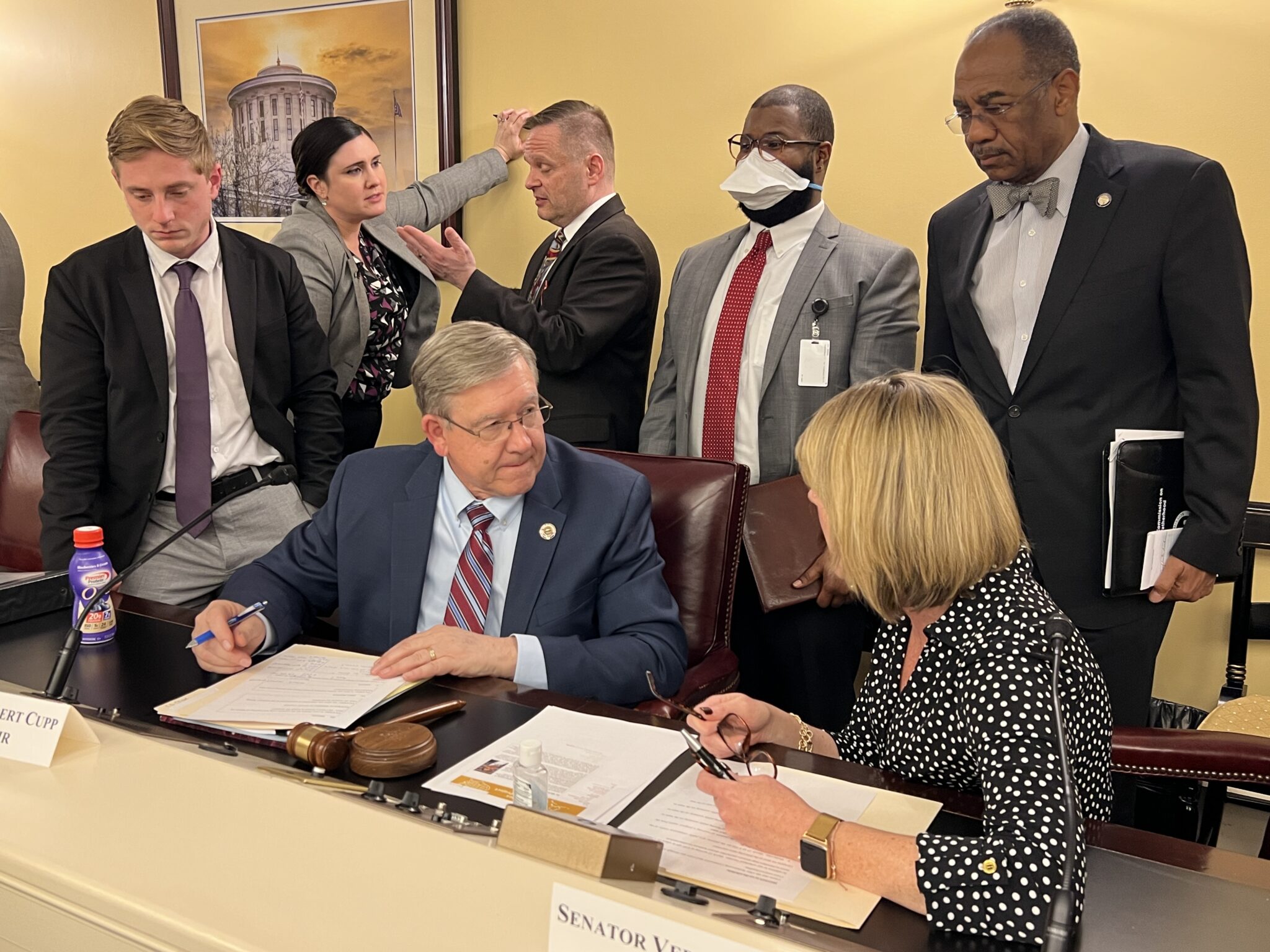
    House Speaker and Ohio Redistricting Commission co-chair Bob Cupp, center seated, speaks with House Minority Leader Allison Russo, right seated, as fellow co-chair state Sen. Vernon Sykes looks on. The ORC agreed to hire two outside mapmakers to assist in the process of legislative redistrict after a third set of maps was struck down by the Ohio Supreme Court. (Photo: Susan Tebben, OCJ)

    BY: SUSAN TEBBEN –  Ohio Capital Journal

    Legal mediators were added to the mapmaking team on Tuesday by the Ohio Redistricting Commission.

    Two members of the U.S. 6th Circuit Court of Appeals were approved by the commission to act as mediators as the process of creating a fourth map dictating legislative maps.

    Catherine C. Geyer and Scott Coburn were chosen after talking with the commission at their Tuesday meeting. They both are listed as circuit mediators on the 6th Circuit’s website, with Geyer listed as having alternative dispute resolution experience and Coburn noted for his work in civil mediation since 2005.

    “Mediators manage the process and the parties manage the solution,” Geyer said when explaining their role.

    Neither of the mediators have experience with redistricting cases, they told the commission.

    The legal mediators act as neutral parties to address issues that come up as the mapmakers come up with map ideas and commissioners wish to register input in the process, or when disagreements come up.

    “I think the advantage you have in this scenario … here, there’s the advantage of everyone trying to get to the shared goal,” Coburn told the commission.

    The mediators are “the best deal you can get,” according to Geyer, because they are “on loan from the court,” so come at no cost to the commission.

    House Speaker Bob Cupp and other GOP members of the commission asked about confidentiality rules and legal privilege when it comes to the mediators. He said it may be necessary for commissioners to be able to have confidential conversations, even as the Ohio Supreme Court directed them to make the process even more transparent.

    Geyer said the commission and the mediators would have to lay down rules on what constitutes legal privilege and confidentiality, but state Sunshine Laws on public meetings would still apply, meaning any decision making would have to be done in the open.

    The mediators also emphasized that while the process has a lot to do with the mapmakers, the commission members should be committed to being available as well.

    “I think access to the decision-makers would be the most important thing from the mediator’s perspective,” Geyer said. “We could get headed down a particular path, only to find out that one of the commissioners is not in agreement.”

    Geyer and Coburn will now join the original four caucus mapmakers, along with Professor Michael McDonald and Douglas Johnson, chosen by the commission on Monday night to act as independent mapmakers.

    Also at its Tuesday meeting, the commission set a schedule up to their March 28 deadline. Meetings are set for:

    • Wednesday – 5 p.m.
    • Thursday – 7 p.m.
    • Friday – 2 p.m.
    • Saturday – 4 p.m.
    • Sunday – 4 p.m.
    • Monday – 10 a.m.

    Thursday and Friday’s meetings are set to have virtual options, so members of the commission who may not be able to attend in-person can still call in. They will also be streamed for the public on The Ohio Channel.

  • Ohio Supreme Court rejects GOP-drawn Statehouse district maps for the third time

    Ohio Supreme Court rejects GOP-drawn Statehouse district maps for the third time

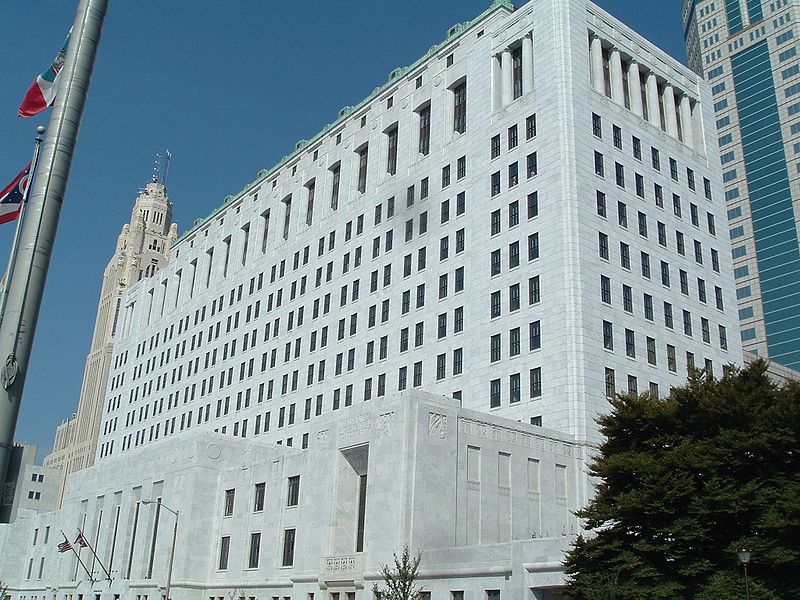
    Photo courtesy Wikimedia Commons..

    A bipartisan majority on the Ohio Supreme Court has for the third time rejected Statehouse district maps passed along partisan lines by Republicans on the Ohio Redistricting Commission.

    The most recent versions of legislative maps that had been approved by the ORC were struck down in a 4-3 decision Wednesday night by the state’s high court.

    A majority of the court justices said the map challengers had shown “beyond a reasonable doubt” that the most recent maps violated the constitution, particularly the provisions prohibiting partisan favoritism.

    “Substantial and compelling evidence shows beyond a reasonable doubt that the main goal of the individuals who drafted the second revised plan was to favor the Republican Party and disfavor the Democratic Party,” the majority wrote in its Wednesday opinion.

    The court sent the job back to the commission with a March 28 deadline to file an “entirely new” district plan for the General Assembly with the Ohio Secretary of State’s Office. A copy of the plan should then be sent to the court the next day.

    The breakdown of votes matched previous votes by the court striking down maps, with Chief Justice Maureen O’Connor, Justice Michael Donnelly, Justice Melody Stewart and Justice Jennifer Brunner forming the majority opinion. Justices Sharon Kennedy and Patrick Fischer dissented. Also dissenting was Justice Patrick DeWine, son of governor and commission member Mike DeWine.

    Justice DeWine recused himself from an issue in the case in which the commission members could be held in contempt of court for not filing new maps within the last deadline, but did not recuse himself from the entire case.

    The justices in the majority once again pointed to Senate President Matt Huffman and House Speaker Bob Cupp as controllers of the map-making process, saying the evidence in this case “is just as strong, if not stronger” than it was in previous map-making attempts.

    “The Democratic members of the commission had no opportunity to provide input in creating the second revised plan, and they had no meaningful opportunity to review and discuss it or to propose amendments once it was presented at the commission hearing on February 22, 2022,” the majority wrote.

    The court said they have “identified a flawed process” in all three of its rulings on the legislative maps, plans adopted after being the “product of just one political party.”

    “The evidence shows that the individuals who controlled the map-drawing process exercised that control with the overriding intent to maintain as much of an advantage as possible for members of their political party,” according to the ruling.

    With these new maps, the court agreed with arguments made by anti-gerrymandering groups who said a disproportionate number of so-called “Democratic-leaning” districts were actually toss-ups, with less than a 1% advantage for the Democrats.

    The newest plan had 19 House districts considered toss-ups, and seven Senate districts in the same toss-up range.

    “The result is that the 54 percent seat share for Republicans is a floor, while the 46 percent share for Democrats is a ceiling,” the court wrote (italics their own).

    That amount of toss-up districts, the court found, is “evidence of an intentionally biased map,” and is just one piece showing partisan lopsidedness on the part of the GOP.

    Justices also made a point to single out Huffman in saying he appears to have voted against a Democratic map proposal “based, at least in part, on a misunderstanding” of the constitutional provisions regulating redistricting in the state.

    Huffman called out the plan introduced by commission co-chair state Sen. Vernon Sykes and House Minority Leader Allison Russo because, according to him, the plan would have impacted the ability of Republican incumbents to keep their seats.

    “Making that observation demonstrates, beyond a reasonable doubt, that Senate President Huffman misunderstands the requirements of Article XI and the reasons for their adoption,” the majority stated. “Senator Huffman’s concern for protecting incumbents is not grounded in Article XI.”

    Kennedy and DeWine wrote their own dissent, that shamed the majority opinion for issuing a judgment “guaranteed to disrupt an impending election and bring Ohio to the brink of a constitutional crisis.”

    The Ohio Secretary of State, yet another member of the redistricting commission, has issued frequent warning about the lateness of the redistricting effort, though he has yet to go against the Republican majority vote.

    With the May 3 primary approaching quickly, Secretary Frank LaRose all but begged the General Assembly to approve extra money to speed up the delivery of absentee ballots to overseas and military Ohioans, and to extend the amount of time the county boards of elections have to send out the ballots, from 45 days before the election to 30.

    In previous court filings and public comments, LaRose said the primary likely couldn’t withstand another map delay.

    In shutting down the most recent map effort, the dissenting court justices say the majority of the court did much of what it did in previous rejections of redistricting maps by allegedly overriding the power of the constitution with its own interpretation.

    In previous dissents, Kennedy and DeWine accused the majority justices of “moving the goalposts” by putting requirements in the constitution where none could be found, but this time, they say, “the majority tears down those goalposts altogether.”

    “Through its actions today, the majority undermines the democratic process, depriving the voters of the constitutional amendment they enacted and leaving in its place only the majority’s policy preferences,” Kennedy and DeWine wrote. “In so doing, it threatens the very legitimacy of this court.”

    The majority of the court added a new level to the next steps in redistricting by ruling the map-drafting “should occur in public” and that the commissioners should “convene frequent meetings to demonstrate their bipartisan efforts to reach a constitutional plan within the time set by this court.”

    Dissenting justices say that the majority finding the most recent maps unconstitutional because this transparency method didn’t happen the first (or second) time “is ludicrous.”

    “Nothing in the constitution requires the seven commissioners to sit down together to draft the plan – effectively handing each one of them an unbridled veto power,” Kennedy and DeWine wrote in their dissent.

    The majority on the court also had a suggestion for the commission: “The commission should retain an independent map drawer — who answers to all commission members, not only to the Republican legislative leaders — to draft a plan through a transparent process.”

    After the Ohio Redistricting Commission passes a new plan, map challengers will once again have three days to object after the maps are submitted.

    The Secretary of State’s office declined to comment on the court ruling Wednesday night.

    The Ohio Supreme Court’s isn’t done: It is still considering court challenges to congressional maps passed earlier this month. The court also hasn’t said whether it will reschedule a contempt of court hearing it brought up after the ORC didn’t come up with legislative maps by its February 17 deadline.


  • U.S. Senate backs shift to permanent daylight saving time

    U.S. Senate backs shift to permanent daylight saving time

    BY: ARIANA FIGUEROA – Ohio Capital Journal

    WASHINGTON — The U.S. Senate with little debate on Tuesday unanimously supported a permanent change to daylight saving time, several days after Americans once again went through the hated “spring forward” ritual of changing their clocks.

    If the bill, the Sunshine Protection Act, clears the House, it would mean most states would stay on daylight saving time throughout the year — giving them an extra hour of sunlight in the evening.

    “Just this past weekend, we all went through that biannual ritual of changing the clock back and forth and the disruption that comes with it,” Florida Sen. Marco Rubio, the Republican who sponsored the bill, said on the Senate floor. “One has to ask themselves, why do we keep doing this?”

    Rubio said that he believed a majority of Americans want to do away with the time switch and would prefer an extra hour of daylight, especially during the winter months. The Senate agreed under a process known as unanimous consent.

    The bill, if signed into law, would not go into effect until 2023, to give airlines and other companies time to adjust. A White House spokesperson did not respond to a question about President Joe Biden’s position on daylight saving time.

    The House held a hearing last week at which a panel of experts debated the health, energy and economic impacts of changing clocks twice a year. While lawmakers on the panel couldn’t decide which time to switch to permanently, they all agreed that the United States should stick to one or the other.

    It turns out daylight saving time is a shared mission among Florida lawmakers. U.S. Rep. Vern Buchanan, a Florida Republican, introduced the House version of the bill, H.R. 69. He wrote on Twitter that he is drafting a letter to House Speaker Nancy Pelosi, asking to bring his bill to the floor for an immediate vote.

    States have moved to pass or enact measures in favor of year-round daylight saving time, but without congressional approval, they can’t adopt those changes.

    Iowa’s state House recently passed a bill that would put the state on daylight saving time, pending federal action.

    Two states have passed measures to stay on standard time — Arizona and Hawaii. Both congressional bills would allow states to stay on standard time if they adopted the time change before the Sunshine Protection Act went into effect.

    Daylight saving time was used as an energy-saving measure during various points in U.S. history, such as World War I and World War II, and has become a permanent fixture since the energy crisis of the 1970s.

    This is not the first time the U.S. has moved to make daylight saving time permanent. On Dec. 14, 1973, Congress voted to put the U.S. on daylight saving time for two years. While 79% of Americans approved of the change in December of that year, within three months, approval fell to 42%, according to the New York Times.

    The biggest concern stemmed from children going to school in the dark, which soon proved to be dangerous as more children were reported to be hit by early-morning drivers.

    Shortly after President Richard Nixon resigned, Congress passed a bill that would restore standard time, which was then signed by President Gerald Ford.

    Daylight saving time this year ends on Nov. 6.

  • Ohio city sues Netflix and Hulu for piece of streaming pie

    Ohio city sues Netflix and Hulu for piece of streaming pie

    BY: JAKE ZUCKERMAN – Ohio Capital Journal

    A small, Cleveland suburb has filed a lawsuit against Netflix and Hulu, trying to force the streaming companies to pay a franchise fee typically applied to cable providers.

    The lawsuit is part of a growing national trend of cities in at least 13 states, often pinched by shrinking budgets, targeting the nascent streaming industry for new tax revenues.

    The city’s suit is filed under a state law written and passed in 2007 — when Netflix was mostly mailing its customers DVDs and Hulu had yet to launch.

    Maple Heights, population 23,000, filed a class action suit in federal court in August 2020. Its claim is simple: Streaming services like Netflix and Hulu provide content that reaches customers through DSL and fiber optic cable lines along public rights of way, just like cable providers do.

    Those cable providers must pay a tax of up to 5% of their gross revenue in an area as a “video service provider” fee. If cable companies must pay, Maple Heights argued, then so should Netflix and Hulu. The lawsuit comes as customers increasingly bail on cable and opt for streaming — a trend that’s costing cities money.

    Both Dish Network — which owns both cable and streaming companies — and Ohio Attorney General Dave Yost have filed legal arguments supporting Netflix and Hulu. In July, U.S. District Judge James S. Gwin sent two certified questions to the Ohio Supreme Court to answer:

    • Are Netflix and Hulu “video service providers” under Ohio law?
    • Can Maple Heights bring the lawsuit in the first place?

    The Supreme Court is scheduled to hear arguments in the case next month.

    In 2007, bipartisan state legislators passed a law centralizing franchising rights at the state level instead of local. The law defined video service as “the provision of video programming over wires or cables located at least in part in public rights-of-way.” However, it excludes video programming provided solely via a service that offers content “over the public internet.”

    Both the streaming companies emphasized they don’t have any hardware in Ohio, and the law exempts internet companies anyways.

    “Netflix has no wires, cables, or other infrastructure in any Ohio public rights of way,” the company’s lawyers wrote.

    Additionally, the 2007 said a company must provide “video programming” — Netflix argues it doesn’t. Its lawyers said ‘programming’ necessarily means prescheduled shows and movies, as opposed to Netflix’s on-demand content.

    Maple Heights said the content Netflix provides is not only comparable to broadcast television, but “indistinguishable.”

    The city argued the “public internet” exemption referred to internet service providers, not streaming services. And content behind a paywall, it said, isn’t public. As far as hardware: The law only requires the companies to use cables — not build or own them, the argument said.

    “Indeed, [Netflix and Hulu’s] ability to deliver their content — and, in turn, operate their enormously profitable businesses — depends wholly on the quality and strength of these wireline facilities,” lawyers for Maple Heights wrote.

    A Netflix spokeswoman declined to comment. Hulu did not respond to inquiries. Maple Heights Mayor Annette Blackwell and a lawyer representing the city didn’t respond to inquiries.

    Mixed success 

    More and more cities, all with similar laws levying fees on cable companies who rely on the use of public rights of way, have filed similar lawsuits over the past two years.

    A count from Bloomberg Law, current as of October 2021, identified 13 such lawsuits around the country. Four have been dismissed. Most the others are mired in procedural battles, including plaintiffs seeking to keep the cases in state court and the streaming companies seeking to transfer them to federal court.

    In Ohio, cities’ share of state tax collections has dwindled. In 2020, the local government fund, split among cities and townships, received $377 million. In 2010, it was $612 million. In 2000, the fund was $675 million, plus another $95 million in a similar account.

    The Ohio Municipal League, which typically advocates for more local government funding, didn’t respond to inquiries about the case, nor did the Ohio Chamber of Commerce.

    Public Knowledge, a Washington D.C.-based think thank focused on tech policy, argued the state interest in franchise fees from cable companies don’t apply to streaming companies.

    Cord-cutters disgorged cities of franchise fee revenues, its lawyers argued, putting the cities in a pickle. But expanding the tax to include streaming services will hike costs for customers and stifle competition from potential competitors.

  • DeWine signs law removing training, background check, permitting requirement to conceal carry

    DeWine signs law removing training, background check, permitting requirement to conceal carry

    BY: JAKE ZUCKERMAN – Ohio Capital Journal

    Gov. Mike DeWine signed a bill into law Monday removing training, background check and permitting requirements to carry a concealed weapon in Ohio.

    When the law takes effect in 90 days, all Ohioans aged 21 and older who are lawfully allowed to possess a weapon will be able to carry it concealed on their persons. Prior law required them to undergo eight hours of training, a background check, and an application through their local sheriff.

    The enactment of “constitutional carry” or “permitless carry” marks a long-coveted win for the gun rights movement and firearms lobby, and a major loss for Democrats, anti-gun violence activists, police organizations and public health researchers who opposed it.

    Ohio is now the 23nd state in the U.S. with a permitless carry law, according to a count from the U.S. Concealed Carry Association. Several states including Iowa, Tennessee, Texas, and Wyoming passed versions of the law in 2021. Alabama signed the legislation into law just last week.“This is a day that will go down in history,” said Dean Rieck, Executive Director of Buckeye Firearms Association. “The brass ring has always been to eliminate the licensing mandate … and now, finally, that day is here. This is a great moment for Ohio and for those who wish to more fully exercise their Constitutional right to keep and bear arms.”

    The bill passed the House 58-36, with only Republicans in support. Two Republicans voted in opposition with Democrats, though at least one said he did so only because the bill does not go far enough.

    It passed in the Senate 24-9. All Democrats voted against the bill. Sen. Jerry Cirino, R-Kirtland, voted against the bill when the Senate first passed it in December. However, he reversed on the final Senate vote.

    Supporters of the legislation say it’s a logical extension of the Second Amendment to the U.S. Constitution, which states: “A well regulated Militia, being necessary to the security of a free State, the right of the people to keep and bear Arms, shall not be infringed.”

    Sen. Terry Johnson, R-McDermott, the bill’s lead sponsor, said in a floor speech the bill is also in some ways a response to protesters “burning down their own cities” — a reference to racial justice protests that formed in the wake of a police officer murdering George Floyd during a stop in the summer of 2020.

    Critics say the policy will enable undertrained and possibly dangerous or unstable people to carry a concealed weapon. Public health research has linked concealed carry policies to increases in violent crimes.

    For instance, the American Journal of Public Health found that states with looser concealed carry regulations were associated with an 11% increase in handgun homicide rates than states with stricter policies. Modeling from the National Bureau of Economic Research found states that adopt concealed carry laws experience between a 13% and 15% increase in violent crime in the 10 years after implementation.

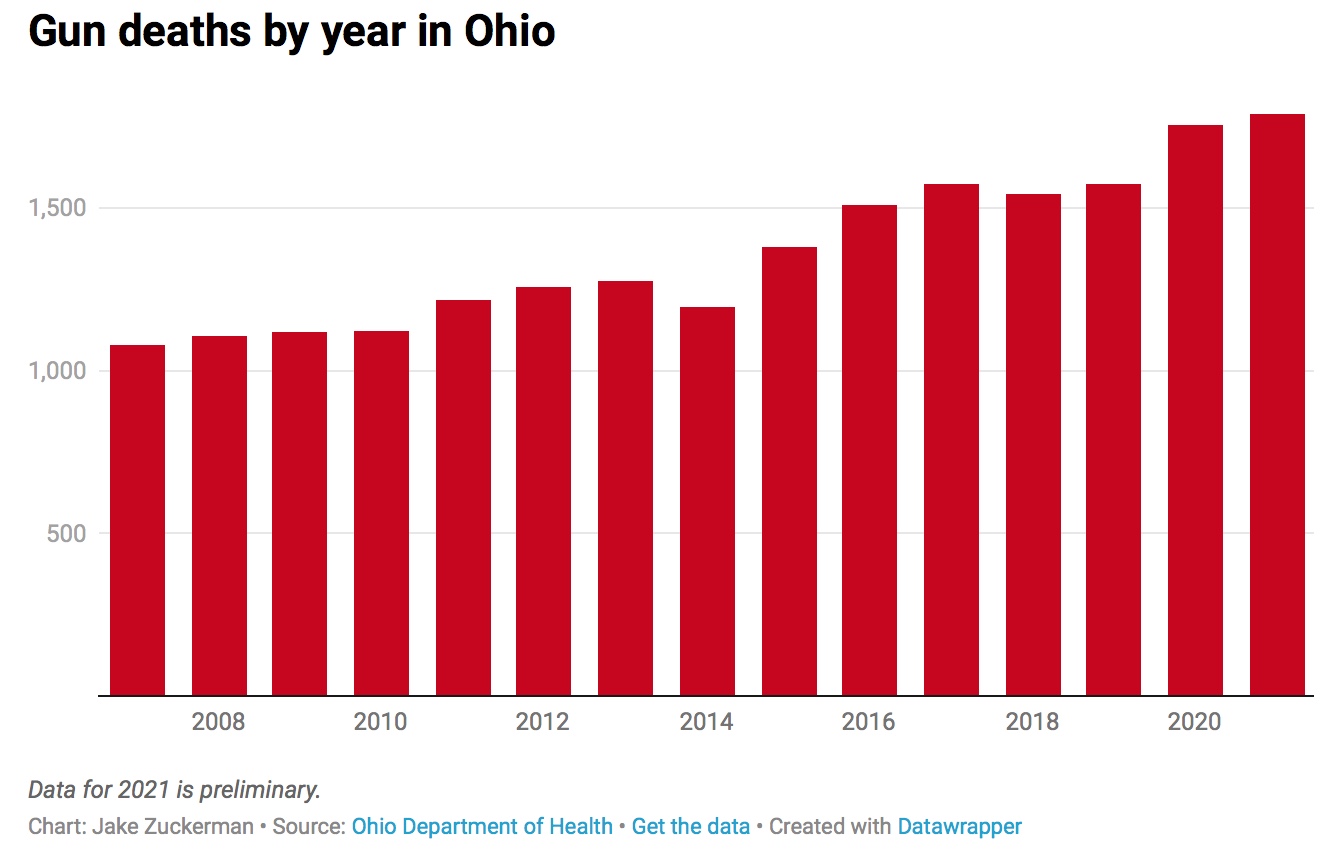
    According to the Health Policy Institute of Ohio, between 1999 and 2020 there have been large increases in annual rates of homicides (123%) and suicides (49%) in the state. While the prevalence of guns in suicides is steady, they’re becoming increasingly prevalent in homicides.

    However, gun supporters often point to a study published in the American College of Surgeons that didn’t identify any significant association after states adopted looser gun policies.

    In a statement, House Minority Leader Allison Russo criticized DeWine, emphasizing the thousands of concealed carry permits that are denied, revoked or suspended every year under the current system. While permitless carry doesn’t change who can possess a gun, it removes an additional layer of scrutiny within the current system.

    “Removing these responsible and reasonable precautions compromises the safety and security of our communities and law enforcement,” Russo said. “SB 215 completely betrays Ohioans who have called time after time for commonsense gun safety legislation, not extreme bills that endanger the lives of our children and families. Republicans have made it crystal clear that they value the approval of the gun lobby more than the lives of Ohioans and the police officers who protect our communities every day.”

    Gary Wolske, president of the Fraternal Order of Police of Ohio, spoke out against the law in a Columbus Dispatch column. He argued the requirement to seek a permit is a reasonable one that strikes a balance between constitutional rights, officer safety, and public safety. The new law also removes a requirement under current law that those carrying a weapon “promptly” notify an officer that they’re armed. Instead, people who are carrying need only inform an officer they’re armed if the officer asks.

    Photo by Matthew Hatcher/Getty Images

    The Ohio Supreme Court has held since 2003 that “there is no constitutional right to bear concealed weapons.” While the right to bear arms, the court said, is fundamental, it is not without limitations.

    Since then, Ohio has steadily loosened its gun laws.

    Ohio first enacted a concealed program shortly thereafter in 2004. Several of its sponsors at the time remain in office including (by their current offices) Auditor Keith Faber, Lt. Gov. Jon Husted; congressmen Bob Gibbs, Jim Jordan and Bob Latta; state Sens. Bob Peterson, Tim Schaffer and Kirk Schuring; and state Reps. Jamie Callender, Bill Seitz, Scott Oelslager, Tom Patton and Jean Schmidt.

    Two years later, the legislature passed a law preemptively blocking Ohio cities from passing any gun restrictions stricter than those established by the state. The law was used to squash lawsuits from Ohio cities including Clyde, Cleveland and Cincinnati seeking to regulate guns within their borders.

    In March 2015, a new law reduced the required training hours to receive a concealed carry permit to eight from 12. Early last year, Gov. Mike DeWine signed a “stand your ground” bill into law, which removes the legal requirement that a person try to retreat from a perceived attack before responding with lethal force.

    The governor announced passage of the permitless carry bill in a news release comingled with several other bills. He didn’t offer any comment.

  • Congressional map challengers ask court to stop map use

    Congressional map challengers ask court to stop map use

    Photo: Courtesy of the Ohio Supreme Court

    Attorneys for League of Women Voters proposed that the commission be given the maps again, but with specific instructions to fix District 1 in Hamilton County

    BY: SUSAN TEBBEN – Ohio Capital Journal


    The League of Women Voters and a group of Ohioans represented by a national redistricting group have asked the Ohio Supreme Court to keep the state from using recently approved congressional maps.

    “Having embarked on its latest map-drawing journey with an irredeemably broken compass, it is no surprise that the (Ohio Redistricting) Commission has once again found itself lost,” Ohioans led by the National Redistricting Action Fund stated in their court filing.

    The group called the newest map – which breaks the state down into 10 Republican districts, three Democratic districts and two “tossup” districts  – “an extreme partisan outlier again,” putting the state at a “partisan advantage at odds with Ohio’s voting patterns.”

    Because of this, they ask the court to strike down the Ohio Redistricting Commission’s second try at congressional districts, move the candidate filing deadline that was March 4 and “if necessary, itself adopt a constitutional plan as early as March 17.”

    “At this point, the commission cannot be trusted behind the wheel,” attorneys for the group wrote.

    The League of Women Voters stopped short of asking for the court to take over the process, saying “it is premature at this juncture for the court itself to implement a plan.”

    Attorneys for the Ohio league proposed that the commission be given the maps again, but with specific instructions to fix two districts: District 1 in Hamilton and Warren counties and District 15, which stretches from the western and southern sides of Franklin County to the Southern half of Shelby County.

    The LWV, represented by the ACLU of Ohio, also argued an alternative plan written by Harvard professor Dr. Kosuke Imai was brought up to to the commission “but was ignored.”

     A congressional redistricting plan proposed by Harvard professor Dr. Kosuke Imai. The League of Women Voters said this map was “ignored” by the Ohio Redistricting Commission, despite following constitutional redistricting requirements.

    The plan had a 10-6 partisan breakdown, but was never brought up for a formal vote by the commission.

    In court documents included with the LWV’s objection to the newest congressional map, Dr. Imai said his map “demonstrates that it is possible to generate a redistricting plan that is free of partisan bias and compactness problems while complying with the other redistricting criteria.

    Imai was also mentioned in the legislative redistricting court battle, when attorneys said the professor conducted 5,000 simulations of Ohio districts and never came up with the same amount of GOP partisanship in any of the simulations.

    Attorneys for the National Redistricting Action Fund said Ohio’s Republican caucus chose to “let the clock run out” on any efforts by the General Assembly to create a congressional plan, and were slow to act even as the ORC began its first week back after the GA made no decision.

    “The General Assembly seemingly took no action to even attempt to draw a plan itself because it was unwilling to attempt to reach the bipartisan agreement that would be necessary to pass emergency legislation,” Adams’ attorneys wrote.

    After the commission adopted a GOP-created map along party lines, the map challengers say Secretary of State Frank LaRose moved forward with “implementing the new gerrymandered plan,” despite the fact that it hadn’t been (and still hasn’t been) given the go-ahead by the state supreme court.

    The NRAF also argues the map continues to violate the constitution, specifically the provision prohibiting the favoring or disfavoring of one political party over another.

    “This disparity between statewide vote share and congressional seat share is astounding,” attorneys wrote.

    Asking for the court to take over the process is not a new argument state redistricting challengers have made. Attorneys arguing against legislative maps also asked the court to take charge after three attempts by the redistricting commission.

    The NRAF also asked the court to postpone “relevant election deadlines” for the May 3 primary, saying the court has “broad authority to issues orders postponing election deadlines to address harm that would occur if elections were to proceed under an unconstitutional map.”

    Republican commission members have said the power to change elections lies with the General Assembly.

  • COVID vaccination hits record lull in Ohio; less than 2 in 3 are vaccinated

    COVID vaccination hits record lull in Ohio; less than 2 in 3 are vaccinated

     A Columbus Fire Department member dons gloves while working at a mass vaccination site at the Celeste Center in Columbus. Photo by Jake Zuckerman, Ohio Capital Journal.

    BY: JAKE ZUCKERMAN – Ohio Capital Journal

    Ohio’s COVID-19 vaccination campaign has hit a new lull after two months of record low numbers of residents getting vaccinated.

    While the concept of diminishing marginal returns would suggest this is to be expected, Ohio remains under-vaccinated on a national and international scale. Just 62% of state residents are vaccine-started, and 57% are vaccine completed.

    Ranked by state, Ohio is the 8th least vaccine-started in the nation and the 17th least fully-vaccinated, according to data from The New York Times. Americans nationally, despite widespread access to vaccines, are about 76% vaccine-started. That’s below a list of countries both wealthy and poor including Cuba (94%), Chile (93%), Canada (86%) and Vietnam (81%), according to Our World in Data, a global, public dataset tracking the pandemic. Ohio is about as vaccine-started as Pakistan (63%).

    While COVID-19 cases, hospitalizations and deaths are significantly down from the winter surge, vaccination is still key for the present and future. It provides powerful, direct protection to the recipient. It also, when enough people in a community are vaccinated, provides indirect protection for those who aren’t vaccinated or have weaker immune systems.

    The consequences of the low vaccination rate are simple and lethal. About 22,000 Ohioans have died of COVID-19 since Jan. 1, 2021. About 95% of them were unvaccinated. In the same period, 64,000 Ohioans were hospitalized with the disease. About 93.5% of them were unvaccinated.

    At the more local level, more than half of Ohio’s 88 counties harbor populations where less than 1 in 2 residents are vaccinated, according to an analysis of state data. These counties tend to be more rural and Appalachian.

    Like other frontiers of the pandemic, vaccination became mired in partisan politics with real human consequences. On average, former President Donald Trump won 53% of the vote share statewide in the 2020 elections. But in Ohio counties that are less than 50% vaccinated, Trump won on average 74% of the votes.

    While COVID-19 deaths concentrated in populous, urban centers early in the pandemic, the paradigm shifted after vaccines became available, according to the Pew Research Center. By late 2021, death rates in the counties Trump won most decisively were about four times those of President Joe Biden’s winningest counties.

    On a statewide basis, older Ohioans are vaccinated at significantly higher rates than their younger counterparts. For instance, those 65 and older are between 80% and 85% vaccinated. Those aged 20 to 49 are between 51% and 63% vaccinated.

     Source: Ohio Department of Health. Graph by Jake Zuckerman.

    Ohio schools require vaccination as a term of enrollment against a broad spectrum of infectious diseases like measles and chicken pox, yielding immunization coverage between about 75% to 95% depending on the disease.

    However, the conservative state legislature has signaled an unlikeliness to mandate coronavirus vaccination.

    Republicans in both chambers of the General Assembly passed legislation in 2021 blocking schools and colleges from mandating receipt of COVID-19 vaccines that are only federally approved on an emergency basis. Both the Moderna and Pfizer vaccine have since received full federal approval.

    The Ohio House passed legislation prohibiting a wide range of employers, businesses and schools from requiring receipt of any vaccine, not just the COVID-19 vaccine. The Senate has not voted on the bill.