Tag: Ohio Capital Journal

  • Ohio’s Medicaid director owns the stock of some major contractors, but won’t say how much

    Ohio’s Medicaid director owns the stock of some major contractors, but won’t say how much

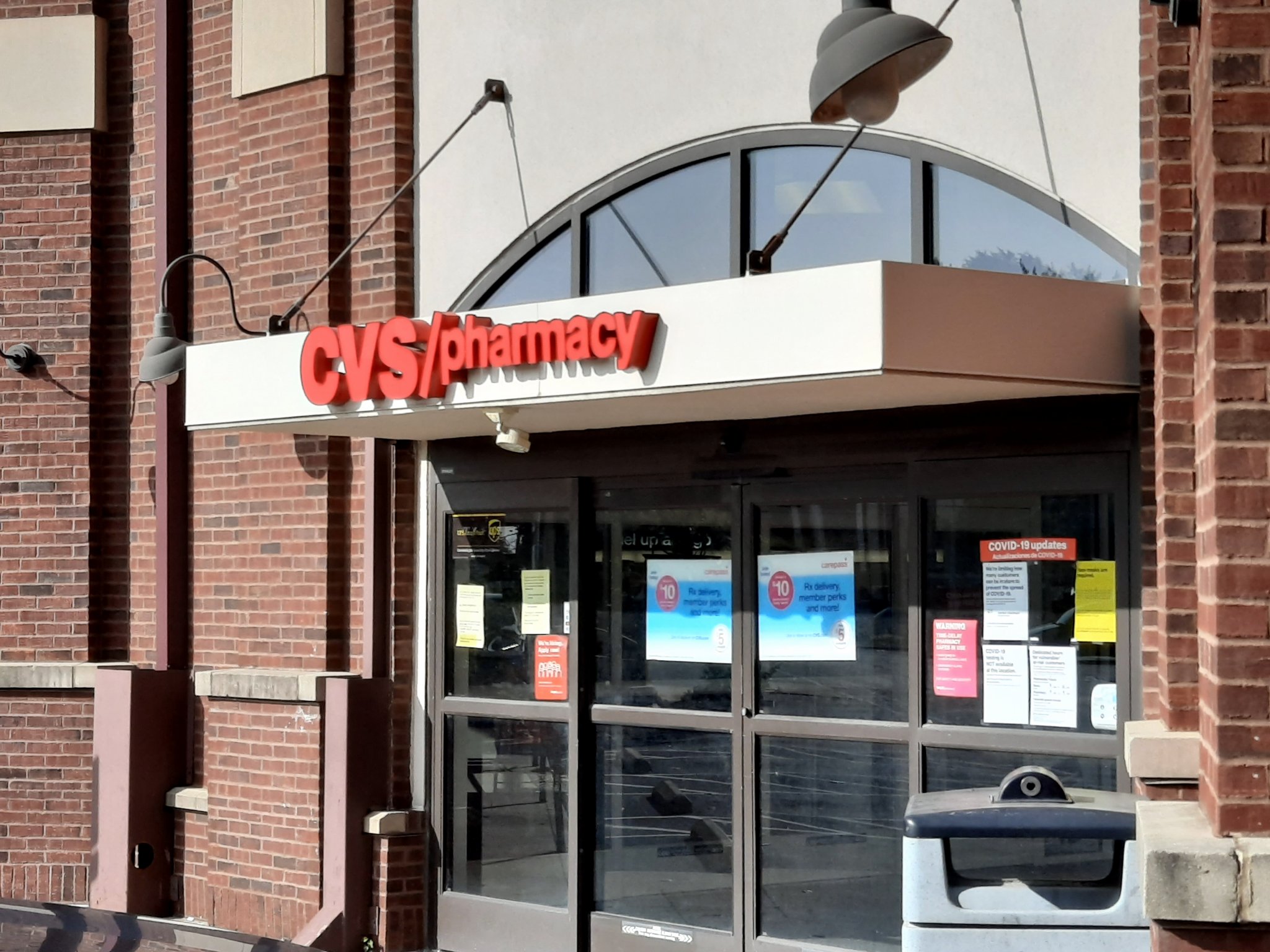
    A group representing small pharmacists says large chains, especially CVS, are moving patients’ prescriptions to their own stores without consent. CVS adamantly denies that. Photo by Marty Schladen, Ohio Capital Journal.

    It’s unclear if she disclosed potential conflict during massive procurement

    BY: MARTY SCHLADEN and Ohio Capital Journal

    Since she became director of the Ohio Department of Medicaid in January 2019, Maureen Corcoran has owned stock in some of the department’s biggest contractors. Given the size of those contracts, they could have increased the value of the stock Corcoran owned.

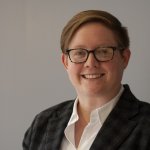
     Ohio Medicaid Director Maureen Corcoran. Official photo.

    But while she complied with one set of state disclosure requirements, Corcoran won’t say just how much stock she owns in such companies as CVS Health, UnitedHealth Group and Express Scripts — each of which has done billions of dollars worth of business with the Medicaid department since Corcoran started running it. 

    In addition, Corcoran won’t say if she filed legally required affidavits disclosing that she had an ownership stake in corporations the department hired earlier this year as part of its $20 billion managed-care re-procurement or the company the state hired to run its $1 billion OhioRISE program. Should they be found, violations of the law could carry criminal penalties and invalidate contracts signed without proper disclosures.

    Big money

    When Corcoran took the reins of the Medicaid department, she held a stake in some companies that were getting a lot of scrutiny over their business with the state. Two were CVS Caremark and OptumRX, pharmacy middlemen that together were handling more than $2 billion a year in prescription-drug transactions for the department.

    Ohio’s independent pharmacists and others accused the companies of several questionable practices — including charging a lot more for drugs than they were paying pharmacists. A state-commissioned analysis showed that in 2017, CVS and Optum charged almost a quarter-billion dollars more for drugs than they reimbursed the pharmacies that had bought and dispensed them.

    The findings were still big news — and the companies were suing the Medicaid department — when Corcoran took control just after Gov. Mike DeWine took office at the start of 2019. Even so, Corcoran held onto stocks in CVS Caremark owner CVS Health and in OptumRX owner UnitedHealth.

    According to disclosures filed with the Ohio Ethics Commission, Corcoran owned at least $1,000 worth of those companies’ stock. 

    Given that they were among 180 stocks and mutual funds she disclosed owning as of Jan. 31, 2019, it’s possible that Corcoran wasn’t even aware that she held stakes in companies that did such high-profile business with her agency. Whatever the case, Corcoran held onto shares in the companies through 2019 and 2020, her ethics filings show.

    Under Ohio’s aging ethics laws, agency bigwigs like Corcoran are allowed to own stock in companies with which their departments do business so long as their holdings don’t exceed 5% of the company’s outstanding stock. In the case of Medicaid’s big contractors, that would mean the director would have to be one of the wealthiest people in Ohio to violate the provision.

    CVS and UnitedHealth are the fourth and fifth-largest corporations in the country by revenue. In order to violate the ethics provision, Corcoran would have to have owned a combined $18 billion worth of the companies’ stock in 2019. 

    Potential for conflict

    That’s a clear sign that the state’s ethics laws need to be updated, said Catherine Turcer, executive director of Common Cause Ohio, a watchdog group.

    “Five percent of a company’s stock in the 70s, 80s or even the 90s wasn’t anywhere near what it is now,” Turcer said.

    In addition, knowing just how much Corcoran’s investments with Medicaid contractors were worth would go a long way toward showing how big a conflict of interest she has. If it’s just over $1,000, the conflict might seem nominal, but if it’s much more, it would be a lot more serious, Turcer said.

    “There are two things Maureen Corcoran could do,” Turcer said. “One would be to publicly identify how much over the $1,000 she owns and allow the public to weigh in. The other thing she could do so the public didn’t worry about the conflict of interest is actually divest herself of these stocks.”

    Last Friday, the Medicaid department was asked the value of Corcoran’s investments in CVS, UnitedHealth and Express Scripts, a third pharmacy middleman with which the department has done business.

    A spokeswoman for the department said it would respond to those and other questions, but as of Tuesday afternoon, it hadn’t. The spokeswoman also didn’t answer questions about when responses would be forthcoming.

    Bigger problem?

    Potentially more ominous for Corcoran and her department is another question they haven’t responded to: Whether Corcoran filed affidavits disclosing her interest in companies with whom the department recently entered into huge contracts.

    This year, the Medicaid department implemented a big redesign of its managed care program. 

    To gain more insight into drug transactions, the department will work next year with a single drug middleman contracted directly with the department — instead of being hired by managed-care providers as they have in the past.

    But while UnitedHealthcare’s OptumRx might be losing that business, the Medicaid department is hiring UnitedHealthcare Community Plan of Ohio to be one of six companies administering the state’s $20 billion-a-year managed-care program.

    The re-procurement has raised other questions. Also hired was a plan owned by managed-care giant Centene, which agreed earlier this year to pay out more than $1 billion to Ohio and 21 other states after being accused by Attorney General Dave Yost of fleecing taxpayers. Corcoran has struggled to explain why her department would keep doing business with the company.

    The state also is creating OhioRISE, an ambitious program intended to help 60,000 Ohio children with the most complex behavioral health and other needs. Aetna Better Health of Ohio was selected in April to administer the $1 billion program.

    The company is a subsidiary of insurer Aetna. CVS — in which Corcoran has been invested — bought the Aetna for $70 billion in 2019.

    It’s unclear whether Corcoran continues to own stock in UnitedHealth or CVS, or whether she disclosed any ownership when contracts were let this year. 

    But the state law governing such disclosures spells out potential criminal penalties for violations and it says any contract so made “is void and unenforceable.”


  • Man whose wife sued hospital to force it to administer ivermectin dies of COVID-19

    Man whose wife sued hospital to force it to administer ivermectin dies of COVID-19

    Prescription drugs sit on a pharmacist’s counter. Photo by John Moore/Getty Images.

    BY: JAKE ZUCKERMAN and Ohio Capital Journal

    Butler County, Ohio

    An Ohio man whose wife sued a Cincinnati area hospital for refusing to provide him ivermectin as he was intubated due to COVID-19 has died, according to one of her attorneys.

    Jeffrey Smith, 51, died Sept. 25, according to the family’s attorney, Jonathan Davidson.

    While he was on a ventilator, Julie Smith filed a lawsuit against West Chester Hospital for refusing to honor a prescription of ivermectin written by a physician who founded a controversial group that champions the drug.

    Ivermectin is an antiparasitic in humans and a dewormer in livestock. It has grown in popularity, egged on by conservative commentators and politicians, as a treatment and preventative against COVID-19. The CDC, Food and Drug Administration, American Medical Association, the drug’s manufacturer and more all warn against the drug’s use against COVID-19, given the lack of evidence to support the treatment and the risks the drug can pose to those who take it.

    Neither Julie Smith nor her husband were vaccinated, she testified at a court hearing.

    On Aug. 23, Julie Smith won an emergency judgement that forced the hospital to administer the ivermectin to her husband.

    Common Pleas Judge Michael Oster reversed that ruling 13 days later. He said in a ruling, siding with expert witnesses from the hospital network who testified, the judgement isn’t a determination that ivermectin will never be proven effective against COVID-19.

    “However, based upon the evidence, it has not been shown to be effective at this juncture,” he said. “The studies that tend to give support to ivermectin have had inconsistent results, limitations to the studies, were open label studies, were of low quality or low certainty, included small sample sizes, various dosing regiments, or have been so riddled with issues that the study was withdrawn.”

    At the time, Ralph Lorigo, a New York attorney who has filed similar lawsuits around the country, claimed victory regardless. He cited purported indications that Jeffrey Smith’s condition was improving, and attributed this to the temporary dosing of the drug.

    “This is a man who has been helped by the medication, and this is a judge who just doesn’t get it right,” Lorigo said.

    Click here for more in-depth coverage of Julie Smith’s lawsuit. 

  • Abortion ‘trigger bill’ coming to Senate committee

    Abortion ‘trigger bill’ coming to Senate committee

    BY: and Ohio Capital Journal

    A piece of legislation meant to go into effect if federal abortion rights protections are overturned will start its path through the Ohio legislature this week.

    Senate Bill 123 is set to appear in the Ohio Senate Health Committee on Wednesday morning.

    If passed, the bill would then await court challenges of the U.S. Supreme Court’s Roe v. Wade decision, the ruling that legalized abortion nationwide. If challenges to Roe were successful, Ohio could then quickly ban abortion.

    There is an exception in the bill for abortions when there is serious risk to the pregnant person’s life, but written certification of the necessity is required, and “appropriate neonatal services for premature infants must exist at the facility where the physician performs or induces the abortion.”

    Currently, abortion is legal in the state of Ohio up to 22 weeks gestation.

    The proposed legislation would also ban “as the crime of promoting abortion” possessing, selling or advertising “drugs, medicine, instrument or device to cause an abortion”

    “Promoting abortion” is one of a few crimes defined under the bill, and would be a first-degree misdemeanor if passed. “Abortion manslaughter” would be a crime under the bill, treated as a first-degree felony punishable with a minimum of four to seven years in prison for “purposely taking the life of a child born by attempted abortion who is alive when removed from the…uterus.”

    As with other attempted legislation on abortion in the state, the punishment primarily lands on the physicians, leaving those having the abortions legally cleared and even able to file a wrongful death lawsuit if an abortion is performed in violation of the proposed legislation.

    A physician could have their license revoked if found guilty of “abortion manslaughter,” “criminal abortion,” or “promoting abortion.”

    The language regarding “abortion manslaughter” is reminiscent of language in a different abortion-related bill seeking to punish doctors after “botched abortions.” That bill seeks to prohibit inaction by doctors in the case of “failed” abortions, however, state data shows failed abortions are very rare.

    Of abortions reported at 19 weeks or more gestation in the state’s most recent data — which was available at the time the botched abortion bill was presented — only one pregnancy was found to be viable.

    The Senate legislation isn’t the first “trigger ban” that has been introduced in the General Assembly in the recent past. Last spring, a House bill was introduced by former state Rep. John Becker, also aiming to take effect if Roe v. Wade was overturned.

    Abortion-rights advocates are planning to rally together at the Ohio Statehouse at 12:30 p.m. on Tuesday, the day before the committee meets to consider the trigger ban.

    “With the stark reality that Ohio could be the next state where abortion is entirely inaccessible, now is the time to show up and fight for our communities,” said Aileen Day, communications for Planned Parenthood Advocates of Ohio, in a statement.


    Susan Tebben is an award-winning journalist with a decade of experience covering Ohio news, including courts and crime, Appalachian social issues, government, education, diversity and culture. She has worked for The Newark Advocate, The Glasgow Daily Times, The Athens Messenger, and WOUB Public Media. She has also had work featured on National Public Radio.

  • HEALTH CARE POLITICS & GOV Proposed Ohio abortion bills would impose new mandates, spread misinformation

    HEALTH CARE POLITICS & GOV Proposed Ohio abortion bills would impose new mandates, spread misinformation

    BY: and Ohio Capital Journal

    Returning from summer break, the Ohio legislature could review two GOP-led pieces of legislation that would place health mandates on patients considering abortions.

    One of the bills, recently introduced by state Rep. Jennifer Gross, would require physicians to dictate the results of a mandated ultrasound and also provide information about a link between breast cancer that has been disproven by multiple medical organizations.

    State Rep. Jennifer Gross, R-West Chester 

    Gross, usually known for and outspoken in her disapproval of health care mandates, introduced the bill this week.

    Patients already have to meet with a physician 24 hours before an abortion, but under this bill, along with hearing about the medical risks of the procedure and the probably gestational age, a patient would be told “the possible increased risk of breast cancer that is associated with women who have undergone an abortion,” along with the “short-term and long-term risk of psychological or emotional harm” from choosing to have an abortion.

    Multiple organizations, including the American Cancer Society, the American College of Gynecologists and the Susan G. Komen Breast Cancer Foundation have denied the link, citing research studies on the relationship between breast cancer and abortion.

    The American Cancer Society said these research studies “have not found a cause-and-effect relationship between abortion and breast cancer.”

    The Gross bill has not been assigned to a committee for consideration, but it has several sponsors, all Republican.

    Meanwhile, a separate bill seeking to notify abortion patients of possible risks was introduced during the legislature’s summer break, and has been assigned to the House Health Committee.

    House Bill 378  was introduced in July by state Reps. Kyle Koehler, R-Springfield, and Sarah Fowler Arthur, R-Ashtabula, and specifically targets medication abortion, which is done through a two-pill regimen, rather than surgery.

    The bill would require medical professionals to explain a controversial and medically unproven method of “reversing” the abortion by not taking the second of the two-pill regimen and giving additional progesterone to counteract the first pill.

    The American College of Obstetricians and Gynecologists said claims about the “reversal” method “are not based in science and do not meet clinical standards.”

    The bill is a reintroduction of a similar one that passed the Senate in 2019, but didn’t make it through the House.

    Abortion is legal in the state of Ohio up to 20 weeks gestation.


    Susan Tebben is an award-winning journalist with a decade of experience covering Ohio news, including courts and crime, Appalachian social issues, government, education, diversity and culture. She has worked for The Newark Advocate, The Glasgow Daily Times, The Athens Messenger, and WOUB Public Media. She has also had work featured on National Public Radio.

  • Ohio gov thinks a law is making kids sick and says it’s unconstitutional. He won’t challenge it

    Ohio gov thinks a law is making kids sick and says it’s unconstitutional. He won’t challenge it

    DeWine spokesman says risks are too high

    BY: MARTY SCHLADEN and Ohio Capital Journal

    Some are questioning Gov. Mike DeWine’s sincerity when he says he’s doing all he can to fight the spread of coronavirus among children.

    DeWine and the leaders of children’s hospitals are in a panic over the lack of masking in Ohio schools. Hospital admissions of children with covid are up 536% since July and the hospitals report that they’re being overwhelmed by the surging delta variant and an unusual jump in other respiratory illnesses.

    [Watch video] Ohio Children’s Hospital leaders briefing for school administrators –…

    DeWine and the hospitals are pleading with local school officials to enact their own mask mandates because DeWine says his hands are tied by Senate Bill 22 — a law the GOP-controlled legislature passed in March over his veto. 

    It circumscribes the governor’s ability to issue health orders such as his 2020 statewide mask mandate by limiting them to 30 days. After that, the legislature would have to sign off in order to continue them.

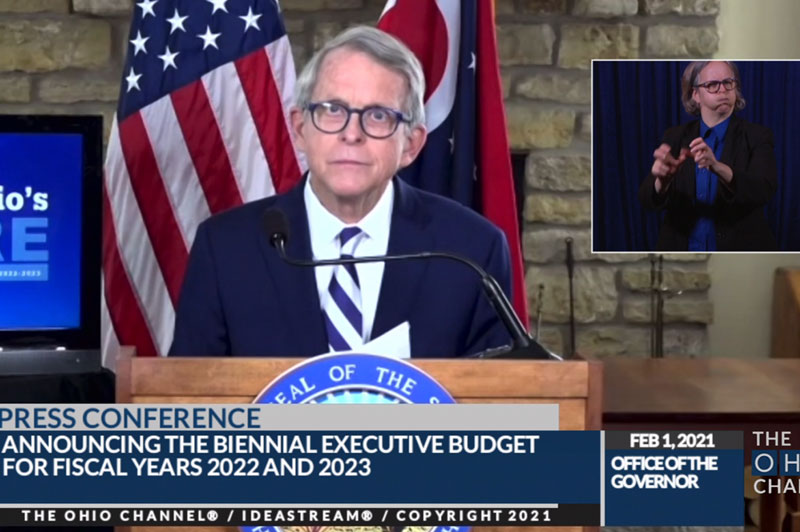
    Asked on Tuesday why he wouldn’t impose a mask mandate as a temporary measure, DeWine said he didn’t want to muddy the issue.

    “All that will do is cause a great deal of confusion and then I think people would say, ‘Well there’s no mandate on, there’s no requirement on, we can go back, there’s really no reason to keep masks on,” the governor said. “I’m afraid what would happen is we would slide backwards, we would go the wrong way.”

    However, some noted that when SB 22 was passed, the governor, who is a lawyer, didn’t believe it would stand up in court.

    “Lots of talk out there excusing @GovMikeDeWine‘s refusal to issue a school mask mandate,” Katie Paris, founder of the group Red Wine and Blue, tweeted. “His hands are NOT tied. He could issue a mandate today and if the legislature fights it, he could take them to court.”

    She followed up with a thread that included the statement DeWine issued when he vetoed SB 22.

    “We believe that significant portions of SB 22 are unconstitutional,” the statement says. “Parts of the bill violate the separation of powers doctrine embedded in our Ohio Constitution; other parts violate Article II, Section 15 of the Ohio Constitution, proscribing how laws must be made; and even other parts of the bill likely violate Article IV, Section 5 of the Ohio Constitution, by exercising power reserved to the judiciary.” 

    Loveland School Superintendant Mike Broadwater

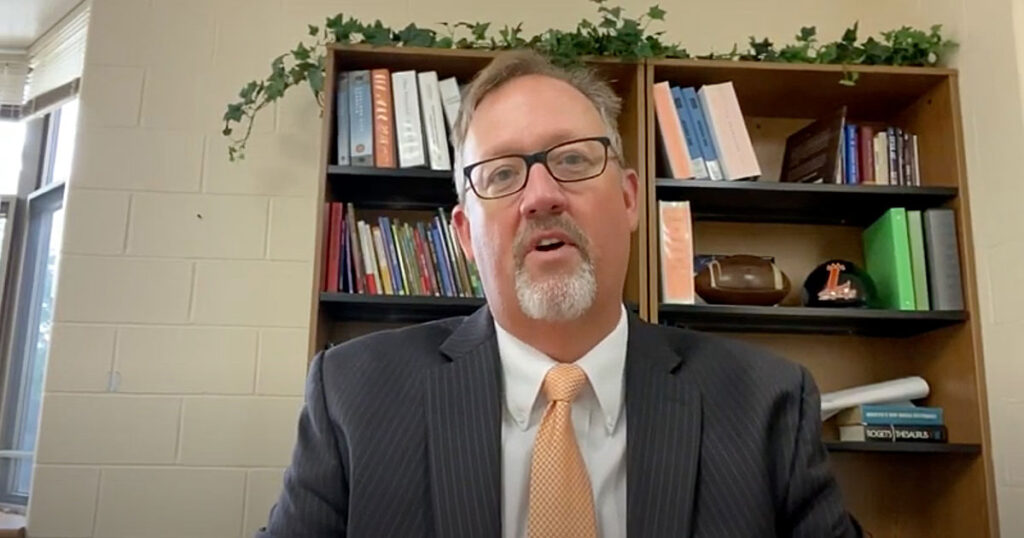
    Loveland School Superintendant Mike Broadwater told Loveland Magazine on Thursday, “It is unfortunate that Governor DeWine no longer has the power to issue health orders that would put every school district across the state in the same situation if that’s what he feels is best. But by leaving it to local control, he’s allowing each district to make the decision that fits best for their community.”

    The current policy of the Loveland City School District is that students in grades PreK-6 are required to wear a mask indoors. Students in grades 7-12 do not have to wear face coverings. All others, while in the buildings must wear masks.

    The Legislative Service Commission also questioned the legality of a draft of the bill, writing that it “might be vulnerable to a constitutional challenge on the grounds that the legislature cannot take such an action by resolution.” But for some reason, it was dropped from the final version of the bill, which was otherwise unchanged.

    Asked why DeWine doesn’t just impose a mask order and fight it out in court, Press Secretary Dan Tierney on Wednesday said it was too risky.

    “Somebody who’s advocating for that is hoping that a judge puts on an immediate restraining order that would allow (the mask mandate) to continue, but you also have to weigh the chance that a judge could rule the other way: that the legislative recision is perfectly valid,” Tierney said.

    He added that DeWine’s current approach — persuading local officials to put on their own mask mandates — is making rapid progress. The portion of students in schools with mask mandates has jumped from 35% on Sept. 1 to 54% on Tuesday, Tierney said.

    “We went from a little over a third to a little over a half of students being in a school where everybody wears a mask in less than two weeks,” he said.

    But while DeWine is blaming the GOP supermajority in the legislature for sapping his ability to fight his coronavirus, on Wednesday he signed off on legislative maps that would preserve that supermajority. Even as DeWine helped to approve the maps, he questioned whether they would survive a court challenge, Gannett journalist Haley BeMiller reported.

    The move by DeWine — who has also criticized President Joe Biden’s vaccination-or-test mandate — prompted a blast from John Hagner, campaign manager for Dayton Mayor Nan Whaley, who is seeking the 2022 Democratic gubernatorial nomination.

    https://twitter.com/JHagner/status/1438485210811748356

    “Mike DeWine on Tuesday: the gerrymandered Republican supermajority is keeping me from protecting kids and keeping them in school,” Hagner tweeted. “Mike DeWine on Wednesday: ok, let’s have four more years of an even more gerrymandered Republican supermajority.”

    Reporter Jake Zuckerman of the Ohio Capital Journal and David Miller, Editor of Loveland Magazine contributed to this rstory.

  • Ratepayers spent $166 million and counting bailing out coal plants under law that passed via bribes

    Ratepayers spent $166 million and counting bailing out coal plants under law that passed via bribes

    BY: JAKE ZUCKERMAN and Ohio Capital Journal

    Despite several plea deals with federal prosecutors regarding bribery on a massive scale to pass legislation providing a windfall to nuclear and coal companies, Ohio utility customers continue to fund bailouts of failing coal-fired power plants in Ohio and Indiana.

    In the first half of 2021, Ohio utility customers paid $51 million to subsidize the plants, which are jointly owned by Ohio utility companies like American Electric Power, Duke Energy, AES Ohio and others. That’s on top of the $115 million ratepayers paid last year, according to data from state utility regulators.

    Sen. Mark Romanchuk, R-Ontario, has spearheaded efforts within the GOP on a piece-by-piece strategy to repeal the remnants of House Bill 6, which codified the coal bailout through 2030.

    HB 6 passed via the muscle of $61 million that utility giant FirstEnergy Corp. paid into an account secretly controlled by House Speaker Larry Householder, R-Glenford. That money funded the bill’s passage and enriched those in on the scheme, according to a statement of facts the company proffered to the U.S. Department of Justice. (Householder has pleaded not guilty to a count of racketeering and awaits trial.)

    Romanchuk said Tuesday he’s facing resistance from his counterparts on the Senate Energy and Public Utilities Committee as far as repealing the coal plant bailouts.

    “You need votes to get it out of committee; the votes probably aren’t there right now,” he said to reporters after a hearing.

     State Sen. Mark Romanchuk, R-Ontario. Official photo.

    “The legislation has some other things in it like refunds that are probably, in the minds of committee members, not what they want to vote for.”

    Earlier this year, representatives of the utilities that comprise the Ohio Valley Electric Corp., which owns the two plants, appeared before the committee to argue in favor of the subsidies.

    Senate Energy Chairman Rob McColley, R-Napoleon, said Tuesday he has no update on timing regarding a vote to repeal the coal bailouts. He said Romanchuk is working behind the scenes to prepare the bill for a vote, but he’s not involved in specific details.

    “You know how I feel about House Bill 6. I voted no because I thought it stunk from the very beginning,” he said. “But at the same time, we’ve got to work this through the committee process and that’s what we’re trying to do.”

    Tuesday’s hearing: solar credits

    The Senate Energy and Public Utilities Committee met Tuesday to consider Senate Bill 118, a Romanchuk bill that would repeal a lesser-discussed piece of HB 6: a $20 million annual credit, funded by utility customers, for certain solar projects.

    Franklin County Common Pleas Judge Chris Brown halted collections over nuclear and solar subsidies under HB 6 via an injunction in December, according to PUCO spokesman Matt Schilling. However, in April, Brown issued a ruling allowing the solar fund collections to begin on Nov. 1, 2021.

    SB 118 has support from opponents of HB 6: the conservative group Americans for Prosperity, the Ohio Manufacturing Association, and the Ohio Consumers Counsel, which represents ratepayers.

    Lobbyists representing OMA and AFP described the credit structure as a form of cronyism, alleging HB 6 was narrowly tailored to ensure the payments made it to a select few solar projects.

    A spokeswoman from the Ohio Air Quality Development Authority, which oversees the solar credit program, confirmed collections from consumers won’t begin until Nov. 1. Five projects in Highland, Brown, Hardin and Vinton counties have been approved to receive payments within the program.

    Householder update

    Householder was arrested and indicted in July 2020. Lawmakers ousted him as Speaker of the House shortly thereafter. He was expelled as a member of the Ohio General Assembly in June of this year.

    He has maintained his innocence throughout. He’s scheduled to appear for a status conference before a federal judge Oct. 5.

    “I have not, not have I ever, taken a bribe or solicited or been solicited for taking a bribe. Never,” Householder said.

    Two alleged Householder co-conspirators — his political strategist Jeff Longstreth and lobbyist Juan Cespedes — pleaded guilty in October 2020 to one count each of racketeering. Neil Clark, a high power GOP lobbyist, was charged as well. He died by suicide earlier this year.

    In July, FirstEnergy admitted in court documents that it paid $61 million into an account that Householder controlled to pass HB 6. The company agreed to pay a $230 million penalty and plead guilty to a charge of wire fraud.

    The documents state the company paid $22 million to Sam Randazzo, an energy lawyer appointed by Gov. Mike DeWine to lead the PUCO, in the decade before his appointment. This includes a $4.3 million payment just before he assumed the post.

    In return, Randazzo allegedly used his chairmanship to shield PUCO from regulatory scrutiny that could cost it hundreds of millions. Randazzo denied any wrongdoing and has not been charged with a crime.

  • Republican majority gerrymanders Ohio for another four years

    Republican majority gerrymanders Ohio for another four years

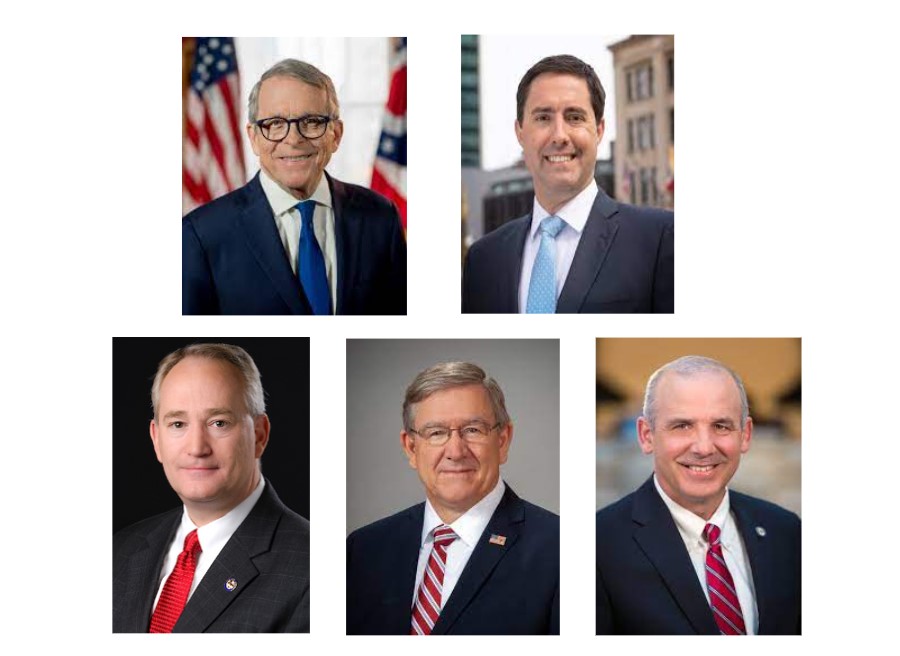
    The Republican majority members of the Ohio Redistricting Commission. Top row from left, Ohio Gov. Mike DeWine and Secretary of State Frank LaRose. Bottom row from left Ohio Auditor Keith Faber, House Speaker Bob Cupp, and Senate President Matt Huffman. Official photos.

    BY: SUSAN TEBBEN and Ohio Capital Journal

    With some using words like “disappointment” and “unease,” Republican majority members of the Ohio Redistricting Commission passed maps of General Assembly districts on Thursday heavily favoring GOP supermajorities that will last four years, if they make it through the courts.

    In a process that bypassed the midnight deadline by minutes, the commission split along party lines 5-2 and passed GOP-produced maps that they said were presented to the commission the night before.

    Currently, Republicans hold a 64-35 supermajority in the Ohio House, and a 25-8 supermajority in the Ohio Senate. The new maps continue the supermajorities, which require 60+ seats and 22+ seats respectively.

    Republicans said the maps for the House and Senate approved early Thursday morning reduced the GOP stronghold with a House breakdown of 62 seats to 37 Dems, and 23 to 10 in the Senate. Democrats and Dave’s Redistricting App project a 65-seat GOP supermajority in the House.

    Anti-gerrymandering advocates have repeatedly called for representation that actually reflects the make-up of voters. And Ohio voters amended the state constitution in 2015 to implement reform intended to produce bipartisan and fair districts, with 71.47% of voters supporting.

    In an average of the last 16 statewide elections not including non-partisan judicial races, Republicans have won a 54% to 46% advantage.

    As of 2020, 1.9 million Ohioans were registered Republican while 1.6 million were registered Democratic, for a ratio also of 54% to 46%. More than 4.5 million voters remain unaffiliated.

    Nevertheless, the Republican majority said in a statement that because they’ve won 13 of 16 statewide elections they could be entitled to up to 81% of representation of the people, despite them only winning the average of 54% of the votes in those elections.

    The GOP committee majority includes Ohio Gov. Mike DeWine, Secretary of State Frank LaRose, Auditor Keith Faber, Ohio House Speaker Bob Cupp and Ohio Senate President Matt Huffman. Voting against the maps were Democratic House Leader Emilia Sykes and Democratic state Sen. Vernon Sykes.

     The Republican majority’s four-year Ohio House map.
     The Republican majority’s four-year Ohio Senate map.

    The only bipartisan agreement was a condemnation of how the process had gone, and the fact that there seemed to be no way to reach a 10-year map.

    “Tonight, it has become clear to me that there will not be a compromise,” said DeWine. “It’s clear in talking to both sides that there’s not going to be an agreement, and that we could go tomorrow or the next day or the next day, and it simply was not going to occur.”

    The Democratic legislators on the commission both objected to the maps as presented, with commission co-chair Sen. Vernon Sykes saying the map proposal “falls far below what’s considered to be fair.”

    House Minority Leader Emilia Sykes said the maps were an affront to women who had to earn the right to vote, and minorities who are protected by the Voting Rights Act.

    “To have before today a map that summarily and arrogantly eliminates the ability for women like me…to engage in a process and have their votes heard is not only offensive, it is plain wrong,” Sykes said.

    The criticism of the process was broad, with Auditor Faber and Secretary of State LaRose both urging the commission to learn from its mistakes before congressional redistricting begins next month.

    “I’m casting my ‘yes’ vote with great unease,” LaRose said. “I fear we’ll be back in this room very soon.”

    The expectation of lawsuits was brought up quickly and early, with DeWine and others acknowledging that the courts would ultimately decide whether the maps fit the bill, or if the process was constitutional.

    “I’m not judging the bill one way or another, that’s up for a court to do,” DeWine said.

    The condemnation from redistricting advocacy groups was also swift, though analysis of the maps is still ongoing.

    “The Commission didn’t reconvene until forty-five minutes before the midnight deadline and then enacted a map along party lines that disregards the letter and spirit of the reforms passed in 2015,” wrote Common Cause Ohio executive director Catherine Turcer in a statement sent out by the Fair Districts Ohio coalition. “We are disappointed in both the process and the result.”

    Past court challenges, the discussion now turns to congressional districts representing the state, a process that should start in the next few weeks.

  • Judge reverses order forcing hospital to give ivermectin to COVID-19 patient

    Judge reverses order forcing hospital to give ivermectin to COVID-19 patient

    Ivermectin used to prevent heartworm in dogs as prescribed by a veterinarian. (© Photo by David Miller)

    “We are believers he’s going to survive because of ivermectin.”

    BY: JAKE ZUCKERMAN and Ohio Capital Journal

    Hamilton, Ohio – A Butler County judge sided with a local hospital and reversed a previous court order forcing it to honor a prescription of ivermectin, which infectious disease experts have warned against as a COVID-19 treatment, for a patient who has spent weeks in the ICU with the disease.

    After two days of testimony and arguments, Common Pleas Judge Michael Oster issued an order Monday siding with West Chester Hospital. He said the hospital bears no duty to honor a prescription written for Jeffrey Smith, 51, for ivermectin, a drug used as a dewormer in horses and an anti-parasitic in humans.

    The drug has surged in popularity as a COVID-19 treatment, egged on by conservative politicians and media figures, despite adverse warnings from the Centers for Disease Control, the Food and Drug Administration, the American Medical Association, the drug’s manufacturer and others.

    “This Court is not determining if ivermectin will ever be effective and useful as a treatment for COVID-19,” Oster said.

    “However, based upon the evidence, it has not been shown to be effective at this juncture. The studies that tend to give support to ivermectin have had inconsistent results, limitations to the studies, were open label studies, were of low quality or low certainty, included small sample sizes, various dosing regiments, or have been so riddled with issues that the study was withdrawn.”

    Julie Smith brought the lawsuit on behalf of her husband, Jeffrey Smith, who tested positive for COVID-19 and was admitted to the ICU July 15, where he remains today. He has been sedated, intubated and on a ventilator since Aug. 1.

    The hospital refused to honor the prescription, written Aug. 20, prompting the lawsuit that same day. On Aug. 23, another judge wrote an emergency order demanding the hospital administer the ivermectin as prescribed. Monday’s order nixes the August order.

    Trial last week

    Julie Smith testified that neither she nor her husband were vaccinated against COVID-19. She said it was “experimental,” so she didn’t trust it.

    “We didn’t feel confident it had been out long enough,” she said during a hearing Thursday.

    She later connected with Dr. Fred Wagshul, a founding physician of the Front Line COVID-19 Critical Care Alliance, a nonprofit that touts ivermectin as a wonder drug. Wagshul is a licensed physician but is not board certified within any specialty and hasn’t worked in a hospital for 10 years, according to his testimony.

    He prescribed Jeffrey Smith 21 days’ worth of ivermectin without reviewing Jeffrey Smith’s clinical information or talking to any of his treating physicians. He said the pharmaceutical industry and U.S. government have smeared ivermectin and “censored” its allegedly undeniable beneficial value.

    However, when asked if it had benefitted Smith, he hedged.

    “I honestly don’t know, but the rule of thumb is, when something is working, you don’t stop it,” he said.

    Several witnesses for the hospital cast doubt on Wagshul’s testimony and credibility as a physician. Dr. Ferhan Asghar, a surgeon and chief of staff at the hospital, said a physician who is not board certified would never be admitted to practice at West Chester, per hospital policy. He said it was also a “concern” that a physician would issue such a controversial prescription without seeing the patient or reviewing his information.

    Dr. Jaime Robertson is an infectious disease physician who sits on a committee at UC Health, which staffs West Chester Hospital, to review available evidence to guide treatment for COVID-19 patients. He said the evidence doesn’t necessarily conclude ivermectin doesn’t work; instead, he said ivermectin bears risks just like any treatment but there’s no conclusive evidence to show enough benefit exists to outweigh that risk.

    “I think the problem here is there are conflicting outcomes in public health literature,” he said.

    Dr. Daniel Tanase, Jeffrey Smith’s treating physician, disputed any notion that the ivermectin demonstrably helped his patient, and said there’s not enough evidence to support the use of ivermectin on COVID-19 patients.

    “We follow science and we follow what the guidelines are,” he said. “So yes, I don’t think ivermectin is what he needs at this time.”

    Officials on ivermectin 

    On Aug. 26, the CDC issued a health alert warning of a five-fold increase of calls to poison control centers regarding ivermectin exposure compared to a pre-pandemic baseline. These included exposures related to topical and veterinary formulations of the drug.

    “Clinical effects of ivermectin overdose include gastrointestinal symptoms such as nausea, vomiting, and diarrhea,” the CDC states. “Overdoses are associated with hypotension and neurologic effects such as decreased consciousness, confusion, hallucinations, seizures, coma, and death. Ivermectin may potentiate the effects of other drugs that cause central nervous system depression such as benzodiazepines and barbiturates.”

    Several other federal authorities have issued similar warnings. Even Merck, which manufactures the drug, issued a statement in February affirming its position that there’s no scientific basis for a potential therapeutic effect against COVID-19 from ivermectin. The company also noted a “concerning lack of safety data” in the majority of studies.”

    review of available literature conducted in August by the journal Nature found there’s no certainty in the available data on potential benefits of ivermectin.

    Ohio Hospital Association President Mike Abrams said in a statement before Oster issued his order stating there is insufficient data to support ivermectin as a treatment for COVID-19. He called the initial order “concerning” in regards to forcing a hospital to use a drug unapproved for use.

    “OHA believes it is an extraordinarily dangerous precedent for judges to practice medicine and order unproven medical treatments over the objections of highly-trained clinicians and against all standards established by the medical community,” Baker said.

    Appeal is unlikely

    Bill J. Paiobeis, an attorney for West Chester Hospital, declined comment Monday, citing the potential for an appeal.

    Kelly Martin, a UC Health spokeswoman, said the hospital network respects its doctors and the scientific rigor they use to develop treatments, medications and therapies. UC Health, she said, doesn’t believe that hospitals or clinicians should be ordered to administer medications, especially “unproven medications and/or therapies,” against medical advice.

    “This news, while positive in support of respect for science and the expertise of medical professionals, does not change the fact that there are many people suffering from COVID-19 in our communities,” she said. “We implore all members of the community to do what we know works: wear a mask, become fully vaccinated and use social distancing whenever possible.”

    Ralph Lorigo, an attorney representing Smith, said he won the lawsuit in a way. He said Jeffrey Smith obtained 13-days’ worth of ivermectin, and the hospital has since told Julie Smith that they’re ready to begin to ween him off the ventilator.

    “Julie has won this case; I don’t care what this judge says,” Lorigo said in an interview. “We are believers he’s going to survive because of ivermectin.”

    He said he’s not planning any appeal as one would effectively be moot.

    “This is a man who has been helped by the medication, and this is a judge who just doesn’t get it right,” Lorigo said.

  • COVID-19 cases leap by 900% over a month, State health department says

    COVID-19 cases leap by 900% over a month, State health department says

    A surgical mask and an N95 mask hang on display for sale at a pharmacy. Photo by Sean Gallup/Getty Images.

    BY: JAKE ZUCKERMAN and Ohio Capital Journal

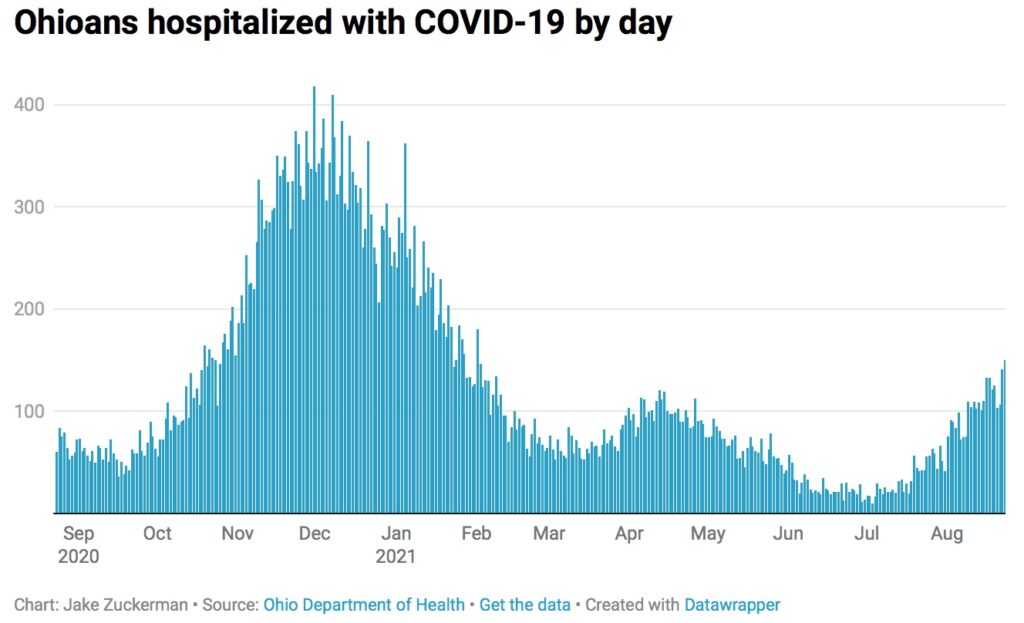
    More than 3,000 Ohioans per day are contracting COVID-19 on average, the highest the rate has been since early February.

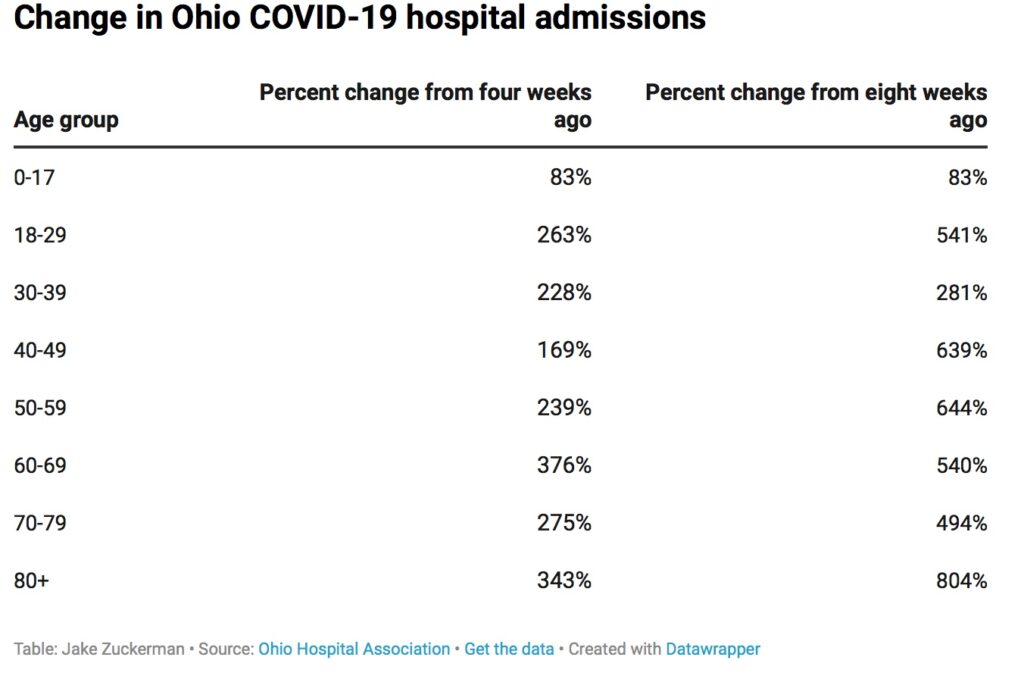
    Over the last month, hospitalizations increased by between 83% and 375% by age group, according to data from the Ohio Hospital Association.

    As children go back to school, more students are testing positive. Comparing the week of July 4 with the week of August 25, COVID-19 infections leapt by 909% among all Ohioans and 827% among school-age Ohioans, according to separate data from the Ohio Department of Health.

    While vaccination has modestly picked up pace, Ohio’s coverage sags well below the national average. About 52% of the state has received at least one vaccine dose, compared to 61% nationally, according to a New York Times data tracker. Only 12 states have a lower rate.

    The state’s hottest spots for infection are toward the southern border, where the vaccination rate sits between 30% and 40%.

    All told, more than 65,000 Ohioans have been hospitalized with COVID-19. More than 20,700 have died.

    “With many districts going back to school last week, the number of illnesses from Monday, Aug. 23 is troubling,” said ODH Director Dr. Bruce Vanderhoff in a news release. “As students statewide continue to return to their classrooms, this high figure should be yet another indicator to parents and families that the best protection from COVID-19 is for those 12 and older to choose to be vaccinated, and for those who aren’t vaccinated to wear masks.”

  • Public calls for fair districts in first redistricting commission meetings

    Public calls for fair districts in first redistricting commission meetings

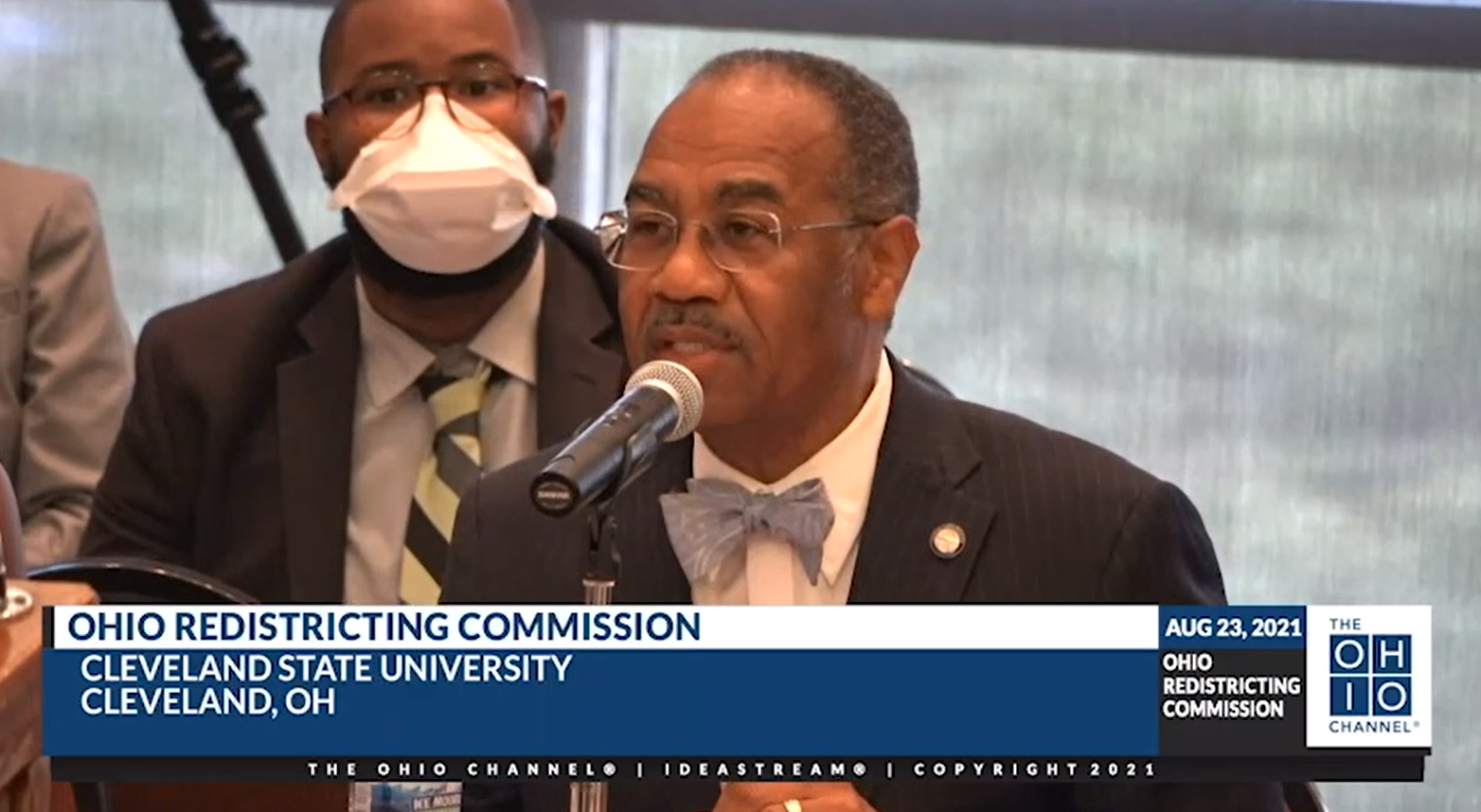
     State Sen. Vernon Sykes, co-chair of the Ohio Redistricting Commission, opens Monday morning’s public hearing on redistricting on the campus of Cleveland State University. A full week of hearings will be held across the state to discuss gerrymandering in the state. Photo: The Ohio Channel

    BY: SUSAN TEBBEN and Ohio Capital Journal

    A week of double-header public hearings on redistricting began Monday in Cleveland and Youngstown, with members of the public calling for more fair districts.

    Ohioans shared with the Ohio Redistricting Commission stories of unrepresentative and oddly-drawn districts (including the “snake on the lake” of Ohio’s 9th district, so-called because of it’s long, skinny appearance on the map), and urged the commission to keep the process transparent and the mapmaking fair.

    “There are things that we like and things that we don’t like, but no matter how you slice it, you need to slice it fairly,” said Rita Mayhew, a retired teacher from Lorain.

    Speakers at the hearings on the Cleveland State University and Youngstown State University campuses, touched on the impact of redistricting and gerrymandering on everything from education to abortion rights and being an informed voter.

    Former Democratic state representative, John Patterson, co-author of the Fair School Funding Plan and Ashtabula County resident, said at the Youngstown hearing that the current legislative districts “lend themselves to candidates who either lean left or lean right, and in the extreme, force potential candidates to run further left or further right.”

    “We need to work together, but we need the opportunity to do just that,” Patterson said. “And fairly drawn districts give us that opportunity.”

    Some in the packed meeting rooms expressed outrage as members of the commission sent proxies, rather than attending themselves.

    “We have put aside everything to come here today, and we are not getting the same response from the people who are supposed to be on this commission,” said Cleveland Heights resident Sue Dyke.

    At Monday morning’s Cleveland hearing, Auditor of State Keith Faber attended, along with House Minority Leader Emilia Sykes, D-Akron, and commission co-chair, state Sen. Vernon Sykes, D-Akron.

    House Speaker Bob Cupp, Secretary of State Frank LaRose, Gov. Mike DeWine and Senate President Matt Huffman all sent designees in their place.

    For Cupp, state Rep. Scott Oelslager, R-North Canton, stood in; LaRose sent chief of staff Merle Madrid. DeWine’s chief legal counsel Matthew Donahue sat in on his behalf, and Huffman sent state Sen. Theresa Gavarone, R-Bowling Green.

    At the afternoon meeting in Youngstown, Faber and Sen. Sykes were both in attendance, but stand-ins were still present for Cupp, DeWine, LaRose and Huffman. State Rep. Timothy Ginter, R-Salem, was in for Cupp this time and state Sen. Kirk Schuring, R-Canton, was in for Huffman.

    Donahue was again in for DeWine, and Madrid repeated his proxy appearance for LaRose.

    Minority Leader Emilia Sykes also sent a proxy to that meeting, state Rep. Michele Lepore-Hagan, D-Youngstown.

    One speaker at the Youngstown hearing noted that DeWine was attending a practice with the Cincinnati Bengals. A number of sports reporters posted pictures and videos of DeWine on the sidelines of Monday’s practice.

    DeWine’s spokesperson Dan Tierney said the governor intends to take into consideration the information given at the hearings, but also said the hearings “are not official committee hearings, these are listening sessions.”

    Asked whether the DeWine will attend any of the hearings, Tierney said that is “yet to be determined” and his calendar has not been finalized.

    A spokesperson for Huffman said the Senate president chose to let representatives from the districts where the hearings were occurring to attend in his place.

    “President Huffman believes this is an important opportunity to give members from the regions around the state where the hearings are held to participate in a process that only happens once in a decade,” said spokesperson John Fortney.

    Fortney said Huffman plans to attend the hearing set to happen Thursday at Ohio State University’s Lima campus, in his district.

    LaRose’s office said the secretary “was supposed to be on orders from the U.S. Army, but as with many things with the Army, those are constantly changing and we expect him to be able to attend upcoming hearings.”

    A spokesperson Cupp did not respond to a request for comment.

    Another criticism hitting commission members was the time of the meetings, which some speakers said kept those who work during the day and can’t afford to take a day off from being able to speak at their local meetings.

    “The hope is that you all understand that their interests need to be represented even though they’re not here, even though they may not have voted for you, even though they may not have voted,” said Reginald Williams, an attorney and Shaker Heights resident.

    Even the one person in either hearing who publicly denied the idea of gerrymandering and charged that Republicans had instead “dominated” elections in the past, causing their supermajority, said the commission should have more hearings. Those hearings should be held at locations other than universities, he said.

    “You do not have a representative cross-section of Ohio in this room,” said Thomas Hach, a Concord resident. “This is wrong, you need to have another week of hearing from the people.”

    The other hearing locations and dates can be found on the Ohio Redistricting Commission website.